


Launching a VPN service is more than building an app. It demands global servers, strong encryption, and continuous network management. For most companies, developing this internally is costly and time-consuming.
A white label VPN service simplifies the process. Businesses can launch a branded VPN product using an existing provider’s infrastructure, focusing on marketing and customer growth rather than servers and software.
This guide breaks down how white label VPNs work, the infrastructure behind them, costs, and the technical layers that power a branded VPN service.
- White Label VPN Overview: Allows businesses to launch branded VPN services without building infrastructure, apps, or backend systems from scratch.
- Prebuilt Infrastructure: Provides applications across multiple platforms, global server networks, encryption protocols, and user management systems.
- Cost and Time Savings: Launch time is reduced to 1–2 weeks with lower upfront and ongoing costs compared to building a VPN internally.
- Branding Importance: Customize apps, portals, domains, and marketing to build trust, recognition, and user retention.
- Mistakes to Avoid: Skipping app testing, neglecting security updates, inconsistent branding, unclear pricing, and choosing providers without API/SDK support.
What Is a White Label VPN Service?
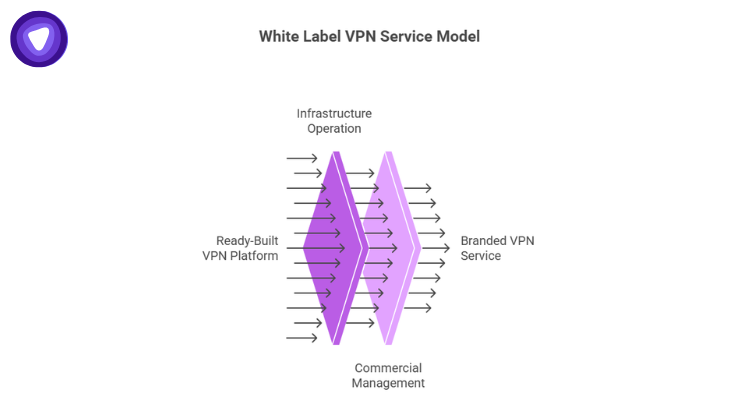
A white label VPN service is a ready-built VPN platform that businesses can rebrand and offer to their customers. The infrastructure provider operates the technical backend, including:
- global VPN servers
- encryption protocols
- client applications
- authentication systems
- network monitoring tools
The partner company manages the commercial side of the service:
- branding
- pricing and subscriptions
- marketing and distribution
- customer relationships
To the end user, the VPN appears to be developed by the business. In reality, the service runs on the infrastructure maintained by the provider. This structure allows companies to launch a VPN product without developing complex networking systems or maintaining server infrastructure.
Why the VPN Market Continues to Expand
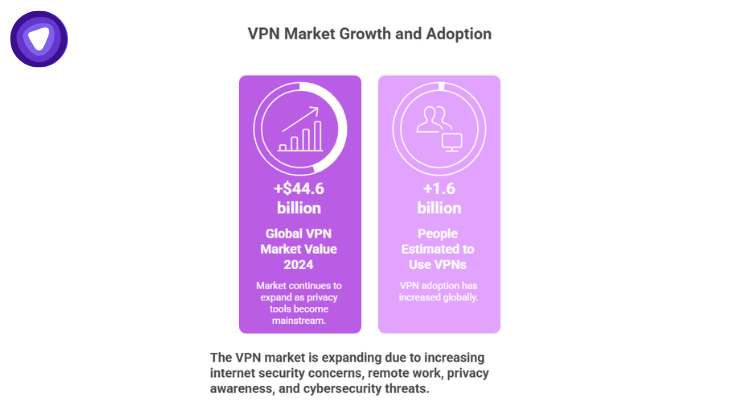
VPN usage has grown steadily as internet security concerns increase. Several factors contribute to this growth.
Remote connectivity
Organizations rely heavily on remote work and distributed teams. Secure encrypted connections help protect internal resources from unauthorized access.
Privacy awareness
Consumers are increasingly aware of how their browsing activity is tracked online.
Cybersecurity threats
Encrypted connections help protect data when users connect through public or unsecured networks.
Market growth
The global VPN market was valued at approximately $44.6 billion in 2024 and continues to expand as privacy tools become mainstream. VPN adoption has also increased globally, with over 1.6 billion people estimated to use VPN services worldwide.
These trends make VPN services attractive for companies looking to expand their digital service offerings.
The Infrastructure Behind a White Label VPN Service
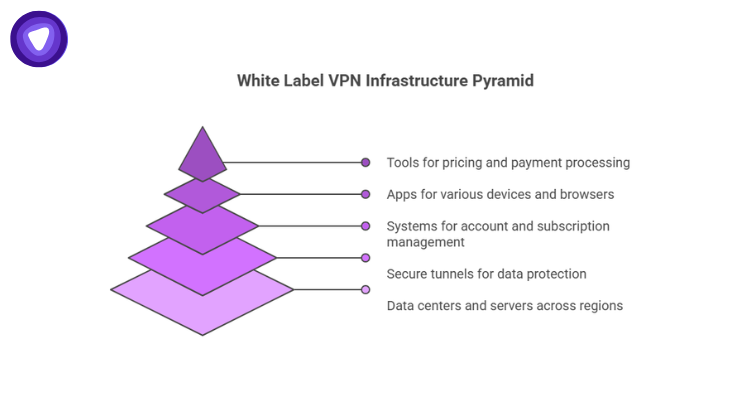
Even though a white label VPN appears to be a branded product, several technical layers operate behind the scenes.
Running a VPN platform requires large-scale infrastructure that supports secure and stable internet connections.
Global VPN Server Network
The foundation of any VPN service is its server infrastructure. This network includes:
- Data center deployments
- Physical and virtual servers
- Global IP address pools
- Bandwidth management systems
- Traffic routing infrastructure
- API and SDK integration layers
VPN providers maintain server networks across multiple regions to ensure stable performance and geographic coverage. Some large VPN networks operate thousands of servers across 100+ countries, allowing users to connect to nearby locations for faster speeds.
Infrastructure providers manage server deployment, uptime monitoring, and network scaling. This removes the need for businesses to operate complex global hosting infrastructure.
Encryption and VPN Protocol Layer
Security depends on encryption protocols and secure tunneling technology. Common protocols supported by modern VPN platforms include:
- OpenVPN
- IKEv2
- IPSec
- WireGuard
These protocols create encrypted tunnels between a user’s device and the VPN server. They ensure that:
- Internet traffic cannot be intercepted on public networks
- User IP addresses remain hidden
- Sensitive data remains protected during transmission
White label partners rely on the provider to maintain these protocols, apply security updates, and optimize performance.
Authentication, User Management, and APIs
A strong VPN platform requires backend systems to manage accounts, subscriptions, and device connections. These include:
- Account creation and authentication
- Subscription validation
- Device connection limits
- Usage monitoring
- Administrative dashboards for reporting and settings
Modern white label platforms also provide APIs and SDKs that allow partners to:
- Automate user provisioning and subscription management
- Integrate VPN functionality into SaaS products, hosting dashboards, or telecom systems
- Embed server selection and connection options directly into applications
This makes it easy for businesses to scale and integrate the VPN service into their existing digital ecosystems without handling infrastructure themselves.
Cross-Platform VPN Applications
End-users connect to VPN services through apps. White label solutions typically include applications for:
- Windows
- macOS
- Android
- iOS
- Browser extensions
These apps include the connection logic required for secure tunnels. Partners can customize them with:
- Logos and brand identity
- Interface colors
- Domain settings
- App store listings
The underlying technology remains consistent, but the visual identity reflects the brand. APIs and SDKs ensure that apps can integrate smoothly into existing platforms and automated workflows.
Billing and Monetization Systems
A commercial VPN requires subscription and billing management. White label platforms often include systems to configure:
- Monthly and annual pricing plans
- Device limits
- Promotional packages
- Payment gateway integrations
APIs allow automated provisioning, analytics, and integration into platforms like SaaS dashboards or telecom systems. This enables partners to monetize quickly and maintain operational efficiency.
Architecture Layers of a White Label VPN Platform
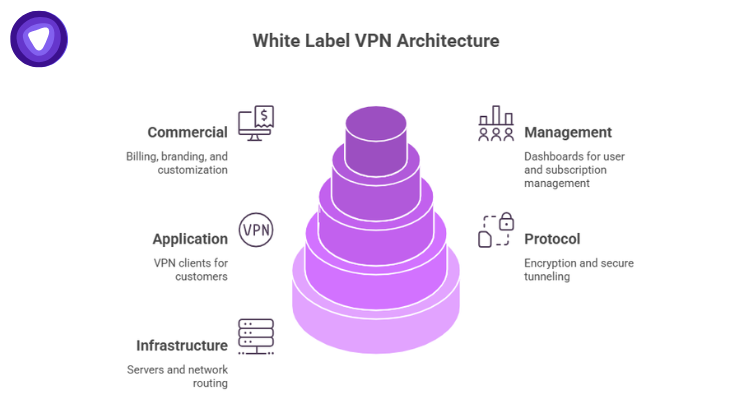
A white label VPN service typically operates using layered architecture. Each layer performs a specific function within the system.
- Infrastructure layer
Handles servers, network routing, and traffic management.
- Protocol layer
Manages encryption protocols and secure tunneling technology.
- Application layer
Provides desktop and mobile VPN clients used by customers.
- Management layer
Includes dashboards used to manage users, subscriptions, and analytics.
- Commercial layer
Handles billing systems, branding, and seller customization.
This layered architecture allows infrastructure providers to maintain network stability while partners control branding and distribution.
VPN Build vs White Label VPN: Comparison
White label VPNs drastically reduce cost, complexity, and time to market, while providing all infrastructure, apps, and security needed to launch a VPN service quickly.
| Factor | Build Your Own VPN | White Label VPN |
| Infrastructure | Deploy and manage servers globally | Provider handles servers, routing, and monitoring |
| App Development | Custom apps for Windows, macOS, iOS, Android | Prebuilt branded apps included |
| Security & Protocols | Must implement and maintain encryption protocols | Managed by provider with updates |
| Backend & User Management | Build authentication, subscriptions, reporting | Admin console, APIs, and SDKs provided |
| Launch Time | 4–6 months+ | 1–2 weeks |
| Upfront Cost | $50K–$500K+ | $500–$10K setup typical |
| Maintenance | Full internal responsibility | Managed by provider |
| Time to Revenue | Long | Short, days to weeks |
Key Features Businesses Should Look For
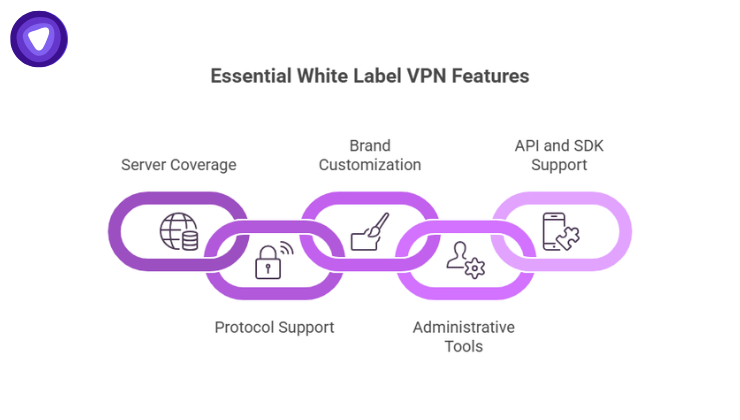
Not all white label VPN platforms offer the same capabilities. Businesses evaluating providers should consider several factors.
Server coverage
A large global network improves connection speed and availability.
Protocol support
Modern encryption protocols ensure secure and reliable connections.
Brand customization
Partners should be able to fully customize applications and services under their own brand.
Administrative tools
Dashboards simplify user management and subscription monitoring.
API and SDK support
Integration tools allow VPN functionality to be embedded directly into applications or platforms.
These features determine how easily a VPN service can scale.
Steps to Launch a White Label VPN
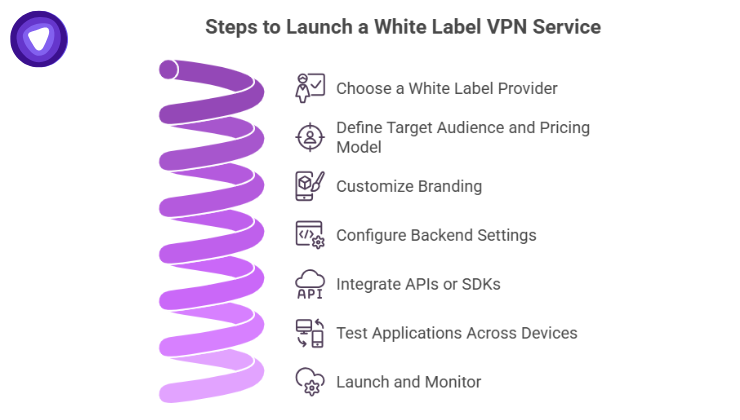
Launching a white label VPN involves planning, setup, and integration, while avoiding the complexities of building infrastructure from scratch. Key steps include:
- Choose a white label provider: Evaluate providers based on server coverage, security protocols, app quality, API/SDK integration, and pricing.
- Define your target audience and pricing model: Decide on monthly/annual plans, device limits, and subscription tiers.
- Customize branding: Apply your logo, colors, domain, and app store identity to prebuilt applications.
- Configure backend settings: Set up user authentication, subscription management, device limits, and analytics via the provider’s admin console.
- Integrate APIs or SDKs: If embedding VPN functionality into existing SaaS or hosting platforms, configure API/SDK connections.
- Test applications across devices: Ensure apps function correctly on Windows, macOS, iOS, Android, and browsers.
- Launch and monitor: Deploy the service, track usage, gather customer feedback, and optimize subscription plans as needed.
Following these steps allows a business to go live within weeks compared to months for building a VPN internally. Read more on how to launch a white label VPN within weeks.
Branding Your White Label VPN
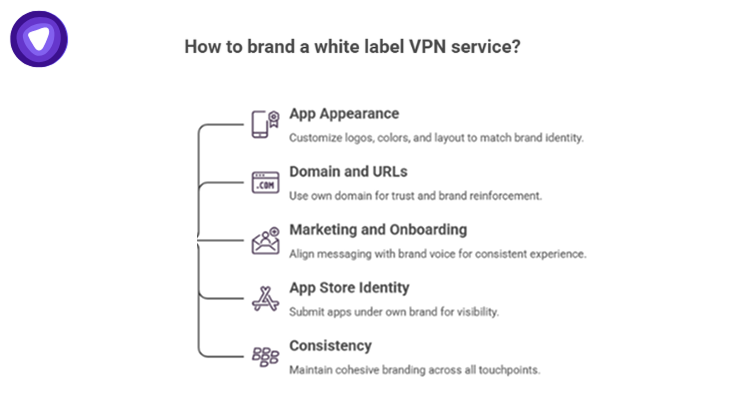
Branding is a critical differentiator in the VPN market. Even though the underlying infrastructure is provided, your visual identity and user experience define customer perception. Key branding elements include:
- App appearance: Customize logos, color schemes, and interface layout to match your brand.
- Domain and URLs: Use your own domain for apps and portals to reinforce brand trust.
- Marketing and onboarding: Ensure onboarding emails, tutorials, and support messaging align with your brand voice.
- App store identity: Submit apps under your brand in Google Play, Apple App Store, or other marketplaces.
- Consistency across touchpoints: Maintain cohesive branding across websites, apps, and support channels.
Strong branding improves customer recognition, trust, and retention while still leveraging the provider’s technical infrastructure.
How Businesses Monetize VPN Services
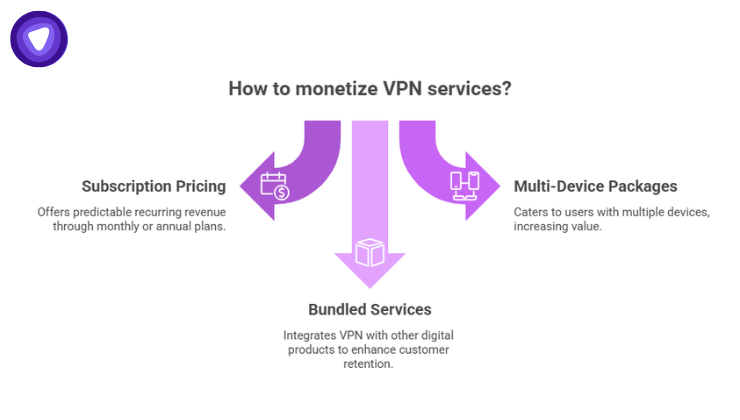
VPN services typically operate using subscription pricing models. Common pricing structures include:
- monthly subscriptions
- annual plans
- multi-device packages
- bundled services with other digital products
Companies often integrate VPN services with hosting platforms, cybersecurity tools, or SaaS applications to increase customer retention.
Because VPN services require ongoing connectivity, they provide predictable recurring revenue.
Mistakes to Avoid When Launching a White Label VPN
Launching a white label VPN can be quick, but common mistakes can hurt growth and credibility. Avoid underestimating infrastructure needs, skipping app testing across devices, neglecting security updates, and failing to define clear pricing tiers.
Do not ignore branding consistency or customer support setup, as these directly impact user trust. Finally, avoid choosing a provider without checking API/SDK capabilities if integration into existing platforms is required. Careful planning and attention to these areas ensure a smooth launch and long-term success.
Where PureVPN White Label VPN Fits
Businesses that want to launch a VPN product without building infrastructure can use PureVPN’s white label VPN service as the technical foundation.
The platform provides global VPN infrastructure, branded applications for major operating systems, and administrative systems for managing users and subscriptions. PureVPN also provides APIs and SDKs that allow businesses to integrate VPN functionality directly into their own applications or platforms.
Because the servers, protocols, and network monitoring systems are already maintained by the provider, companies can focus on branding, marketing, and growing their customer base.
Conclusion
Launching a VPN service independently requires large infrastructure investments, engineering expertise, and continuous operational management.
A white label VPN service removes these barriers by providing the entire technical backend while allowing businesses to operate under their own brand.
By relying on an established network and software platform, companies can introduce VPN services quickly, avoid the complexity of global infrastructure management, and focus on delivering secure connectivity to their customers.