


Digital platforms are expected to protect user traffic, support global access, and maintain secure connectivity across devices. Yet building a VPN network from the ground up requires server infrastructure, encryption expertise, and continuous network management.
For most platforms, that level of infrastructure investment does not align with product development priorities.
A white label VPN platform solves this challenge by providing the backend VPN infrastructure while allowing platforms to deploy a fully branded service. Instead of building and maintaining a global VPN network, companies integrate an existing infrastructure layer and focus on delivering secure connectivity within their own platform ecosystem.
- White Label VPN Integration: Allows digital platforms to deploy a branded VPN service without building infrastructure from scratch.
- Provider Management: The provider handles global server networks, encryption protocols, security updates, and backend authentication.
- Platform Control: Platforms manage branding, user interface, subscriptions, feature configuration, and customer support workflows.
- Enhanced Security and Access: VPN integration protects privacy, enables global content access, and supports hybrid and remote work environments.
- Scalability and Monetization: Supports enterprise-level scalability, API/SDK integration, and multiple monetization models for platforms.
What Is a White Label VPN Platform?
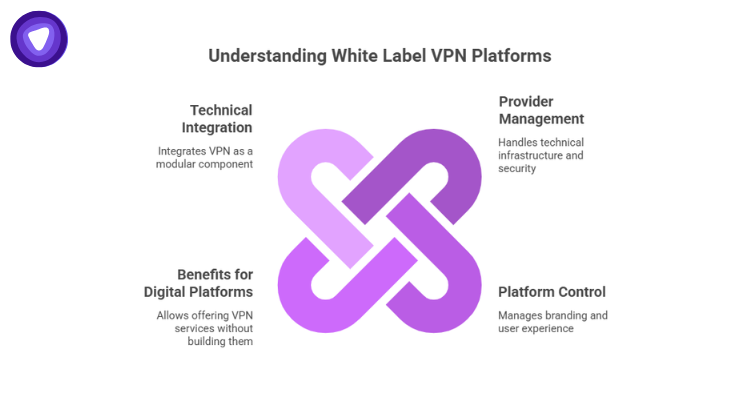
A white label VPN platform provides the infrastructure, protocols, and server network required to run a VPN service while allowing a company to deploy it under its own brand. The provider handles the technical backend, while the platform retains control over branding and user experience.
This approach allows digital platforms to offer a fully branded VPN service without building the network themselves.
The provider manages:
- Global VPN server infrastructure
- Encryption protocols and tunneling technologies
- Network scaling and uptime monitoring
- Security updates and protocol maintenance
- Authentication systems and backend management
The platform integrating the service controls:
- Branding and user interface
- Application distribution
- Customer subscriptions or pricing models
- Feature configuration
- Customer support workflows
From a technical standpoint, the VPN service becomes a modular component of the digital platform rather than a standalone external product.
Why Digital Platforms Are Integrating VPN Services
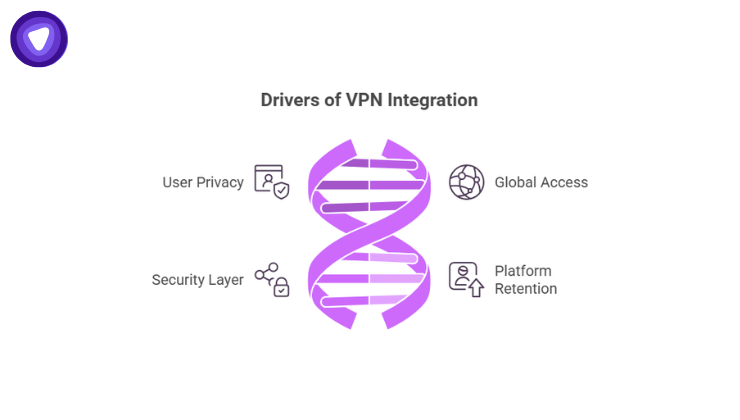
Modern digital platforms face several security and connectivity challenges.
Cloud adoption, remote access, and global audiences have expanded the attack surface and increased demand for encrypted network connections. More than 60 percent of organizations implemented or expanded VPN infrastructure to support hybrid work environments in recent years.
Several factors drive the adoption of integrated VPN services.
1. User Privacy Expectations
Users increasingly expect encryption and IP protection when accessing online services.
Platforms handling personal data, financial transactions, or communication tools must protect traffic across public networks.
2. Global Content Access
Digital platforms often serve international audiences. VPN functionality enables:
- Regional testing for developers
- Secure access from restricted networks
- Cross-border content distribution
3. Built-In Security Layer
VPN integration encrypts traffic between the user device and the VPN gateway. This reduces exposure to:
- Public Wi-Fi interception
- IP tracking
- Session hijacking
4. Platform Retention and Monetization
Adding a VPN service can extend the platform’s feature set and create additional revenue streams through subscription models.
Key Components of a White Label VPN Architecture
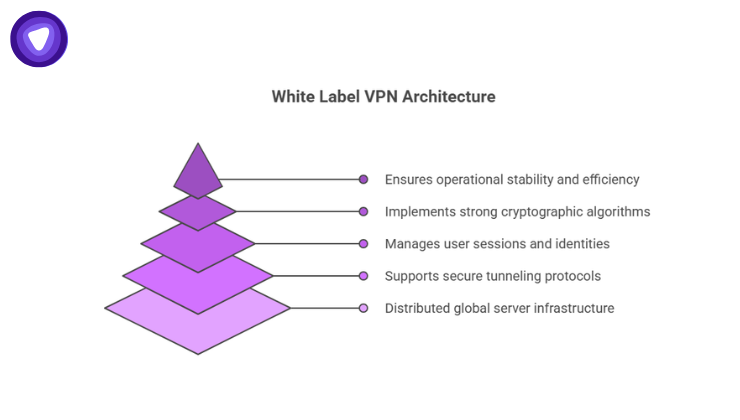
A white label VPN platform typically includes several core technical components.
VPN Server Network
A distributed global server infrastructure routes encrypted traffic through secure gateways.
Capabilities usually include:
- Multiple geographic locations
- High bandwidth capacity
- Load balancing across nodes
- Redundant routing for uptime
Global coverage is critical. The VPN services market continues to expand rapidly, with industry estimates projecting over $170 billion in market value by 2033 due to increasing enterprise and consumer demand.
VPN Protocol Stack
The platform supports secure tunneling protocols such as:
- OpenVPN
- WireGuard
- IKEv2/IPSec
Each protocol offers trade-offs between speed, encryption strength, and compatibility across operating systems.
Authentication and User Management
Most white label VPN deployments include backend identity systems to manage user sessions.
Typical mechanisms include:
- API-based authentication
- Token validation
- Multi-device account support
- Session management
Traffic Encryption
Traffic encryption in a white label VPN platform is implemented using strong cryptographic algorithms, with common standards including AES-256 encryption, ChaCha20 encryption for mobile performance, and perfect forward secrecy.
Monitoring and Network Management
Operational stability requires constant monitoring of:
- Server health
- Bandwidth usage
- Latency metrics
- Routing efficiency
The infrastructure provider handles these responsibilities within the white label VPN platform.
Integration Methods for Digital Platforms
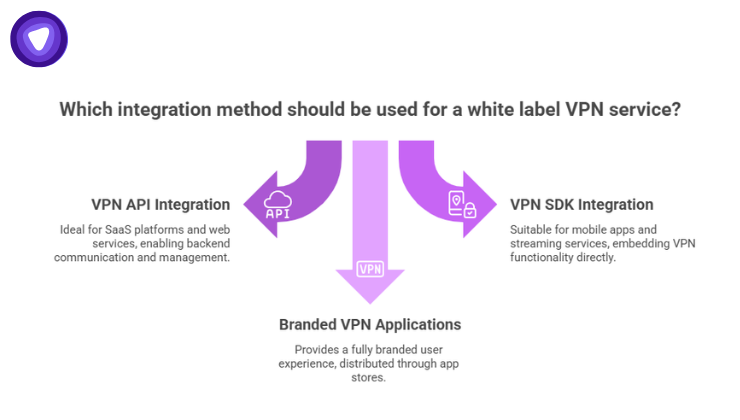
Digital platforms typically integrate a white label VPN service through one of three methods.
VPN API Integration
A VPN API allows the platform backend to communicate with the VPN infrastructure.
The API enables:
- User provisioning
- Connection management
- Server selection
- Subscription validation
This approach works well for SaaS platforms and web services. Read more on VPN API integration here.
VPN SDK Integration
A VPN SDK allows developers to embed VPN functionality directly inside their applications.
SDKs typically support:
- Android
- iOS
- Windows
- macOS
- Linux
This method is common for mobile apps, communication platforms, and streaming services.
Branded VPN Applications
Some platforms deploy fully branded VPN apps distributed through app stores.
These apps connect to the underlying white label VPN platform while maintaining the platform’s visual identity and user experience.
Features Commonly Offered by White Label VPN Platforms
Digital platforms evaluating VPN integration often assess the following capabilities.
| Feature | Description | Platform Benefit |
| Global server locations | Distributed VPN gateways worldwide | Enables international connectivity |
| Protocol support | WireGuard, OpenVPN, IKEv2 | Balances speed and security |
| Kill switch | Automatically blocks traffic if VPN disconnects | Prevents IP exposure |
| Split tunneling | Select which traffic uses VPN | Optimizes performance |
| Device compatibility | Mobile, desktop, browser support | Broad user accessibility |
| Dedicated IP options | Static IP routing | Useful for enterprise workflows |
| API management | Backend control of accounts and sessions | Simplifies integration |
These capabilities allow platforms to adapt VPN functionality to specific use cases rather than offering a generic standalone service.
Security Considerations When Deploying a White Label VPN
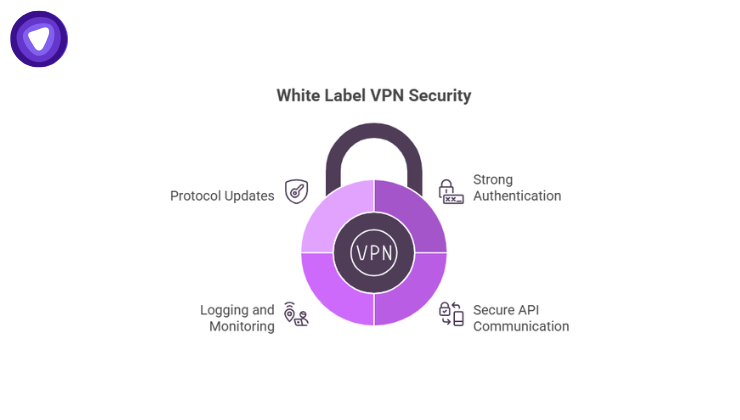
Although VPN integration adds a strong encryption layer, secure deployment still requires proper implementation.
Recent cybersecurity studies show that 41 percent of remote access breaches involve compromised VPN credentials, highlighting the importance of strong authentication controls.
Digital platforms deploying a white label VPN platform should focus on several security practices.
Strong Authentication
Use multi-factor authentication and secure token validation for VPN sessions.
Secure API Communication
All API calls between the platform and VPN backend must use encrypted channels and strict authentication policies.
Logging and Monitoring
Traffic patterns, authentication attempts, and connection activity should be logged for anomaly detection.
Protocol Updates
VPN protocols evolve to address vulnerabilities. The infrastructure provider must maintain regular updates.
Business Models Enabled by White Label VPN Platforms
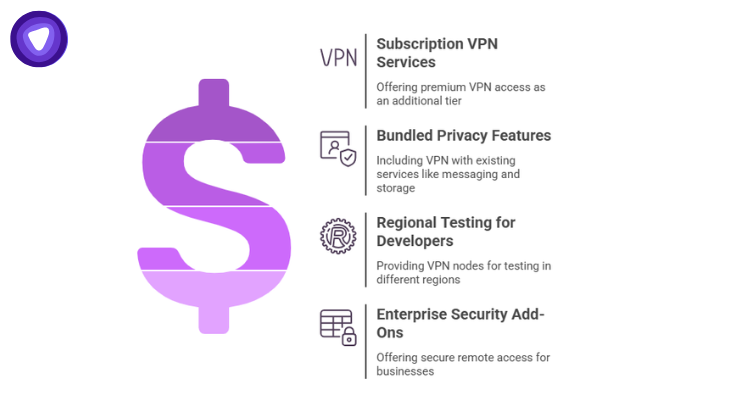
A white label VPN platform enables multiple monetization models for digital platforms.
Subscription VPN Services
Platforms can offer premium VPN access as an additional subscription tier.
Bundled Privacy Features
VPN access can be included with existing services such as:
- Secure messaging platforms
- Cloud storage tools
- Remote collaboration software
Regional Testing for Developers
Platforms serving developers can provide VPN nodes for regional testing and debugging.
Enterprise Security Add-Ons
B2B platforms can offer VPN connectivity for secure remote access to internal resources.
Challenges of Building a VPN Infrastructure Internally
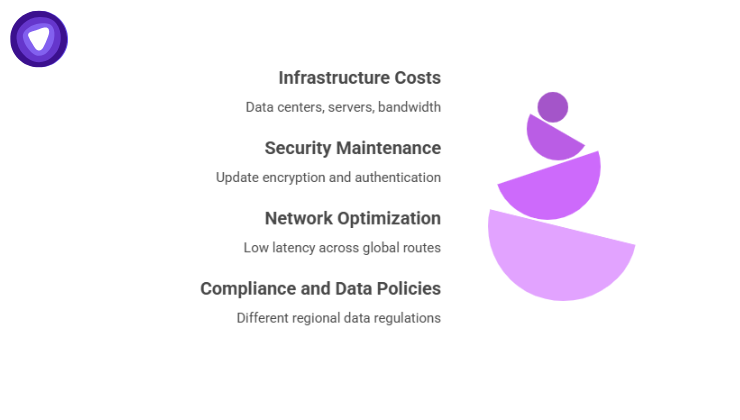
Organizations sometimes consider building their own VPN networks.
This approach introduces several technical and operational challenges.
Infrastructure Costs
Global VPN networks require:
- Data center deployments
- Server provisioning
- Bandwidth agreements
Security Maintenance
Encryption protocols and authentication systems must be continuously updated.
Network Optimization
Maintaining low latency across global routes requires advanced traffic management.
Compliance and Data Policies
Different regions enforce different data regulations.
A white label VPN platform eliminates much of this complexity by providing a managed infrastructure layer.
Where PureVPN White Label Fits for Digital Platforms
Digital platforms looking to deploy a branded VPN service often prioritize scalability, security, and integration flexibility.
PureVPN’s white label infrastructure is designed for this use case. The platform provides the backend network, encryption protocols, and server infrastructure required to launch a branded VPN service without building a network from scratch.
Through API and SDK integration, digital platforms can embed VPN functionality directly into their applications while maintaining full control over branding, user experience, and subscription models.
Final Thoughts
Digital platforms increasingly operate in environments where secure connectivity is a baseline requirement. Users expect encrypted traffic, privacy controls, and reliable access regardless of location.
A white label VPN platform allows companies to integrate VPN functionality into their ecosystem without managing global infrastructure, encryption protocols, or server operations.
By combining branded applications, API integrations, and managed network infrastructure, digital platforms can deploy secure connectivity services that support privacy, cross-border access, and scalable growth.
As VPN adoption continues to rise worldwide, integrating a white label VPN platform offers a practical path for platforms that want to expand their security capabilities while maintaining full control over their product experience.atform retains control over branding and user experience.