

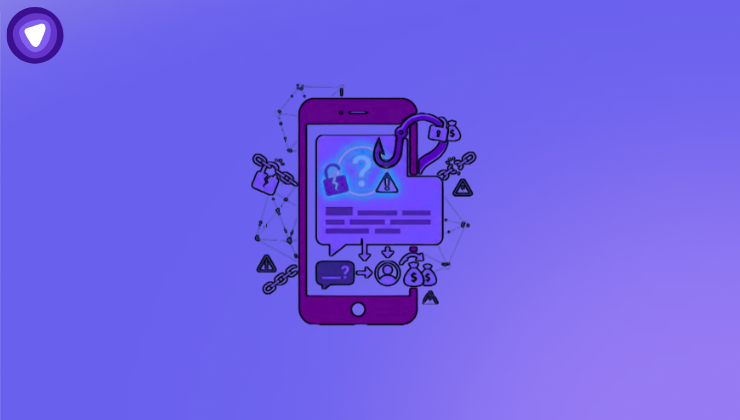
- DPD Scam Texts: Fraudulent messages designed to steal personal information or money by impersonating DPD.
- Effectiveness: Smishing succeeds because SMS is trusted, urgent, and highly engaging, leading to high click-through rates.
- Common Tactics: Scammers use familiar branding, fake delivery alerts, and urgent payment requests to pressure victims.
- Consequences: Victims face financial loss, identity theft, account compromise, and malware infections.
- Prevention: Verify tracking details, ignore unknown messages, inspect links, use phone security features, and consider VPN protection.
A text message about a delayed package is easy to ignore until it looks legitimate. Courier scam texts that impersonate delivery companies like DPD are designed to appear routine. They claim a parcel cannot be delivered and direct recipients to click a link or pay a small fee. What looks like a simple delivery update often leads to stolen personal data, financial loss, or identity theft.
These attacks are known as smishing, a form of phishing delivered through SMS. They work because people check and trust text messages more quickly than email. Fraudsters exploit that behavior by imitating delivery notifications and payment requests. Understanding how DPD scam texts operate is the first step to recognizing them and avoiding the risks they create.
What Exactly Is a DPD Scam Text?
A DPD scam text is a fraudulent message that claims to come from the delivery company DPD, usually about a package supposedly awaiting delivery or blocked at customs. The scam often states that there is an issue that must be resolved by:
- Paying a small fee for redelivery, customs, or insurance
- Confirming personal details like your name, address, or banking information
- Clicking a link that looks legitimate but points to a fake site
These scams usually include a sense of urgency, so the victim feels pressured to act quickly before their “package” is returned or delayed further. In truth, DPD never asks for payments or sensitive details through unsolicited SMS links. Any message that does so is designed to harvest your data or financial information.
Why These Scam Texts Work So Well
Smishing attacks succeed because they tap into common human behaviors and expectations around texting:
High Trust in SMS: People generally treat text messages as more trustworthy than emails. Carriers and trusted services often use SMS legitimately for updates, so recipients may not question a message immediately.
Pressure and Urgency: Scam texts nearly always include urgent language, “your package is about to be returned” or “action required immediately”, encouraging impulsive reactions rather than careful verification.
Familiar Branding: Fraudsters replicate familiar logos, names, and phrases to make scam messages look authentic.
High Engagement: Text messages have exceptionally high open rates (up to 98%) compared to email, making them effective channels for fraud delivery.
All these factors contribute to the effectiveness of smishing. In 2024 alone, U.S. consumers reported losing $470 million to text message scams, a figure more than five times higher than reported losses in 2020.
Smishing Isn’t Limited to Courier Scams
DPD impersonation is just one of many smishing tactics. Fraudsters constantly adapt, and several common themes dominate the threat landscape:
- Fake Fraud Alerts: Messages pretending to be your bank or credit card company warning of suspicious activity. Often these aim to collect account credentials or prompt unauthorized transfers.
- Bogus Job Offers: Scam texts promising easy or remote work that require you to send money or share personal data to “activate” your account or receive materials for the job.
- Unpaid Fees or Toll Myths: Texts claiming you owe minor fees for tolls, tickets, or package delivery, prompting an immediate payment to avoid fines.
- “Wrong Number” Scams: Innocuous “hello” messages that start a conversation, build trust, and eventually segue into costly investment or payment schemes.
Smishing incidence rose globally by around 18% in 2024, with delivery service scams seeing a disproportionate jump. All these variants highlight that smishing is not a peripheral issue; it is a central feature of digital fraud today.
Anatomy of a Typical DPD Scam Text
Understanding how scammers construct these texts can help people identify them more easily. Common characteristics include:
- Unexpected Delivery Notification: You receive a message out of the blue about a parcel you did not track or order.
- Urgent Call to Action: The text warns that the delivery will be returned unless a small payment is made within a short timeframe.
- Shortened or Suspicious Link: It includes a URL that does not match the official domain of the courier. Shortened links (e.g., bit.ly) are especially suspicious.
- Unusual Sender ID: The number or alphanumeric sender ID may look “off” or unfamiliar.
- Requests for Payment or Personal Info: The text directs you to enter details that a legitimate courier would never request via SMS.
Recognizing these signs early is key to avoiding fraud.
The Financial and Personal Cost of Falling for a Scam
The harm from smishing goes beyond simply losing money. Criminals who gain partial access to your personal data can sell it on the dark web or use it to:
- Open fraudulent accounts in your name
- Access your bank accounts via credential reuse
- Steal your identity for further scams
Even if you avoid the primary bait, clicking malicious links can lead to malware installation on your device. Once a phone is infected, attackers can extract sensitive information, monitor activity, or escalate their exploit to target banking apps and authentication codes.
Global research indicates that SMS phishing attacks have 19–36% click‑through rates, vastly higher than traditional email phishing, which often yields 2–4%. This discrepancy reflects how quickly people react to texts, making smishing a powerful tool for cybercriminals.
Regulatory and Corporate Responses to Text Scams
Public agencies and telecom companies are increasingly active in combating these threats. Authorities in the EU and the United States have issued repeated warnings about courier impersonation scams, advising consumers to verify tracking details directly through official websites.
The Federal Trade Commission (FTC) encourages anyone receiving suspicious messages to forward them to 7726 (SPAM) to help carriers identify and block similar attacks, and to file fraud reports.
Mobile platforms like iOS and Android also offer spam filtering for unknown senders. Consumers are advised to enable these features and be cautious before engaging with any unexpected SMS.
How to Avoid Falling for a DPD Scam Text
Avoiding these scams requires both skepticism and technique. Follow these practical steps:
Check Before You Click
Always verify tracking information by inputting your official tracking number on the courier company’s website or app.
Don’t Respond to Unknown Messages
Replying to a scam text can confirm your number as active and lead to more fraudulent messages.
Look Closely at Links
If a URL looks unfamiliar, do not tap it. Real tracking links typically contain recognizable domains.
Use Your Phone’s Security Features
Modern smartphones allow you to block numbers or filter unknown senders. Use those tools to reduce exposure.
Report Suspicious Messages
Forward scams to your carrier or report them to relevant authorities like the FTC.
Educate Contacts
Warn friends and family, especially those who may be less aware of digital threats, such as older adults who statistically report high losses in other forms of cybercrime.
Why Smishing Is Growing and What It Means for Your Security
Smishing’s rapid growth is not an accident. There are several structural reasons scammers focus on text messages:
Higher Visibility: Messages are opened almost universally by recipients.
Low Delivery Cost: Sending millions of SMS messages costs criminals nearly nothing.
Ease of Spoofing: Phone numbers and sender IDs can be faked convincingly.
AI Enhancement: Tools automate personalization and context to make scam texts more believable.
These factors suggest text‑based scams will remain a focus for attackers for years to come.
How Businesses and Individuals Can Raise Defenses
Addressing smishing requires combined action:
Invest in Communication Security Tools
Enterprises can adopt advanced filtering and anomaly detection to flag suspicious traffic before it reaches users.
Promote Consumer Education
Clear, ongoing education about SMS scams reduces the pool of victims exposed to simple social engineering.
Integrate Multi‑Factor Verification
Avoid using SMS as a second factor for critical services because it can be intercepted or mimicked.
Report and Share Threat Data
Sharing indicators of compromise helps carriers and law enforcement detect trends and block scam campaigns more effectively.
These practices reduce overall exposure and acknowledge that attackers continually adapt their techniques.
How a VPN Complements Scam Awareness
A VPN like PureVPN white label solution does not stop scam texts directly but adds a crucial layer of protection. By encrypting your connection on mobile devices or laptops, it prevents attackers from intercepting traffic or monitoring activity after clicking a malicious link.
PureVPN’s white label solution safeguards against phishing redirects and malicious sites that can follow a smishing click. DPD scam texts show that phishing is moving beyond email into personal channels, making vigilance and secure digital habits essential to staying ahead of fraudsters.
Conclusion
DPD scam texts highlight that phishing has moved beyond email into the most personal digital channels. Awareness, careful verification, and practical security habits are essential to avoid falling victim. Tools like a VPN add an extra layer of protection by encrypting connections and blocking malicious redirects, reducing the risk of credential theft or malware. Staying vigilant, informed, and proactive ensures individuals and businesses can navigate digital communications safely and keep sensitive data secure.