


- White Label VPN: Enables businesses to offer branded VPN services without building infrastructure from scratch.
- Global Access: Provides secure and reliable connectivity worldwide, bypassing geographic restrictions.
- APIs and SDKs: Support seamless integration into apps and platforms with automated account management and embedded VPN features.
- Network Performance: Global server networks reduce latency and ensure encrypted communication for users everywhere.
- Scalability and Branding: Offers businesses scalable solutions with brand ownership and simplified maintenance for international expansion.
The internet was designed to connect the world, yet geography still shapes how people experience it. A user in Singapore sees a different version of the web than a user in Germany. Businesses launching digital services quickly discover that global access is far more complex than simply putting a product online.
Regulations, regional restrictions, latency issues, and security requirements create barriers that limit how users connect to services across borders. For companies building platforms, SaaS products, or digital marketplaces, ensuring seamless global access is no longer optional. It directly affects user experience, growth, and retention.
This is where White Label VPN solutions play an important role. By allowing businesses to deploy branded VPN infrastructure, they enable secure and reliable access to digital services across regions without forcing companies to build complex network systems themselves.
The result is a scalable way to connect users worldwide while maintaining control over security, performance, and brand experience.
The Rising Demand for Global Digital Access
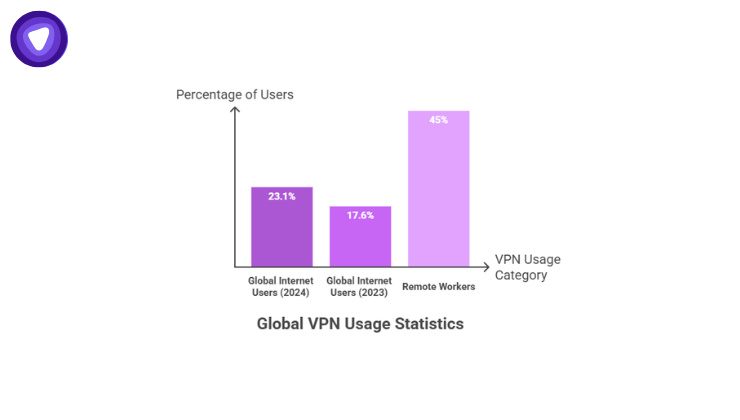
Global connectivity is expanding rapidly, but so are the challenges that come with it.
VPN technology has moved from niche security infrastructure to a mainstream tool for both businesses and individuals. As online services grow across borders, organizations increasingly rely on secure network tunnels to provide consistent user access.
Recent research shows:
- 23.1% of global internet users use a VPN for part of their online activity as of 2024.
- 1.42 billion people worldwide used a VPN in 2023, representing about 17.6% of internet users globally.
- 45% of remote workers globally rely on VPNs daily for secure access to systems and applications.
- In enterprise environments, remote employee access remains the primary reason organizations deploy VPN technology.
These numbers highlight a clear shift: secure network access is becoming foundational infrastructure for modern digital services.
For businesses operating across multiple regions, traditional VPN deployment models often create operational friction. Infrastructure costs, management overhead, and branding limitations make it difficult to scale globally.
White label VPN platforms address these issues by providing ready-to-deploy infrastructure that companies can integrate into their own ecosystem.
What Is a White Label VPN?
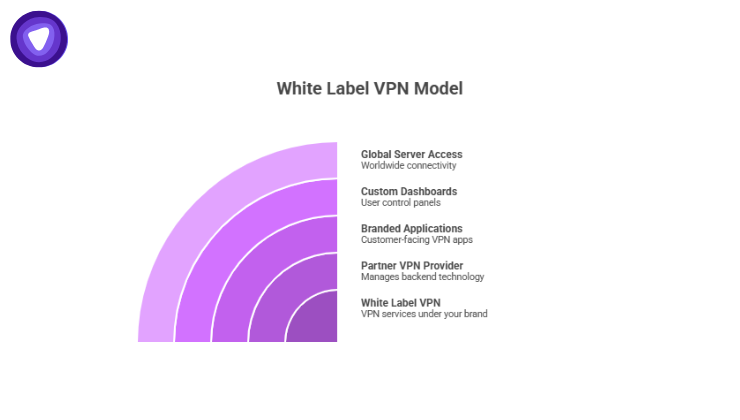
A white label VPN allows a business to offer VPN services under its own brand without building the technology from scratch.
Instead of developing global servers, encryption systems, authentication mechanisms, and client applications internally, companies partner with an established VPN infrastructure provider.
The provider manages the backend technology, while the partner controls the customer-facing experience.
This includes:
- Branded VPN applications
- Custom user dashboards
- Dedicated infrastructure options
- Global server access
- Integrated billing and subscriptions
From the end user’s perspective, the VPN appears as a fully owned product from the brand offering it.
For businesses, this model significantly reduces the technical complexity of deploying global connectivity services.
How White Label VPN Expands Global User Access
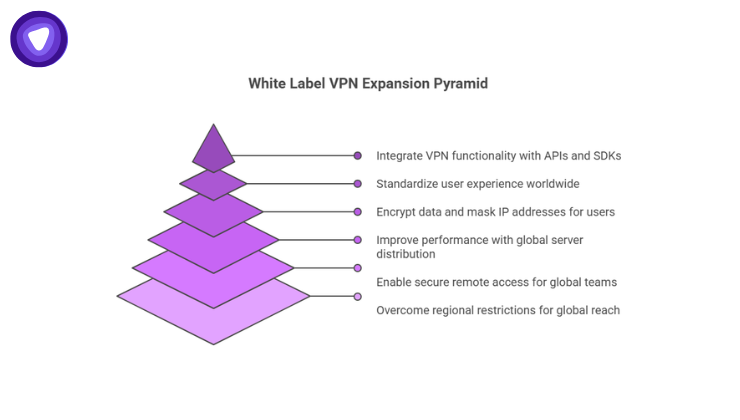
White label VPN infrastructure helps organizations solve several common barriers that limit worldwide connectivity.
1. Access Across Geographic Restrictions
Many online platforms face regional restrictions, content licensing limitations, or localized service availability.
VPN infrastructure allows users to securely connect through servers in different regions, enabling access to services that may otherwise be limited by geographic boundaries.
For digital businesses, this means:
- Supporting users traveling across regions
- Delivering consistent service availability
- Reducing regional access limitations
This capability is particularly valuable for streaming services, SaaS platforms, financial services, and international digital communities.
2. Secure Remote Connectivity for Global Teams
Modern organizations rarely operate from a single location. Teams work across continents, contractors access internal systems remotely, and customers log in from multiple regions.
Secure connectivity becomes essential to maintain productivity and protect sensitive data.
White label VPN infrastructure enables companies to provide:
- Encrypted remote access
- Secure login environments
- Controlled access to internal resources
- Protected communication channels
For distributed organizations, this reduces the risk of exposing internal systems to public networks while still supporting global collaboration.
3. Reduced Latency Through Global Server Distribution
One of the biggest challenges in global connectivity is performance.
When users connect to servers located far from their region, network latency increases. This leads to slower loading times, unstable connections, and poor application performance.
White label VPN platforms often include global server networks designed to reduce this issue.
By allowing users to connect to servers closer to their location, companies can deliver:
- Faster data routing
- Improved platform performance
- More stable connections
For services such as SaaS platforms, gaming infrastructure, and media streaming, these improvements directly affect user satisfaction.
4. Privacy Protection for Global Users
Digital privacy concerns have increased significantly in recent years.
Surveillance policies, data monitoring practices, and regional privacy regulations have made users more cautious about how their information travels across networks.
VPN encryption provides a critical layer of protection by securing internet traffic between users and services.
Key privacy benefits include:
- Encrypted data transmission
- Masked IP addresses
- Reduced tracking exposure
- Protection on public networks
This is particularly important for users accessing services from regions with limited online privacy protections.
5. Consistent User Experience Worldwide
Companies expanding globally often struggle to maintain a consistent digital experience.
Different network environments, ISP policies, and regional connectivity challenges can disrupt access to services.
White label VPN systems help standardize how users connect to platforms by routing traffic through controlled infrastructure.
This results in:
- Stable connection environments
- Reduced ISP throttling
- Predictable network performance
- Reliable access to online services
For platforms operating internationally, consistency is essential to maintain trust and usability.
6. APIs and SDKs for Seamless Integration
White label VPN solutions often include APIs and SDKs, enabling companies to integrate VPN functionality directly into their applications or platforms.
Key benefits include:
- Automated account management: create, suspend, or update user accounts programmatically.
- Embedded VPN features: allow users to connect to VPN servers without leaving the app.
- Custom workflows: integrate subscription billing, analytics, and access control into existing systems.
- Faster time-to-market: deploy branded VPN services without building complex infrastructure from scratch.
By leveraging APIs and SDKs, businesses can maintain a consistent user experience while scaling global access efficiently.
Key Benefits of White Label VPN for Businesses
The advantages of white label VPN solutions extend beyond connectivity. They also provide operational and commercial benefits.
| Benefit | Impact for Businesses |
| Faster market entry | Launch a VPN service without building infrastructure |
| Global scalability | Support users across multiple regions easily |
| Brand ownership | Offer VPN services under your own brand identity |
| Recurring revenue | Create subscription-based service models |
| Reduced development costs | Avoid building encryption and network infrastructure |
| Simplified maintenance | Infrastructure updates handled by the provider |
This model allows businesses to focus on growth and customer experience rather than complex network engineering.
Industries Benefiting from White Label VPN Solutions
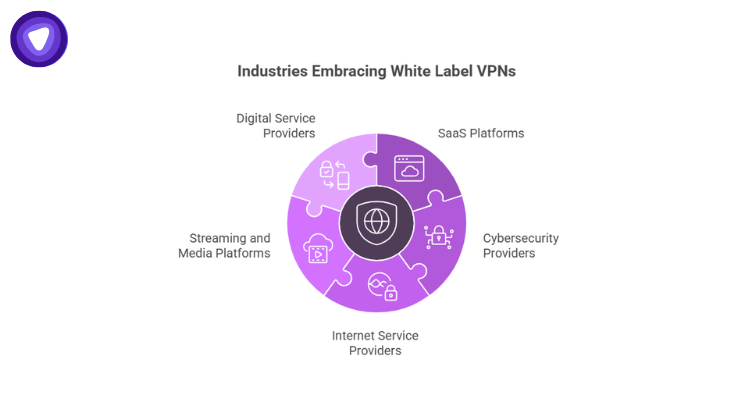
Several industries are increasingly adopting white label VPN platforms to support global connectivity.
SaaS Platforms
Software providers use VPN infrastructure to ensure customers can securely access applications from any location.
Cybersecurity Providers
Security companies expand their offerings by integrating VPN services into broader protection suites.
Internet Service Providers
ISPs bundle branded VPN solutions into subscription packages to enhance privacy features for customers.
Streaming and Media Platforms
Content platforms use VPN infrastructure to deliver secure and consistent access across regions.
Digital Service Providers
Marketplaces, fintech platforms, and cloud services use VPN connectivity to protect transactions and ensure reliable access.
Challenges Businesses Face Without Global VPN Infrastructure
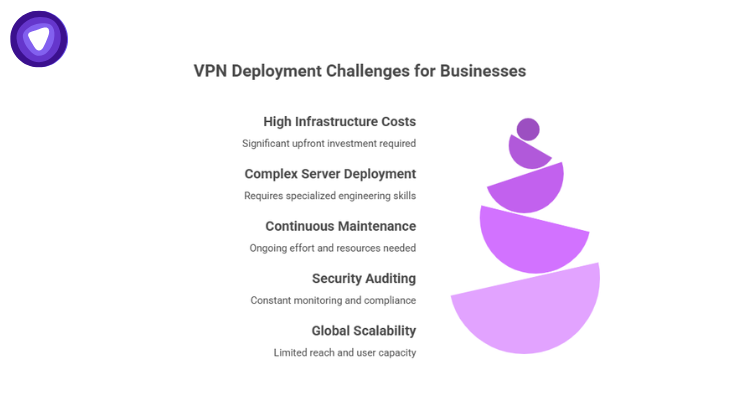
Organizations attempting to deploy their own VPN networks quickly encounter several challenges.
These include:
- High infrastructure costs
- Complex server deployment
- Continuous maintenance requirements
- Security auditing and monitoring
- Global scalability limitations
Managing these elements internally requires significant engineering expertise and ongoing investment.
White label solutions eliminate most of this complexity by providing prebuilt infrastructure that partners can integrate quickly.
The Role of White Label VPN in the Future Internet
The internet is becoming more fragmented due to regional regulations, data sovereignty laws, and platform restrictions.
At the same time, users expect seamless global connectivity.
VPN technology is increasingly serving as the bridge between these two realities.
Recent reports show that more than 18% of global web traffic already passes through VPN infrastructure, highlighting how central encrypted connectivity has become to modern internet usage.
As businesses continue expanding across regions, VPN-enabled connectivity will remain a key component of digital infrastructure.
White label models make this capability accessible even to companies without large engineering teams.
How PureVPN White Label Supports Global Connectivity
Businesses looking to deploy VPN services without building their own infrastructure often turn to white label platforms designed specifically for this purpose.
The PureVPN White Label VPN solution allows organizations to launch fully branded VPN services using an established global server network. Companies can offer VPN applications under their own brand while relying on proven backend infrastructure.
This approach removes the need to build encryption systems, server networks, and VPN client applications from scratch. Businesses gain access to scalable infrastructure while maintaining control over branding, customer management, and subscription models.
For organizations seeking to deliver secure access to global users, a white label VPN platform provides a practical and efficient path to market.
Final Thoughts
Digital services are no longer confined to a single country or region. Platforms launch globally from day one, and users expect uninterrupted access regardless of where they connect from.
Meeting these expectations requires infrastructure designed for worldwide connectivity.
White label VPN solutions give businesses the ability to provide secure, scalable, and branded network access without the burden of building complex systems internally.
As the demand for global digital services continues to grow, the role of VPN infrastructure will only become more central to how organizations connect users across the internet.