

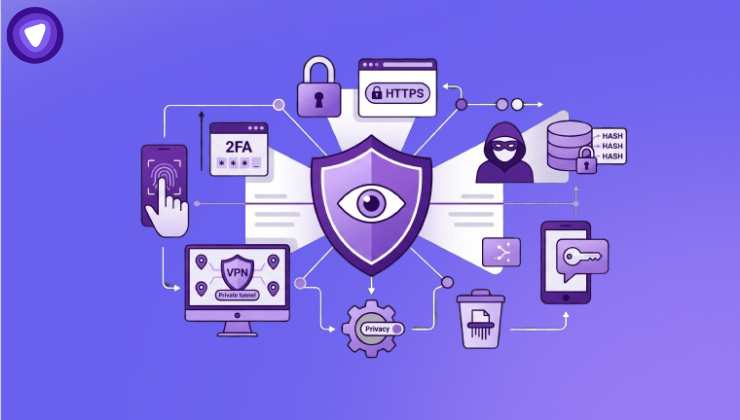
- A VPN encrypts data in transit, but dark web monitoring catches data that already leaked through a breach or infostealer infection.
- Infostealer malware like RedLine and Lumma harvests passwords, cookies, and autofill data straight from infected devices.
- Stolen session tokens let attackers bypass passwords and MFA entirely, so monitoring must flag tokens, not just credentials.
- Detection speed matters most now, since 73% of breached credentials surface within 48 hours of the original compromise.
- A digital privacy platform needs continuous scanning across multiple sources, not a one-time check, to keep pace with how fast stolen data moves.
A stolen password from a 2023 breach can still work in 2026. Attackers rarely use stolen credentials right away. They test them first, often months later, against banking portals, corporate VPNs, and email accounts. That delay is the gap a digital privacy platform exists to close.
Most privacy tools operate at the point of use. A VPN encrypts a connection. An ad blocker stops trackers. Neither one checks whether a user’s credentials are already circulating in a stealer log or a breach compilation. Dark web monitoring fills that gap, and without it, a digital privacy platform is only solving half the threat model.
The Gap Between Encryption and Exposure
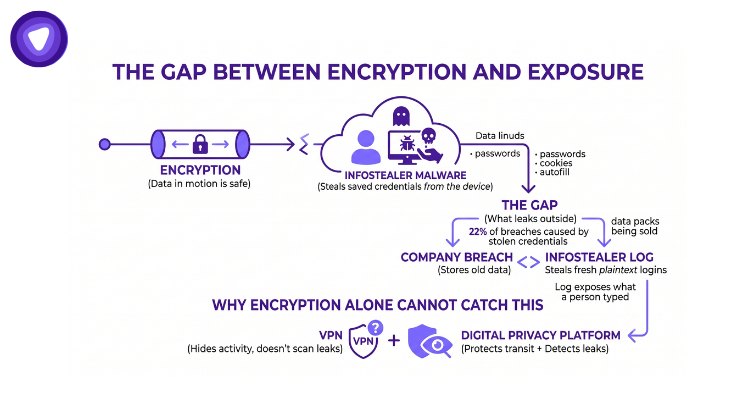
Encryption protects data in motion. It does nothing for data that already left the user’s device through a different channel entirely.
Infostealer malware is the main channel now. Variants like RedLine, Lumma, and Raccoon infect a device through a phishing link or a cracked software download. Once active, the malware pulls every saved password, browser cookie, and autofill entry, then packages it into a log file sold on criminal marketplaces.
This is a different threat than a traditional database breach. A company breach exposes what that company stored. An infostealer log exposes what a person actually typed, across every site they use.
Stolen credentials caused 22% of breaches tracked in 2025. That is not old, hashed data sitting untouched. Much of it is fresh, plaintext, and already matched to a working login.
Why Encryption Alone Cannot Catch This
A VPN hides browsing activity from an internet provider or a network observer. It does not scan criminal forums. It does not know if a password was harvested by malware last week. These are two separate security functions, and treating them as one leaves a real gap in coverage.
This is where the term digital privacy platform starts to mean something specific. A true platform combines both functions: protecting data in transit, and detecting data that has already leaked elsewhere. Products that only handle one function are privacy tools, not complete platforms.
Why Session Tokens Matter More Than Passwords
Password resets used to be enough. That is no longer true.
Infostealer logs frequently include active session cookies alongside credentials. A session cookie lets an attacker walk straight into an account without entering a password or triggering multi-factor authentication. The login already happened. The token just needs reuse.
This is why dark web monitoring built for 2026 threats cannot stop at password matching. A platform needs to detect exposed session tokens too, and flag them for revocation, not just password change.
Traditional breach checkers like public leak databases do not cover this. They index old, confirmed breaches. They were never built to catch a session cookie stolen from a browser three days ago.
The Shift From Static Credentials to Live Sessions
Security teams used to think in terms of static secrets: a password, a security question, a PIN. Attackers have moved past that model. A stolen session token behaves like a temporary master key. It bypasses login screens entirely, because the system sees it as an already authenticated user.
A digital privacy platform that only checks for leaked passwords misses this category completely. Monitoring for session tokens requires different data sources, since tokens rarely show up in old breach compilations. They surface almost exclusively in fresh infostealer logs, which means monitoring speed matters as much as monitoring scope.
What a Complete Monitoring Layer Actually Covers
A dark web monitoring feature inside a digital privacy platform needs to pull from several distinct source types, each with a different detection speed.
| Source Type | Typical Detection Speed | What Gets Exposed |
| Infostealer logs | Hours to days | Passwords, session cookies, autofill data |
| Breach compilations | Weeks to months | Emails, hashed or plaintext passwords |
| Ransomware leak sites | Days to weeks | Files, internal records, customer data |
| Paste sites | Hours to weeks | Partial dumps used to advertise larger leaks |
| Private trading channels | Real time | Fresh credentials, active tokens |
No single source covers everything. A platform relying only on public breach databases will miss the fastest-moving and most dangerous category: live infostealer logs traded within hours of infection.
Each row in this table represents a different attacker workflow too. Breach compilations get scraped and resold by low-effort actors. Infostealer logs and private trading channels are used by more targeted operators who verify data before acting on it. A monitoring system needs visibility into both tiers, not just the easy ones to index.
The Scale of the Problem in Numbers
The volume moving through these channels has grown fast, and the financial stakes have grown with it.
Ransomware groups claimed 7,307 victims in 2025, a 45% jump from the year before. Many of those incidents began with a single compromised credential, not a sophisticated exploit.
Breached credentials appeared within 48 hours of the original compromise in 73% of cases studied in 2026. That window keeps shrinking, which means detection speed matters as much as detection accuracy.
The average breach cost dropped to $4.44 million globally in 2025, down 9% from the year before. Faster detection is the reason. Organizations catching exposure early spend less cleaning up afterward.
These numbers point to the same conclusion from different angles. Attacks increasingly start with data that already leaked somewhere else. The organizations and individuals limiting damage are the ones checking for that exposure early, not the ones with the strongest firewall.
Why the Timeline Keeps Compressing
A few years ago, stolen data sat on forums for months before criminals organized it into usable form. That process has been automated. Infostealer logs now get parsed, indexed, and resold within days, sometimes hours, of collection. Automated tooling on the attacker side has closed the gap that used to give victims time to react.
This shift changes what monitoring needs to look like. A weekly or monthly scan misses most of the exposure window entirely. Continuous monitoring, checking new data as it appears, is the only approach that keeps pace with how fast this data moves now.
How Monitoring Should Actually Work
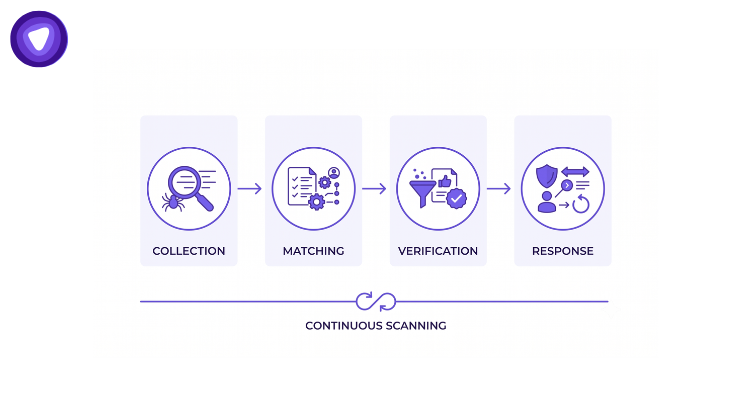
A functional monitoring pipeline runs on four stages, not one static scan.
Collection. Automated crawlers and analysts pull data from forums, marketplaces, and Telegram channels that standard search tools cannot index.
Matching. Collected records get checked against a user’s registered email addresses, domains, or usernames.
Verification. Not every match is genuine. Old breach data gets repackaged and resold as new. Verification filters out recycled noise before an alert goes out.
Response. A confirmed match triggers a specific action: force a password reset, revoke an active session, or flag a domain for deeper review.
Static, one-time scans miss everything that surfaces after the initial check. New logs get uploaded daily. A digital privacy platform needs continuous scanning, not a single onboarding sweep.
Why Verification Cannot Be Skipped
Verification is the stage most basic tools skip, and it is the one that separates a credible monitoring feature from a noisy one. Recycled data compilations get repackaged and sold as fresh breaches constantly. Without verification, users get flooded with duplicate alerts for exposure they already fixed months ago.
A well-built verification stage checks timestamps, cross-references multiple sources, and confirms whether a credential is still active before triggering an alert. This keeps the alert volume manageable and keeps trust intact. Users who get too many false alarms start ignoring alerts altogether, which defeats the purpose of monitoring in the first place.
Turning Detection Into Trust
A privacy product earns trust through specific, actionable alerts, not general advice. Telling a user to “use strong passwords” does not help much. Telling them their exact password from a named 2023 breach just resurfaced does.
That specificity is what makes dark web monitoring different from every other privacy feature. It does not just prevent future exposure. It surfaces exposure that already happened, and gives users a concrete reason to act now instead of later.
This also changes how a digital privacy platform gets evaluated by its users. A VPN’s value is invisible most of the time. It works quietly in the background. Dark web monitoring produces visible, dated, specific results. That visibility builds retention, because users see direct evidence the platform is doing something for them.
Deploying This Without Building It From Scratch
Building infostealer log ingestion, breach verification, and real-time alerting from the ground up takes serious infrastructure and ongoing threat intelligence access. Most businesses launching a privacy product do not have the resources to run that pipeline internally.
PureVPN’s white label VPN solution addresses this by bundling dark web monitoring directly into the core platform. Partners launch a fully branded digital privacy platform with VPN protection and credential exposure detection running together, without managing the underlying data pipeline themselves. New breach sources and infostealer feeds stay current on the backend, so the product keeps working as the threat landscape shifts.
Final Thoughts
This matters most for businesses entering the privacy space without an existing security team. Instead of hiring analysts and licensing multiple threat intelligence feeds separately, a partner gets a working monitoring layer already integrated, tested, and ready to brand under their own name.
Encryption and monitoring solve different halves of the same problem. One protects data while it moves. The other catches it after it has already leaked somewhere else. A digital privacy platform that only does one of these is leaving its users exposed to exactly the kind of attack that starts quietly, months before anyone notices.