


- Reliable guest Wi-Fi experience: Directly influences guest satisfaction, reviews, and loyalty.
- Guest Wi-Fi security: Guests expect secure hotel Wi-Fi that protects personal data and supports work and leisure needs.
- Wi-Fi management: Poor guest Wi-Fi management, including congestion and weak coverage, reduces repeat bookings and generates negative reviews.
- Guest segments: Different guest segments (business, leisure, groups) have varied connectivity needs requiring structured network management.
- White-label VPN solutions: Solutions like PureVPN provide secure, centralized, and consistent guest Wi-Fi performance across properties.
Guests may overlook a compact room or a slightly delayed check-in, but poor internet connectivity often leaves a lasting negative impression. When video calls disconnect, digital boarding passes fail to load, or streaming services constantly buffer, frustration builds quickly. In today’s connected world, the quality of a hotel’s Wi-Fi service significantly influences how guests perceive comfort, reliability, and overall service quality, often before they evaluate any other aspect of their stay.
Reliable connectivity is no longer just a convenience; it has become an essential component of the guest experience. From business travelers attending virtual meetings to leisure guests streaming entertainment and staying connected with family, seamless internet access plays a critical role in guest satisfaction. As a result, the guest Wi-Fi experience directly impacts online reviews, customer loyalty, repeat bookings, and brand reputation across the hospitality industry. For hotels, resorts, and boutique properties alike, recognizing the connection between Wi-Fi performance and guest loyalty is now a strategic necessity rather than a technical consideration.
Why Guest Wi-Fi Experience Has Become a Loyalty Driver?
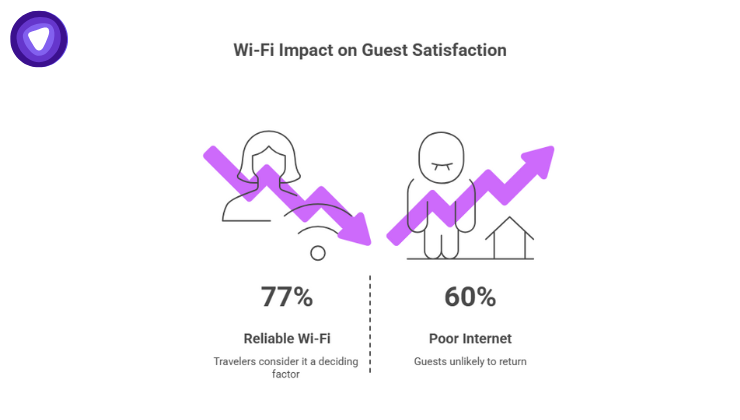
Connectivity expectations do not pause when someone checks into a hotel. Guests arrive with work deadlines, streaming habits, smart devices, and security concerns. When hotel guest Wi-Fi fails to meet those expectations, the gap feels personal.
Recent industry data reinforces this shift:
- A study found that over 77 percent of travelers consider reliable Wi-Fi a deciding factor when choosing accommodation.
- According to Statista, more than 60 percent of guests say poor internet directly impacts their likelihood of returning to a property.
- A study showed that internet quality ranked among the top three drivers of overall satisfaction for business travelers.
Guest Wi-Fi experience is no longer a supporting service. It is part of the promise a property makes to its guests.
The Emotional Side of Connectivity
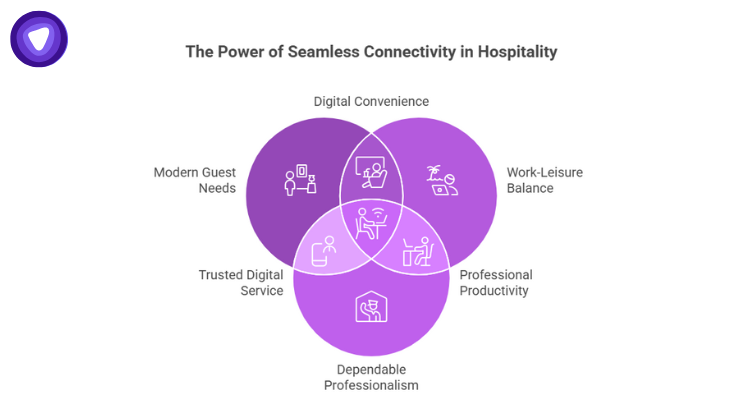
Connectivity issues rarely trigger complaints at the front desk. Instead, they surface later as lower ratings and reduced loyalty. Guests interpret poor Wi-Fi as a lack of care, even when everything else meets expectations.
Strong connectivity creates subtle positive signals:
- The property understands modern guest needs
- The stay supports both work and leisure seamlessly
- The environment feels dependable and professional
These signals compound across repeat visits. Improving guest Wi-Fi experience strengthens trust in ways that marketing messages cannot replicate.
Guest Wi-Fi Security Is Part of the Experience
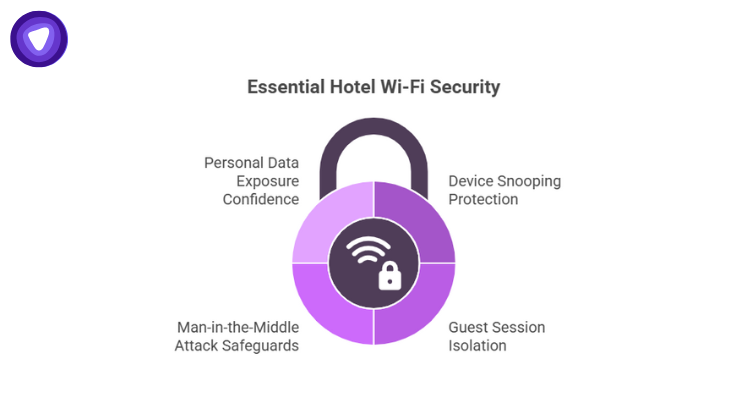
Speed alone no longer defines quality. Guest Wi-Fi security has become inseparable from guest comfort. Travelers increasingly understand the risks of public networks, especially business travelers handling sensitive data.
Key security expectations include:
- Protection from device snooping
- Isolation between guest sessions
- Safeguards against man-in-the-middle attacks
- Confidence that personal data is not exposed
A 2025 cybersecurity survey by ENISA reported that over 40 percent of travelers avoid using hotel Wi-Fi for sensitive tasks due to security concerns. When guests feel unsafe online, they disengage or rely on mobile data, which weakens the perceived value of hotel guest Wi-Fi.
A secure guest Wi-Fi network does not need to be visible to be effective. Its presence is felt through peace of mind.
Where Guest Wi-Fi Often Breaks Down?
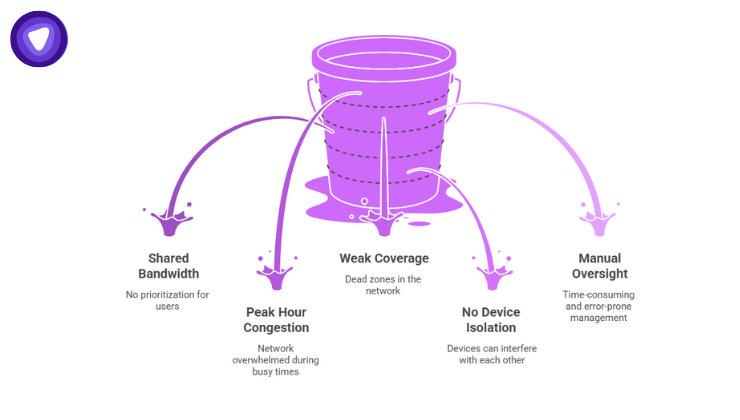
Most loyalty damage comes from predictable gaps in guest Wi-Fi management rather than infrastructure failure alone.
Common pain points include:
- Shared bandwidth with no prioritization
- Congestion during peak hours
- Weak access point coverage
- No device isolation
- Manual network oversight
These issues escalate as properties add smart TVs, digital check-ins, and IoT systems that share the same network. Without structured guest Wi-Fi management, performance degrades quietly until reviews reflect it.
The Link Between Wi-Fi and Online Reviews
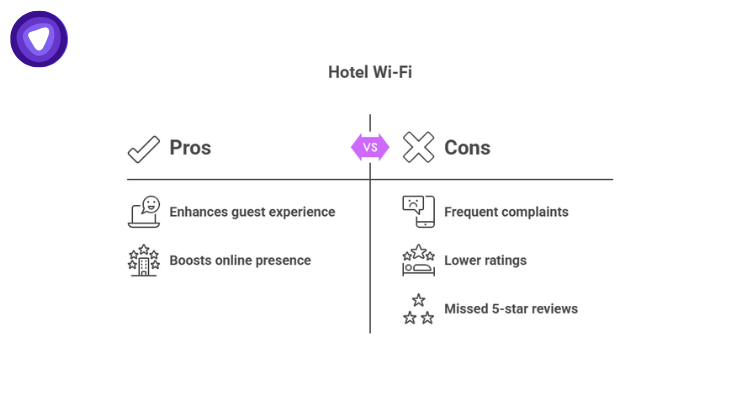
Connectivity issues disproportionately influence reviews because they affect guests repeatedly throughout a stay. A delayed login or slow speed may seem minor, but repeated interruptions amplify dissatisfaction.
Research shows:
- Wi-Fi complaints appear in nearly 1 out of 5 negative hotel reviews
- Reviews mentioning poor internet are 32 percent more likely to include lower overall ratings, even when other services are positive
Improving guest Wi-Fi experience reduces friction at multiple touchpoints, which directly improves review sentiment and long-term brand equity.
Hotel Guest Wi-Fi and Different Traveler Profiles
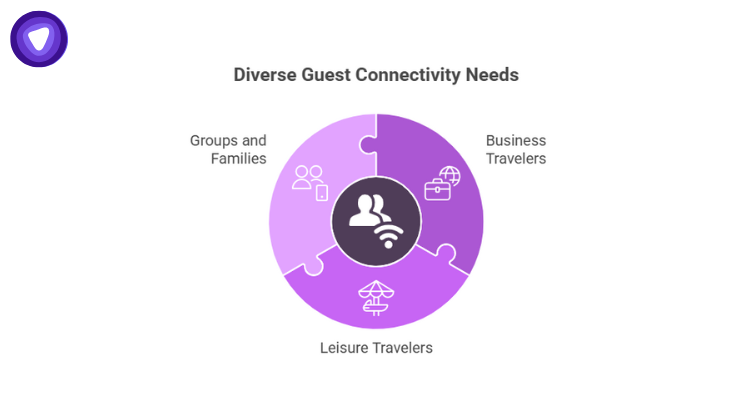
Not all guests use connectivity the same way, but every segment expects reliability.
Business travelers
- Video conferencing
- Cloud access
- Secure logins
- Multiple devices
Leisure travelers
- Streaming
- Social media
- Mobile apps
- Smart TVs
Groups and families
- Simultaneous device usage
- Gaming
- Shared bandwidth needs
A single network approach rarely satisfies all segments. Guest Wi-Fi management must account for usage diversity while maintaining security and performance.
What a Strong Guest Wi-Fi Strategy Looks Like
A modern approach balances performance, security, and operational simplicity. It focuses on consistency rather than peak speed claims.
| Wi-Fi Element | Impact on Guest Loyalty |
| Dedicated guest bandwidth | Prevents congestion during peak hours |
| Secure guest Wi-Fi network | Builds trust and reduces security anxiety |
| Device isolation | Protects personal data and privacy |
| Centralized guest Wi-Fi management | Reduces outages and response time |
| Scalable access control | Supports growth and seasonal demand |
Each element contributes incrementally to improving guest Wi-Fi experience without overwhelming hotel staff or budgets.
The Cost of Ignoring Connectivity
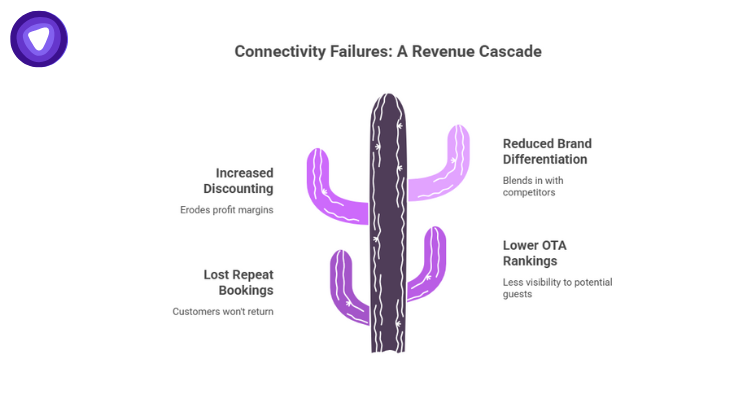
Connectivity failures do not just affect individual stays. They compound across revenue streams.
- Lost repeat bookings
- Lower OTA rankings
- Increased dependency on discounting
- Reduced brand differentiation
Why Security and Simplicity Must Coexist
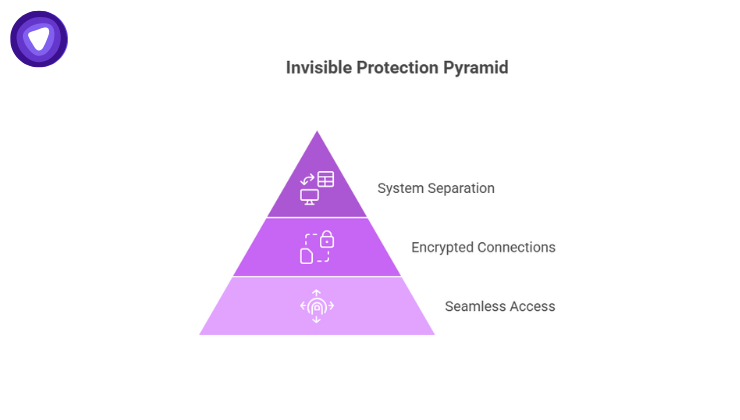
Hotels often face a false tradeoff between strong guest Wi-Fi security and ease of use. Complex logins or unreliable captive portals frustrate guests just as much as insecure networks.
The goal is invisible protection:
- Seamless access
- Encrypted connections
- Clear separation between guest and internal systems
When done correctly, security supports experience rather than competing with it.
How White-Label VPN Infrastructure Fits the Hospitality Model
As guest expectations rise, many hospitality brands are rethinking how connectivity is delivered. Traditional Wi-Fi alone struggles to meet modern security and performance needs, especially across multi-property portfolios.
This is where solutions like PureVPN White Label VPN become relevant. By enabling a secure guest Wi-Fi network through managed VPN infrastructure, hospitality providers can offer encrypted connectivity without exposing operational complexity to guests. It supports consistent performance, strong guest Wi-Fi security, and centralized guest Wi-Fi management across locations.
For brands aiming to improve guest Wi-Fi experience while maintaining operational control, white-label VPN models align naturally with hospitality workflows. They strengthen trust without disrupting service delivery.
Final Thoughts
Guests may not remember the router model or network name. They remember whether everything worked. Connectivity influences productivity, relaxation, and peace of mind throughout the stay.
A strong guest Wi-Fi experience reinforces loyalty quietly, visit after visit. It signals competence, care, and respect for the guest’s time and data. In hospitality, those signals matter as much as location or service quality, and they last long after checkout.