

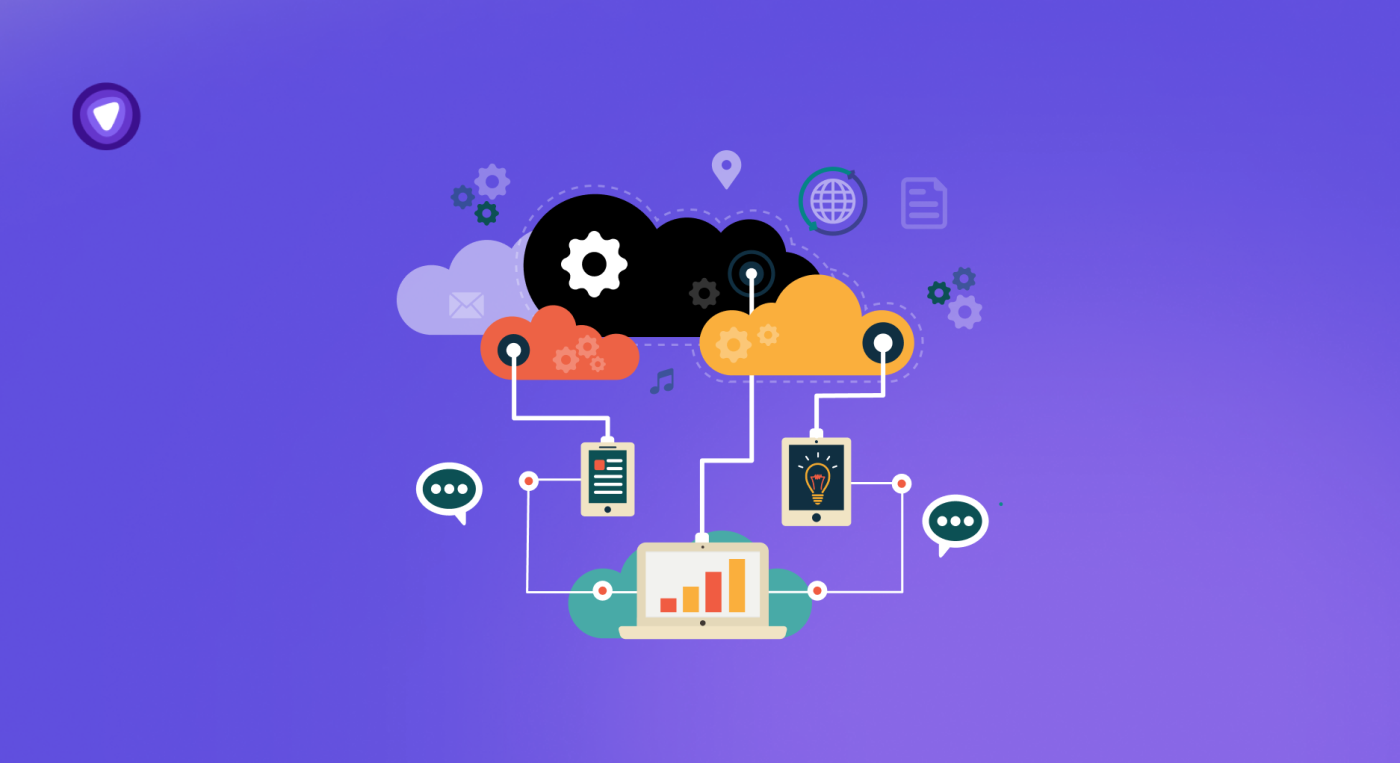
- Enterprise mobility enables secure access from any device or location: Supporting remote, field, and global teams.
- Routing SDKs make mobility manageable: Dynamically directing traffic based on location, device, and application.
- IT efficiency improves: Routing SDKs reduce operational load, maintain session stability, and enforce security policies.
- Performance and security are strengthened: Optimized paths, geo-specific routing, and enforced secure tunnels improve experience.
- PureVPN White Label offers practical routing solutions: Allowing teams to implement enterprise mobility with control, stability, and security.
The pressure on IT teams has never felt more immediate. Remote teams expect fast access to internal systems, field workers rely on secure connections from unpredictable locations, and global teams depend on stable pathways to business apps without friction.
This constant movement of people, devices, and data is what defines mobility in the enterprise, and it demands an infrastructure that adapts to connection changes in real time.
Routing SDKs bring order to this movement. They give IT a way to secure, steer, and optimize traffic across distributed teams without slowing productivity. Instead of relying on fixed VPN paths or complex manual controls, IT can create dynamic routing rules that respond to location, device type, or application requirement.
This is the shift many organizations need to keep mobility in the enterprise manageable and predictable.
Understanding Mobility in the Enterprise
Many teams still search for clarity around the mobility in the enterprise meaning. At its core, it describes a company’s ability to give employees secure access to systems, data, and tools from any device and any location. It is not only about remote work. It includes offsite teams, traveling staff, branch locations, contractors, and distributed infrastructure.
Here are straightforward mobility in the enterprise examples:
- Field agents updating records from client sites
- Engineers connecting to staging servers from different cities
- Support teams working across global time zones
- Executives traveling and accessing internal dashboards
- Remote developers pushing code from a home network
The common denominator is movement. Devices connect from WiFi, LTE, public hotspots, hotels, airports, and co working hubs. Each environment carries risks and unpredictability that IT must stabilize. This is where routing intelligence becomes essential rather than optional.
Why Mobility Now Demands Smarter Routing
The importance of mobility in the enterprise has intensified for three specific reasons:
- Endpoint diversity has multiplied.
A 2024 analysis found that organizations now manage an average of nine device types per employee. More devices create more pathways for risk and misrouting. - Work happens everywhere.
A survey reported in 2023 that 71 percent of employees globally use mobile devices as part of their daily workflow, regardless of their official work location. - Apps moved to the cloud, but access paths stayed outdated.
Many enterprises still route traffic through legacy VPN hubs, causing congestion and inconsistent experience for distributed workers.
Routing SDKs help IT shift from static routing to adaptive routing. Instead of sending traffic through a single choke point, rules can be created so that data takes the fastest and safest path based on real time context.
What Enterprise Mobility Requires From IT
Understanding what enterprise mobility does helps frame why routing matters. Enterprise mobility removes the need for employees to be tied to corporate networks. It turns business applications into location independent services and lets productivity continue without waiting on physical access.
But this model introduces new responsibilities:
- Protecting data across unpredictable networks
- Ensuring identity based sessions remain consistent
- Maintaining stable connections across geographies
- Enforcing routing rules that respect compliance regions
- Directing traffic to the nearest or most secure endpoint
Modern routing SDKs allow IT teams to embed intelligent routing logic directly into apps, devices, or custom platforms. Instead of configuring routing once at a network level, policies can adapt per user session.
The Role of Routing SDKs in Supporting Distributed Teams
Routing SDKs simplify the orchestration of mobility in the enterprise by giving IT granular control. They manage how traffic moves without forcing users to understand or configure anything manually.
Key Capabilities
- Dynamic path selection: Connections automatically take the best available route based on latency, proximity, and security rules.
- Location aware routing: Traffic is directed according to geolocation requirements. This directly connects to enterprise mobility locations, where organizations must handle region specific traffic rules.
- Session stability: When users move between networks, the session persists securely.
- Security enforced at the edge: Apps can be coded to ensure all traffic passes through approved gateways.
- Custom logic: IT teams can embed routing triggers based on app type, risk score, or device status.
Why Mobility in the Enterprise Breaks Without Routing Intelligence
The challenge is not movement. It is unpredictability. Teams may switch from office WiFi to mobile data, walk into high density areas, work from restricted networks, or travel across borders. Without routing intelligence, IT cannot maintain consistent policy enforcement.
Here are the most common failure points:
- Split tunneling creates inconsistent application behavior
- Public networks expose internal traffic
- Static routing paths slow remote workloads
- Incorrect geo routing affects compliance
- VPN congestion pulls down performance for the entire team
Routing SDKs solve these issues through embedded logic that responds instantly to change. They turn any device with the SDK into a predictable node that respects IT defined rules.
Enterprise Mobility Values and Mission Driven IT
Teams often describe enterprise mobility values as flexibility, security, and performance. These values guide the architecture and help IT decide how to handle routing, identity, and access.
A clear enterprise mobility mission statement usually reflects priorities such as:
- Empowering employees to work securely from anywhere
- Reducing friction between the device and the application
- Maintaining trust by protecting sensitive data across all environments
- Giving IT full visibility and control without burdening users
Routing SDKs help bring these values to life. They allow IT to support global teams without continuous manual intervention.
How Routing SDKs Improve the Entire IT Workflow
Routing SDKs give IT a structured way to manage constant movement across users, devices, and networks so daily operations stay predictable and secure.
1. Lower operational load
IT teams spend less time adjusting routes, managing VPN endpoints, or resolving connection instability. Routing intelligence handles routine adjustments.
2. Consistent user experience
Workers get stable connections regardless of where they are. This boosts adoption rates for mobile workflows.
3. Predictable application performance
Traffic is routed through locations and gateways that minimize latency. This is essential for engineering, support, finance, and mobile heavy roles.
4. Stronger security posture
Routing SDKs enforce traffic paths that meet organizational rules. No more random connections or risky direct access.
5. Faster onboarding for global teams
Policies are embedded once. Every device using the SDK follows the same routing logic.
How Routing SDKs Solve Core Enterprise Mobility Challenges
These challenges arise as teams work across shifting networks and locations, and Routing SDKs give IT a precise way to control how traffic moves in every scenario.
| Enterprise Challenge | Impact Without Routing SDK | Improvement With Routing SDK |
| Unstable connections | Frequent session drops | Automatic rerouting to best path |
| Geo specific access | Wrong region routing | Location based routing rules |
| Public network risk | Exposure of sensitive data | Enforced secure tunnels |
| Slow cloud access | Congested VPN endpoints | Optimized path selection |
| Multi device use | Inconsistent policy control | Unified policy enforcement |
Where PureVPN White Label VPN Solution Fits Naturally
PureVPN White Label VPN Solution offers routing capabilities designed specifically for teams handling large scale mobility in the enterprise.
Its Routing SDK helps organizations build controlled, secure pathways directly into their apps or devices. IT teams gain the ability to direct traffic through dedicated gateways, assign region specific routes, and maintain session integrity without manual configurations.
For businesses prioritizing dependable enterprise mobility, the white label platform allows full brand ownership while providing the routing intelligence required for distributed teams. It keeps mobility stable and secure while giving IT complete control over how data moves across global teams.
Closing Thoughts
As mobility in the enterprise grows, stability becomes the new strategic advantage. Routing SDKs give IT the structure needed to support teams that work across networks, regions, and devices. They simplify access without lowering security. They bring order to movement. And they give organizations the confidence to scale mobility as the business expands.