

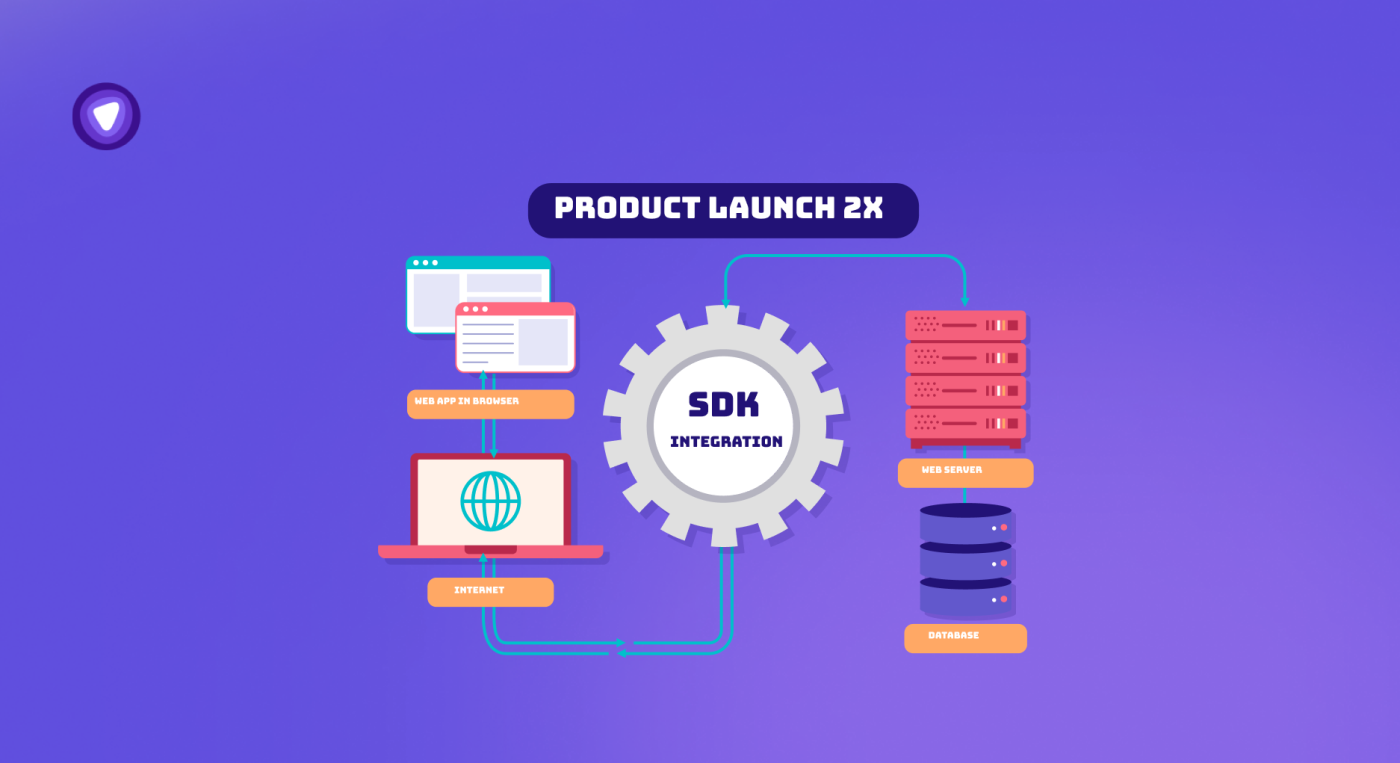
- SDK Integration Speed: SDK integration accelerates product launches by providing prebuilt functionality that reduces development time and operational friction.
- SDK vs API: SDKs offer ready-to-use components and platform-specific tooling, while APIs require more manual implementation and maintenance.
- Developer Efficiency: Developer efficiency improves with SDK integration, freeing up teams to focus on core product logic rather than infrastructure and repetitive tasks.
- SDK Interface: A well-designed SDK interface simplifies adoption, ensures consistent functionality, and minimizes integration errors across platforms.
- White-label SDKs: White-label SDKs, like PureVPN White Label, allow teams to add secure connectivity features without expanding developer headcount or managing underlying infrastructure.
Shipping a new product feature often feels less like building and more like waiting. Waiting for backend work. Waiting for security reviews. Waiting for yet another hiring cycle to close. Meanwhile, the market does not pause. Teams that release faster usually do not work harder. They build smarter. One of the most reliable ways they do that is through SDK integration.
This article explains how SDK integration shortens launch cycles, reduces developer load, and helps teams ship complete features without expanding headcount.
What Is SDK Stand For and Why It Matters in Product Development
SDK stands for Software Development Kit. An SDK is a packaged set of tools that allows developers to add a specific capability to a product without building it from scratch.
A typical SDK includes:
- Prebuilt libraries
- Ready-to-use functions
- Configuration files
- Documentation and usage examples
- A defined SDK interface for integration
Unlike raw components, SDKs are designed for implementation speed. The goal is not flexibility at all costs, but predictable behavior with minimal setup.
From a product perspective, SDK integration changes the work from engineering-heavy development to controlled assembly. That distinction is what directly impacts launch timelines.
Why Product Launches Slow Down as Teams Scale
Most delays during product launches are not caused by lack of ideas. They are caused by operational friction.
Common blockers include:
- Backend infrastructure that needs months of validation
- Security features that require deep expertise
- Mobile and web parity gaps
- Repeated QA cycles for foundational features
- Developer bandwidth stretched across maintenance and new work
Hiring more developers seems like the obvious fix. In practice, it introduces onboarding delays, architectural inconsistencies, and management overhead.
SDK integration addresses these blockers by shifting complexity away from your internal team and into a maintained, tested component.
How SDK Integration Directly Reduces Time to Market
SDK integration accelerates launches because it replaces multi-step development with implementation steps that are already defined.
Here is what changes in practice:
- Core functionality is already built and tested
- Edge cases are handled upstream
- Security controls come preconfigured
- Updates arrive as version upgrades rather than rewrites
A 2024 report noted that teams relying on mature SDKs ship features 30 to 40 percent faster than teams building equivalent functionality internally. This gain comes from reduced rework and fewer cross-team dependencies.
SDK integration also improves predictability. Launch dates become easier to commit to because fewer variables remain under internal control.
SDK Integration vs API Integration: The Real Difference in Delivery Speed
The debate around SDK integration vs API integration often focuses on flexibility. The more important difference is operational effort.
API Integration
- Requires manual request handling
- Needs custom error management
- Demands authentication logic per platform
- Often duplicates work across mobile and web
- Places maintenance responsibility on your team
SDK Integration
- Wraps API logic into usable components
- Standardizes error handling
- Simplifies authentication flows
- Provides platform-specific tooling
- Offloads maintenance to the SDK provider
APIs are powerful but incomplete. SDKs are opinionated and structured. For teams optimizing for launch speed rather than architectural purity, SDK integration consistently wins.
The Developer Efficiency Impact You Can Measure
Developer productivity gains from SDK integration are not theoretical.
According to a survey, developers spend over 40 percent of their time on non-feature work such as setup, debugging, and maintenance. SDK integration reduces that overhead by narrowing the surface area developers need to manage.
McKinsey research published in 2024 also found that organizations using standardized development kits reduced feature delivery cycles by up to 35 percent without increasing team size.
The implication is clear. Faster launches do not require more developers. They require fewer unknowns.
SDK Interface Design and Why It Matters for Adoption
The quality of an SDK interface determines whether integration takes days or weeks.
A well-designed SDK interface:
- Uses consistent method naming
- Abstracts platform-specific complexity
- Provides sensible defaults
- Supports gradual configuration
- Aligns with native development patterns
Poor SDKs fail not because of missing features, but because they increase cognitive load. Teams abandon them when integration becomes harder than building internally.
When evaluating SDK integration, interface clarity should be weighted as heavily as feature completeness.
Real-World SDK Examples Across Product Teams
SDK integration is not limited to payments or analytics. High-performing product teams use SDKs for:
- Authentication and identity
- Networking and connectivity
- Encryption and data protection
- Media handling
- Location and routing
- White-label infrastructure
In mobile development, SDK-based features consistently reach production faster because platform-specific logic is already addressed.
Many teams evaluate SDK examples directly through public repositories. Searching SDK integration GitHub projects often reveals how real developers implement and extend SDKs under production constraints.
SDK Integration Tutorial Mindset: What Teams Should Focus On
A common mistake is treating SDK integration as a copy-paste task. High-performing teams approach it as structured implementation.
A practical SDK integration tutorial mindset includes:
- Reading the lifecycle documentation first
- Mapping SDK responsibilities to product requirements
- Defining ownership for upgrades and versioning
- Testing failure scenarios early
- Planning rollback strategies
SDK integration reduces work, but it does not remove accountability. Teams that treat SDKs as black boxes often face issues during scale phases.
Where SDK Integration Saves the Most Engineering Cost
The cost advantage of SDK integration compounds over time.
Areas with the highest return:
- Security-sensitive features that require constant updates
- Cross-platform functionality that must stay consistent
- Infrastructure-heavy capabilities with low differentiation value
- Features that must meet regulatory expectations indirectly
When SDK Integration Is Not the Right Choice
SDK integration is not universal.
It may be a poor fit when:
- The feature defines your core differentiation
- You need full control over protocol-level behavior
- The SDK roadmap conflicts with your product direction
- Compliance requires custom implementation details
Knowing when not to use SDK integration is part of mature product strategy. The goal is acceleration without dependency risk.
Comparing Build vs SDK Integration Outcomes
This comparison explains why SDK integration is increasingly used for foundational product layers rather than surface-level features.
| Factor | Building In-House | SDK Integration |
| Time to launch | Long and variable | Short and predictable |
| Developer workload | High | Reduced |
| Maintenance effort | Continuous | Version-based |
| Security updates | Manual | Provider-managed |
| Cross-platform support | Rebuilt per platform | Included |
| Hiring pressure | High | Minimal |
How White-Label SDKs Change Go-to-Market Strategy
White-label SDKs extend SDK integration beyond development efficiency into business agility.
They allow companies to:
- Launch branded products faster
- Enter new markets without infrastructure rebuilds
- Maintain ownership of customer experience
- Avoid operational complexity behind the scenes
Where PureVPN White Label Fits into This Model
For teams building privacy, security, or connectivity features, SDK integration often becomes the deciding factor between launching this quarter or next year.
PureVPN’s White Label VPN Solution provides an SDK-based approach that removes the need to build VPN infrastructure, encryption handling, and network management internally. The SDK interface is designed for integration into existing products while keeping branding and user experience under your control.
Instead of dedicating developers to protocol maintenance and security updates, teams focus on product logic while the underlying VPN layer is managed through structured SDK integration.
This approach aligns with teams that want to ship secure connectivity features without increasing engineering headcount or operational risk.
Final Thoughts
SDK integration is not a shortcut. It is a shift in responsibility.
Teams that adopt SDK integration effectively treat it as a strategic decision rather than a development convenience. They use it to eliminate repeat work, reduce uncertainty, and stabilize launch timelines.
The strongest product teams do not measure success by how much they build. They measure it by how reliably they deliver. SDK integration enables that reliability while keeping teams lean, focused, and capable of shipping on schedule.