

Launching a VPN service under your own brand can unlock new revenue streams and strengthen your product offering. A white label VPN solution allows businesses to deliver a fully branded VPN without building and maintaining their own global network infrastructure.
Instead of developing a VPN from scratch, companies partner with a provider that supplies the backend technology, servers, security protocols, and applications. The business controls branding, pricing, and customer relationships while the provider manages the infrastructure.
However, selecting the wrong white label VPN provider can create long-term operational risks. Poor infrastructure, weak security practices, or limited customization options can negatively affect your product and brand reputation.
That is why evaluating a provider carefully is essential.
The original framework for choosing a white label VPN focuses on key buyer considerations such as branding capabilities, infrastructure strength, security standards, and pricing transparency. These factors help businesses determine whether a provider can support a successful VPN product.
But for companies planning to scale their VPN offering or serve enterprise customers, these basic questions are not enough.
Enterprise buyers must also evaluate operational maturity, developer integration capabilities, compliance readiness, and network governance.
Here is the brand evaluation framework to help you make the right decision:
1. Branding & Product Ownership
A white label VPN should operate entirely under your brand. Some providers advertise white labeling but only allow limited customization, which restricts differentiation in the market.
Your provider should allow full branding control across applications and services.
Questions to Ask
- Can the VPN apps be fully branded with your company’s identity?
- Will the App Store and Play Store listings belong to your company?
- Can the interface, onboarding process, and connection experience be customized?
- Can you control subscription tiers and pricing plans?
- Will the VPN service operate under your own domain and authentication system?
A true white label VPN solution should allow customers to experience the product as if it were built entirely by your organization.
2. Infrastructure & Global Network Coverage
The provider’s network infrastructure determines the reliability and performance of your VPN service.
Users expect fast connections, minimal latency, and consistent uptime across multiple regions.
Questions to Ask
- How many server locations are available globally?
- Does the provider maintain redundant infrastructure for traffic spikes?
- Are servers physically owned, leased, or virtualized?
- How does the network handle peak demand periods?
- What uptime guarantees are offered?
Strong infrastructure ensures your VPN service can scale while maintaining performance.
3. Security & Encryption Standards
Security is the foundation of any VPN service. Customers trust VPN providers to protect their data and online activity.
Your white label provider must demonstrate clear and transparent security practices.
Questions to Ask
- Which encryption protocols are supported (WireGuard, OpenVPN, IKEv2)?
- Does the provider maintain strict privacy policies regarding user data?
- Are security practices validated through independent audits?
- How does the provider protect against data leaks and unauthorized access?
Strong security architecture builds customer trust and strengthens the credibility of your VPN product.
4. Pricing Transparency & Business Model
Pricing structure can significantly affect the long-term profitability of a VPN service.
Some providers offer low entry pricing but add hidden fees for infrastructure usage, user growth, or technical support.
Questions to Ask
- Is the pricing structure transparent and predictable?
- Are there hidden costs related to infrastructure or scaling?
- Can the pricing model adapt as your user base grows?
- Does the provider allow flexible subscription plans?
Understanding the financial model helps ensure your VPN business remains sustainable.
Enterprise Evaluation Framework: 28 Questions to Ask a White Label VPN Provider
Organizations planning to scale their VPN offering or integrate VPN services into larger platforms must perform deeper technical and operational due diligence.
Below are 28 enterprise-level evaluation questions grouped across key operational areas.
Infrastructure & Network Reliability
- How many global server locations are available?
- What redundancy systems protect against traffic spikes or outages?
- Are servers owned, leased, or virtualized?
- Which network backbone providers support the infrastructure?
Security & Compliance
- Which encryption protocols are supported across the network?
- Does the provider follow zero-log or minimal-log policies?
- Are independent security audits conducted regularly?
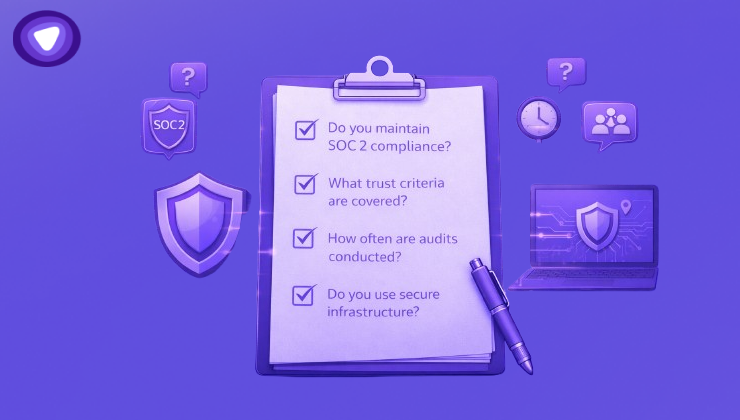
- Does the provider maintain SOC 2 or similar compliance certifications?
Enterprise Operations
- What Service Level Agreement (SLA) guarantees uptime?
- How are service incidents communicated to partners?
- What escalation process exists for security incidents?
- Is 24/7 enterprise support available?
Developer Integration & SDK Capabilities
- Are SDKs available for mobile and desktop platforms?
- Does the platform provide developer APIs for integration?
- Can VPN functionality be embedded directly into existing applications?
- How mature is the provider’s developer documentation?
Network Reputation & Governance
- How does the provider manage IP reputation and abuse monitoring?
- Are dedicated IP pools available for enterprise deployments?
- What systems detect and prevent network abuse?
- How frequently are IP ranges refreshed or rotated?
Logging Controls & Data Governance
- What logging levels can partners configure?
- Can enterprises customize data retention policies?
- Are audit logs available for monitoring and compliance?
- Can logging configurations adapt to different regulatory requirements?
Product Control & Business Model
- Can partners control subscription tiers and pricing?
- Are branding and user-interface customization options flexible?
- Are there hidden infrastructure costs as usage grows?
- How easily can the platform scale as the customer base expands?
Why Enterprise Evaluation Matters?
Many companies choose a white label VPN provider based only on branding capabilities and pricing.
However, as a VPN service grows, infrastructure reliability, operational maturity, and security governance become far more important.
Enterprise-level evaluation ensures the provider can support your business long after launch.
By applying a structured framework during the evaluation stage, businesses can identify providers capable of supporting long-term growth and operational stability.
Final Thoughts
Launching a VPN service under your own brand can open new opportunities in the cybersecurity and privacy market. But the provider you choose becomes the foundation of your entire product experience.
Infrastructure reliability, security architecture, operational maturity, and scalability will all depend on the platform powering your service behind the scenes. That is why applying a structured evaluation framework, like the one outlined in this guide, is essential before selecting a white label VPN provider.
By asking both the core buyer questions and the 28 enterprise evaluation questions, businesses can better assess whether a provider can support long-term growth, enterprise deployments, and evolving security requirements.
For organizations looking to launch a VPN product quickly while relying on proven infrastructure, PureVPN’s White Label program offers a comprehensive platform designed for scalability and security. Businesses can deploy fully branded VPN apps, leverage a global server network, integrate VPN functionality through SDKs and APIs, and manage users through centralized dashboards, all without building or maintaining the underlying infrastructure.