

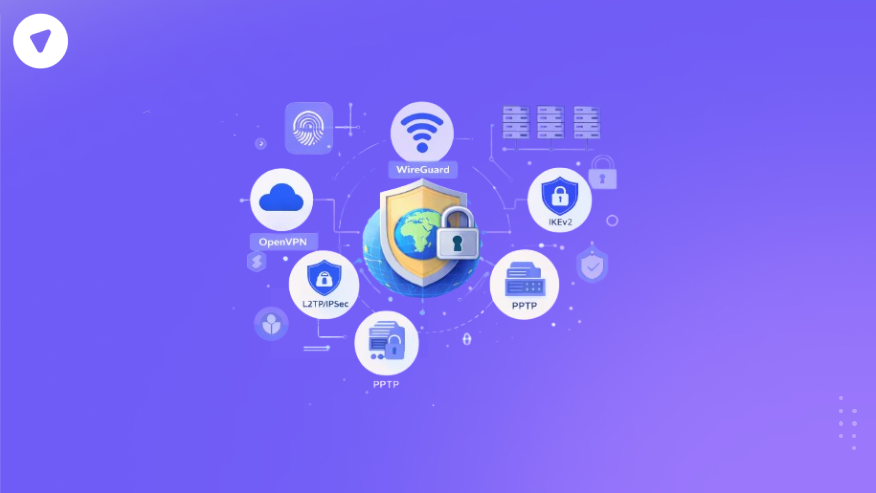
- VPN protocols determine speed, security, stability, and overall user experience in white label VPN platforms.
- OpenVPN offers broad compatibility and reliability, making it ideal for desktops and cross-platform support.
- WireGuard provides the fastest connections, low latency, and efficient performance for both desktop and mobile users.
- IKEv2 excels in mobile environments, reconnecting quickly when switching between networks, while IPsec suits enterprise and site-to-site deployments.
- Protocol selection impacts infrastructure load, encryption strength, and scalability, making it a critical business and technical decision for white label VPN operators.
The protocol you choose becomes the product you sell.
Branding attracts attention, pricing drives trials, and apps enhance usability. But in a white label VPN platform, the protocol stack defines speed, privacy, scalability, and long term trust. If the protocol layer is inefficient or outdated, performance drops and support costs rise. If it is engineered correctly, everything else becomes easier to scale.
Anyone building a white-label VPN business needs clarity on the protocols operating behind the scenes. This is not an engineering footnote. It is the structural core of the service.
What Is a VPN Protocol?
A VPN protocol is the technical framework that defines how data moves securely between a user’s device and a VPN server. It determines how encrypted tunnels are created, how keys are exchanged, how packets are authenticated, and how connections are maintained across different networks.
In simple terms, the protocol controls the rules of the connection. It affects speed, encryption strength, stability on mobile networks, and how well the VPN performs under heavy traffic.
Different protocols use different cryptographic methods and transport mechanisms, which is why performance and security levels vary between them.
Why VPN Protocols Matter in White Label Platforms?
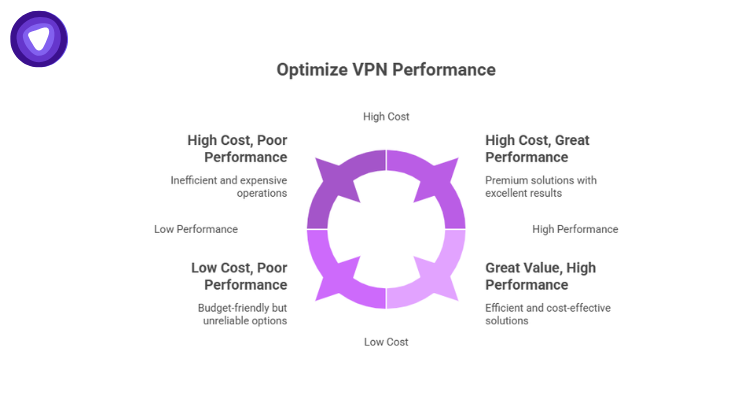
A VPN protocol determines how encrypted tunnels are created, how keys are exchanged, and how traffic behaves across unstable networks. These decisions affect connection stability, mobile performance, server density, and operational costs.
In a white label model, protocol selection influences:
- User experience across devices
- Infrastructure efficiency
- Security posture
- Customer retention
The global VPN market surpassed $44 billion in 2023 and is projected to cross $75 billion by 2027. As competition intensifies, technical performance becomes visible quickly. Users compare speed and reliability, not protocol names. The wrong backend choice translates into churn.
Protocol architecture is therefore a business decision, not just a technical one.
1.OpenVPN: Mature and Widely Adopted
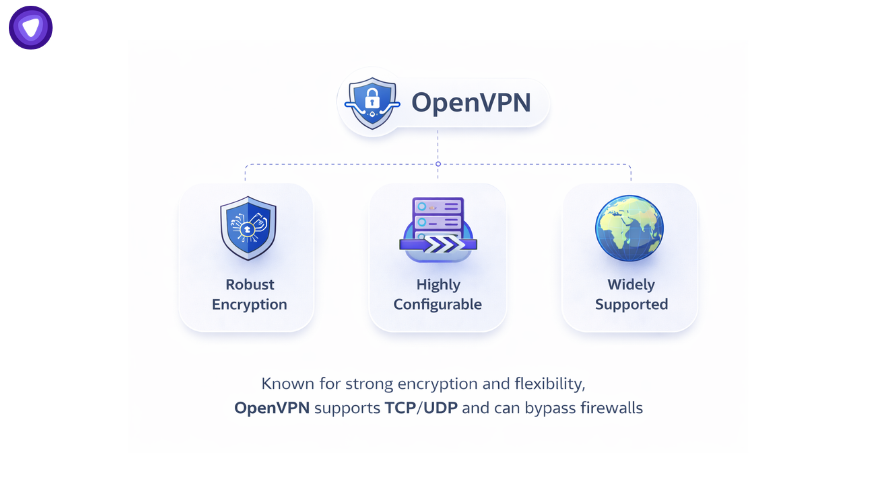
OpenVPN remains one of the most deployed VPN protocols in commercial environments. It has earned that position through longevity and flexibility.
OpenVPN is open source and relies on the OpenSSL library for encryption. It supports both UDP and TCP transport modes, allowing operators to balance speed and reliability depending on network conditions. It commonly uses AES 256-bit encryption combined with RSA or elliptic curve key exchange.
Its strengths include:
- Broad compatibility across Windows, macOS, Linux, routers, and enterprise devices
- High configurability for advanced deployments
- Long standing security review history
Because it can operate over port 443, OpenVPN can blend into regular HTTPS traffic in restrictive environments. This makes it valuable in regions with network filtering.
From a business perspective, OpenVPN delivers predictable stability. It does, however, require more processing power than newer lightweight protocols. That translates into higher server resource consumption at scale. For white label platforms targeting broad device coverage, OpenVPN remains a reliable foundation.
2.WireGuard: Performance as a Baseline
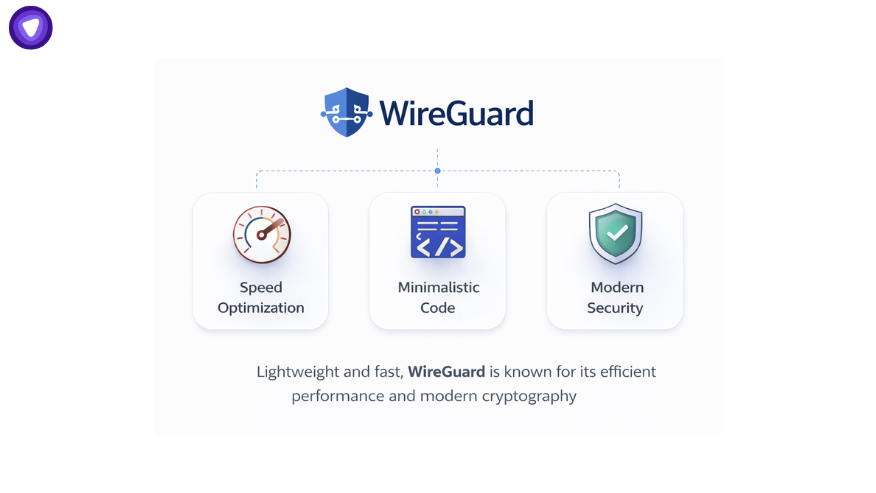
WireGuard redefined expectations around VPN speed and efficiency. Unlike older protocols with large codebases, WireGuard was designed with minimalism in mind.
It uses modern cryptographic primitives such as ChaCha20 for encryption and Poly1305 for authentication. The codebase is significantly smaller than OpenVPN, reducing complexity and easing security audits. WireGuard is also integrated into the Linux kernel, improving performance in server environments.
Its advantages include:
- Lower latency connections
- Faster handshake times
- Reduced CPU load on servers
- Better battery efficiency on mobile devices
WireGuard based WARP service achieves consistently lower latency compared to traditional IPsec based tunnels under various network conditions. That performance difference directly influences streaming quality and download speeds.
For white-label VPN businesses targeting consumer markets, WireGuard has moved from optional to essential. Customers now expect near native internet speeds even while connected to a VPN. Infrastructure built around lightweight protocols scales more efficiently as traffic volumes grow.
3.IKEv2: Built for Mobility
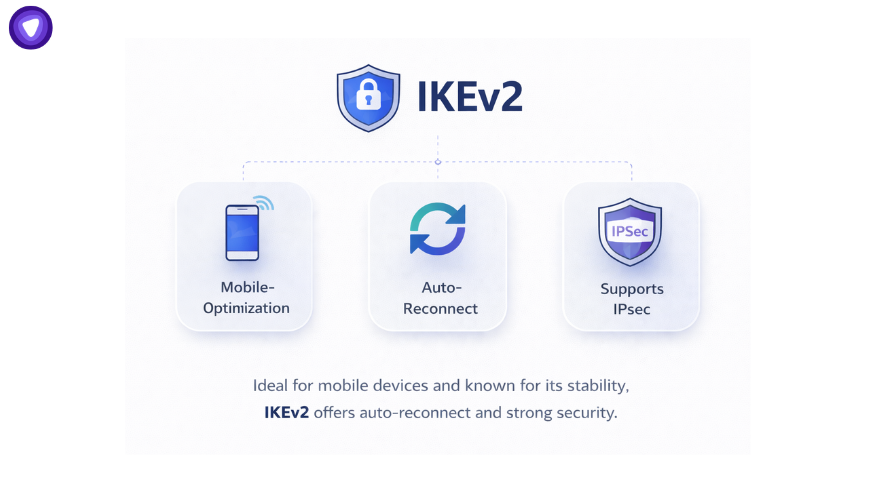
IKEv2, typically paired with IPsec, continues to play an important role, especially for mobile-first deployments. Its design allows rapid reconnection when users switch between WiFi and cellular networks.
IKEv2 supports MOBIKE, an extension that enables seamless network transitions without dropping the VPN session. This is particularly relevant in regions where mobile connectivity dominates.
It stands out for:
- Stable performance on smartphones and tablets
- Fast reconnection after signal interruptions
- Native support in iOS and macOS
Statista reported in 2024 that mobile devices account for more than 58 percent of global internet traffic. Protocols that handle network switching efficiently directly impact user satisfaction in app based VPN services.
For white label operators distributing branded mobile apps, IKEv2 often serves as a dependable fallback alongside WireGuard.
4. IPsec: Enterprise Grade Framework
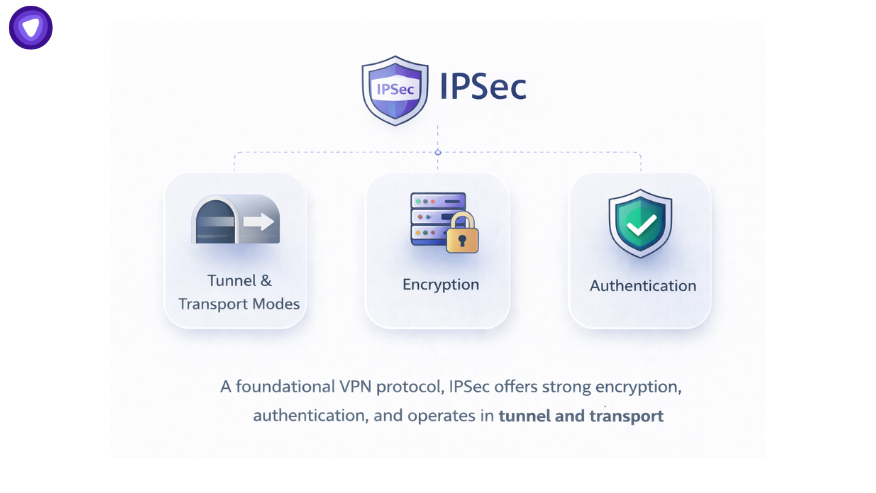
IPsec is not a single protocol but a suite of standards used to secure IP communications. It is widely adopted in corporate networks and site to site deployments.
It provides strong encryption and authentication mechanisms and is embedded into many operating systems and network appliances. However, configuration can be complex, and firewall traversal may require careful setup.
IPsec is best suited for:
- Business to business VPN services
- Managed enterprise deployments
- Site to site connectivity
For white label platforms expanding into enterprise segments, IPsec adds credibility and compatibility with existing corporate infrastructure. Its operational overhead is higher, but so is its relevance in regulated environments.
5. L2TP: Legacy Support
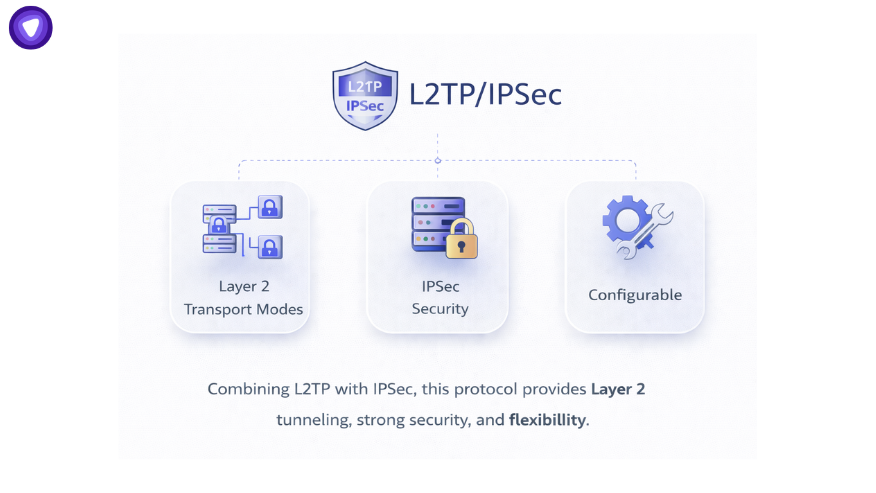
Layer 2 Tunneling Protocol, commonly combined with IPsec for encryption, was widely used in earlier VPN implementations. Today, it is largely phased out in modern consumer platforms.
L2TP introduces double encapsulation, which reduces performance and increases overhead. Many networks also block it more aggressively than newer protocols.
Its remaining value lies primarily in:
- Supporting older devices
- Providing compatibility for legacy systems
Most contemporary white label VPN platforms treat L2TP as transitional rather than strategic.
Protocol Comparison Overview
This table summarizes key VPN protocols by speed, security, mobile performance, infrastructure load, and their ideal use cases, helping businesses choose the right solution for their needs.
| Protocol | Speed | Security Level | Mobile Performance | Infrastructure Load | Ideal Use Case |
| OpenVPN | High | Very High | Moderate | Higher | Cross platform stability |
| WireGuard | Very High | Very High | Excellent | Low | Consumer performance focused services |
| IKEv2 | High | High | Excellent | Moderate | Mobile heavy deployments |
| IPsec | High | Very High | Good | Higher | Enterprise and site to site |
| L2TP | Moderate | Moderate | Moderate | Moderate | Legacy compatibility |
Encryption Standards Inside Modern Protocols
Protocols rely on strong encryption algorithms to secure user data. Common implementations include AES 256 GCM and ChaCha20 Poly1305. Key exchange often relies on RSA 2048 or elliptic curve cryptography.
The U.S. National Institute of Standards and Technology continues to recognize AES 256 as secure for classified level data in its current guidance. Modern platforms increasingly favor ChaCha20 for mobile devices due to better efficiency on hardware without AES acceleration.
Encryption decisions influence server density, processing load, and energy consumption. At scale, these technical factors affect operational margins.
Infrastructure and Scalability Implications
Protocol architecture shapes backend design. WireGuard requires efficient key management and precise IP allocation for each peer. OpenVPN requires certificate authority management and TLS configuration. IPsec deployments demand careful policy configuration and firewall alignment.
Gobal IP traffic continues to grow at double digit rates. As traffic increases, protocol efficiency determines how many concurrent sessions a single server can support.
For white label VPN businesses aiming for rapid expansion, lightweight protocols reduce hardware strain and lower infrastructure costs per user.
Security Implementation Matters
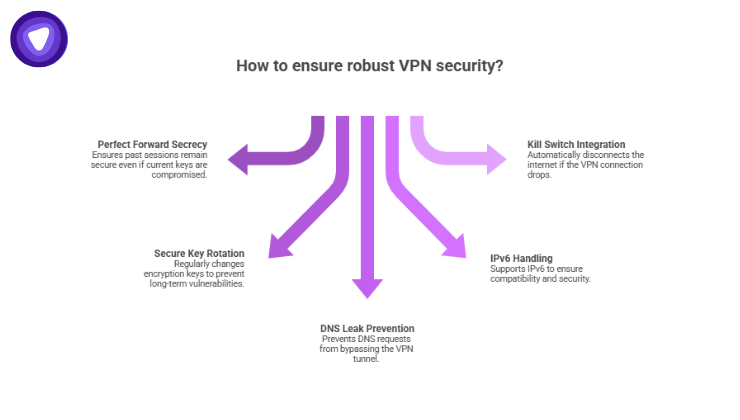
Selecting a protocol is only part of the equation. Proper implementation determines actual protection.
Critical components include:
- Perfect Forward Secrecy
- Secure key rotation
- DNS leak prevention
- IPv6 handling
- Reliable kill switch integration
Between 2023 and 2025, independent security audits have become more common across the VPN industry. Buyers increasingly expect transparency around infrastructure and cryptographic standards. White label operators benefit from platforms that have already validated their implementations rather than assembling them independently.
Launching a VPN Without Building the Protocol Stack
Building a protocol stack from scratch requires deep cryptographic expertise, server orchestration, and ongoing maintenance. For many businesses, that investment slows time to market and increases operational risk.
PureVPN White Label VPN Solution provides access to established protocols such as OpenVPN, WireGuard, and IKEv2 within a ready to deploy infrastructure. This enables businesses to focus on branding, distribution, and pricing while relying on a mature and scalable backend.
Instead of engineering encryption layers and optimizing server density internally, operators gain a tested protocol foundation designed to support both consumer and enterprise models.
Wrapping Up
White label VPN platforms are defined by the tunnels they create, not the logos they display.
OpenVPN offers reliability across devices. WireGuard delivers performance aligned with modern expectations. IKEv2 ensures stability for mobile users. IPsec supports enterprise connectivity.
Protocol depth shapes speed, security, and scalability. For any serious white label VPN business, understanding this layer is essential to building a service that retains users and scales sustainably.