

- Privacy routing is lightweight: Protects user traffic without slowing devices or disrupting workflows.
- Add-ons outperform full VPN clients: Faster to install, easier to manage, and use fewer system resources.
- Browser and mobile privacy add-ons: Chrome, Android, and iPhone add-ons drive adoption due to convenience and minimal friction.
- Selective traffic routing reduces overhead: Maintains privacy while avoiding complex configurations and support issues.
- Users prefer small, easy-to-use tools: Deliver meaningful protection without requiring behavior changes, making privacy add-ons practical in 2026.
Privacy expectations are no longer shaped by activists or security professionals. They are shaped by everyday frustration. Users are tired of apps that feel heavier after every update, browsers that slow down with each extension, and privacy tools that promise control but demand tradeoffs. In that environment, the privacy add on has shifted from a defensive tool to a usability feature. Privacy routing sits at the center of that shift.
Unlike full VPN clients or layered security stacks, privacy routing works quietly in the background. It protects traffic paths without forcing users to change how they browse, work, or connect. That simplicity is the reason it has become the lightest add-on to offer in 2026, both technically and commercially.
This blog explains why privacy routing matters now, how it differs from traditional privacy tools, and why browser and mobile-based privacy add ons are gaining faster adoption than heavier alternatives.
Privacy Has Become an Expectation, Not a Feature
User behavior has changed faster than most product roadmaps. Privacy is no longer evaluated at the point of breach. It is evaluated at the point of friction. When protection slows a workflow or complicates access, users abandon it.
Recent data reflects this shift clearly:
- According to a 2024 study, 72 percent of users stopped using a privacy tool because it made browsing slower or harder to manage.
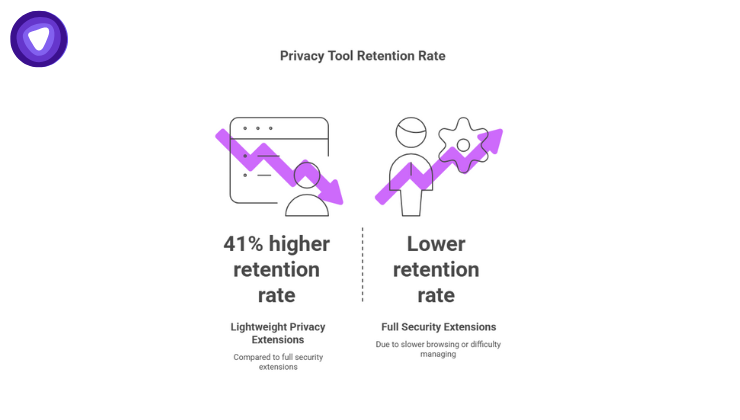
- Google’s Chrome Web Store transparency reports in 2026 show that lightweight privacy extensions have a 41 percent higher retention rate than full security extensions.
- Statista reported in 2024 that mobile-first privacy tools grew adoption by 38 percent year over year, outpacing desktop-only solutions.
The demand is not for more controls. The demand is for fewer interruptions. That is where the privacy add on fits naturally.
What Privacy Routing Actually Does
Privacy routing focuses on how traffic moves, not on how users behave. Instead of encrypting all activity at the device level, it selectively routes traffic through privacy-preserving paths.
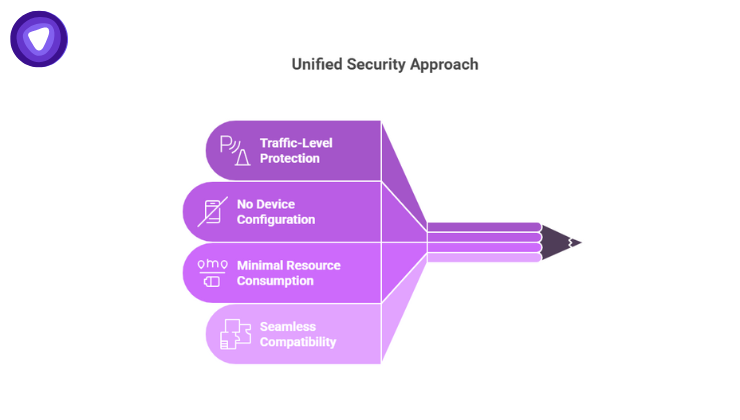
Core characteristics include:
- Traffic-level protection rather than full tunnel encryption
- No device-wide configuration changes
- Minimal resource consumption
- Seamless compatibility with existing browsers and apps
This makes a privacy add on feel invisible. Users do not need to toggle modes, select locations, or understand protocols. The routing logic handles exposure reduction without altering daily usage.
Why Add-Ons Are Replacing Full Privacy Clients
Traditional privacy tools were designed for control. Add-ons are designed for continuity.
A full VPN client requires installation, permissions, background processes, and ongoing management. A privacy routing add-on requires none of that. It installs in seconds and works only where it is needed.
This difference matters more in 2026 because:
- Work and personal browsing are increasingly blended
- Users switch devices frequently
- Mobile usage now dominates total web traffic
A Privacy add on android or Privacy add on iphone avoids those issues by operating at the app or browser layer instead of the system layer.
Browser-Based Privacy Add-Ons Lead Adoption
Browser environments are where privacy expectations are the highest and tolerance for friction is the lowest. That is why browser-based solutions dominate early adoption.
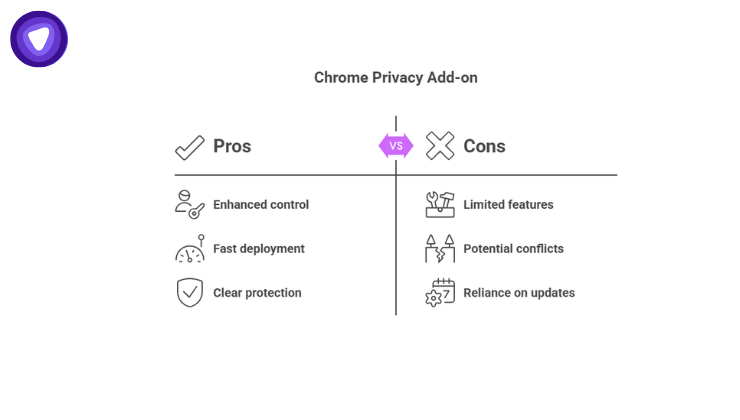
A privacy add on chrome benefits from:
- Native browser permission models
- Fast deployment without system access
- Clear scope of protection
Users understand what browser extensions do. They do not feel invasive when implemented responsibly.
In 2024, Google disclosed that privacy-focused Chrome extensions surpassed 1.2 billion combined installs, with routing-based tools ranking among the fastest-growing categories. These tools succeed because they solve a specific problem without promising total anonymity or absolute security.
Mobile Privacy Routing Solves a Different Problem
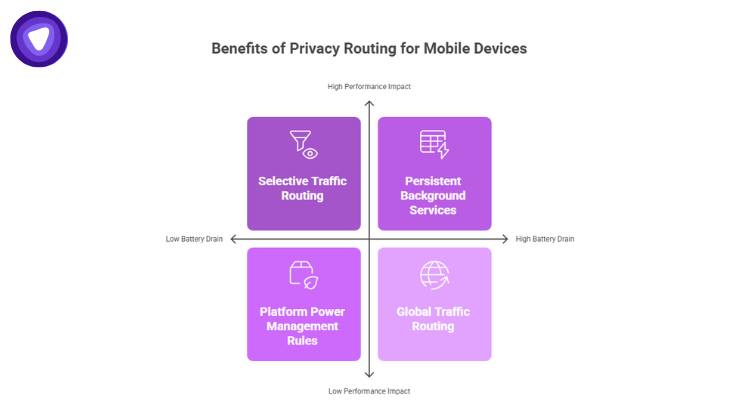
Mobile privacy challenges are not identical to desktop ones. Battery drain, background restrictions, and app-level traffic isolation all limit traditional privacy tools.
Privacy routing fits mobile constraints better because:
- It avoids persistent background services
- It routes traffic selectively instead of globally
- It respects platform power management rules
A Privacy add on android can operate within browser containers or selected apps. A Privacy add on iphone aligns well with Apple’s stricter networking policies, which increasingly restrict system-wide VPN behavior.
Why Privacy Routing Is the Lightest Add-On to Maintain
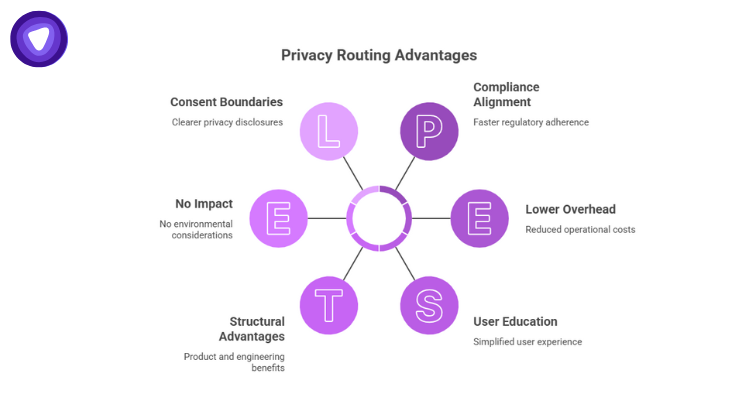
From a product and engineering perspective, privacy routing offers structural advantages.
Lower operational overhead
- No device-level networking conflicts
- Fewer support tickets related to connectivity
- Reduced update dependencies
Faster compliance alignment
- Narrower data handling scope
- Clearer consent boundaries
- Easier privacy disclosures
Easier user education
- No technical onboarding
- Minimal explanation required
- Predictable behavior
This makes the privacy add on easier to deploy at scale, especially for platforms serving mixed technical audiences.
Comparison: Privacy Routing vs Traditional Privacy Tools
This comparison highlights why privacy routing qualifies as the lightest add-on option in 2026. It delivers value without demanding behavior change.
| Feature | Privacy Routing Add-On | Full VPN Client |
| Installation time | Seconds | Minutes |
| Device permissions | Minimal | Extensive |
| Performance impact | Low | Moderate to high |
| User configuration | None or minimal | Required |
| Mobile compatibility | High | Limited by OS |
| Support complexity | Low | High |
Download Behavior Reflects Trust
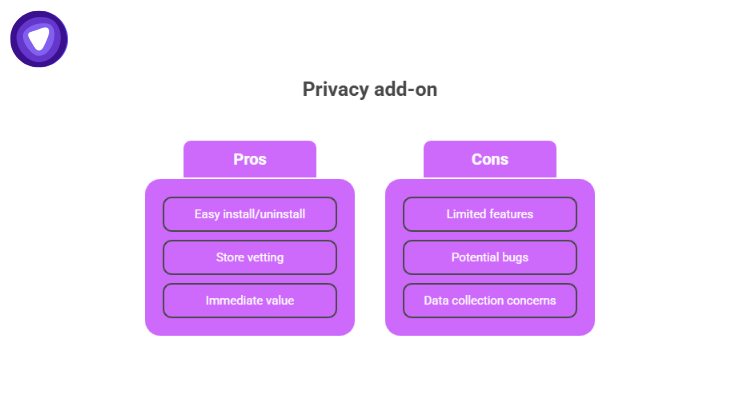
The way users download privacy tools has changed. Large installers and bundled software trigger hesitation. Lightweight add-ons feel safer and easier to reverse.
A Privacy add on download benefits from:
- Clear install and uninstall paths
- Store-level vetting signals
- Immediate value without commitment
Users equate size with risk. Privacy routing aligns with that perception.
Why Privacy Routing Fits Product Strategy in 2026
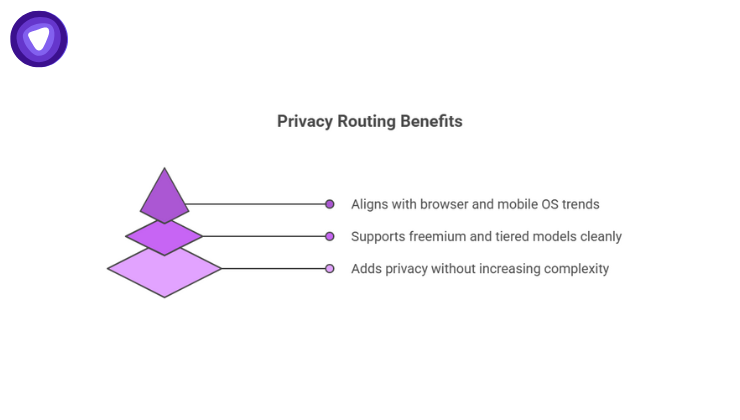
For platforms and service providers, privacy routing solves multiple challenges at once.
- It adds privacy value without expanding infrastructure complexity
- It supports freemium and tiered models cleanly
- It aligns with browser and mobile OS trends
Most importantly, it respects user intent. Users want protection, not transformation.
The privacy add on succeeds because it does not attempt to replace existing behavior. It simply removes unnecessary exposure.
Practical Application With PureVPN
As privacy routing adoption grows, implementation quality matters. Routing logic must be reliable, transparent, and stable across environments.
PureVPN White Label VPN Solution integrates privacy routing principles into its add-on experiences by focusing on selective traffic protection rather than blanket tunneling. This approach supports browser-based workflows and mobile usage without introducing performance drag.
For teams and individuals who want privacy controls without operational burden, this model reflects where user expectations are heading rather than where privacy tools started.
A Clear Direction Forward
Privacy routing is not a trend. It is a correction. Users no longer reward tools that demand attention, configuration, or compromise. They reward tools that stay out of the way.
In 2026, the lightest add-on is the one that protects without interrupting. The privacy add on meets that standard by design. It fits modern browsing, respects mobile constraints, and aligns with how people actually use the internet now.
That balance is why privacy routing has become the simplest privacy offer that still delivers meaningful value.