

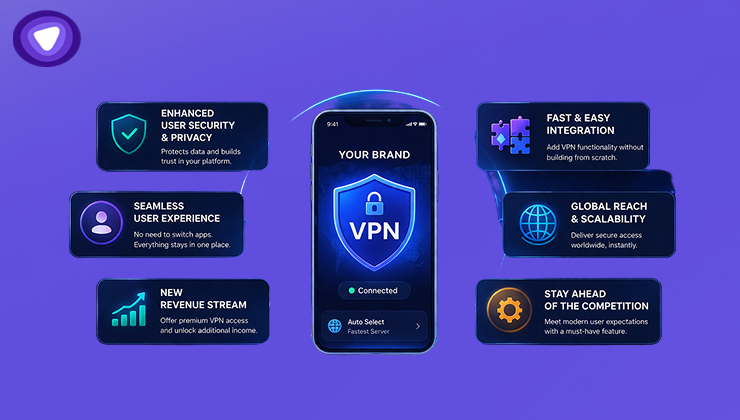
Remote users, public Wi-Fi, and distributed teams create constant exposure to data leaks and cyber threats. Many businesses struggle to secure traffic without dedicating massive resources to infrastructure, encryption, and monitoring.
This challenge is driving white label VPN adoption. Instead of building and maintaining a VPN network, companies can integrate a ready-made solution and launch fully branded VPN services within their own products.
As cyber risks grow and privacy expectations rise, white label VPN adoption is becoming a standard feature across SaaS platforms, telecom providers, cybersecurity tools, and consumer applications.
The Growing Demand for Built-In Privacy Tools
Digital privacy expectations have changed significantly over the last decade. Users now expect secure connectivity across devices and networks.
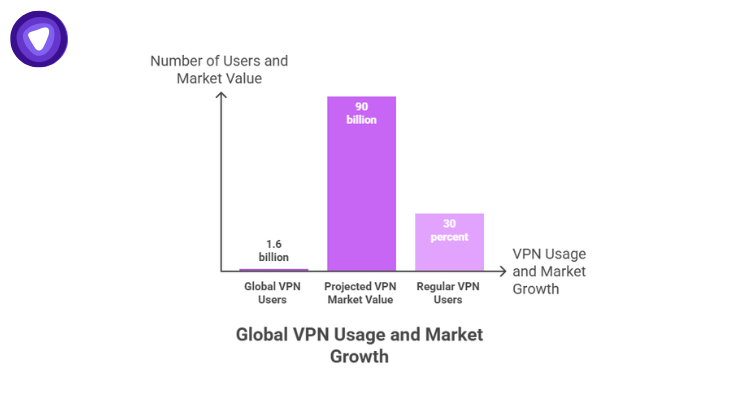
Industry research reflects this demand:
- More than 1.6 billion people globally use VPN services.
- The global VPN market is projected to exceed $90 billion by 2027 due to rising cyber threats and remote work adoption.
- Roughly 30 percent of internet users regularly use a VPN.
These trends push companies to integrate privacy features directly into their services. As a result, white label VPN adoption is accelerating across multiple industries.
What is a White Label VPN Solution?
A white label VPN is a ready-made VPN service that businesses can rebrand and offer under their own name. The provider manages the global server infrastructure, encryption protocols, and network maintenance, while the company controls the branding, user interface, and customer relationships.
This model allows organizations to launch a fully functional VPN product without building or operating the underlying VPN network themselves.
Because it removes infrastructure complexity, white label VPN adoption has increased among SaaS platforms, telecom providers, cybersecurity vendors, and consumer apps that want to add secure connectivity as a built-in feature.
What a White Label VPN Platform Actually Provides
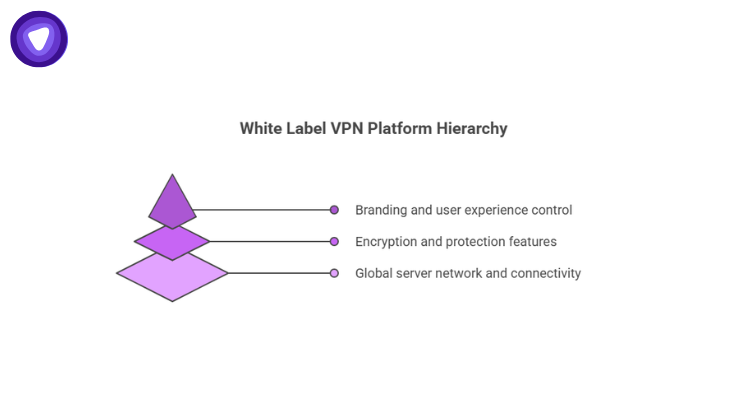
A white label VPN platform delivers the technical infrastructure required to operate a VPN service while allowing companies to control branding and user experience.
Key components typically include:
Infrastructure Layer
- Global VPN server network
- Load balancing and traffic routing
- Multi region connectivity
- High bandwidth capacity
Security Architecture
- AES-256 encryption
- Secure tunneling protocols
- DNS leak protection
- Kill switch functionality
Platform Integration
- Branded VPN applications
- API or SDK integration
- User authentication systems
- Subscription management
These components allow companies to launch a fully branded VPN service without maintaining the underlying network infrastructure. This convenience explains the rapid white label VPN adoption across digital platforms.
Industries Driving White Label VPN Adoption
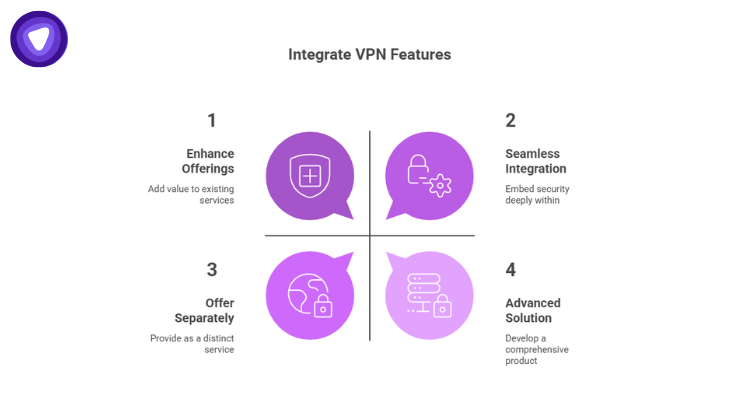
Several industries now treat VPN functionality as a built in feature rather than a standalone product.
SaaS Platforms
SaaS providers integrate VPN connectivity to secure remote user access and protect application traffic.
Telecom Providers
Mobile carriers bundle branded VPN services with data plans to increase service value and customer retention.
Cybersecurity Platforms
Security vendors add VPN connectivity to complement endpoint protection or network security tools.
Consumer Applications
Browsers, messaging apps, and privacy tools embed VPN connectivity to protect user data on public networks.
These industry shifts continue to increase white label VPN adoption as organizations look for new ways to integrate security features into their platforms.
Business Advantages of White Label VPN Adoption
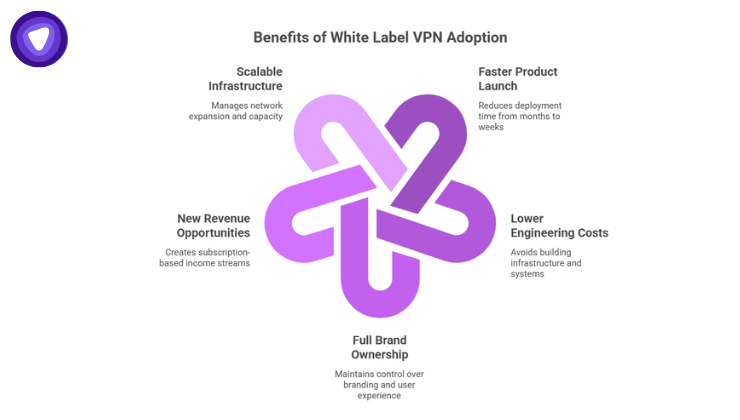
Organizations adopting white label VPN platforms gain several operational advantages.
Faster Product Launch
Developing a global VPN infrastructure can take 12 to 24 months. White label platforms reduce deployment time to weeks.
Lower Engineering Costs
Companies avoid building server infrastructure, encryption frameworks, and monitoring systems.
Full Brand Ownership
Businesses maintain complete control over branding, product design, and user experience.
New Revenue Opportunities
A branded VPN service creates subscription based revenue streams or bundled service packages.
Scalable Infrastructure
The platform provider manages network expansion and server capacity as demand increases.
These benefits make white label VPN adoption an attractive model for digital platforms seeking to expand security features.
Build vs White Label VPN: Infrastructure Comparison
For most companies, white label VPN infrastructure offers a practical path to market without the technical complexity of building a global network.
| Factor | Build VPN Infrastructure | White Label VPN Platform |
| Server Network | Must build global infrastructure | Provided by the platform |
| Security Protocols | Must develop and maintain | Pre integrated protocols |
| Time to Launch | 12 to 24 months | Weeks |
| Maintenance | Internal engineering team required | Managed by provider |
| Cost Structure | $10,000+ upfront minimum | $500–$2,000 per month |
| Branding | Full control | Full control |
Technical Capabilities Modern White Label VPN Platforms Support
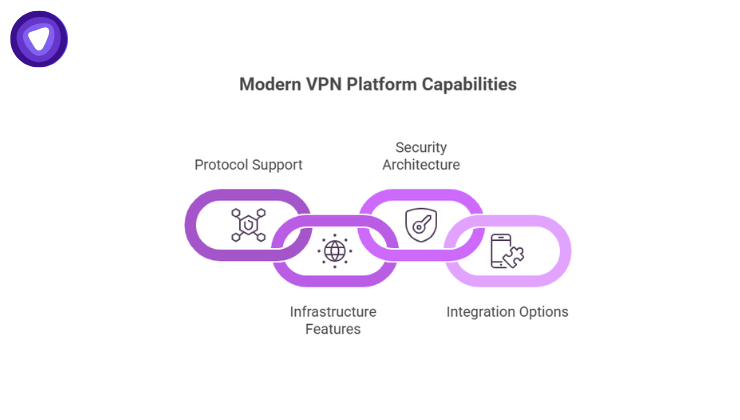
Modern VPN platforms support advanced features beyond simple encrypted connections.
Typical capabilities include:
Protocol support
- WireGuard
- OpenVPN
- IKEv2
Infrastructure features
- Global server clusters
- Dedicated IP addresses
- Traffic optimization systems
Security architecture
- Military grade encryption
- DNS leak protection
- Multi device compatibility
Integration options
- Mobile SDKs
- API integration
- Administrative dashboards
These technical capabilities allow businesses to deploy enterprise grade VPN services quickly through white label solutions.
Why White Label VPN Is Becoming a Standard Feature
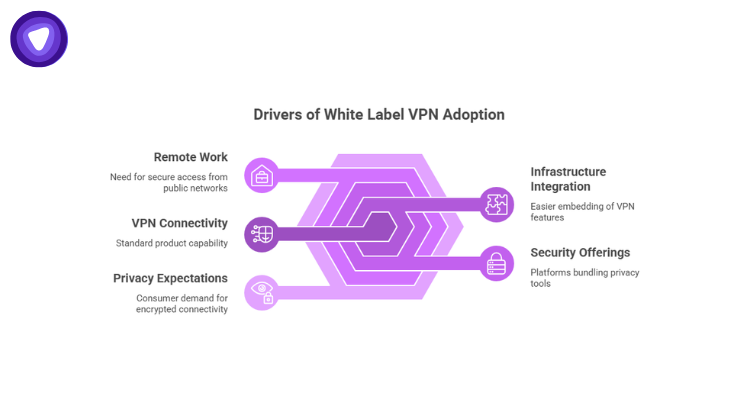
Several structural trends are driving the rapid growth of white label VPN adoption.
Privacy Expectations Are Rising
Consumers expect encrypted connectivity as a default feature in many digital services.
Remote Work Requires Secure Access
Employees frequently access platforms from public networks, increasing demand for secure connections.
Platforms Are Expanding Security Offerings
Software platforms increasingly bundle privacy tools into their core services.
Infrastructure Integration Is Easier
Modern APIs and SDKs allow VPN capabilities to be embedded directly into mobile and web applications.
Together these factors are turning VPN connectivity into a standard product capability across many digital ecosystems.
How Businesses Implement White Label VPN Services
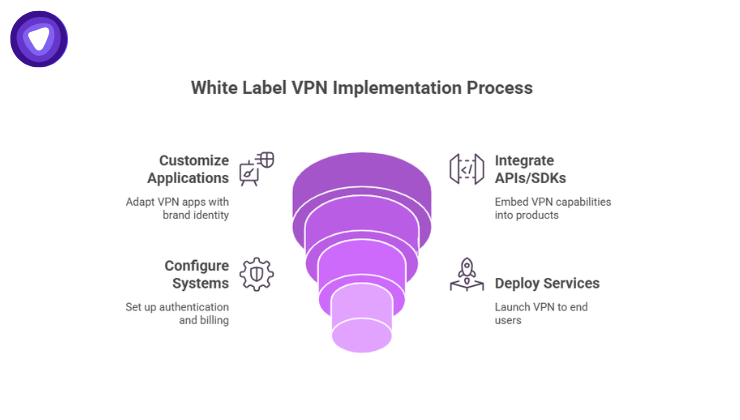
Launching a white label VPN service generally follows a structured implementation process.
- Select a white label VPN provider with global infrastructure
- Customize VPN applications with brand identity
- Integrate APIs or SDKs into existing products
- Configure user authentication and billing systems
- Deploy VPN services to end users
Because the infrastructure layer is already established, this process significantly reduces development complexity.
PureVPN White Label as a Practical Deployment Option
Businesses looking to launch a branded VPN service often rely on providers that already operate a large global server network. This approach removes the operational complexity of building and maintaining VPN infrastructure.
PureVPN White Label provides the underlying VPN network, encryption protocols, and server infrastructure required to operate a commercial VPN service. Companies can launch fully branded VPN applications while the backend infrastructure remains managed.
This model allows businesses to participate in the growing VPN market without developing the entire technology stack internally.
Final Thoughts
VPN technology is no longer limited to standalone privacy tools. It has evolved into a core capability integrated across digital platforms.
Rising privacy expectations, remote work environments, and growing cybersecurity risks are driving rapid white label VPN adoption. Companies across SaaS, telecom, cybersecurity, and consumer applications are embedding VPN services directly into their products.
By eliminating infrastructure complexity and reducing development timelines, white label platforms allow organizations to launch secure connectivity services quickly. As digital privacy becomes a standard requirement, white label VPN adoption will continue expanding across the modern internet system.