


Security is moving from the settings page to the product core. Users no longer install separate privacy tools after onboarding. They expect protection to be built into the platform itself. This shift is changing how connectivity is designed, delivered, and managed across digital products.
An embedded white label VPN allows businesses to integrate encrypted network access directly within their application or device under their own brand. Instead of redirecting users to a third party service or building complex infrastructure internally, companies deploy managed VPN architecture as a native feature inside their existing ecosystem.
This approach transforms VPN from a standalone utility into an integrated product capability.
Key Takeaways
- Embedded VPN: Embedded white label VPN integrates encrypted connectivity directly into a product, keeping users within the ecosystem.
- Brand & Control: It provides full branding control, subscription management, and API-driven user provisioning without internal infrastructure overhead.
- Integration Time: Integration is faster and more predictable than building a VPN from scratch, typically taking 4 to 12 weeks.
- Provider Management: Infrastructure, server maintenance, and protocol updates are managed by the VPN provider, reducing engineering burden.
- Seamless Security: Properly integrated, embedded VPN becomes a seamless, invisible security layer that scales with the product.
Why Built In Encryption Is Becoming a Product Requirement
The attack surface has expanded faster than most product teams anticipated. Remote work, mobile usage, and public network access are now standard operating conditions.
- According to IBM’s 2024 Cost of a Data Breach Report, the global average cost of a data breach reached $4.45 million in 2023.
- Another report states that 93 percent of organizations experienced at least one data breach in the past year.
- At the same time, a report confirms that more than 5.6 billion people use the mobile internet globally.
This scale of connectivity means unsecured sessions directly translate into financial and reputational exposure. When platforms control user traffic, encryption cannot remain optional.
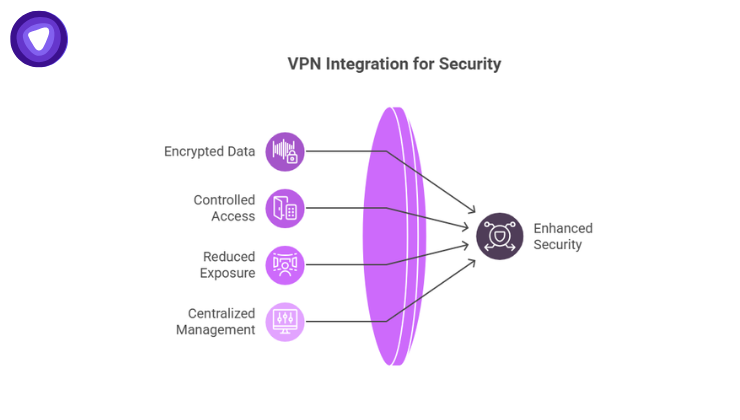
Embedding VPN at the product level ensures:
- Encrypted data transmission by default
- Controlled access to backend systems
- Reduced exposure on public networks
- Centralized session management
Security becomes a built in standard rather than a user activated feature.
What an Embedded White Label VPN Actually Includes
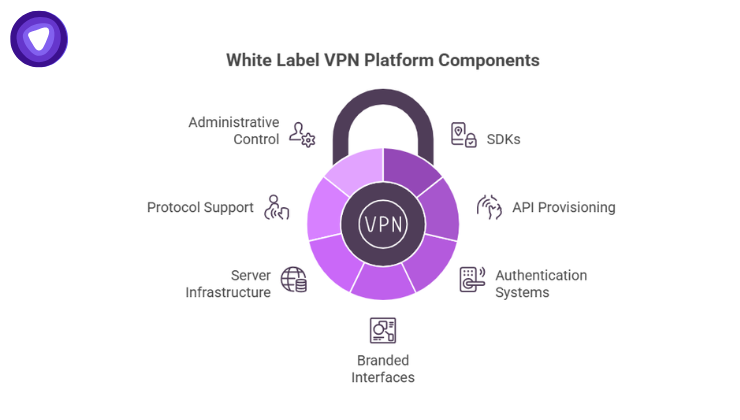
An embedded white label VPN is a managed VPN infrastructure delivered under a company’s branding and integrated directly into its software, hardware, or service architecture.
It typically includes:
- Mobile and desktop SDKs
- API based user provisioning
- Authentication and token management systems
- Branded user interfaces
- Global VPN server infrastructure
- Support for modern protocols such as OpenVPN and WireGuard
- Administrative control panel for user and policy management
The authentication layer operates separately from tunnel infrastructure, ensuring identity validation before connection is established. Sessions can be revoked centrally, and API activity remains traceable.
From the user perspective, the VPN feels native. From the business perspective, infrastructure complexity is externalized.
Build From Scratch, Referral, or Embedded
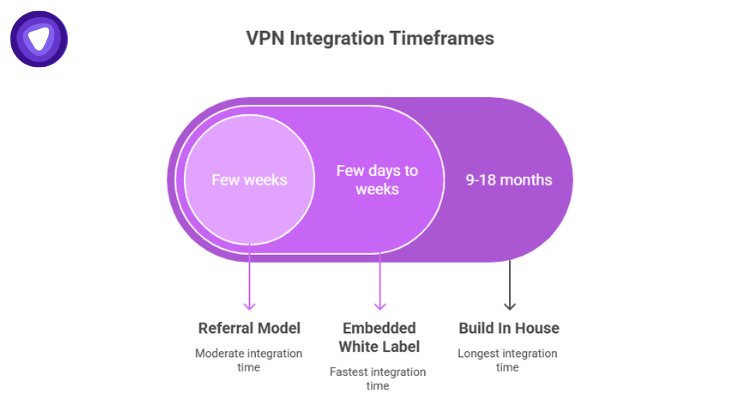
Organizations evaluating VPN integration generally consider three paths.
| Criteria | Build In House | Referral Model | Embedded White Label VPN |
| Infrastructure Ownership | Fully built and maintained internally | Third party controlled | Managed infrastructure, private labeled |
| Estimated Time to Market | Min. 9 to 18 months for production grade deployment | 2 to 6 weeks | Few days to weeks depending on integration scope |
| Upfront Investment | Typically six to seven figures depending on global coverage | Minimal | Setup and licensing based |
| Ongoing Operational Cost | Dedicated DevOps, monitoring, security audits | None | Infrastructure managed by provider |
| Branding Control | Full | Limited | Full |
| Revenue Model | Full subscription ownership | Commission based | Subscription ownership |
| Engineering Commitment | Dedicated networking and backend teams | Minimal | Integration and API configuration |
Build In House
Building a VPN internally often requires atleast 9 to 18 months to reach a stable, production ready state. This includes protocol implementation, infrastructure provisioning across regions, security testing, logging systems, traffic routing optimization, and monitoring frameworks.
Investment frequently reaches six or seven figures depending on server footprint, redundancy requirements, and compliance obligations.
Ongoing costs include DevOps resources, performance optimization, patch management, and continuous security validation. This route provides maximum control but carries the highest operational burden.
Referral Model
Referral partnerships can typically be launched within a few weeks because infrastructure and product delivery are external. Revenue is generated through commission structures rather than direct subscription ownership.
However, the VPN remains outside the product ecosystem. Branding continuity is limited, customization options are constrained, and API level automation is often unavailable. The integration remains commercial rather than architectural.
Embedded White Label VPN
An embedded white label VPN generally supports deployment within a few days to weeks depending on SDK integration depth and user interface customization. Infrastructure, server maintenance, and protocol updates are handled by the provider, while branding and subscription control remain with the integrating company.
Engineering effort focuses on integration and provisioning rather than building network infrastructure. API driven user management and centralized authentication systems are typically included, allowing security to operate as a native product layer without internal infrastructure expansion.
Technical Architecture Behind Embedded Integration
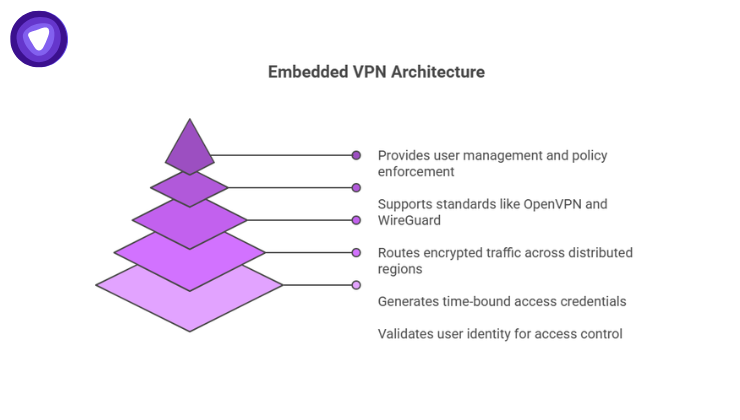
A mature embedded white label VPN operates as a layered system, where each component supports security, scalability, and operational control.
Core architectural layers include:
- Authentication API: Validates user identity before tunnel creation. Ensures centralized access control and prevents unauthorized session initiation.
- Token Issuance System: Generates time bound access credentials. Enables controlled session duration, expiration policies, and secure revocation.
- Global Server Network: Routes encrypted traffic across distributed regions. Supports performance stability, redundancy, and geographic coverage.
- Protocol Layer: Supports standards such as OpenVPN and WireGuard. Balances encryption strength, compatibility, and connection speed.
- Admin Dashboard: Provides user management, policy enforcement, and session monitoring. Allows operational oversight without direct infrastructure handling.
This structure ensures identity is verified before connections are established, and sessions can be revoked instantly. Encryption remains consistent across all deployments, while the infrastructure scales without disrupting the user experience.
Properly integrated, the VPN becomes an invisible, built-in feature rather than a standalone utility, providing seamless and secure connectivity within the platform.
Business Impact of Embedding VPN
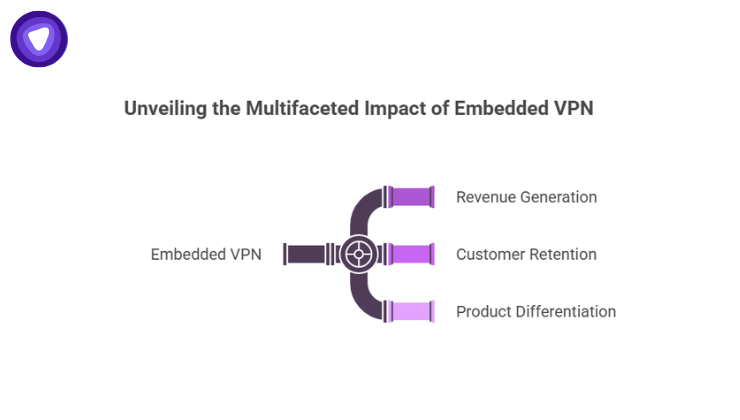
Embedding VPN capability affects both revenue and retention. For product owners, embedded VPN enables:
- Premium feature tiering
- Device bundled security subscriptions
- Secure enterprise access packages
- Region based routing services
It also increases retention. When users rely on integrated encryption for daily usage, platform dependency strengthens. Switching platforms requires replacing security functionality, not just core features.
Industries Actively Embedding VPN
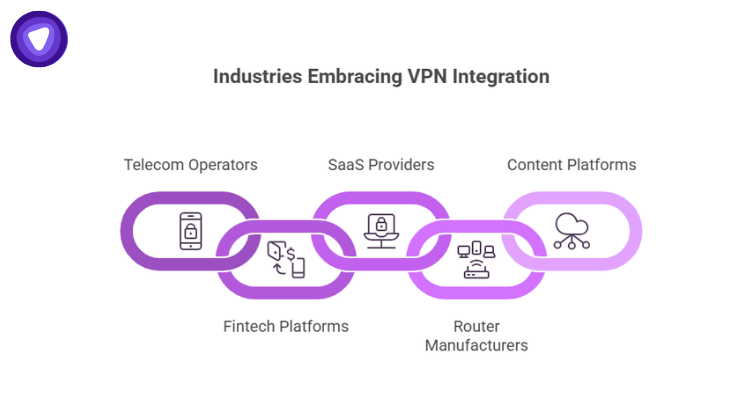
Embedded integration is expanding across:
- Telecom operators bundling encrypted browsing
- Fintech platforms securing transaction sessions
- SaaS providers offering protected remote access
- Router manufacturers enabling whole network encryption
- Content platforms managing region based routing
In each case, network trust directly influences revenue stability and user confidence.
Where PureVPN White Label VPN Solution Fits
PureVPN’s White Label VPN solution enables companies to deploy an embedded white label VPN with SDK integration, API based provisioning, and full branding control. The infrastructure includes a global server network, separated authentication architecture, and protocol flexibility designed for SaaS platforms, telecom operators, and hardware vendors.
It allows businesses to integrate encrypted connectivity as a native feature without building and maintaining VPN infrastructure internally. Administrative controls and automated user management align with products that require scalable, secure network access embedded directly into their ecosystem.
Final Thoughts
Encryption is no longer a secondary download. It is becoming a structural product layer. Platforms that integrate VPN functionality internally gain control over user trust, monetization strategy, and session security.
An embedded white label VPN is not an add on utility. It is an architectural decision about where security belongs inside modern digital products.