

- White label VPN providers supply the infrastructure that powers branded VPN services while partner companies manage the customer experience and distribution.
- User privacy depends on how the provider designs its network, including encryption standards, server architecture, and secure tunneling protocols.
- Reputable providers enforce strict no-logs policies so browsing activity and connection data are not stored or exposed.
- Strong privacy protection also relies on infrastructure controls such as IP masking, secure data routing, and controlled server access.
- Businesses must evaluate a white label VPN provider’s privacy policies, infrastructure practices, and data handling standards before offering the service to users.
A privacy promise means little without the infrastructure behind it.
Many platforms now offer built-in VPN services under their own brand, from telecom providers to SaaS tools. In many cases, these services run on infrastructure supplied by a white label VPN provider while the company manages branding and distribution.
This setup raises an important question: how is user privacy protected when the technology comes from another provider? The answer lies in how white label VPN providers design their networks, handle data, and enforce privacy safeguards. Understanding this structure helps businesses evaluate providers and ensures users know how their data is protected.
Why VPN Privacy Matters More Than Ever
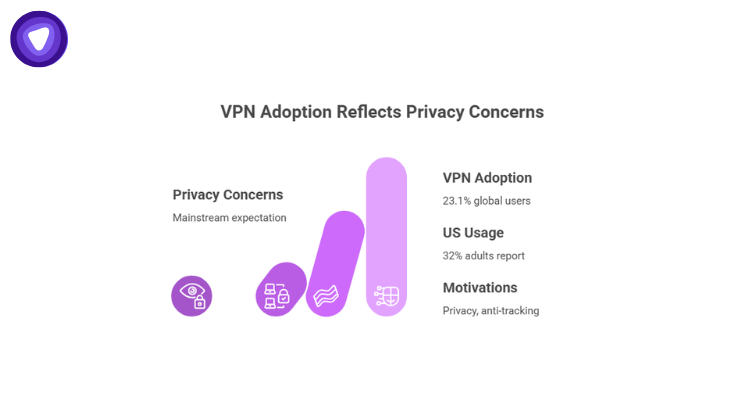
Online privacy has shifted from a niche concern to a mainstream expectation. VPN adoption reflects that change.
Recent research shows that 23.1 percent of global internet users now rely on VPNs for at least some of their online activity, demonstrating how widely privacy tools have spread beyond technical audiences.
In the United States alone, about 32 percent of adults report using a VPN, with privacy protection and anti-tracking among the most common motivations.
Several factors drive this demand:
- Increased data breaches and credential leaks
- Widespread tracking by advertisers and platforms
- Remote work and public Wi-Fi risks
- Regulatory pressure on data collection
Surveys also show that privacy remains the top reason people activate VPN services. In one industry survey, 79 percent of VPN users reported using the technology specifically to protect online privacy.
As privacy expectations grow, companies that distribute VPN services must ensure the underlying provider protects user data correctly. This is where the architecture of white label VPN platforms becomes critical.
What a White Label VPN Actually Provides
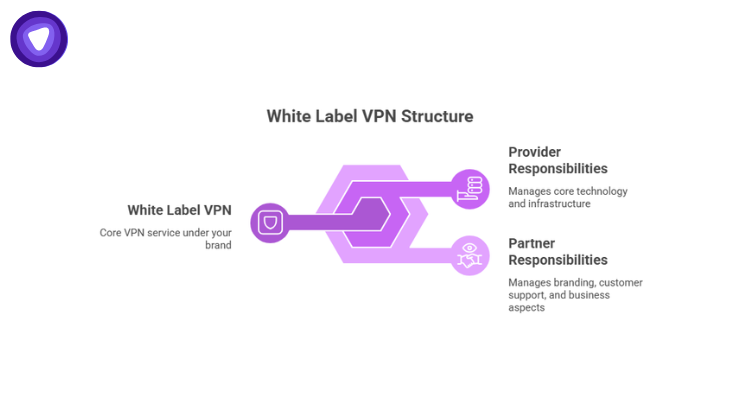
A white label VPN allows a company to launch a VPN service under its own brand without building the infrastructure from scratch.
Instead of operating global servers, encryption protocols, and network management systems themselves, businesses integrate an existing VPN platform that handles the core technology.
Typically, the provider manages:
- Global VPN server infrastructure
- Encryption protocols such as WireGuard or OpenVPN
- Network routing and IP masking
- Application clients for mobile and desktop
- Security monitoring and updates
The partner company manages:
- Branding and user interface
- Customer acquisition and support
- Pricing and subscription plans
- Product integration with existing apps or platforms
From a user perspective, the service appears to be owned by the brand they interact with. Behind the scenes, however, privacy protection depends on the underlying VPN architecture.
Core Privacy Principles Behind White Label VPN Services
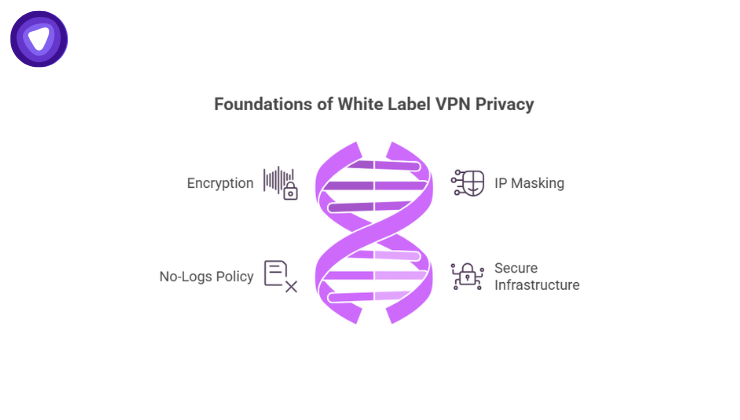
Strong white label VPN privacy relies on several fundamental principles. These practices determine whether a VPN genuinely protects user activity or simply reroutes traffic without meaningful safeguards.
1. Encryption of All Internet Traffic
Encryption forms the foundation of VPN privacy.
When a VPN connection is active, user traffic passes through an encrypted tunnel between the device and the VPN server. This process prevents external observers from reading the transmitted data.
Typical encryption standards include:
- AES-256 encryption
- ChaCha20 encryption
- Secure tunneling protocols such as WireGuard or OpenVPN
Encryption protects traffic from:
- Internet service providers
- Public Wi-Fi attackers
- Network monitoring systems
Even if data is intercepted during transmission, the encryption prevents it from being interpreted.
2. IP Address Masking
A VPN replaces the user’s real IP address with the IP address of the VPN server.
This process helps prevent tracking by:
- Websites
- Advertising networks
- Data brokers
- Internet providers
Without this masking layer, many online services build detailed behavioral profiles based on IP activity.
For businesses deploying a white label VPN, the provider’s server network determines how effectively this masking occurs across different regions.
3. No-Logs Data Policies
One of the most important elements of white label VPN privacy is the logging policy.
A no-logs architecture means the VPN infrastructure does not store records of user activity. This includes:
- Browsing history
- Websites visited
- Connection timestamps
- IP addresses tied to activity
Instead, the system only maintains minimal operational data necessary to keep the network functioning.
Typical operational data may include:
- Server performance metrics
- Bandwidth load statistics
- Anonymous connection diagnostics
When implemented correctly, a no-logs design ensures that even the VPN provider cannot reconstruct a user’s browsing activity.
4. Secure Server Infrastructure
The physical and virtual infrastructure behind a VPN plays a significant role in privacy protection.
Many advanced VPN platforms deploy servers with privacy-focused configurations such as:
- RAM-only servers that erase data after reboot
- Diskless architecture that prevents long-term storage
- Automated server resets
- Isolated network segments
These configurations reduce the risk of sensitive data remaining on servers.
Infrastructure design is especially important because investigations show many low-quality VPN apps lack transparency and proper infrastructure. In one analysis of Android VPN apps, over 75 percent failed basic transparency checks related to privacy policies and operational legitimacy.
This gap highlights the importance of selecting a reputable white label VPN provider.
Privacy Architecture in White Label VPN Platforms
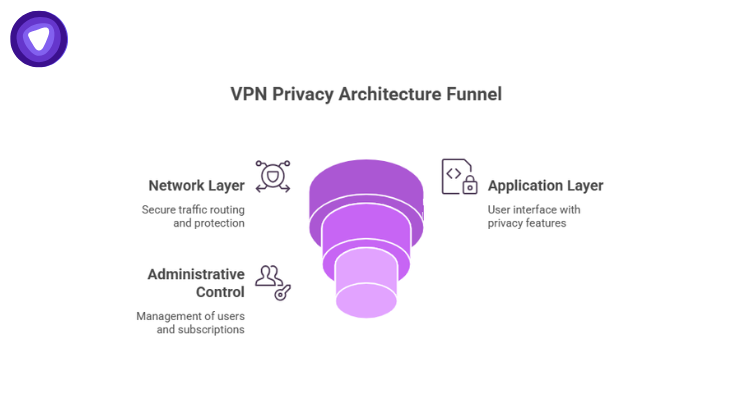
White label VPN providers build privacy protection into several layers of their systems.
Network Layer
The network layer controls how user traffic moves through the VPN infrastructure.
Key components include:
- Secure tunneling protocols
- DNS leak protection
- Kill switch mechanisms
- Traffic routing through global servers
DNS leak protection ensures that domain requests do not bypass the VPN tunnel. Without it, websites visited could still be visible to internet providers.
Application Layer
VPN applications act as the interface between the user and the VPN infrastructure.
Privacy-focused applications include features such as:
- Automatic connection on public Wi-Fi
- Split tunneling controls
- IP rotation options
- Secure authentication systems
These features prevent accidental exposure when users connect to untrusted networks.
Administrative Control Layer
For businesses distributing VPN services, the administrative layer determines how much operational data is visible.
A well-designed white label VPN platform allows companies to manage users and subscriptions while keeping browsing activity invisible.
Administrative dashboards typically provide:
- User account management
- Subscription status
- Device authorization
They do not provide visibility into user traffic or browsing activity.
Key Privacy Features Businesses Should Evaluate
Companies considering a white label VPN platform must evaluate several privacy safeguards before launching a service.
The following table summarizes critical factors that influence white label VPN privacy.
| Privacy Feature | Why It Matters | What to Look For |
| No-logs architecture | Prevents storage of browsing activity | Clear policy and infrastructure design |
| Encryption protocols | Protects data in transit | Modern protocols such as WireGuard |
| DNS leak protection | Prevents exposure of visited domains | Built-in DNS safeguards |
| Kill switch | Stops traffic if VPN disconnects | Automatic connection protection |
| Global server network | Improves privacy and performance | Distributed, secure server locations |
| Infrastructure transparency | Confirms privacy practices | Clear documentation and audits |
Selecting a provider without these protections risks exposing user activity despite the presence of a VPN.
The Business Advantage of Privacy-First VPN Infrastructure
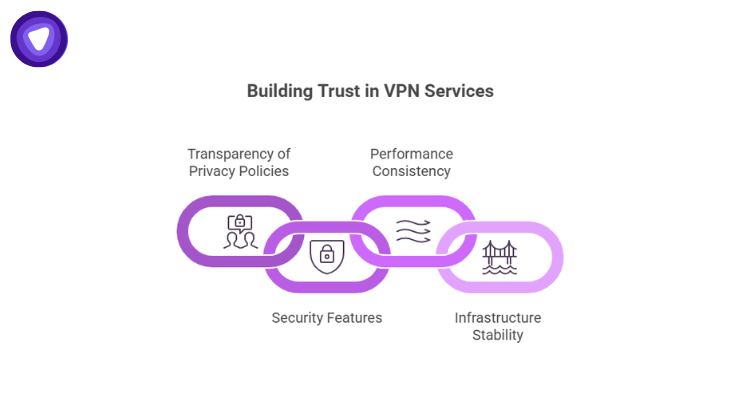
Privacy architecture does not only protect users. It also strengthens the credibility of the brand offering the VPN service.
Users often judge a VPN product based on trust signals such as:
- Transparency of privacy policies
- Security features within the application
- Performance consistency
- Infrastructure stability
Privacy failures can damage a brand quickly because VPN services operate at the core of user internet activity.
Businesses launching VPN products through white label solutions must ensure that privacy practices match user expectations.
How PureVPN White Label Supports User Privacy
Companies that want to launch a VPN service without building their own infrastructure often rely on specialized platforms designed for privacy and scalability.
PureVPN White Label VPN Solution provides the backend infrastructure required to operate a branded VPN service while maintaining strong privacy practices.
The platform manages core technical elements such as encrypted connections, secure server networks, and user traffic routing. Businesses can deploy their own branded VPN applications while relying on the underlying infrastructure to handle encryption, server management, and privacy safeguards.
This approach allows companies to offer privacy-focused VPN services to their customers without managing complex global networks or security architecture themselves.
Closing Thoughts
User privacy is the defining value behind VPN technology. When a company launches a VPN service through a white label platform, that privacy promise depends entirely on the architecture beneath the brand.
Strong white label VPN providers protect user data through encrypted connections, strict no-logs policies, secure infrastructure, and careful control of administrative access. These layers ensure that user browsing activity remains private while businesses retain full control over branding and distribution.
As VPN adoption continues to grow and privacy concerns expand, the companies that succeed in this space will be the ones that treat privacy as an engineering requirement rather than a marketing claims.