

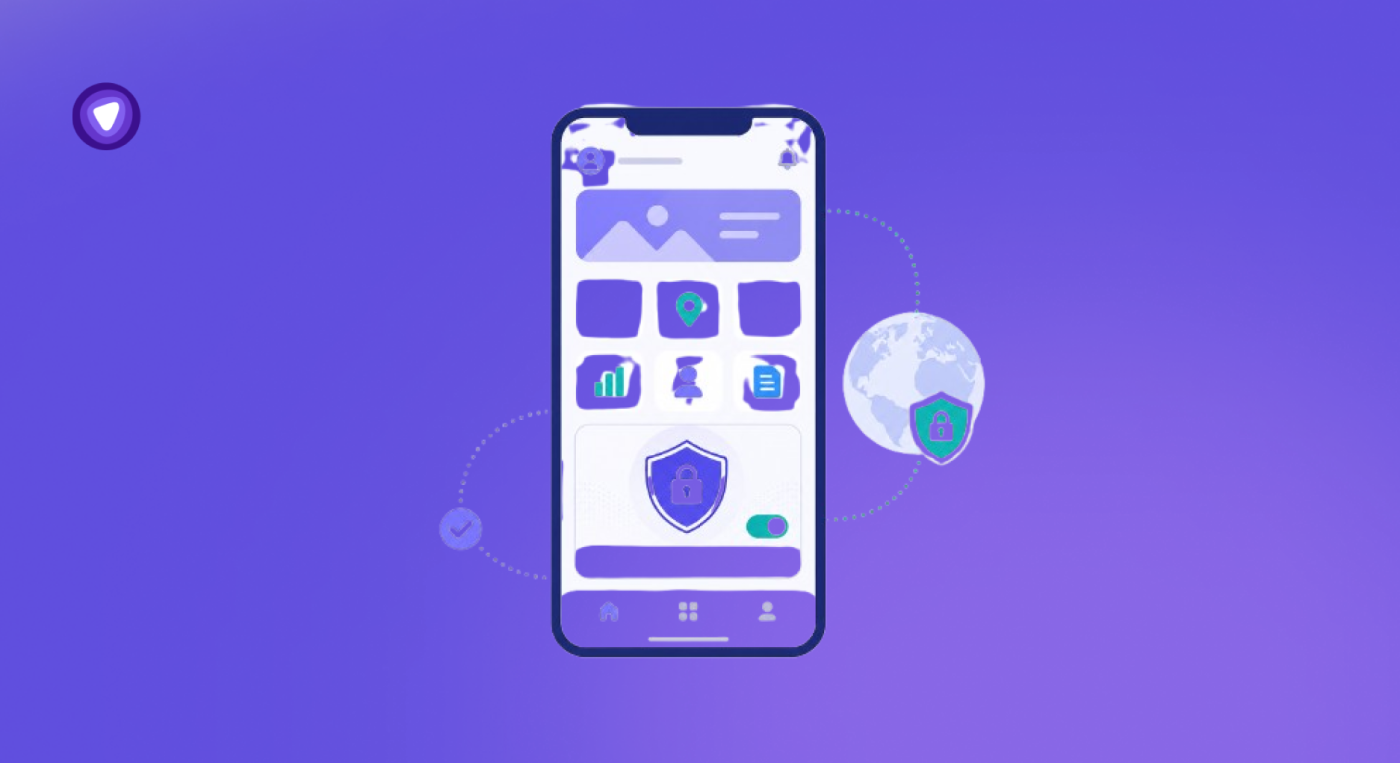
A super app is no longer just a convenience layer, it’s a consolidation of high-risk workflows into a single ecosystem. Payments, messaging, commerce, identity verification, and content all operate within one platform.
This convergence creates a new challenge: You’re no longer securing features, you’re securing data movement across untrusted networks.
From fintech transactions on public Wi-Fi to creators accessing global monetization tools, modern apps operate in environments they do not control. This is why leading platforms are moving beyond traditional security models.
Instead of assuming the network is safe, they are embedding security directly into the application layer using VPN integration.
This is where PureVPN White Label becomes structurally important.
Why Super Apps Need Built-In Network Security
Traditional application security relies heavily on HTTPS. While effective, it assumes that the network layer beneath is not compromised. In reality, that assumption often fails, especially across public Wi-Fi, roaming networks, and geo-distributed users.
By integrating a VPN layer directly into the app:
- Traffic is encrypted before it leaves the device
- Data travels through a controlled, secure network path
- Security becomes invisible but always active
This transforms security from a feature into a built-in foundation of the product experience.
How VPN Integration Works (Architecture Overview)
The architecture introduces a clear separation of responsibilities:
- SDK (Client Layer): Establishes encrypted tunnels and manages connection lifecycle
- API (Backend Layer): Handles user provisioning, session control, and routing logic
- Infrastructure (VPN Network): Ensures global server availability and optimized routing
This creates a controlled data path, where all application traffic is secured by design—not by assumption.
Core Use Cases in a Secure Super App
Super apps are no longer just digital platforms. They are becoming ecosystems where payments, communication, mobility, and connectivity operate in one place, making security a core layer of the architecture rather than an optional feature.
1. Secure Payments (Fintech)
Financial transactions are one of the most sensitive operations inside a super app. Whether users are transferring money, paying bills, or managing wallets, data exposure risks are high, especially on unsecured networks.
With VPN integration:
- Payment requests and tokens are encrypted before TLS even begins
- Public Wi-Fi risks (packet sniffing, rogue hotspots) are neutralized
- Transactions remain secure regardless of network conditions
Business Impact:
- Builds user trust in financial features
- Reduces fraud risk
- Positions the app as a secure fintech platform
2. VPN + eSIM: Secure Global Connectivity
Modern super apps increasingly support global users, especially in telecom, travel, and remote work scenarios. eSIM technology enables seamless connectivity—but network trust varies across regions.
Combining eSIM with VPN creates:
- Secure internet access across countries
- Encrypted traffic regardless of carrier or roaming network
- Seamless protection during network switching
Real-world value:
- Travelers stay protected on public networks
- Remote teams maintain secure connections globally
- Businesses ensure consistent security across regions
Business Impact:
- Enables global-ready products
- Enhances reliability and user confidence
- Opens opportunities in telecom and mobility ecosystems
3. VPN for Content Creators & Monetization
For platforms supporting creators, geography directly impacts revenue. Platforms like TikTok, YouTube, and Instagram enable monetization features only in specific regions.
With VPN-enabled routing:
- Creators can access monetization-enabled regions
- Teams can test ads and content across markets
- Platform access remains consistent even in restricted environments
Business Impact:
- Unlocks new revenue opportunities for creators
- Makes your platform more attractive to global users
- Enables better ad optimization and targeting
Strategic Advantage:
You’re not just offering a platform, you’re enabling earning potential.
4. Private Messaging & Communication
Super apps often include chat, voice, and video communication. While many rely on application-level encryption, network-level exposure still exists.
With VPN:
- Communication is encrypted before reaching messaging protocols
- ISPs cannot monitor traffic patterns
- Metadata exposure is reduced
Business Impact:
- Strengthens privacy positioning
- Builds trust for business communication and customer support
- Enables secure enterprise use cases
5. Safe Online Shopping & Checkout
E-commerce inside super apps introduces risks like session hijacking, tracking, and payment interception, especially on unsecured networks.
VPN integration ensures:
- Secure transmission of session tokens and checkout requests
- Reduced exposure to phishing and tracking systems
- Protected browsing and purchasing experience
Business Impact:
- Increases conversion rates through trust
- Reduces cart abandonment caused by security concerns
- Positions your app as a secure commerce platform
6. Secure Document Uploads (KYC & Onboarding)
Uploading documents like IDs, passports, or financial records is a critical step in fintech and onboarding flows.
With VPN:
- Data is encrypted at the network layer before TLS
- Interception risks during upload are minimized
- Sensitive user data remains protected end-to-end
Business Impact:
- Strengthens compliance and user trust
- Reduces risk in high-sensitivity workflows
- Improves onboarding confidence
7. Public Wi-Fi Protection (Automatic Security Layer)
Public Wi-Fi networks are one of the biggest attack vectors in modern digital environments.
A well-integrated VPN can:
- Automatically detect insecure networks
- Activate protection in the background
- Maintain persistent encrypted connections
User Experience Advantage:
- No manual action required
- Security works silently in the background
Business Impact:
- Reduces user risk significantly
- Enhances brand perception as security-first
8. Location Privacy & Anti-Tracking
Modern apps rely heavily on user data, but increasing privacy concerns are changing expectations.
With VPN:
- Real IP addresses are masked
- Tracking systems become less accurate
- User behavior remains private
Business Impact:
- Aligns with global privacy expectations
- Differentiates your app in privacy-conscious markets
- Builds long-term user trust
9. Secure Admin & Vendor Dashboard Access
Super apps often include dashboards for vendors, partners, and administrators—making them high-value attack targets.
With VPN-based access control:
- Only VPN-authenticated sessions can access dashboards
- Data exposure risks are reduced
- Session hijacking becomes significantly harder
Business Impact:
- Protects critical business data
- Strengthens enterprise-grade security posture
- Enables safer B2B and marketplace ecosystems
10. Secure API Communication
APIs are the backbone of any super app. While HTTPS secures transport, adding a VPN layer enhances protection against advanced threats.
Security stack becomes:
- VPN → Network-level protection
- HTTPS → Transport-level encryption
- Application Logic → Authentication & validation
Business Impact:
- Reduces exposure of critical endpoints
- Strengthens overall system resilience
- Supports scalable, secure architecture
Why This Matters Now
The shift toward super apps is accelerating across industries, from fintech and telecom to SaaS and creator platforms.
At the same time:
- Public network usage is increasing
- Privacy expectations are rising
- Cyber threats are becoming more sophisticated
Users no longer just want features. They expect secure, private, and reliable experiences by default.
This is why VPN integration is no longer optional, it’s becoming a standard feature in modern digital platforms.
How PureVPN White Label VPN Solution Helps
PureVPN White Label VPN solution helps super apps move from concept-level security to infrastructure-level protection. It provides the underlying VPN framework that can be embedded directly into the application, allowing platforms to secure user traffic without building or maintaining their own global VPN network. This removes operational complexity while ensuring consistent protection across all user journeys.
It also enables super apps to scale securely across regions without re-architecting their security stack. With pre-built global servers, encryption protocols, and SDK-based integration, PureVPN White Label allows platforms to focus on product experience while maintaining always-on network security across payments, communication, commerce, and data-heavy workflows.
Final Thoughts
Super apps operate in environments where networks cannot be fully trusted, especially when users switch between public Wi-Fi, mobile data, and regional carriers. Relying only on traditional security models is no longer sufficient to protect sensitive actions such as payments, identity verification, and cross-border connectivity.
By integrating a VPN layer using a white label solution like PureVPN White Label, platforms can secure traffic before it leaves the device, standardize protection across all features, and deliver a seamless, consistent security experience without adding user friction.
The outcome is not just a more secure application. It becomes a stronger product with built-in trust, a more reliable brand in the eyes of users, and a scalable competitive advantage in markets where privacy and connectivity define adoption.