

- VPN API Automation: VPN APIs enable businesses to automate core VPN functions such as user provisioning, access control, IP assignment, and session management, reducing manual configuration.
- Expanded VPN Usage: VPNs are no longer limited to remote employee access and are now integrated into SaaS platforms, cloud environments, partner systems, and application workflows.
- Scalability Needs: Businesses use VPN APIs to manage large, distributed infrastructure and frequent access changes that traditional VPN setups cannot handle efficiently at scale.
- Stronger Security Control: API-driven VPNs improve security by enforcing consistent access policies, reducing human error, and supporting real-time control across users and systems.
- White-Label Integration: White-label VPN solutions and API-based infrastructure allow businesses to embed secure connectivity into their own products without building VPN systems from scratch.
VPN usage inside businesses has changed significantly over the past few years. Companies are no longer using VPNs only for remote employee access. In 2026, VPN infrastructure is tied directly to SaaS platforms, cloud environments, partner ecosystems, customer-facing applications, and automated workflows.
Security teams now expect VPN access to integrate with identity systems, provisioning tools, deployment pipelines, and internal platforms through APIs.
This shift is being driven by operational pressure. Businesses now manage larger SaaS stacks, distributed infrastructure, third-party vendors, and temporary access requirements at a scale that manual VPN administration cannot support efficiently.
What Is an API?
An API (Application Programming Interface) is a set of rules that allows different software systems to communicate with each other. It enables one application to request data or trigger actions in another system without direct human interaction or manual configuration.
This shift is being driven by operational pressure. Businesses now manage larger SaaS stacks, distributed infrastructure, third-party vendors, and temporary access requirements at a scale that manual VPN administration cannot support efficiently. VPN APIs help businesses deploy secure connectivity programmatically across users, applications, and cloud workloads without adding administrative overhead.
VPN APIs Are Becoming Infrastructure Components
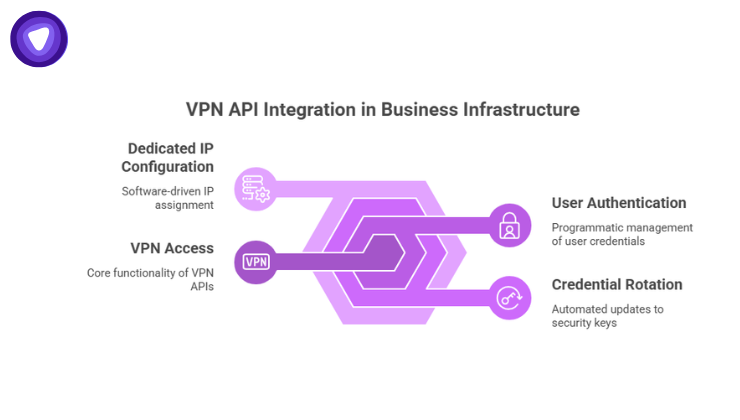
Most organizations already automate identity management, cloud provisioning, monitoring, and access control through APIs. Network security is moving in the same direction.
A VPN API allows businesses to:
- Provision VPN access automatically
- Manage user authentication programmatically
- Rotate credentials without manual intervention
- Configure dedicated IPs through software
- Monitor connection status in real time
- Integrate VPN access into SaaS platforms or internal systems
This changes how VPNs are deployed and consumed.
Instead of asking employees to install software and configure settings manually, businesses can integrate secure connectivity directly into workflows, applications, and onboarding systems.
For engineering teams, APIs reduce operational friction. For product teams, APIs create opportunities to embed secure connectivity into customer-facing products.
Remote Work Is No Longer the Main Driver
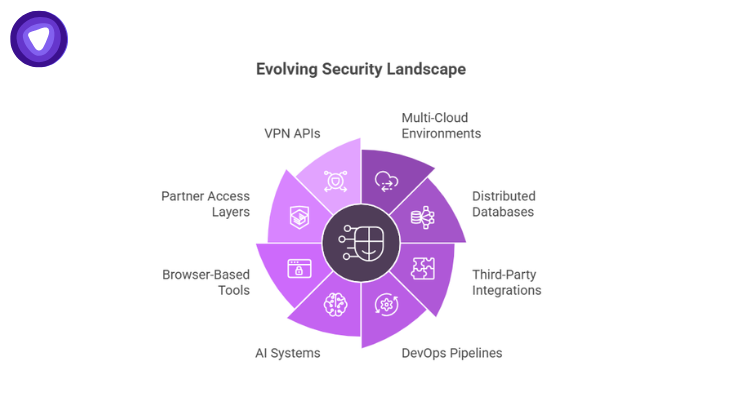
For years, remote work pushed VPN adoption. That is still relevant, but the bigger shift now comes from application architecture.
Businesses operate through:
- Multi-cloud environments
- Distributed databases
- Third-party integrations
- DevOps pipelines
- AI systems processing external data
- Browser-based internal tools
- Partner and contractor access layers
Every one of these systems creates exposure points.
A report from IBM found that the global average cost of a data breach reached $4.88 million, with credential compromise and cloud misconfiguration remaining among the leading causes of breaches.
Static VPN deployments struggle in environments where infrastructure changes constantly.
VPN APIs solve this by enabling security to adapt programmatically.
For example:
- A contractor account can receive temporary VPN access automatically
- A cloud workload can receive a dedicated secure tunnel during deployment
- API-driven access rules can expire immediately after project completion
- Applications can enforce secure routing without user action
The VPN becomes part of infrastructure orchestration instead of a separate networking layer.
Businesses Need Faster Provisioning Cycles
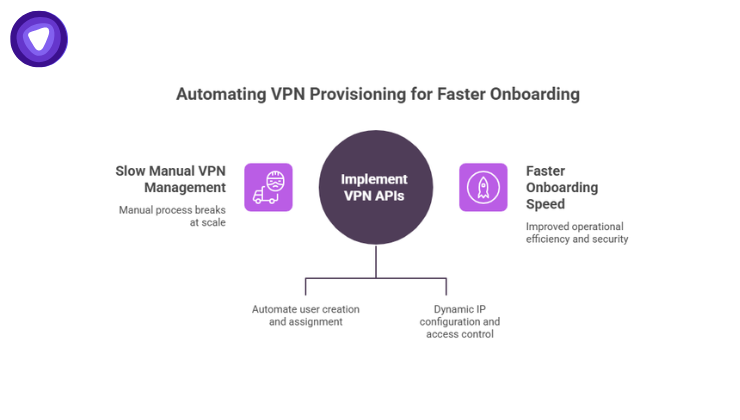
Manual VPN management slows operations.
Traditional deployment often involves:
- Creating user accounts manually
- Assigning credentials
- Sending setup instructions
- Configuring devices individually
- Managing IP allowlists manually
- Revoking access through support tickets
That process breaks at scale.
Modern companies onboard employees, vendors, and temporary workers continuously. Security teams need systems that respond instantly.
VPN APIs automate provisioning through:
- Identity provider integration
- Automated user creation
- Role-based access assignment
- Centralized policy enforcement
- Dynamic IP configuration
This matters because onboarding speed directly affects operational efficiency.
Large organizations now use an average of 112 SaaS applications across departments. Managing secure access manually across fragmented environments creates major administrative overhead.
VPN APIs reduce that burden by connecting access control to existing systems.
Embedded Security Is Becoming a Product Requirement
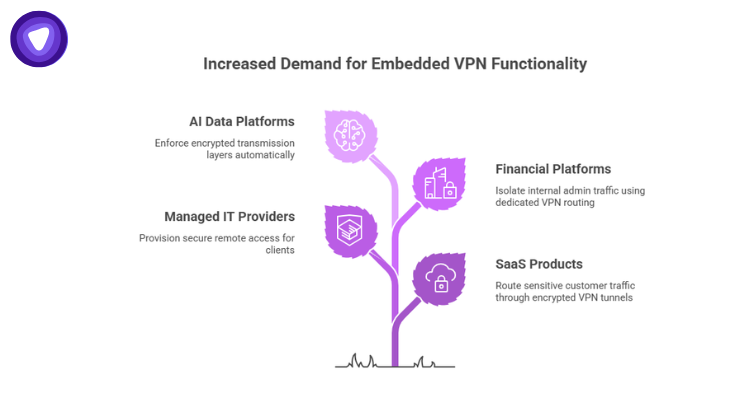
VPN APIs are no longer used only by internal IT teams.
Many businesses now embed VPN functionality directly into:
- SaaS products
- White-label platforms
- Managed service offerings
- Browser-based tools
- Enterprise dashboards
- IoT management systems
Customers increasingly expect built-in privacy and secure connectivity.
For example:
SaaS Platforms
A SaaS provider can route sensitive customer traffic through encrypted VPN tunnels automatically.
Managed IT Providers
MSPs can provision secure remote access for clients through automated API workflows.
Financial Platforms
Fintech companies can isolate internal admin traffic using dedicated VPN routing integrated into backend systems.
AI Data Platforms
AI tools handling proprietary training data can enforce encrypted transmission layers automatically.
This is creating demand for developer-friendly VPN infrastructure that integrates cleanly into products.
API-Driven VPNs Improve Access Control
Access control is becoming more granular every year.
Organizations no longer grant broad network access to every user. Instead, they enforce:
- Temporary permissions
- Context-aware access
- Device-based restrictions
- Role segmentation
- Session monitoring
VPN APIs help enforce these controls dynamically.
| Traditional VPN Setup | API-Driven VPN Infrastructure |
| Manual account provisioning | Automated user provisioning |
| Static credentials | Dynamic credential management |
| Shared configurations | Role-based access policies |
| Delayed offboarding | Instant access revocation |
| Separate admin workflows | Centralized orchestration |
| Limited scalability | Infrastructure-level scalability |
This model aligns with zero trust security principles.
A report identified identity-focused attacks as one of the fastest-growing enterprise security risks, with attackers increasingly targeting access systems instead of endpoints directly.
VPN APIs support tighter identity integration, reducing exposure from unmanaged or persistent access.
Dedicated IP Management Needs Automation
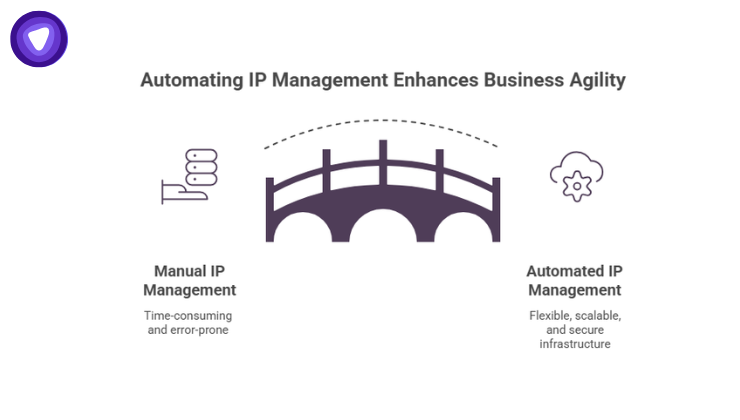
Dedicated IP infrastructure creates operational challenges when managed manually.
Businesses often require dedicated IPs for:
- Secure admin access
- Cloud allowlisting
- Remote server management
- Vendor authentication
- Accessing sensitive databases
- Geo-specific infrastructure routing
Without APIs, managing these IPs becomes time consuming.
VPN APIs simplify:
- Dedicated IP assignment
- IP rotation
- IP mapping across teams
- Automated allowlist synchronization
- Infrastructure scaling
This is especially important for organizations running multi-region operations.
As more businesses deploy region-specific cloud infrastructure, networking flexibility becomes essential.
Compliance and Audit Requirements Are Expanding
Security audits increasingly focus on access visibility.
Businesses must demonstrate:
- Who accessed systems
- When access occurred
- Which credentials were used
- Whether access policies were enforced
- How permissions were revoked
Manual VPN workflows create visibility gaps.
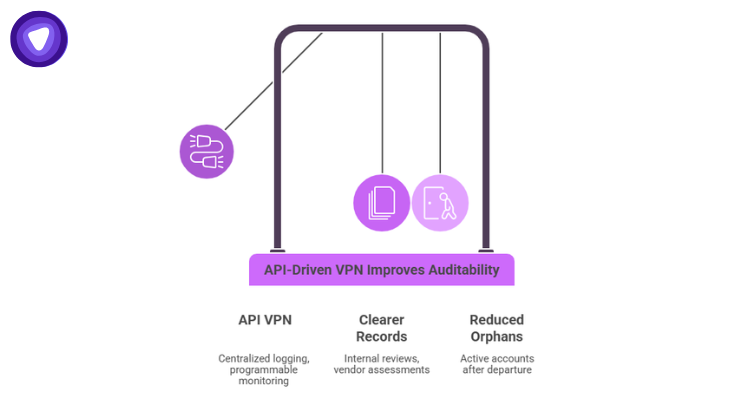
API-driven VPN infrastructure improves auditability through centralized logging and programmable monitoring.
This helps organizations maintain clearer records for:
- Internal security reviews
- Vendor risk assessments
- Customer security requirements
- Regulatory audits
It also reduces the likelihood of orphaned accounts remaining active after users leave projects or organizations.
VPN APIs Support DevOps and Automation Workflows
Modern engineering teams automate nearly everything.
Infrastructure provisioning, CI/CD pipelines, monitoring, deployment testing, and access management increasingly rely on APIs.
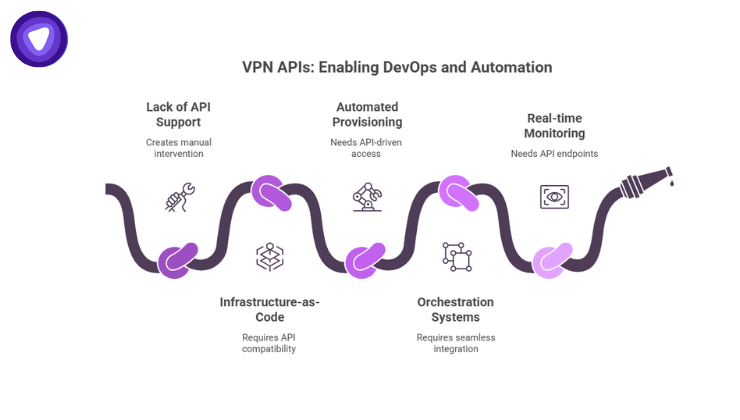
VPN infrastructure that lacks API support creates operational friction.
Engineering teams now expect:
- Infrastructure-as-code compatibility
- Automated provisioning
- API-triggered access workflows
- Integration with orchestration systems
- Real-time monitoring endpoints
VPN APIs support these expectations directly.
For DevOps teams, this means secure network access can become part of deployment pipelines instead of a manual post-deployment task.
Examples include:
- Temporary secure access during staging deployments
- Automated dedicated IP allocation for testing environments
- Secure API communication between distributed services
- Encrypted traffic routing during infrastructure scaling
This reduces dependency on manual intervention from networking teams.
White-Label VPN Services Are Growing
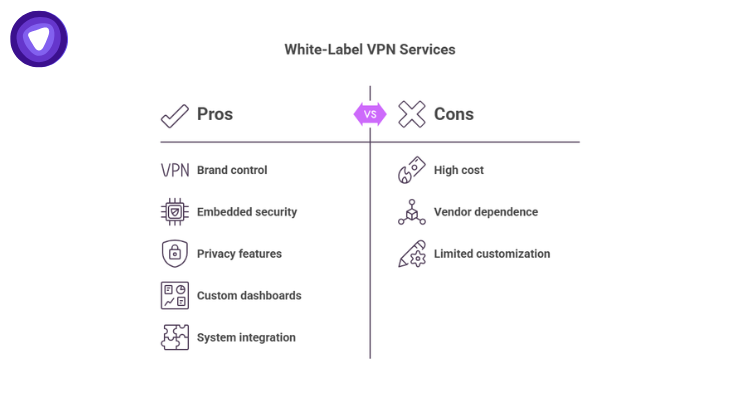
Businesses increasingly want control over branding, infrastructure presentation, and customer experience.
This is driving growth in white-label VPN services powered by APIs.
Instead of building VPN infrastructure from scratch, businesses use API-enabled white-label platforms to:
- Launch branded VPN services
- Embed secure connectivity into products
- Offer privacy-focused features to customers
- Manage users through custom dashboards
- Control provisioning through existing systems
This model is expanding across industries including:
- SaaS
- Telecom
- Managed services
- Cybersecurity
- Remote workforce platforms
- Privacy-focused consumer apps
Building custom VPN infrastructure independently requires significant investment in networking, server management, maintenance, monitoring, and security engineering.
API-driven white-label models reduce that complexity significantly.
Performance Monitoring Is Becoming Critical
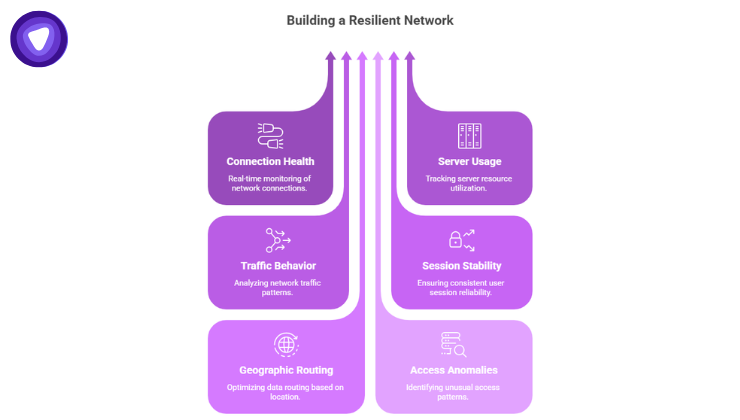
Businesses no longer accept blind infrastructure.
Security systems are expected to provide visibility into:
- Connection health
- Server usage
- Traffic behavior
- Session stability
- Geographic routing
- Access anomalies
VPN APIs expose this operational data programmatically.
That allows businesses to:
- Build internal dashboards
- Trigger alerts automatically
- Monitor service health
- Optimize server distribution
- Detect unusual access behavior
Operational visibility matters because network instability now impacts productivity, customer experience, and cloud performance directly.
Why Businesses Are Moving Toward API-First VPN Providers
Businesses evaluating VPN providers in 2026 are prioritizing API accessibility, automated provisioning, dedicated IP management, white-label deployment capabilities, and infrastructure flexibility.
Traditional VPN services built primarily for consumers often lack the centralized controls and integration support required by SaaS platforms, managed service providers, cybersecurity companies, and cloud-native businesses.
This is where platforms like PureVPN White Label VPN Solution fit into the market. PureVPN provides API-enabled white-label VPN infrastructure that businesses can integrate into their own applications, platforms, and workflows without building VPN architecture internally. Companies can manage user provisioning, branded deployments, dedicated IP assignments, and secure connectivity through scalable infrastructure that aligns with modern operational requirements.
The VPN Market Is Shifting Toward Integration
The biggest change in the VPN market is no longer encryption standards or server counts. The focus has shifted toward integration and automation. Businesses want VPN infrastructure that works directly with identity providers, cloud environments, DevOps pipelines, customer platforms, and internal management systems. Manual configuration and disconnected security tools create operational delays that modern infrastructure teams cannot afford.
VPN APIs address these challenges by turning secure connectivity into programmable infrastructure. Businesses can automate access management, deploy secure tunnels dynamically, monitor usage centrally, and integrate VPN functionality directly into products and workflows.
In 2026, companies adopting API-driven VPN infrastructure are reducing administrative overhead, improving access control, and scaling secure operations more efficiently across distributed environments.