

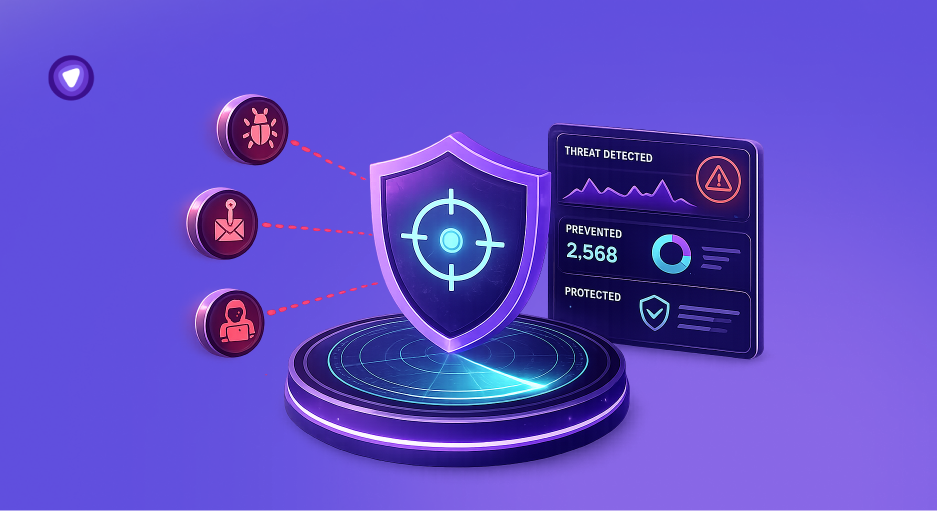
- Real-Time Detection: Real-time threat detection identifies cyberattacks as they happen by continuously monitoring user behavior, network traffic, and system activity.
- Limitations of Traditional Security: Traditional security models fail against modern threats because they rely on delayed scans and post-incident analysis, allowing attackers time to move inside systems.
- Identity-Based Attacks: Most cyberattacks begin with identity compromise such as phishing or stolen credentials, making early behavioral detection critical for prevention.
- AI-Driven Prevention: AI, machine learning, and threat intelligence feeds work together to detect anomalies instantly and trigger automated responses like blocking or isolating threats.
- Business Impact: Real-time detection significantly reduces financial losses, downtime, and breach impact by stopping attacks during early stages of intrusion.
A single unnoticed intrusion rarely stays small. It moves quietly across systems, collects credentials, and escalates access before security teams even see the first sign of compromise. By the time logs are reviewed, the damage is already in motion.
Modern business environments are built on constant connectivity. Remote employees, cloud applications, APIs, and third-party integrations keep operations running, but they also expand the attack surface every second. This shift has pushed cybersecurity from periodic monitoring to continuous, real-time defense.
Real-time advanced threat detection is no longer a high-end capability reserved for large enterprises. It is becoming a baseline requirement for any organization that depends on digital infrastructure.
Why Traditional Security Models No Longer Hold
Conventional security systems were designed for slower threat environments. They relied on perimeter defenses, scheduled scans, and post-incident analysis. That model breaks when attackers move faster than detection cycles.
Global cybercrime costs will reach $10.5 trillion annually by 2025, driven by ransomware, identity theft, and infrastructure attacks. The scale reflects a simple reality: attacks are now automated, distributed, and continuous.
The average breach cost has reached $4.88 million, the highest recorded to date. These costs are not just financial. They include operational downtime, reputational damage, and regulatory pressure.
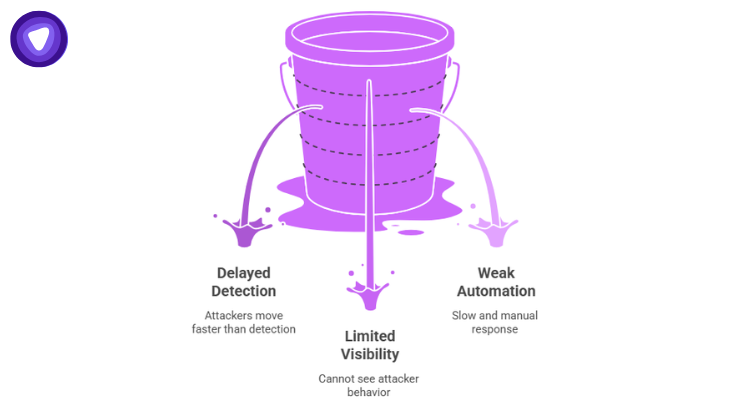
Traditional systems fail in three key areas:
- Delayed detection windows
- Limited behavioral visibility
- Weak response automation
Attackers exploit these gaps using speed, stealth, and legitimate credentials.
What Real-Time Advanced Threat Detection Actually Means
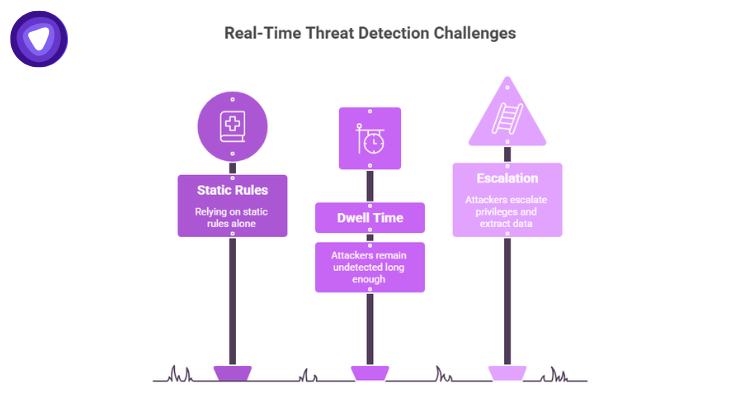
Real-time threat detection focuses on identifying malicious activity as it happens, not after the fact. It continuously analyzes system behavior, user activity, and network traffic to detect anomalies instantly.
Instead of relying on static rules alone, modern systems combine:
- Behavioral analytics
- Machine learning models
- Threat intelligence feeds
- Automated response mechanisms
The goal is simple. Reduce the time between intrusion and response to near zero.
Mandiant’s M-Trends 2024 Report highlights that the global median dwell time for attackers has dropped to around 10 days, but in many targeted environments, attackers still remain undetected long enough to escalate privileges and extract data.
Real-time systems aim to shrink that window further, often to minutes or seconds.
How Modern Attacks Unfold in Real Time
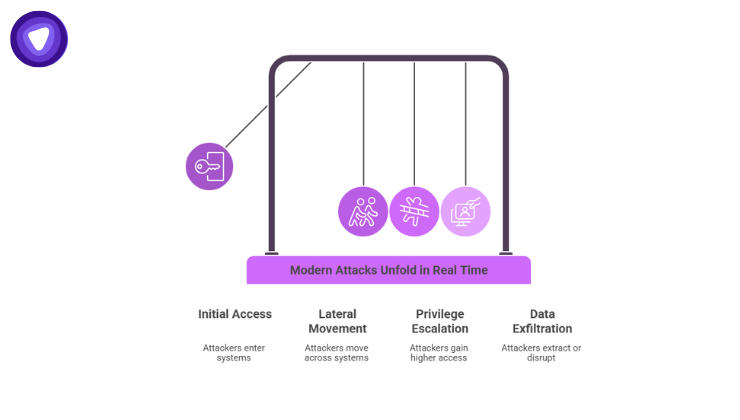
Cyberattacks today rarely follow a single straight path. They evolve dynamically based on access, permissions, and system exposure.
1. Initial Access
Attackers commonly enter through:
- Phishing emails
- Stolen credentials
- Exposed remote access points
- Vulnerable APIs
A report shows that 36% of breaches involve phishing or credential misuse, making identity the primary entry point.
2. Lateral Movement
Once inside, attackers move across systems using legitimate tools. This stage is difficult to detect because activity often looks normal.
3. Privilege Escalation
Stolen or reused credentials allow attackers to gain higher-level access. Without behavioral monitoring, this step often goes unnoticed.
4. Data Exfiltration or Disruption
The final stage involves extracting data, encrypting systems, or disrupting operations.
Real-time detection aims to interrupt this chain early, often during lateral movement or privilege escalation.
Core Components of Real-Time Threat Detection Systems
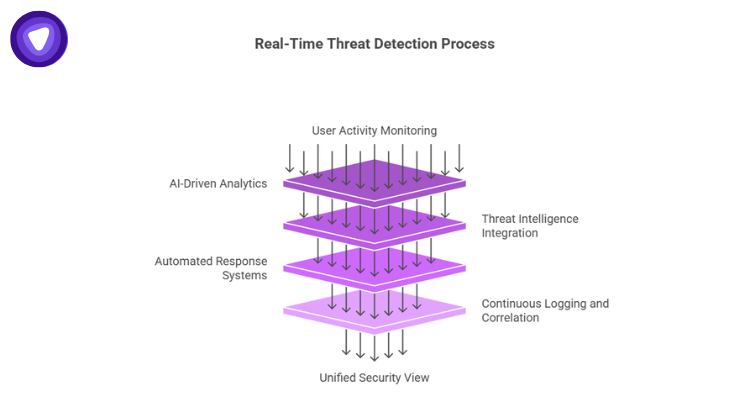
A functioning real-time detection system is not a single tool. It is a layered structure built for continuous visibility and automated response.
Behavioral Monitoring
Tracks user activity patterns such as login times, device changes, and access frequency. Deviations from normal behavior trigger alerts.
AI-Driven Analytics
Machine learning models identify unusual patterns across massive datasets. These models improve over time as they process more behavior data.
Threat Intelligence Integration
External threat feeds provide information about known malicious IPs, domains, and attack signatures.
Automated Response Systems
When a threat is detected, automated systems can:
- Block user sessions
- Isolate devices
- Restrict access permissions
- Trigger alerts to security teams
Continuous Logging and Correlation
Logs from endpoints, servers, and cloud platforms are correlated in real time to build a unified security view.
Real-Time vs Traditional Detection
This shift defines the modern security difference between reacting to incidents and actively preventing them while they unfold.
| Feature | Traditional Security Models | Real-Time Threat Detection |
| Detection Speed | Hours or days | Seconds or minutes |
| Monitoring Method | Scheduled scans | Continuous monitoring |
| Response Style | Manual intervention | Automated and adaptive |
| Threat Visibility | Limited to known signatures | Behavioral + predictive |
| Attack Containment | Post-incident | During active intrusion |
| Data Correlation | Fragmented logs | Unified real-time analytics |
Business Impact of Real-Time Prevention
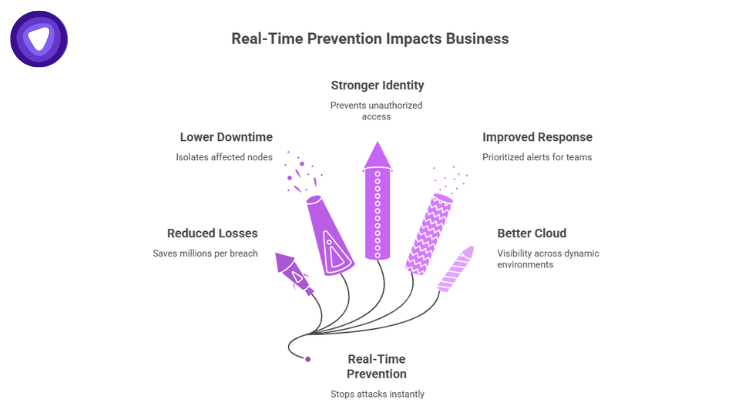
Real-time detection is not only about stopping attacks. It directly influences operational stability and business continuity.
Reduced Financial Losses
Faster detection reduces breach impact. IBM reports that organizations using automated security systems save an average of $1.76 million per breach compared to those without automation.
Lower Downtime Risk
Attacks like ransomware can halt operations within minutes. Real-time systems isolate affected nodes before spread occurs.
Stronger Identity Protection
Since most attacks start with credential abuse, continuous authentication monitoring prevents unauthorized access early.
Improved Incident Response Efficiency
Security teams receive prioritized alerts instead of raw log data, reducing fatigue and response delays.
Better Cloud Security Posture
Cloud workloads change constantly. Real-time monitoring ensures visibility across dynamic environments.
Where Most Organizations Still Fall Short
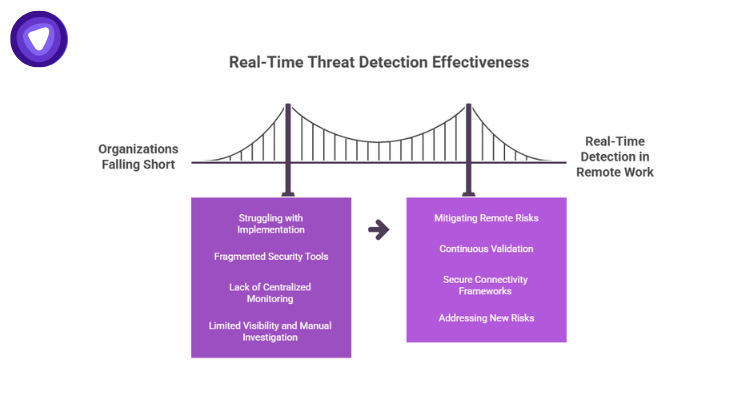
Even with advanced tools available, many businesses struggle with implementation gaps.
Common challenges include:
- Fragmented security tools that do not communicate
- Lack of centralized monitoring dashboards
- Delayed response workflows
- Limited visibility into remote endpoints
- Overdependence on manual investigation
The result is not a lack of security tools but a lack of integration between them.
Real-Time Detection in Remote Work Environments
Remote and hybrid work models have permanently changed network boundaries. Employees now access systems from home networks, mobile devices, and international locations.
This introduces new risks:
- Unsecured Wi-Fi usage
- Shared devices in home environments
- Increased credential exposure
- Inconsistent endpoint security
Real-time detection systems help mitigate these risks by continuously validating user identity and device behavior instead of relying on one-time authentication.
This is where secure connectivity frameworks, including VPN-based access controls, play a critical role in ensuring encrypted and verified access paths.
Key Capabilities That Define Strong Real-Time Security Systems
These capabilities work together to reduce detection time and limit attacker movement inside systems.
| Capability | Function | Business Outcome |
| Continuous monitoring | Tracks all user and system activity | Early threat identification |
| Behavioral analytics | Detects abnormal patterns | Reduced false positives |
| Automated response | Blocks or isolates threats instantly | Faster containment |
| Identity verification | Validates users continuously | Prevents credential misuse |
| Centralized visibility | Consolidates security data | Better decision-making |
Implementation Considerations for Businesses
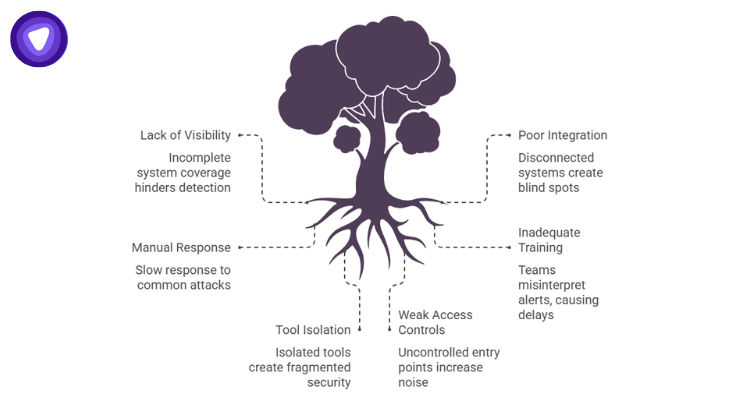
Deploying real-time threat detection requires more than installing tools. It involves aligning infrastructure, processes, and security policies.
Key considerations include:
- Ensuring full visibility across cloud, on-premises, and remote systems
- Integrating identity and access management with monitoring tools
- Automating response workflows for common attack patterns
- Training teams to interpret real-time alerts effectively
- Reducing dependency on isolated security tools
Organizations that treat detection as a system rather than a product achieve stronger long-term resilience.
Strengthening Security with Secure Access Layers
Real-time detection is most effective when paired with secure access controls. Without controlled entry points, monitoring systems are forced to handle excessive noise and unnecessary exposure.
Secure access frameworks help:
- Enforce encrypted communication channels
- Restrict unauthorized entry points
- Segment user access based on roles
- Reduce attack surface across distributed teams
This layered approach improves both prevention and detection efficiency.
Enterprise-Ready Secure Access for Real-Time Defense
PureVPN White Label VPN solution fits into this security structure by enabling organizations to build secure, encrypted access layers for their teams and clients. It supports controlled connectivity across distributed environments while maintaining consistent access policies.
For businesses managing remote teams or client-facing platforms, it strengthens the entry layer that real-time threat detection systems rely on. When access is secured and centralized, detection tools operate with clearer signals and fewer blind spots.
PureVPN White Label VPN solution also supports scalable deployment models, allowing organizations to extend secure access without redesigning existing infrastructure.
Final Perspective
Real-time advanced threat detection is reshaping how businesses respond to cyber risks. Instead of reacting after damage occurs, organizations now operate in a continuous defense cycle where threats are identified and contained as they emerge.
As attack methods evolve, speed becomes the defining factor between disruption and control. Systems that combine behavioral intelligence, automation, and secure access frameworks deliver the strongest protection against modern threats.
Security is no longer about building higher walls. It is about seeing movement as it happens and responding before it spreads.