

- The Real Risk: Most exposure never touches the app’s own servers, yet the app absorbs the reputational cost anyway.
- The App Store Angle: Adding exposure or dark web monitoring means updating your Apple privacy manifest and Google Data Safety section, or risking rejection.
- The Pricing Shift: Consumer apps meter this feature by tier and upgrade funnel, not per seat like enterprise SaaS.
- The Sequencing: Exposure checks, monitoring, and opt out requests run in a fixed order, and webhook alerts beat manual polling for mobile.
- The Proof: A built-in privacy feature has already driven an 18 percent churn reduction in a comparable daily-use app.
A single one star review often reveals the real cost of ignoring user data exposure. Someone finds their own email address in a breach dump. They link it back to your app and write about it in the App Store. No line of your code failed. No server of yours was breached. Yet the review stays, and it shapes install decisions for months.
Consumer apps rarely lose users because their own systems got hacked. They lose users because someone else’s system did, and the app offered no way to respond. Digital privacy protection for consumer apps closes that exact gap. It does so before support tickets pile up and before the review section fills with complaints the app cannot control.
This is not a pitch for another security badge on a pricing page. It is an operational question product teams already face. A user’s personal data can show up somewhere the app never controlled. The app is often the only brand that user still trusts enough to complain to.
That is exactly why digital privacy protection for consumer apps belongs on the product roadmap, not the legal one.
The Real Cost When Consumer Apps Ignore Exposed Data
Most breach damage does not come from the breach itself. It comes from the gap between exposure and discovery. The average breach goes undetected for 194 days, based on IBM’s most recent global research. The average cost of a single breach has also climbed past four million dollars. Consumer apps rarely sit inside that figure directly. Most exposures trace back to third party data brokers rather than the app’s own servers. The reputational bill still lands on the app. The app is the surface the user checks every day.
What This Looks Like At Scale For A Freemium App
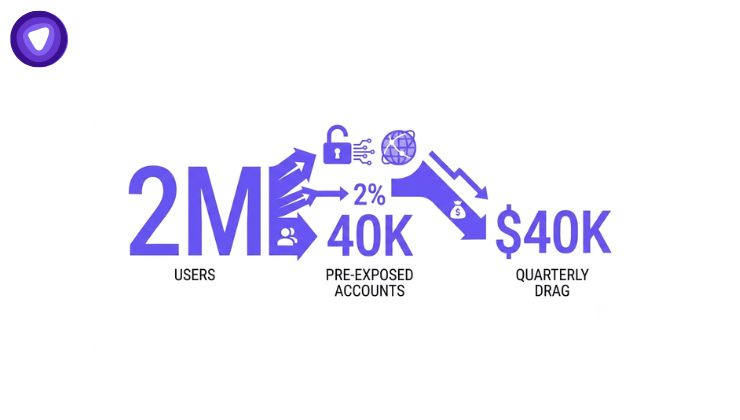
Picture a mid sized fitness app with two million active users on a freemium model. Assume two percent of that base already has an email or phone number listed on active data broker sites. That is forty thousand users carrying exposure the app did nothing to cause. Assign a modest one dollar cost per flagged account for support time and churn risk.
That works out to forty thousand dollars in avoidable drag every quarter. This is an illustrative model built from typical freemium usage patterns, not a published dataset. It shows why the case for digital privacy protection for consumer apps changes at scale. Enterprise software only has to think in seats. A freemium app has to think in millions of individual accounts.
Why This Is Not Just An Enterprise Problem
More than 4,000 active data brokers operate in the United States. Industry research also shows 85 percent of consumers want more control over their own personal data. Neither number is unique to enterprise software. Both apply directly to any app with a login screen and a user base large enough to attract scraping.
What Digital Privacy Protection For Consumer Apps Actually Includes
Digital privacy protection for consumer apps is not a single feature. It is three connected services running on one user account.
The first service is identity exposure intelligence. It checks whether a user’s email, phone number, or username already appears in known breach data. The second is continuous dark web monitoring, which watches for new exposures after the first check clears. The third is data broker opt out. It submits removal requests on the user’s behalf across broker and people search sites.
Most consumer apps ship with a privacy settings screen and nothing behind it. That screen controls what the app itself collects. It does nothing about data that already leaked elsewhere. The table below shows where the gap sits.
| Capability | Native Privacy Settings | Digital Privacy Protection |
| Controls in-app data collection | Yes | Yes |
| Detects existing breach exposure | No | Yes |
| Monitors dark web for new leaks | No | Yes |
| Submits broker removal requests | No | Yes |
| Tracks removal status per broker | No | Yes |
| Alerts user when new exposure appears | No | Yes |
The App Store Compliance Question Competitor Content Skips
Generic privacy content rarely covers what happens on the product side once a team adds this kind of feature. That gap matters, since Apple and Google both treat data collection disclosures as a submission requirement rather than a suggestion.
Apple has required a privacy manifest file for every app and third party SDK since May 2024. Review still rejects submissions that leave one incomplete. Google Play runs a parallel Data Safety section. It must match what the app and its SDKs actually do with user data. Adding an identity exposure or dark web monitoring module means updating both disclosures with care, not treating them as boilerplate.
What Changes In Your Privacy Manifest
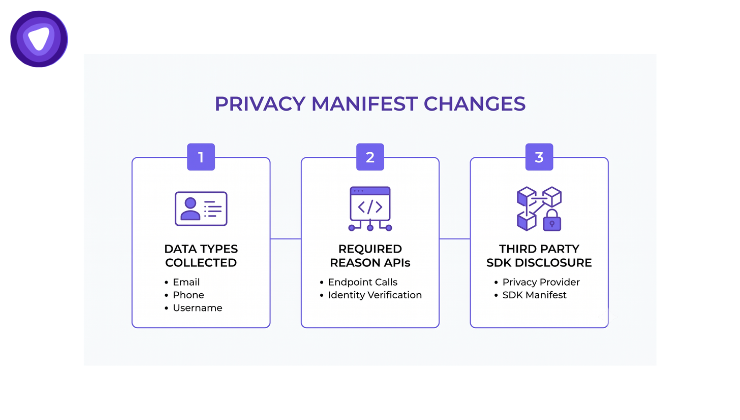
A digital privacy protection module typically touches three declaration areas inside the manifest.
- Data types collected: email, phone number, or username used for exposure checks
- Required reason APIs: any endpoint calls tied to identity verification
- Third party SDK disclosure: the underlying privacy provider must ship its own manifest file
None of this blocks approval when declared correctly. It blocks approval when a team bolts on a monitoring feature. Forgetting to update the manifest before the next submission is the common failure point.
App store review is not the only regulatory layer worth planning for. California’s Delete Act pushes registered data brokers toward faster, standardized removal through the DROP platform. Civil penalties reach up to $200 a day per unresolved request starting August 2026. Consumer apps are not data brokers themselves in most cases. The same removal infrastructure that keeps brokers compliant still powers the opt out layer inside digital privacy protection for consumer apps. Knowing that timeline helps a product team explain why a removal request can take weeks, not hours.
Pricing Digital Privacy Protection For Consumer Apps Inside A Freemium Model
Enterprise SaaS platforms usually meter privacy features as a per seat add on. Exposure risk scales with individual employee accounts there. Consumer apps do not have seats. They have a free tier, a paid tier, and a conversion problem to solve.
Three pricing models show up most often in freemium products:
- A free exposure check, with continuous monitoring and opt out requests gated behind the paid tier
- A dedicated privacy add on sold as a separate in app purchase
- Full inclusion inside the top subscription tier, used as a retention lever instead of a new revenue line
Where It Fits In The Upgrade Funnel
The free exposure check works as a conversion trigger on its own. A user who sees their email already listed across broker sites has an immediate, personal reason to upgrade. That is a stronger prompt than most generic premium feature walls.
How Provisioning And Alerts Work Behind The Scenes
The mechanics matter for any mobile team scoping this integration. A typical flow runs the identity exposure check first. It registers confirmed identifiers for continuous monitoring second. Only then does it open data broker opt out requests third. Skipping that order wastes opt out cycles on identifiers that were never actually exposed.
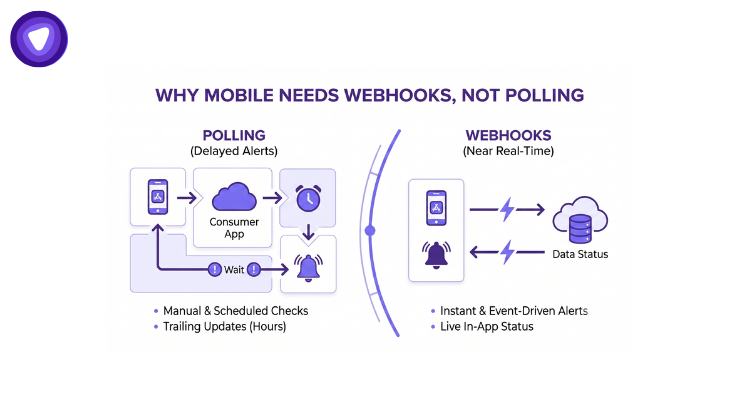
Opt out requests move through a defined lifecycle. Stages include submitted, in progress, pending verification, completed, and occasionally re listed if a broker resells the same data later. A mobile app benefits from webhook based alerts over manual polling here. Push notifications depend on near real time delivery, not a scheduled status check run once a day.
Why Mobile Needs Webhooks, Not Polling
This distinction matters more for consumer apps than it looks at first glance. A B2B dashboard can afford to show status on login. A user there checks it a few times a week at most. A consumer app lives or dies on daily engagement. A delayed exposure alert undercuts the entire point of offering the feature. Webhook delivery keeps the in app notification in step with the actual opt out status, not trailing it by hours.
Who Owns The Bad News When A User’s Data Turns Up Exposed
This is the question generic privacy content never touches, and it matters most once the feature ships. When a monitoring service flags a new exposure, the underlying infrastructure provider owns detection and the removal mechanics. The app itself owns how that news reaches the user.
That split creates a real product decision. A poorly worded in app alert about exposed personal data can feel more alarming than the exposure itself. Product and support teams need a script for this moment before launch, not after the first confused support ticket lands.
Three questions worth settling before launch:
- Does the alert name the specific broker or breach source, or stay generic
- Does support get a copy of the alert language before users do
- Is there a clear next action inside the app, not just a warning
Apps that skip this step treat the first exposure alert as a support fire drill. Teams that plan ahead turn digital privacy protection for consumer apps into a trust builder. It stops being a source of confused tickets. The difference is almost entirely in how the alert is written, not in the underlying detection technology.
Proof Beyond The Pitch
A productivity app added built in privacy protection to its subscription tier. It saw an 18 percent reduction in churn after launch. That figure comes from a real client outcome inside PureVPN White Label VPN Solution’s case study library, not a projection. The tool ran on daily active use. That pattern sits closer to a consumer app than an enterprise workspace product with occasional logins.
Bundled users across the wider partner base also churn 50 percent less than users on a single standalone product. That pattern holds whether the base is enterprise seats or individual consumer accounts. It is the strongest signal that digital privacy protection for consumer apps behaves like a retention feature. It is not just a compliance cost.
How PureVPN White Label VPN Solution Fits Into This
PureVPN White Label VPN Solution packages identity exposure intelligence and dark web monitoring behind one branded API. Data broker opt out runs on the same API. It suits teams that want the feature without building broker relationships from scratch. Consumer app teams keep their own brand on every screen the user sees. The underlying detection and removal work runs on infrastructure covering more than 400 data brokers and 150 partners worldwide.
For a mobile team, that means shipping digital privacy protection for consumer apps without hiring a compliance staff. It also means skipping broker by broker removal negotiations entirely. The integration sits behind an API rather than a rebuilt backend. That keeps the work closer to a sprint than a quarter long project.
Conclusion
Consumer apps that treat privacy as a static settings screen are answering a question users stopped asking years ago. The one users actually ask now is simpler. What happens after my data is already out there. An app that can answer that question keeps the trust a generic permissions toggle never earned in the first place.