

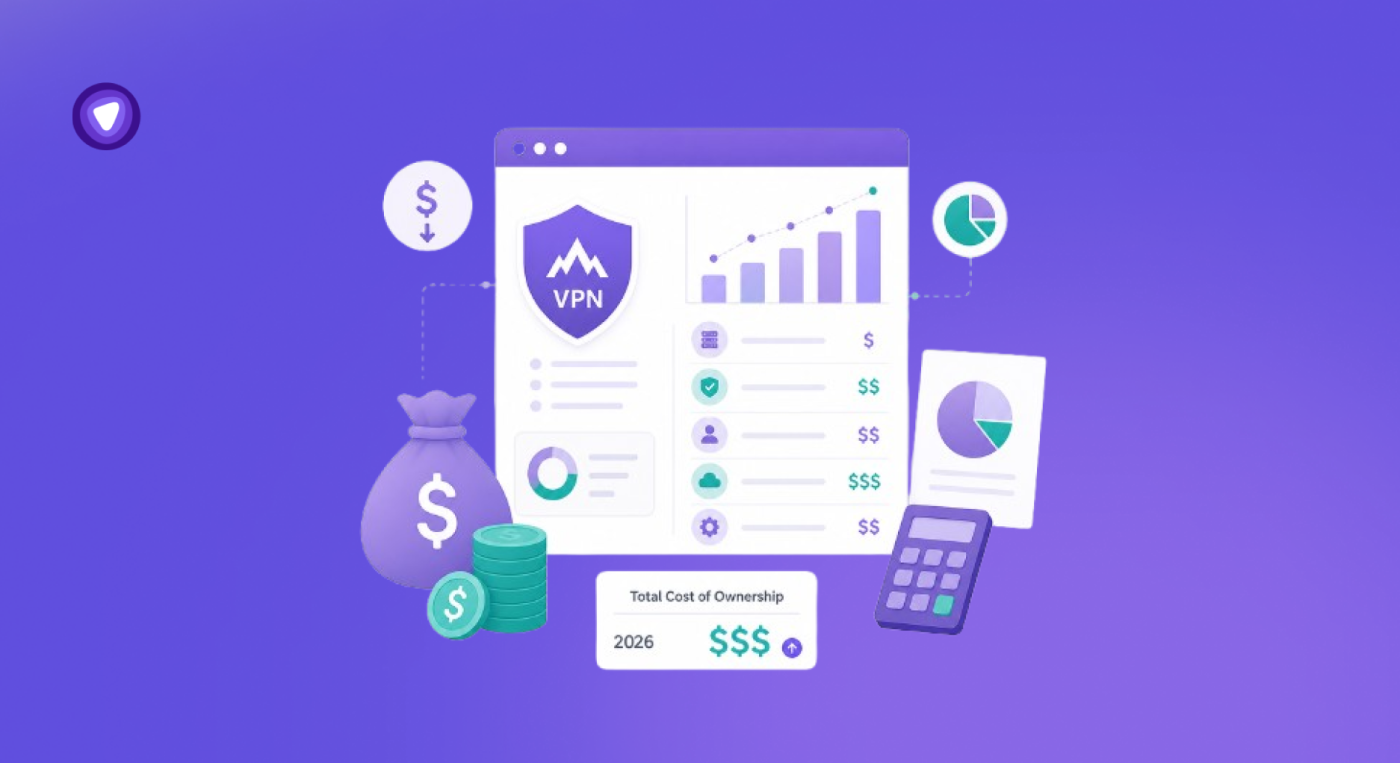
- VPN Infrastructure Commitment: Adding a VPN for SaaS platform is not just a feature decision but a full infrastructure commitment with long-term operational costs.
- Total Cost of Ownership Scope: TCO includes infrastructure scaling, engineering effort, security monitoring, performance optimization, and support functions.
- Ongoing Maintenance Load: Maintenance and engineering work represent a major portion of VPN-related costs and increase as systems scale.
- Security and Complexity Impact: VPN environments increase security complexity, requiring stronger monitoring and longer detection and response cycles.
- White Label Efficiency: White label VPN approaches reduce TCO by shifting infrastructure, maintenance, and operational responsibilities away from internal teams.
A VPN capability appears straightforward at the interface level, typically presented as a simple control within the product. Behind that interface, however, sits a layered cost structure that extends beyond initial implementation.
Integrating a VPN for SaaS platform represents an infrastructure decision rather than a feature addition. It introduces ongoing requirements across network provisioning, engineering resources, performance management, and security operations. Industry analysis and deployment patterns show that these costs scale with user growth, geographic expansion, and evolving security expectations.
This breakdown examines the total cost of ownership in 2026, covering not only setup and integration, but the full range of recurring operational and financial commitments that follow.
What TCO Really Means for VPN Integration
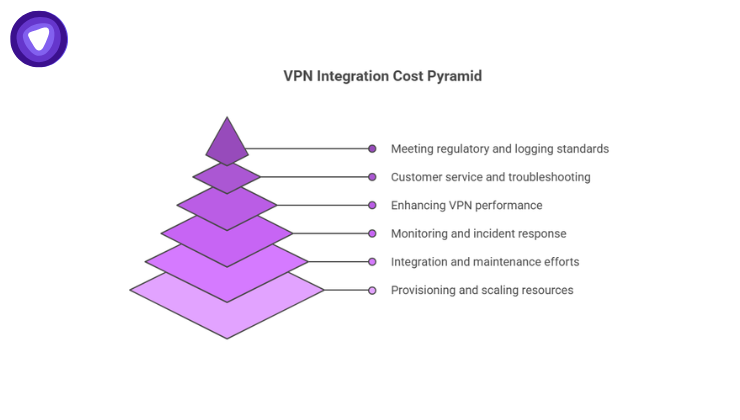
Total cost of ownership is not limited to licensing or development hours. For a SaaS platform, it includes every layer required to deploy, maintain, and scale a VPN offering.
This includes:
- Infrastructure provisioning and scaling
- Engineering time for integration and maintenance
- Security monitoring and incident response
- Performance optimization
- Customer support and troubleshooting
- Compliance and logging requirements
A VPN for SaaS platform becomes part of your core architecture. That means every inefficiency compounds over time.
- Infrastructure Costs: The First Layer That Expands Fast
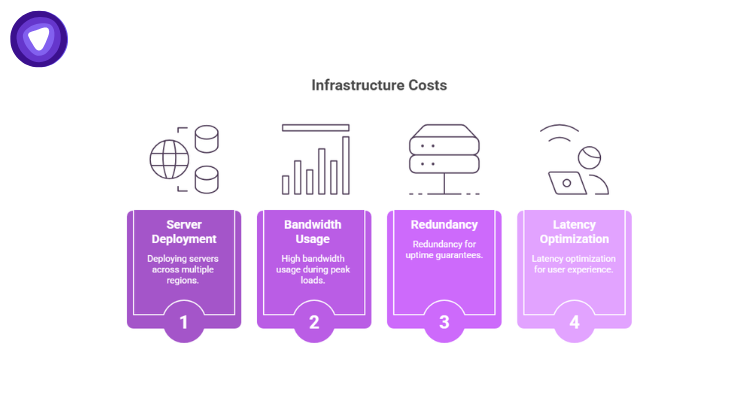
At the base level, VPN requires servers, bandwidth, and global coverage.
Key cost drivers:
- Server deployment across regions
- Bandwidth usage during peak loads
- Redundancy for uptime guarantees
- Latency optimization for user experience
According to the International Data Corporation, global spending on cloud infrastructure continued to rise through 2024, with networking components seeing steady growth due to increased demand for secure connectivity.
For SaaS platforms, this translates into:
- Higher cloud bills as user traffic scales
- Ongoing need to add new server locations
- Cost spikes during usage surges
Without careful planning, infrastructure alone can account for a significant portion of your VPN total cost of ownership.
- Engineering Costs: Integration Is Not a One-Time Task
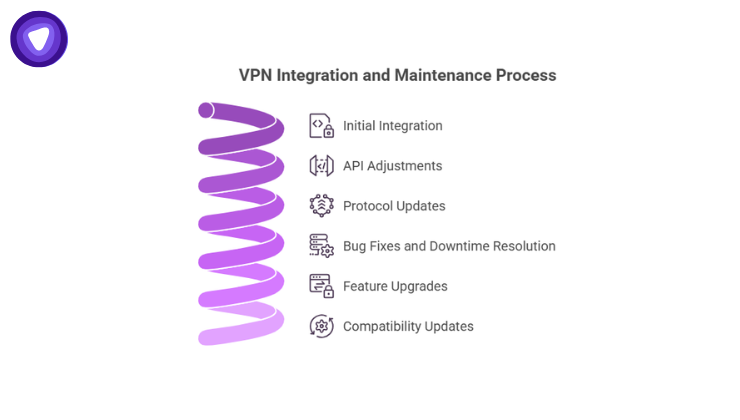
Adding a VPN layer is not a plug-and-play operation.
Initial integration includes:
- Authentication flow alignment
- Session management
- Encryption implementation
- API-level adjustments
Ongoing engineering costs include:
- Protocol updates
- Bug fixes and downtime resolution
- Feature upgrades such as split tunneling or Dedicated IP support
- Compatibility with new operating systems and devices
A 2024 report highlights that maintenance work consumes a large portion of engineering resources in production systems. For a VPN for SaaS platform, maintenance never stabilizes. It grows with user demand and security requirements.
- Security and Monitoring: The Hidden Operational Load
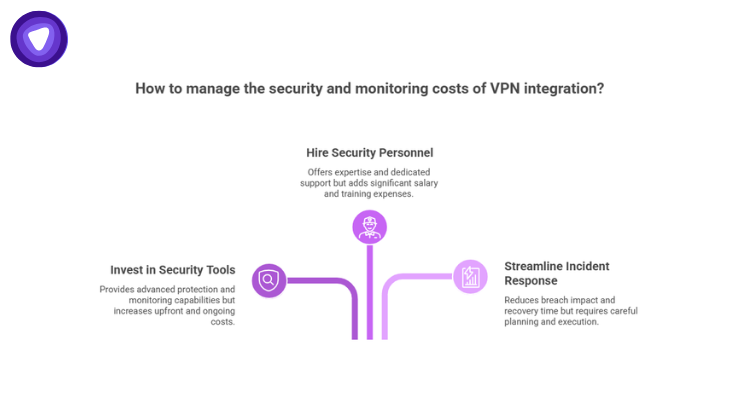
VPN introduces new security responsibilities. You are not only protecting your platform. You are also responsible for:
- Encrypted traffic integrity
- Threat detection within tunnels
- Credential misuse prevention
- Logging and audit trails
The IBM Cost of a Data Breach Report found that the average breach cost reached $4.88 million globally. It also noted that breaches involving complex environments take longer to detect and contain.
VPN infrastructure adds complexity to your environment. That increases both detection time and operational overhead.
Ongoing costs include:
- Security tools and monitoring systems
- Dedicated security personnel
- Incident response workflows
This layer often gets underestimated during planning.
- Performance Costs: User Experience Comes at a Price
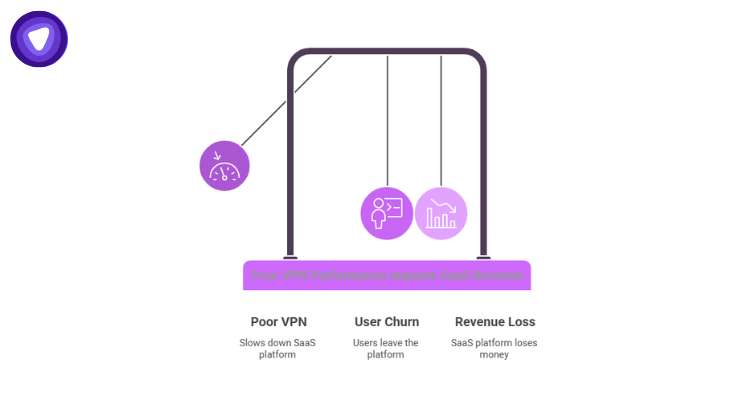
VPN affects speed. That is unavoidable.
To maintain performance standards, SaaS platforms must invest in:
- Load balancing
- Smart routing
- Regional server optimization
- Traffic prioritization
If performance drops, user churn increases.
Even small increases in latency can impact user engagement and retention.
For SaaS platforms, this creates a direct financial link:
Poor VPN performance → Lower retention → Revenue loss
Maintaining performance requires continuous optimization, which adds to both infrastructure and engineering costs.
- Support Costs: Scaling Users Means Scaling Issues
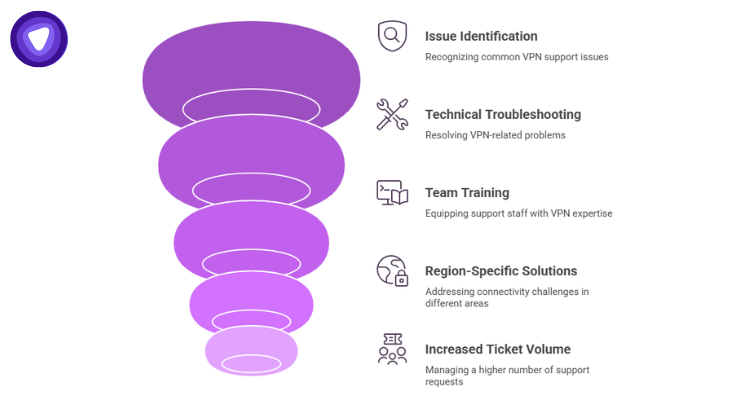
VPN-related issues are different from typical SaaS support queries.
Common support cases include:
- Connection failures
- Device compatibility issues
- Network restrictions in certain regions
- Speed complaints
Each issue requires technical troubleshooting.
As your user base grows, support costs increase in proportion to VPN usage, not just platform usage.
Support cost factors:
- Training support teams on VPN-specific issues
- Handling region-specific connectivity problems
- Increased ticket volume
This layer is often overlooked in early cost estimates.
- Compliance and Data Handling Costs
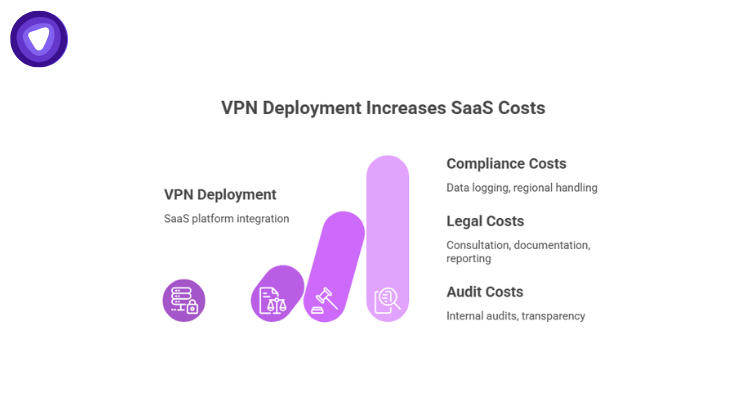
Depending on your target market, VPN deployment may require:
- Data logging policies
- Regional data handling compliance
- Transparency reporting
Even if your SaaS platform avoids heavy regulatory positioning, operating a VPN still introduces expectations around data handling.
This adds:
- Legal consultation costs
- Documentation and reporting overhead
- Internal audits
These are recurring costs, not one-time expenses.
A Practical TCO Breakdown
Below is a simplified view of how costs distribute over time for a VPN for SaaS platform:
| Cost Category | Initial Cost | Ongoing Cost | Growth Impact |
| Infrastructure | High | High | Scales with users and regions |
| Engineering | High | Medium-High | Continuous updates required |
| Security & Monitoring | Medium | High | Increases with complexity |
| Performance Optimization | Medium | Medium | Linked to user expectations |
| Customer Support | Low | Medium-High | Scales with user base |
| Compliance & Legal | Medium | Medium | Market-dependent |
The key insight is simple: Most VPN costs are recurring and increase with scale.
Build vs Buy: Where Costs Shift
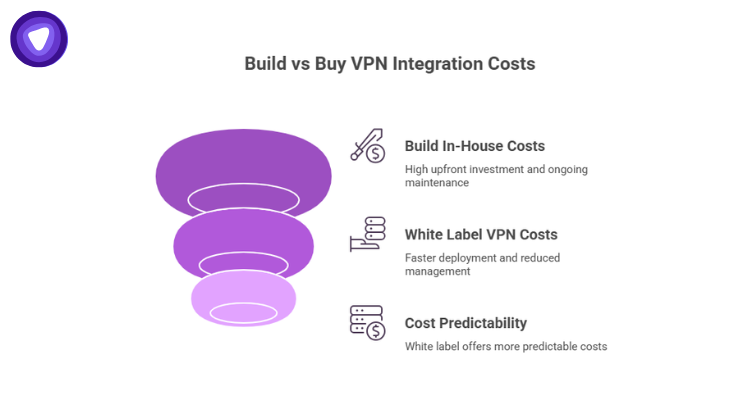
SaaS platforms face two main approaches:
1. Build In-House
Pros:
- Full control over infrastructure
- Custom feature development
Cons:
- High upfront engineering investment
- Long deployment timelines
- Continuous operational burden
2. Use a White Label VPN
Pros:
- Faster deployment
- Reduced infrastructure management
- Lower engineering overhead
Cons:
- Dependency on provider
- Limited customization compared to full in-house builds
For most teams, the decision comes down to cost predictability.
A white label VPN shifts large portions of infrastructure and maintenance costs away from internal teams. That changes the TCO curve significantly.
Where Most SaaS Teams Miscalculate
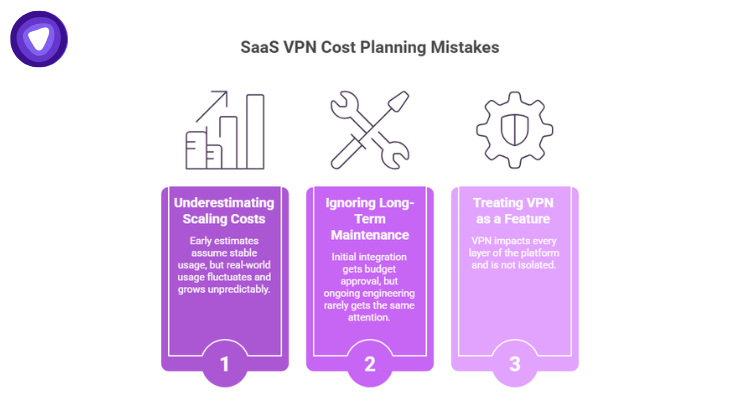
Three common mistakes appear in VPN cost planning:
1. Underestimating scaling costs
Early-stage estimates assume stable usage. Real-world usage fluctuates and grows unpredictably.
2. Ignoring long-term maintenance
Initial integration gets budget approval. Ongoing engineering rarely gets the same attention.
3. Treating VPN as a feature, not infrastructure
VPN impacts every layer of the platform. It is not isolated.
These gaps lead to budget overruns and operational strain.
The Strategic Impact Beyond Cost
Adding a VPN for SaaS platform goes beyond increasing operational expenses. It directly influences how the product is positioned in the market, shaping perceptions around security and privacy. It also has a measurable impact on customer trust, particularly in environments where secure connectivity is a core expectation.
In addition, it can enable expansion into privacy-sensitive markets where secure access infrastructure is a requirement rather than an option. However, these advantages only hold when the system performs consistently at scale. If performance, reliability, or security execution falls short, the intended value is diminished and can negatively affect both adoption and retention.
Where PureVPN White Label Fits In
For SaaS teams that want to avoid building from scratch, PureVPN White Label VPN changes how costs are distributed.
Instead of managing infrastructure, server expansion, and routing optimization internally, teams can integrate an existing network layer. This removes a significant portion of the recurring infrastructure and maintenance burden.
It also reduces engineering overhead tied to protocol updates, performance tuning, and global coverage expansion, which are among the most expensive components of VPN ownership.
A More Predictable Cost Model
A white label approach makes the total cost of ownership more predictable by shifting expenses away from fragmented infrastructure and ongoing in-house development. Instead of managing dispersed cost centers, spending becomes more structured around integration and configuration efforts, controlled subscription or usage-based pricing models, and reduced internal resource allocation across engineering and operations teams.
For growing SaaS platforms, this predictability often carries more weight than simply reducing overall cost, as it supports clearer financial planning, smoother scaling across user bases and regions, and fewer operational bottlenecks during expansion.
Final Thoughts
The decision to add a VPN is not about adding security. It is about taking ownership of a new infrastructure layer.
The VPN for SaaS platform cost structure extends far beyond initial setup. Infrastructure, engineering, monitoring, performance, and support all contribute to long-term ownership costs that increase with scale.
Teams that plan only for integration costs underestimate the commitment.
A clear TCO view changes the decision-making process. It highlights where costs originate, how they grow, and what can be optimized. In 2026, the question is no longer whether to add VPN capabilities. It is how to do it without turning it into an operational burden.