

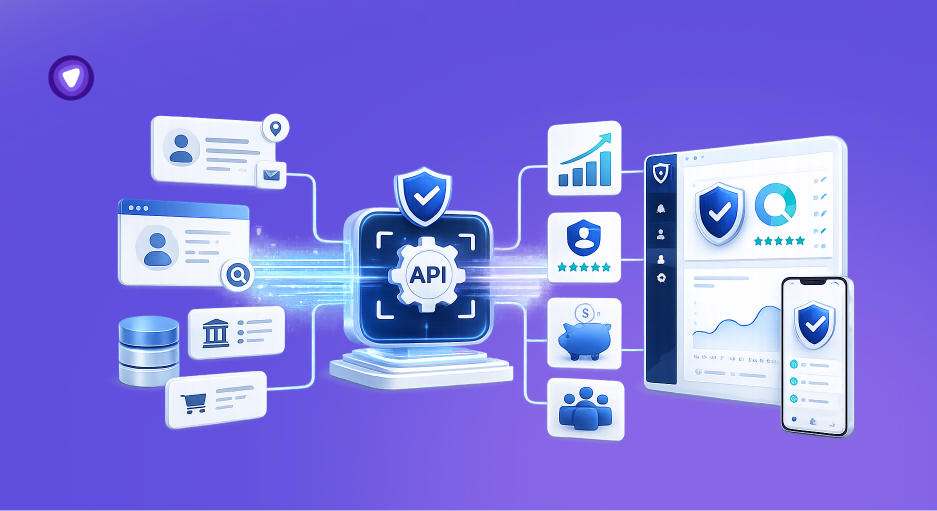
- Data Removal APIs automate the discovery and removal of personal information from data brokers and public databases
- Integrating a Data Removal API helps privacy products deliver scalable, automated removal services without building backend infrastructure from scratch
- White label integration allows companies to offer data removal services under their own brand with full control of user experience
- Continuous monitoring is required because personal data can reappear across data broker networks over time
- Secure architecture, including encryption, authentication, and audit logging, is essential for building a reliable privacy-focused product
Personal information spreads across the internet quickly across people search sites, data brokers, and public databases. Users typically seek privacy services after finding exposed phone numbers, home addresses, or employee records, expecting accurate removal.
Manually handling removals is complex. Data broker networks span hundreds of sources with different verification rules and removal processes, making automated detection, tracking, and removal essential for scale.
This is why Data Removal APIs have become a core component of modern privacy platforms. They allow businesses to embed personal information removal services directly into their own applications while maintaining complete control over branding, customer experience, and service delivery.
This guide explains how Data Removal APIs work, how to integrate them into a privacy product, and the technical considerations required to launch a branded privacy service successfully.
Why Data Removal Services Have Become Essential
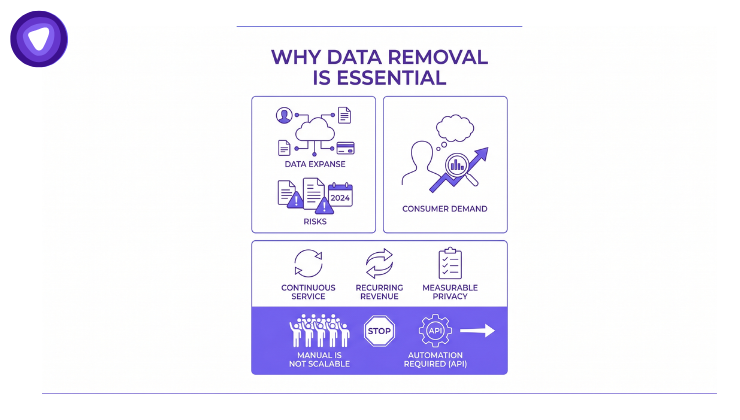
The personal data economy continues to expand across public databases, marketing platforms, people search websites, and data broker networks.
According to a report, data compromises exposed more than 1.7 billion victim notices in 2024, highlighting the growing volume of personal information circulating online.
At the same time, consumer awareness around privacy risks continues to increase. Individuals are actively searching for services that can help them remove exposed information, reduce identity theft risks, and regain control over their digital footprint.
For privacy-focused businesses, this creates a significant opportunity:
- Offer continuous data removal services
- Expand recurring subscription revenue
- Increase customer retention
- Deliver measurable privacy outcomes
- Differentiate from basic VPN or cybersecurity offerings
The challenge is operational execution.
Managing thousands of removal requests manually is not scalable. A Data Removal API solves this problem by automating the entire process.
What Is a Data Removal API?
A Data Removal API is a service interface that enables applications to identify, submit, monitor, and manage requests to remove personal information from data brokers and public databases.
Instead of building relationships with hundreds of data sources individually, businesses can connect to a single API and gain access to an existing removal infrastructure.
Typical API capabilities include:
- Data broker discovery
- Exposure monitoring
- Removal request submission
- Status tracking
- Verification workflows
- Reporting and analytics
- Continuous monitoring
From a customer perspective, everything appears inside your own platform.
From an operational perspective, the API provider handles the complex backend removal processes.
Core Components of a Data Removal Integration
Successful integration requires more than connecting an endpoint.
Several interconnected systems work together to create a complete privacy experience.
Identity Collection Layer
The process begins with collecting the information required to locate exposed records.
Common data points include:
- Full name
- Email addresses
- Phone numbers
- Physical addresses
- Date of birth
- User aliases
Strong validation controls are important because inaccurate information can reduce matching accuracy and generate unnecessary removal requests.
Exposure Discovery Engine
The discovery layer scans supported data broker databases and identifies records associated with a user.
The system typically returns:
- Data source name
- Exposure type
- Confidence score
- Record status
- Risk level
This information becomes the foundation for customer reporting and remediation workflows.
Removal Request Management
Once records are identified, the platform submits removal requests through the API.
Key actions include:
- Automated submissions
- Verification handling
- Status monitoring
- Re-submission workflows
- Escalation management
This component often represents the most technically complex part of the service.
Monitoring and Reappearance Detection
Data removal is not always permanent.
Information frequently reappears through data aggregation, public records updates, or broker data refresh cycles.
Continuous monitoring ensures:
- New exposures are detected
- Previously removed records remain removed
- Customers receive updated privacy reports
Integration Architecture Overview
The following table illustrates a common architecture used by branded privacy platforms.
| Component | Function | Customer Visibility |
| Frontend Portal | User onboarding and reporting | High |
| Identity Verification Service | Confirms ownership of personal data | Medium |
| Data Removal API | Removal automation and status tracking | Hidden |
| Monitoring Engine | Exposure detection and alerts | High |
| Reporting Dashboard | Progress and analytics | High |
| Notification Service | Updates and status changes | High |
This architecture allows organizations to maintain a seamless customer experience while relying on API-driven automation behind the scenes.
Technical Steps to Integrate a Data Removal API
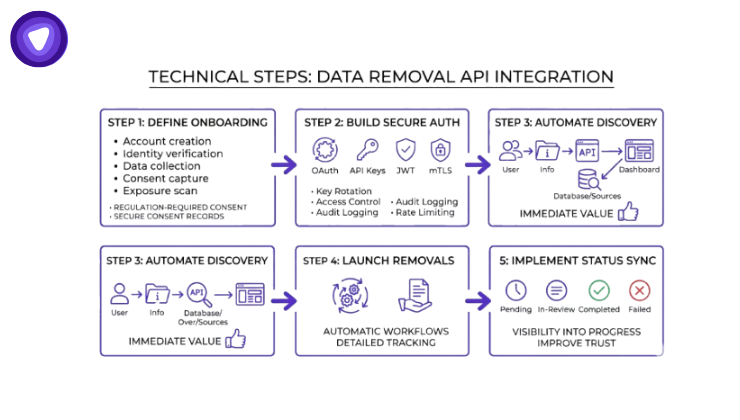
Step 1: Define User Onboarding Workflows
The onboarding process determines how effectively users can submit their information.
Recommended workflow:
- Account creation
- Identity verification
- Data collection
- Consent capture
- Exposure scan initiation
Privacy regulations require clear consent before submitting removal requests on behalf of users.
Consent records should be securely stored and linked to each removal workflow.
Step 2: Build Secure API Authentication
Most enterprise-grade APIs use:
- OAuth 2.0
- API keys
- JWT tokens
- Mutual TLS authentication
Authentication infrastructure should support:
- Key rotation
- Access control
- Audit logging
- Rate limiting
Credential abuse remains one of the most common attack vectors, making secure API authentication a critical requirement.
Step 3: Automate Exposure Discovery
Once onboarding is complete, trigger automated scans through the API.
The workflow generally follows this sequence:
- User submits personal information
- Platform sends discovery request
- API scans supported sources
- Exposure results are returned
- Dashboard displays findings
Efficient exposure discovery creates immediate value because users can see where their information is exposed before removal begins.
Step 4: Launch Removal Workflows
After discovery, removal requests can be initiated automatically or manually.
Automatic workflows provide several advantages:
- Faster remediation
- Reduced support overhead
- Consistent execution
- Improved customer satisfaction
Each request should maintain detailed tracking information, including timestamps, source identifiers, and processing status.
Step 5: Implement Status Synchronization
Users expect visibility into progress.
Status synchronization allows your platform to display:
- Pending removals
- In-review requests
- Completed removals
- Verification requirements
- Failed requests
Regular synchronization prevents reporting inaccuracies and improves trust.
Privacy, Compliance, and Security Considerations
Privacy services process highly sensitive information.
Security controls should be implemented across every layer of the architecture.
Important measures include:
Data Encryption
Encrypt data:
- In transit
- At rest
- During backups
Industry-standard encryption reduces exposure risks and supports regulatory requirements.
Access Controls
Apply role-based permissions to:
- Customer data
- Administrative systems
- Reporting interfaces
- API management portals
The principle of least privilege should guide access decisions.
Audit Logging
Comprehensive logging helps organizations:
- Investigate incidents
- Verify actions
- Track API activity
- Support regulatory requirements
Data Minimization
Collect only the information necessary for removal workflows.
Organizations with mature privacy programs report higher customer trust and stronger business outcomes than those with fragmented privacy practices.
Creating a Strong Customer Experience
Technical functionality alone does not guarantee adoption.
Successful privacy products focus heavily on transparency.
Customers should understand:
- What information was found
- Which removals are underway
- Expected timelines
- Success rates
- Ongoing monitoring status
Effective dashboards often include:
- Exposure counts
- Removal progress
- Historical activity
- Privacy risk scores
- Monthly reports
Visual progress indicators help customers see measurable value over time.
Scaling a Data Removal Service
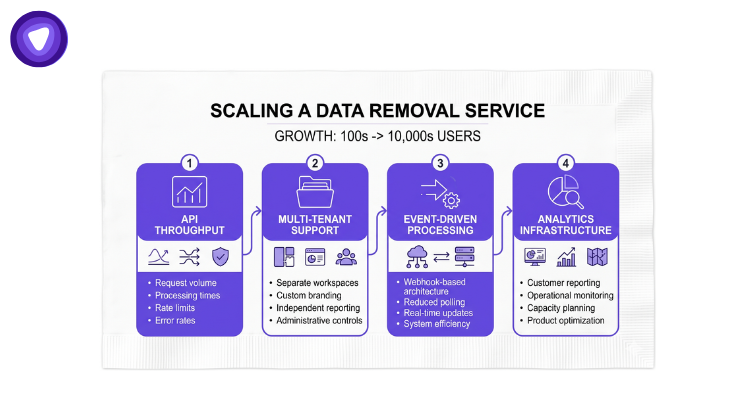
Growth introduces operational challenges.
A privacy platform serving hundreds of users differs significantly from one serving tens of thousands.
Scalability considerations include:
API Throughput
Monitor:
- Request volume
- Processing times
- Rate limits
- Error rates
Multi-Tenant Support
For B2B deployments, organizations often require:
- Separate workspaces
- Custom branding
- Independent reporting
- Administrative controls
Event-Driven Processing
Webhook-based architectures can improve efficiency by reducing constant polling and enabling real-time updates.
Analytics Infrastructure
As user volume increases, analytics become critical for:
- Customer reporting
- Operational monitoring
- Capacity planning
- Product optimization
Launching a Branded Privacy Platform Faster
Building an entire privacy infrastructure from scratch requires significant investment in development, security, integrations, and ongoing maintenance.
Organizations seeking faster market entry often combine multiple privacy technologies into a single branded offering. This approach reduces development complexity while preserving control over customer experience, pricing, and product positioning.
For businesses entering the privacy market, infrastructure flexibility becomes especially important as services expand beyond VPN connectivity into identity protection, data exposure monitoring, and personal information removal.
How PureVPN White Label VPN Solution Supports Privacy-Focused Products
The PureVPN White Label VPN Solution enables businesses to launch fully branded privacy and security services without building core infrastructure internally. Organizations maintain complete ownership of branding, user experience, subscriptions, and customer relationships while operating on a proven backend platform.
For companies integrating Data Removal APIs into a broader privacy offering, the solution provides a foundation for combining secure connectivity, identity protection services, and privacy management under a single brand. This allows businesses to create comprehensive privacy products that address both online security and personal data exposure from a unified customer experience.
Closing Thoughts
Data Removal APIs have become a practical requirement for modern privacy platforms. Consumers increasingly expect privacy services to deliver measurable outcomes, not simply alerts or recommendations. Automated discovery, removal workflows, continuous monitoring, and transparent reporting help transform privacy protection into an ongoing service rather than a one-time action.
Organizations that integrate these capabilities effectively can launch stronger privacy products, improve customer retention, and create recurring revenue opportunities while maintaining complete control over their brand. The combination of automation, security, and operational scalability is what turns a privacy feature into a sustainable privacy business.