


A quiet shift is redefining how businesses compete. It is not pricing. It is not a feature count. It is not even speed to market. It is how responsibly a company handles data.
Privacy has become visible. Customers notice it. Partners evaluate it. Regulators enforce it. Investors factor it into risk. What used to sit in the background is now influencing growth at the front line.
This is the privacy economy. And in this environment, security directly drives revenue, retention, and expansion.
- Privacy Shift: Privacy has shifted from a compliance requirement to a core business strategy that directly influences revenue and growth.
- Trust Impact: Strong data protection builds trust, which increases customer acquisition, retention, and long-term value.
- Market Growth: The privacy economy is growing rapidly, driven by rising cybersecurity spending, increased VPN adoption, and expanding digital threats.
- Infrastructure Need: Infrastructure such as secure remote access, encryption, and VPNs is essential for turning privacy strategy into real protection.
- White Label VPN Value: A white label VPN solution enables businesses to offer secure, branded privacy services while unlocking new growth opportunities.
Privacy Has Moved From Compliance to Competitive Strategy
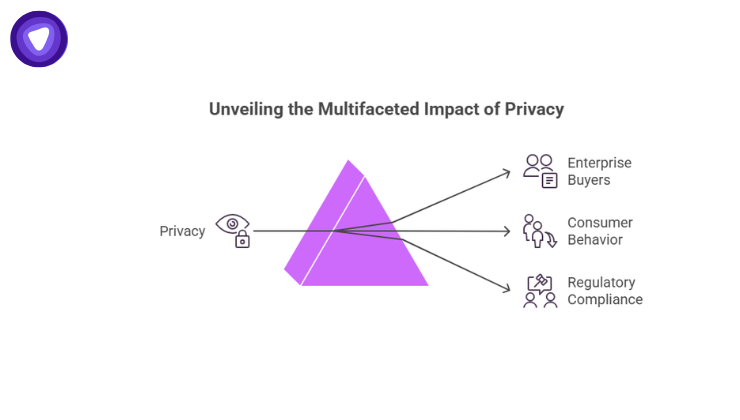
Privacy used to exist to avoid penalties. That model is outdated. Today, privacy determines whether a company can win and retain customers.
- Enterprise buyers request security documentation before onboarding
- Consumers abandon platforms after a single breach
- Regulators impose restrictions that block market entry
According to the IBM Cost of a Data Breach Report 2024, the average global cost of a breach remains $4.45 million, with lost business contributing the largest share. This reflects churn, downtime, and reputational damage, not just technical recovery.
A separate survey found that 76 percent of consumers will not buy from companies they do not trust with their data. This shifts privacy from compliance to a direct revenue lever.
Organizations that treat privacy as strategy are not just safer. They are more competitive.
Market Analysis: The Rise of the Privacy Economy
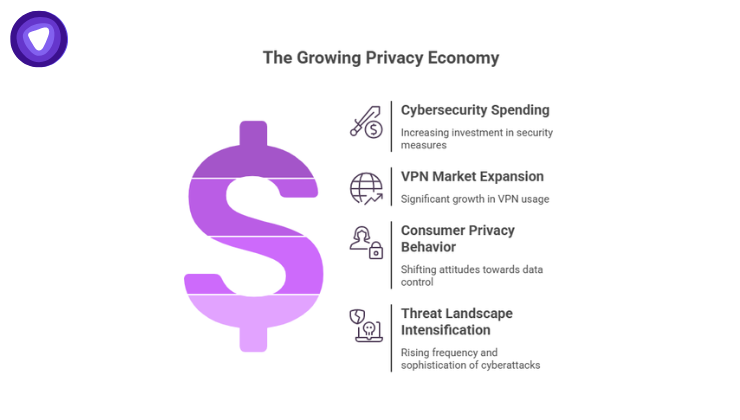
The privacy economy is not a concept. It is a measurable market trend backed by strong growth across multiple sectors.
1. Cybersecurity Spending Is Accelerating
- Global cybersecurity spending exceeded $188 billion in 2024 according to industry estimates
- Gartner projections indicate continued double-digit growth driven by cloud adoption and remote work
This reflects a shift from reactive security to proactive investment.
2. VPN Market Expansion
- The global VPN market was valued at $44.6 billion in 2023
- Projections suggest it will surpass $75 billion by 2027
Growth drivers include:
- Remote workforce expansion
- Increased geo-restrictions and censorship
- Rising awareness of tracking and surveillance
3. Consumer Privacy Behavior Is Changing
- Statista reports that around 31 percent of global internet users use a VPN
- Research found that over 80 percent of users feel they lack control over their data
This signals strong demand for tools that restore control and visibility.
4. Threat Landscape Intensification
- Organizations experienced an average of 1,200 cyberattacks per week in 2024, according to cybersecurity research firms
- Supply chain attacks increased over 700 percent between 2019 and 2023
The scale and frequency of attacks are forcing companies to rethink infrastructure, not just policies.
The Economics of Trust
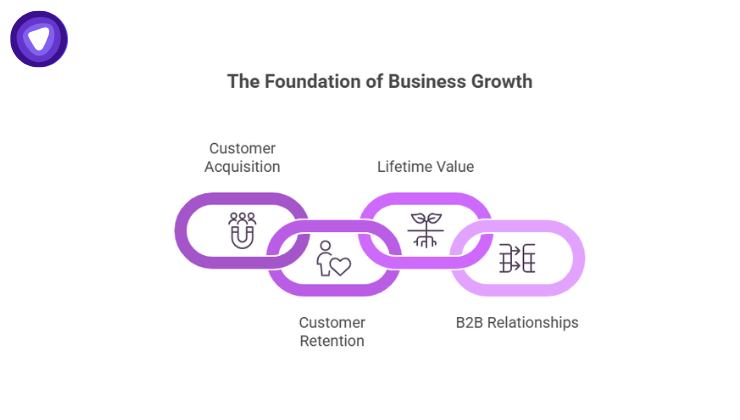
Trust is now measurable in business performance.
Organizations that invest in privacy see improvements in:
- Customer acquisition costs
- Retention rates
- Lifetime value
Trust reduces friction. When users feel secure, they are more likely to:
- Share data required for personalization
- Engage with premium features
- Commit to long-term subscriptions
Privacy also accelerates B2B relationships. Vendors that demonstrate strong security controls move faster through procurement cycles.
This creates a compounding effect. Trust strengthens growth, and growth reinforces trust.
Infrastructure Defines Privacy Outcomes
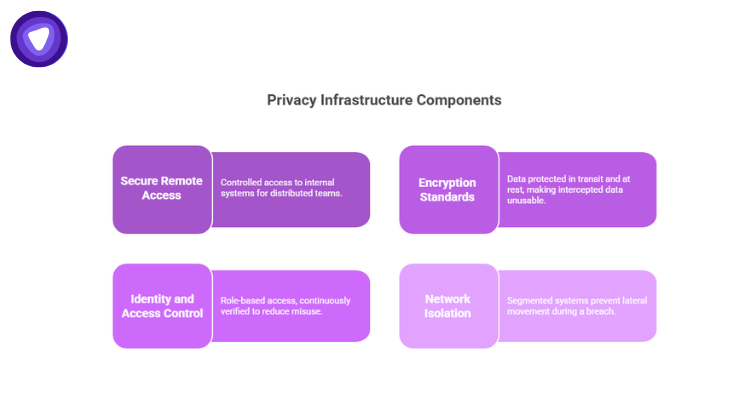
Privacy cannot be achieved through statements or policies. It requires enforceable technical systems.
Key infrastructure components include:
Secure Remote Access
Distributed teams require controlled access to internal systems. Without this, data exposure increases significantly.
Encryption Standards
Data must remain protected in transit and at rest. Encryption ensures that intercepted data remains unusable.
Identity and Access Control
Access must be role-based and continuously verified. This reduces internal misuse and external compromise.
Network Isolation
Segmented systems prevent lateral movement during a breach.
A white label VPN solution becomes a core layer within this infrastructure by enabling encrypted access across distributed environments.
Privacy as a Product Differentiator
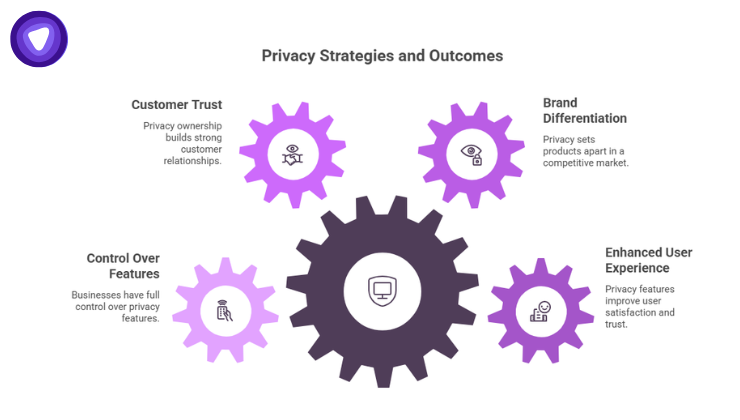
Privacy is now visible to users and influences purchasing decisions. Companies are integrating privacy into their product experience:
- End-to-end encryption as a default feature
- Anonymous browsing and location masking
- User dashboards for data control
This shifts privacy from backend function to front-end value.
A white label VPN solution allows businesses to embed these capabilities directly into their offerings under their own brand. This ensures consistency in user experience while strengthening brand trust.
Competitive Positioning Through Privacy Ownership
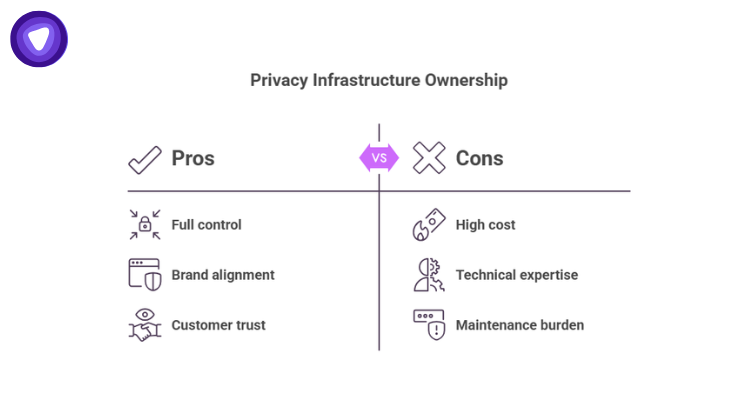
Relying on external providers for privacy infrastructure creates limitations:
- Reduced control over user experience
- Dependency on third-party policies
- Limited ability to differentiate
Owning privacy infrastructure changes this dynamic.
Benefits include:
- Full control over feature deployment
- Alignment with brand identity
- Direct ownership of customer trust
A white label VPN solution enables businesses to offer secure connectivity without exposing third-party branding. This strengthens positioning, especially in markets where trust is a deciding factor.
Industry Use Cases Driving Demand
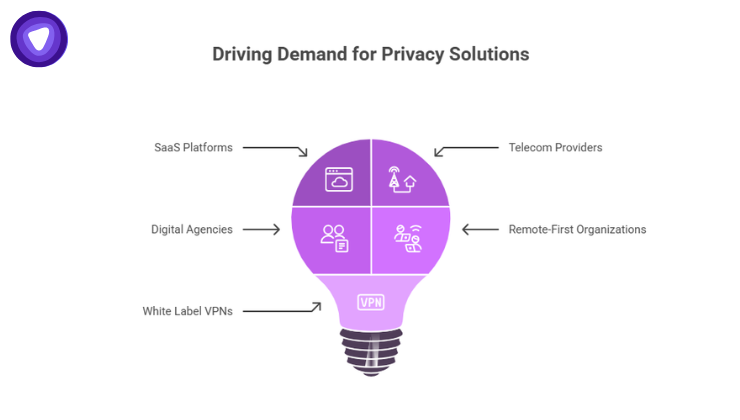
The privacy economy is not limited to a single sector. Demand is expanding across industries.
SaaS Platforms
Secure access to applications and user data is essential. Privacy features reduce churn and improve enterprise adoption.
Telecom Providers
Bundling privacy services with connectivity increases average revenue per user and reduces customer churn.
Digital Agencies
Handling client data requires secure collaboration environments. Privacy capabilities strengthen client confidence.
Remote-First Organizations
Secure access to internal systems is critical for productivity and risk management.
In each case, a white label VPN solution provides a scalable way to integrate privacy without building infrastructure from scratch.
Privacy Investment vs Business Impact
The pattern is consistent. Privacy investments align directly with growth metrics.
| Privacy Investment Area | Market Driver | Business Outcome |
| Secure Remote Access | Remote workforce growth | Reduced breach risk |
| Data Encryption | Rising cyber threats | Lower financial losses |
| User Privacy Features | Consumer awareness | Higher retention |
| Compliance Readiness | Expanding regulations | Faster market expansion |
| White Label VPN Integration | Demand for branded privacy services | New recurring revenue streams |
Barriers to Adoption and How They Are Evolving
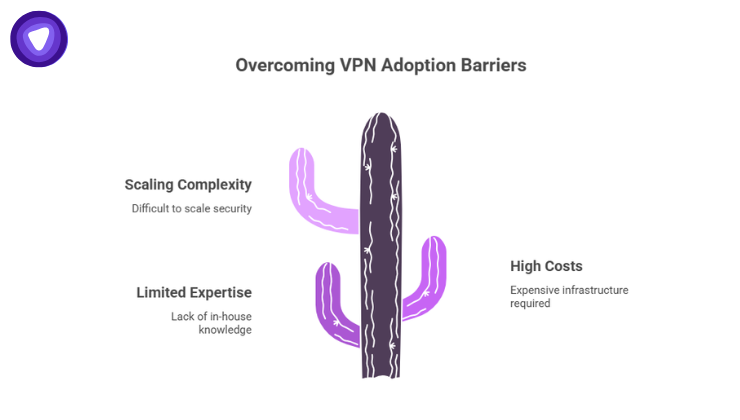
Despite clear benefits, organizations still face challenges:
- Limited in-house expertise
- High infrastructure costs
- Complexity in scaling security systems
However, the market is shifting toward solutions that reduce these barriers.
Businesses are prioritizing:
- Scalable deployment models
- Minimal operational overhead
- Integration with existing systems
A white label VPN solution addresses these requirements by providing ready-to-deploy infrastructure that can be customized and scaled.
Why VPN Technology Remains Foundational
VPN technology continues to play a central role in modern cybersecurity strategy.
It provides:
- Encrypted communication channels
- Secure access across distributed networks
- Protection against interception and monitoring
As businesses expand globally and operate across multiple environments, secure connectivity becomes essential.
A white label VPN solution extends this capability by allowing companies to deliver VPN services under their own brand. This transforms security from an internal function into a customer-facing value.
Turning Privacy Into a Growth Engine
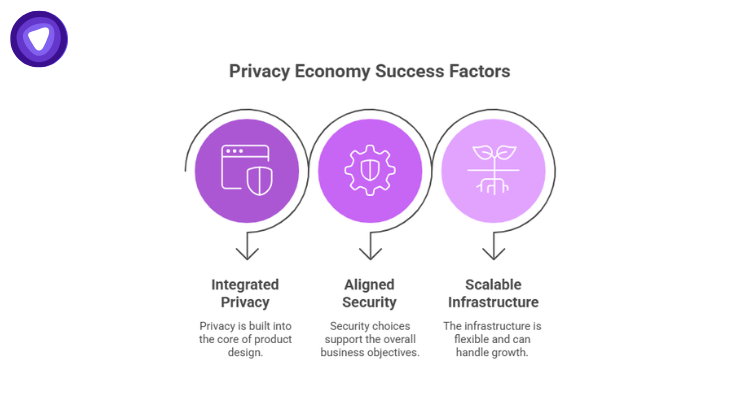
Organizations that succeed in the privacy economy share common traits:
- Privacy is integrated into product design
- Security decisions are aligned with business goals
- Infrastructure supports scalability and flexibility
This approach turns privacy into a growth engine rather than a cost center.
Companies can:
- Enter new markets with confidence
- Build stronger customer relationships
- Create new revenue streams through privacy services
Where PureVPN White Label VPN Solution Fits In
PureVPN’s White Label VPN Solution gives businesses a practical way to deliver secure connectivity without building and managing complex infrastructure. Instead of investing in global servers, encryption systems, and ongoing maintenance, organizations can deploy a ready-made solution under their own brand. This significantly reduces time to market while maintaining strong security standards, allowing teams to stay focused on core business priorities rather than backend technical challenges.
At a strategic level, this approach helps align privacy with growth. By integrating a white label VPN solution, businesses can offer secure access as part of their product experience, strengthen customer trust, and create new revenue opportunities through privacy-focused services. It also ensures scalability as demand grows, enabling companies to support distributed teams and global users while keeping full control over branding and user experience.
Final Thoughts
The privacy economy will continue to expand as digital interactions increase and threats evolve. Expectations around data protection will rise faster than regulations.
Businesses that treat privacy as a strategic asset will lead. Those that treat it as a requirement will struggle to keep pace.
A white label VPN solution is not just a technical tool in this environment. It is a business enabler that connects security directly to growth.