

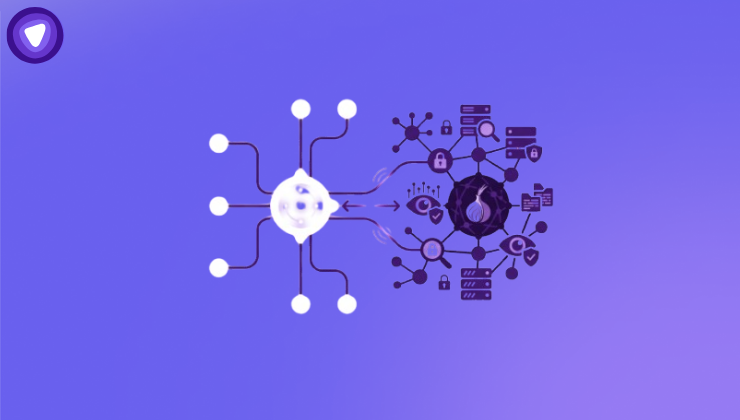
- Product teams need a different model than MSSPs. MSSP tools monitor a domain and cover every employee under it, while a SaaS product has to register and monitor each end user individually.
- The core flow is Secret Key, token, then registration. A partner exchanges a Secret Key for an access token, then registers each user through the User Management endpoint before checking exposure.
- A raw exposure report is not a feature on its own. The API returns a consolidated report, and the product still has to turn it into a security score, a reset prompt, or an alert.
- Webhook delivery matters more than polling at scale. Real time monitoring pushes alerts the moment a monitored identifier surfaces, keeping call volume tied to actual events instead of total user count.
- Building this internally is expensive and slow. A single production grade integration runs about 460 engineering hours and twenty to forty thousand dollars in year one, before any collection pipeline exists.
A user’s email surfaces in a new breach. If your product cannot tell them, they find out elsewhere. A breach notification service, a news alert, or a rival app flags it first. At that point the gap is not technical anymore. It shows up as a support ticket, a canceled subscription, or a review that costs you referrals.
A white label dark web monitoring API exists to close that gap before a user notices it alone. It does not behave like the dashboards most security vendors sell. There is no separate login screen pulling users away from your product. The API sits behind your own backend, and your application decides what a user sees and when.
That distinction matters more than any feature list. Most content on this topic assumes the buyer is a managed security provider. That buyer watches a handful of enterprise domains. A SaaS platform protects millions of individual end user accounts instead. Almost nothing written about a white label dark web monitoring API addresses that gap directly.
Why SaaS Platforms Need a Different Integration Model Than MSSPs
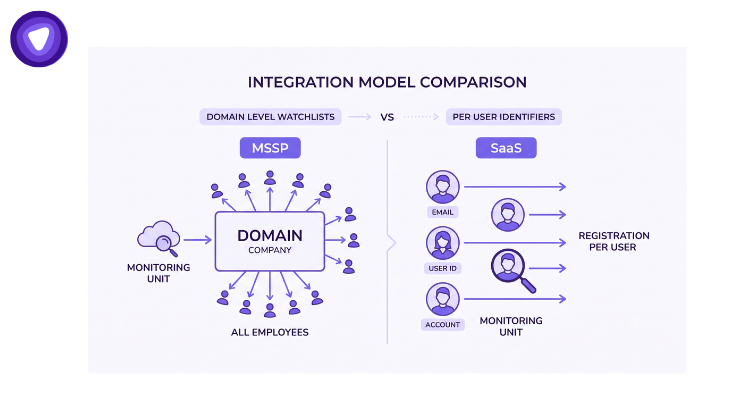
Managed security providers monitor organizations. A product team monitors people, and the stakes of getting that wrong are already measurable. Credential stuffing now makes up a median 19% of authentication attempts on single sign-on platforms. Once an account gets taken over, most consumers never come back to that product. When an exposed credential turns into an account takeover, the loss is not only remediation time. It is the subscription, the support ticket volume, and the referral trust attached to that account. That pressure changes the architecture of a white label dark web monitoring API, from identifier registration to alert delivery.
Consumers are also moving toward this feature by default, not waiting for a vendor to explain why it matters. Users now prefer identity protection built into an app they already use over a separate portal or standalone tool. A product that waits to add this loses that preference to whichever competitor ships it first.
Domain Level Watchlists Versus Per User Identifiers
MSSP tooling treats a domain or a company name as the unit of monitoring. One watchlist entry covers every employee at a client organization. A SaaS product does not have that luxury. Each end user signs up individually. Many use a personal email unrelated to any company domain. The monitoring unit has to be the individual identifier, not the employer.
This changes provisioning entirely. A vendor console cannot add one domain and inherit coverage for hundreds of people. A product team registers each user separately through account provisioning built into the User Management endpoint. That registration happens in code, inside your own signup or opt-in flow.
Where the Line Sits Between Your Product and the Monitoring Layer
The API provider handles collection, parsing, and matching against breach and dark web sources. Your product owns the presentation layer entirely. That covers the alert copy, the severity framing, the in-app notification, and what action a user can take next. That leaves product teams to define where their own responsibility starts.
The Authentication and Provisioning Flow Behind a White Label Dark Web Monitoring API
A white label dark web monitoring API generally follows a fixed sequence. First, obtain a Secret Key from the partner console. Exchange that key for an access token through an authentication endpoint. Then call the User Management endpoint to register each user before checking their exposure.
Registering an End User Without Building a Second User Database
You do not need to duplicate your own user table inside the monitoring platform. The registration call typically needs only an identifier, such as an email, phone number, or username. That identifier maps back to your internal user ID. The mapping lets your application match an incoming alert to the right account later. Your full user schema never leaves your own database, a boundary the wider privacy suite is built around.
Token Scope and Session Handling
Access tokens carry the permissions granted to your partner account. Every call between your application and the API travels over an encrypted SSL connection. The token identifies your partner account, not an individual end user. Your backend is responsible for enforcing which of your users can trigger which checks. Generic API documentation never mentions this control layer.
How Identity Exposure Intelligence Actually Runs
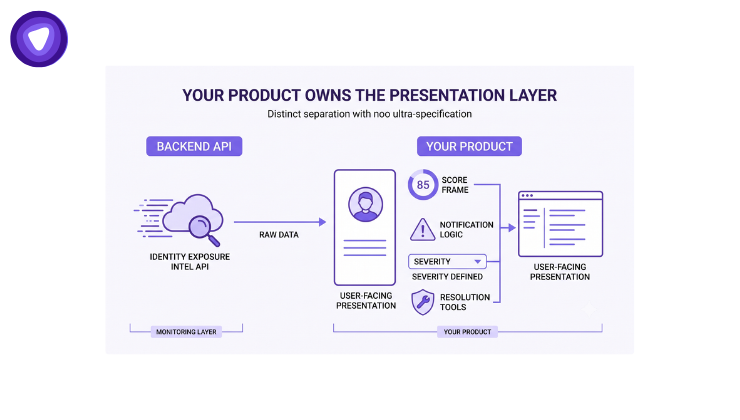
Once a user is registered, the Identity Exposure Intelligence endpoint accepts one or more identifiers. It returns a consolidated report describing where and how that data was found.
What You Submit and What Comes Back
A single call can carry an email, a phone number, or a username. The response consolidates matches across breach databases and dark web sources into one report. Your backend does not need to query multiple raw feeds and merge them itself. That consolidation is the actual product a white label dark web monitoring API sells. Raw feed access without it just shifts the merging work onto your engineers.
Turning a Raw Exposure Report Into a Product Feature
The report itself is not a feature. A feature is what your product does with it. That means a security score inside a settings page, a forced password reset prompt, or a one time alert banner. Most vendor documentation skips this step entirely. Product teams are left to reverse engineer the presentation layer on their own.
Real Time Monitoring: Webhook Delivery Versus Polling
After the initial check, Real-Time Dark Web Monitoring keeps watching an identifier continuously. It does not require a repeated manual scan.
Why Webhook First Design Matters at Product Scale
Polling means your backend repeatedly asks the API whether anything changed. That wastes calls when nothing has happened and adds latency when something has. A webhook pushes a notification the moment a monitored asset appears somewhere new. At the scale of millions of end users, webhook delivery is not a preference. It is the only design that keeps call volume tied to real events, not to your total user count.
Handling Re-Listed and Recurring Alerts
Exposure is not a one time event. Data removed from a broker site can reappear later. A monitored identifier can also surface in a new breach months after the first alert. Your webhook handler needs to treat every incoming event as new. Do not assume a user’s exposure status stays resolved once handled.
The Data Broker Opt-Out Lifecycle Inside a Product Workflow
Data privacy protection API architecture typically pairs monitoring with a Data Broker Opt-Out Service. That service submits removal requests on a user’s behalf and tracks each one individually until confirmed.
Five States a Request Moves Through
A single opt-out request generally moves through five stages. Each one is queryable through the status endpoint below.
- Submitted, when the request is created and queued
- In Progress, while the service actively contacts the broker
- Pending Verification, if the broker requires confirmation before acting
- Completed, once the broker confirms removal
- Re-listed, if the data reappears and a new request gets filed automatically
Surfacing Status Without Building a Support Queue
A single user can have dozens of opt-out requests in flight across different brokers at once. Tracking that manually with a support ticketing system would defeat the point of buying an API. The realistic approach is a status endpoint your backend polls periodically. Surface that as a simple progress indicator inside your own account settings.
Compliance Questions That Come With Embedding Someone Else’s API
Product and legal teams evaluating a white label dark web monitoring API ask questions generic feature comparisons never answer.
Who Is the Data Controller for the End User
Your product collects a user’s email and passes it to a monitoring API. Your company is typically the data controller in that exchange. The API provider acts as a processor operating under your instructions. That distinction determines who is legally accountable if the data is mishandled. It belongs in your data processing agreement before a single identifier gets submitted.
PII in Transit: What Actually Gets Sent
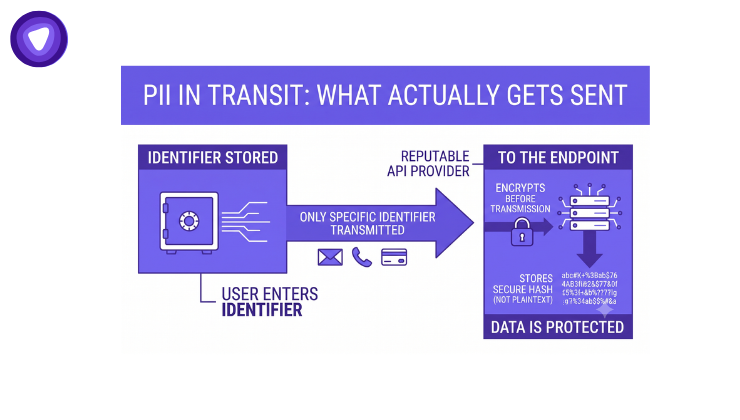
Only the specific identifier you submit travels to the endpoint, not your entire user database. Monitored identifier types commonly include email addresses, phone numbers, credit card numbers, and government ID numbers. Reputable providers encrypt this data before transmission. They store it using a secure hash rather than plaintext.
Build Versus Buy: The Real Engineering Cost of a DIY Version
Product teams sometimes ask whether it is cheaper to build exposure checking internally instead of licensing an API. A single production grade third party integration typically consumes 460 engineering hours in its first year. That covers build time, maintenance, security review, and handling upstream API changes. The visible build cost alone lands between twenty and forty thousand dollars, before any collection infrastructure is counted.
That estimate covers a normal API integration, not a continuous dark web collection pipeline. A real collection pipeline spans infostealer logs, breach dumps, and paste sites. One partner building a comparable cybersecurity suite internally needed more than six months before launch. Integrating a pre-built API took that same partner under three weeks, based on PureVPN White Label’s own partner data.
Multi Tenant MSSP API Versus Embedded SaaS Identity API
The two models diverge at nearly every layer, from what gets monitored to who sees the resulting alert.
| Attribute | MSSP Multi-Tenant API | Embedded SaaS Identity API |
| Monitoring unit | Client domain or organization | Individual end user identifier |
| Typical registration point | Vendor console, added manually | Signup or opt-in flow, added in code |
| Alert audience | Internal security or IT team | The end user directly, inside the product |
| Delivery pattern | Dashboard plus periodic reports | Webhook push into application logic |
| Billing model | Per tenant or per seat | Per active monitored user |
How PureVPN White Label Dark Web Monitoring Fits This Architecture
PureVPN White Label Dark Web Monitoring runs on the same structure this primer describes. That covers the Secret Key, token exchange, User Management, Identity Exposure Intelligence, Real-Time Monitoring, and the Opt-Out lifecycle. Coverage spans more than 400 data brokers. The underlying no-log infrastructure carries a SOC 2 Type II certification verified by KPMG, independently audited rather than self-reported. More than 150 partners run on this base layer across 17 years of privacy infrastructure, PureVPN White Label’s own figure.
No dedicated dark web monitoring case study exists yet on this domain. The closest matched proof comes from an adjacent embedded-security launch. A productivity SaaS app added a built-in VPN. Over 30 percent of uninstalls cited the lack of built-in security as the reason. That is a VPN-bundling result, not a dark web monitoring result. It tests the same underlying bet: users notice a missing security feature, and they leave over it.
For a product team, the practical difference shows up at the API boundary. Identifiers stay scoped to what you explicitly submit. Webhook delivery keeps call volume tied to real events, not your total user count. The opt-out lifecycle status is queryable, not something support agents track by hand. None of that requires building a collection pipeline from scratch, or maintaining one afterward.
What This Means for Your Integration Timeline
A white label dark web monitoring API removes the collection and matching problem. It does not remove the integration work entirely. Your team still owns identifier mapping, webhook handling, alert presentation, and the data processing agreement. Budget engineering time for those four pieces specifically, not for the monitoring itself. The rollout timeline stops being a guess once you do.
Product teams sometimes treat a white label dark web monitoring API as a plug in feature. It is closer to an integration project. Teams that skip scoping the webhook and mapping work tend to underestimate it. They overcorrect later under a support backlog they did not plan for. Scoping that work honestly against the five pieces this primer covers is what determines whether the feature ships on time.
See how your team can embed dark web monitoring without building its own collection pipeline. Request a 20-minute API integration walkthrough with a PureVPN White Label partner engineer.