


Each year, new online services rely on secure connectivity. SaaS platforms, fintech apps, remote work tools, streaming services, and digital marketplaces all face the same challenge: providing private internet access without building a full network infrastructure.
This demand has reshaped the VPN market. Instead of developing VPNs internally, many companies now use white label VPN platforms to launch branded services quickly using established infrastructure.
What began as a startup shortcut has become a strategic model. As privacy concerns grow and remote work expands, white label VPN platforms are shifting from a niche tool to a key part of modern digital services.
Understanding the future of white label VPN means examining rising demand, evolving technology, and why businesses now view VPN services as a product opportunity
- White label VPN platforms allow businesses to launch branded VPN services quickly without building or managing global infrastructure.
- Growing privacy concerns, remote work, and rising cybersecurity spending are accelerating demand for VPN services.
- Industries such as SaaS, telecom, fintech, and digital security are increasingly integrating VPN features into their platforms.
- Modern white label VPN platforms must offer scalable infrastructure, fast protocols, cross-platform support, and strong privacy controls.
- Businesses are using white label VPN services to create new subscription revenue streams and strengthen customer trust.
Why White Label VPN Platforms Are Gaining Momentum
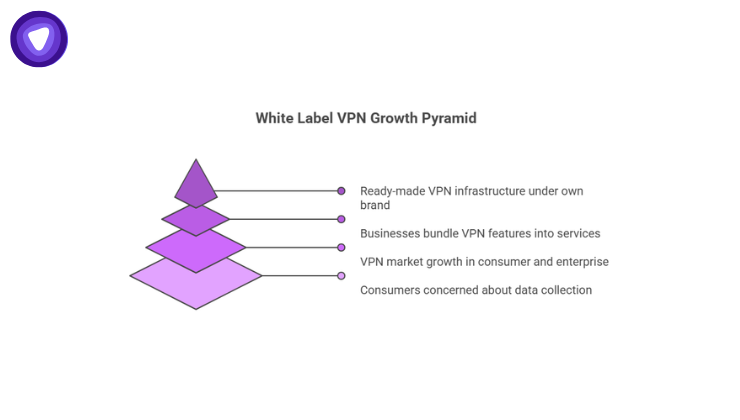
Many companies want to offer privacy tools, but very few want to operate a global VPN infrastructure. Building and maintaining servers across multiple countries requires expertise, capital, and constant maintenance.
White label VPN platforms solve that challenge.
Instead of managing servers and protocols internally, businesses can deploy a ready-made VPN infrastructure under their own brand. This approach reduces technical complexity and shortens product launch timelines.
Several market trends are accelerating adoption.
1. Privacy awareness among consumers
People have become more conscious of how their data is collected and monitored online. According to a 2024 Pew Research study, 81 percent of Americans say they feel they have little control over the data companies collect about them.
This concern has increased demand for privacy tools such as VPNs.
2. Rapid expansion of the global VPN market
The VPN market continues to grow across both consumer and enterprise segments. A 2024 report by Global Market Insights estimates the VPN market will exceed $135 billion by 2032 as remote work and online privacy concerns continue to rise.
3. Businesses adding privacy features to their products
Digital platforms increasingly bundle security features directly into their services. VPN functionality can strengthen trust and add value without forcing customers to install separate tools.
White label VPN platforms make this possible.
Key Industries Driving the Future of White Label VPN
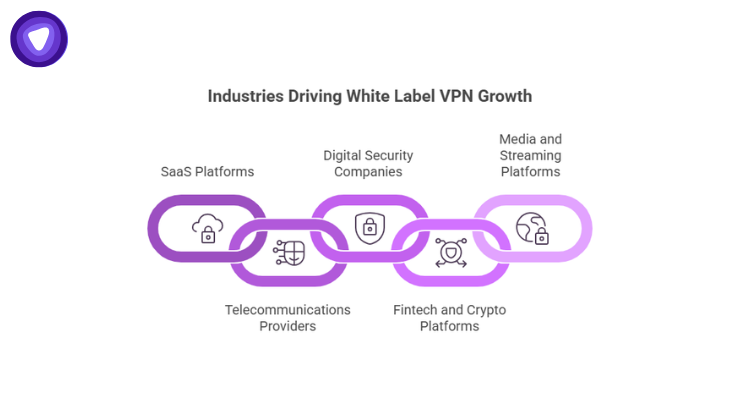
White label VPN services are no longer limited to traditional cybersecurity companies. Many industries now integrate VPN functionality into their digital offerings.
SaaS Platforms
Software providers increasingly include privacy features as part of their product ecosystem. VPN integration can help users secure connections when accessing cloud platforms, dashboards, or sensitive data remotely.
Telecommunications Providers
ISPs and telecom operators often bundle VPN services into subscription packages. A branded VPN helps differentiate service plans while improving customer trust.
Digital Security Companies
Companies that offer antivirus, password managers, or identity protection tools often add VPN services to complete their product suite.
Fintech and Crypto Platforms
Financial platforms operate in a high-risk environment where secure connections matter. VPN services can reduce exposure to network-level threats when users access financial tools from public networks.
Media and Streaming Platforms
Some media companies include VPN services to support global accessibility and protect user data.
The breadth of these use cases highlights why the future of white label VPN extends far beyond traditional cybersecurity vendors.
Core Capabilities Businesses Expect from Modern White Label VPN Platforms
The next generation of white label VPN platforms must go beyond basic tunneling and encryption. Businesses require scalable, flexible systems that integrate easily into existing digital ecosystems.
The following capabilities have become essential.
| Capability | Why It Matters for Businesses |
| Global Server Infrastructure | Ensures reliable connectivity across regions |
| Custom Branding | Allows companies to launch a fully branded VPN service |
| Cross-Platform Support | Supports mobile, desktop, and browser environments |
| High-Performance Protocols | Improves speed and connection stability |
| Scalable User Management | Enables growth without infrastructure expansion |
| Security and Privacy Controls | Protects user data and builds trust |
Platforms that combine these capabilities enable companies to launch VPN services quickly while maintaining service reliability.
Emerging Technologies Shaping the Future of White Label VPN
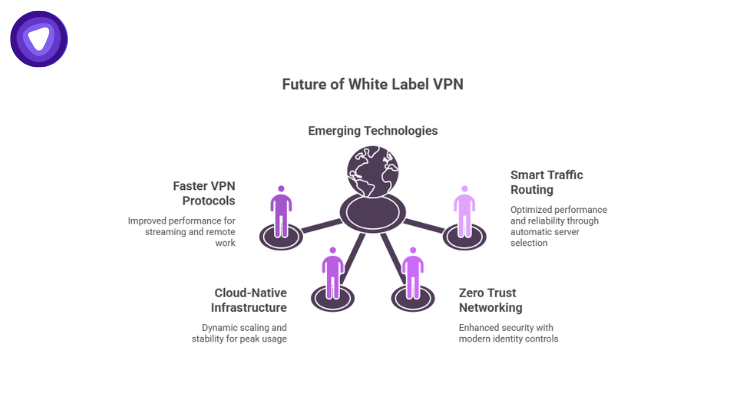
The VPN industry continues to evolve alongside broader networking and security trends. Several technologies are shaping how white label VPN platforms will develop in the coming years.
1. Faster VPN Protocols
New protocols have improved performance significantly.
For example, modern VPN protocols such as WireGuard have reduced connection overhead and improved speed compared to older standards. Faster connections are essential for streaming, remote work tools, and high-bandwidth applications.
2. Cloud-Native VPN Infrastructure
Traditional VPN networks relied on static server deployments. Today, many VPN infrastructures operate in cloud environments that allow providers to scale resources dynamically.
Cloud-based architectures make it easier to expand server coverage and maintain network stability during peak usage.
3. Zero Trust Networking
Zero Trust security models assume that no connection should be trusted by default. Many organizations now use VPN technology as one layer within a broader Zero Trust architecture.
White label VPN platforms that support modern identity and access controls will become more attractive to enterprise customers.
4. Smart Traffic Routing
Advanced routing technologies help optimize performance and improve reliability by automatically directing users to the fastest available servers.
This reduces latency and improves the user experience.
The Business Opportunity Behind White Label VPN
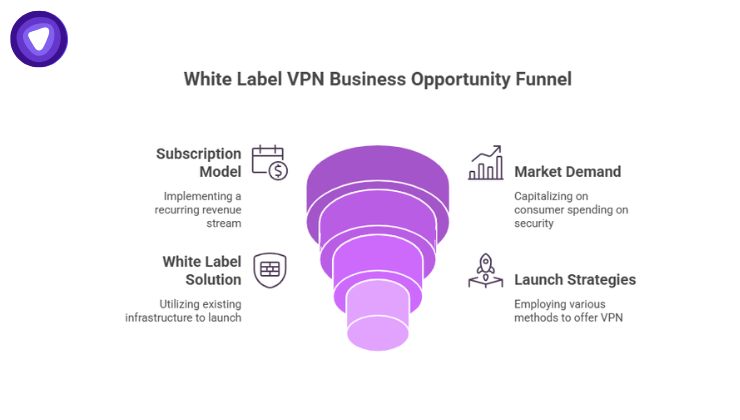
For many companies, offering a VPN service is not only a security improvement but also a new revenue channel.
Subscription-based privacy services have proven successful across multiple digital markets.
According to Statista data from 2024, global consumer spending on cybersecurity products reached over $188 billion, reflecting strong demand for personal security tools.
White label VPN platforms allow businesses to participate in that market without building infrastructure from scratch.
Companies can launch branded VPN services in several ways:
- As a standalone subscription product
- As a bundled feature within existing apps
- As a premium upgrade for existing customers
- As a value-added service within telecom or SaaS packages
Because the infrastructure is already managed by the VPN provider, companies can focus on customer acquisition and brand positioning.
Challenges That Will Shape the Future of White Label VPN
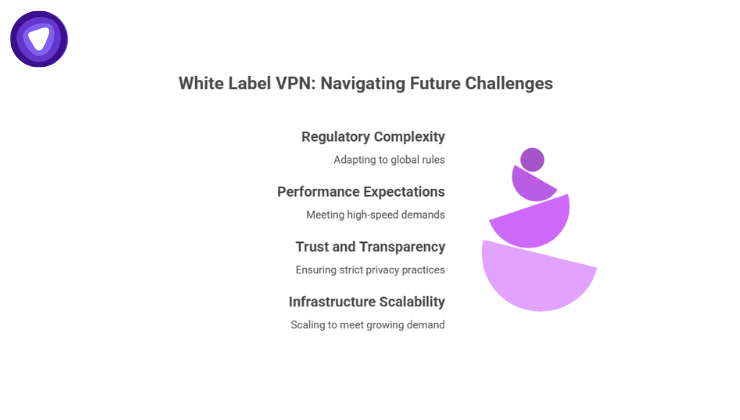
Despite strong growth, the future of white label VPN platforms will depend on how providers address several industry challenges.
Regulatory Complexity
Governments worldwide are introducing new rules related to encryption, digital privacy, and data storage.
VPN providers must adapt to different regulatory environments while maintaining service reliability across global markets.
Performance Expectations
Users expect VPN services to maintain high speeds, especially for streaming, gaming, and remote collaboration tools.
Platforms must continuously improve network optimization to meet these expectations.
Trust and Transparency
Privacy tools require user trust. Businesses that launch branded VPN services must ensure that the underlying infrastructure follows strict privacy practices.
Clear privacy policies and transparent logging practices will play a key role in maintaining user confidence.
Infrastructure Scalability
As VPN adoption grows, infrastructure must scale accordingly. Providers that operate large global networks will have a clear advantage in maintaining performance under heavy usage.
What the Next Phase of White Label VPN Platforms Will Look Like
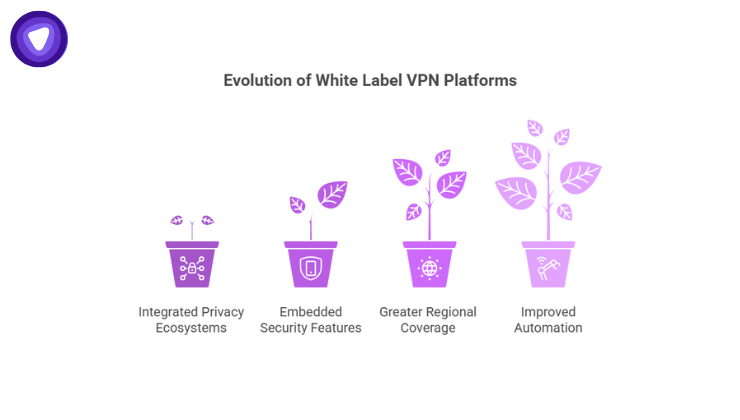
Looking ahead, the white label VPN ecosystem is expected to become more integrated with broader digital services.
Several developments are likely.
Integrated privacy ecosystems
VPN services will increasingly appear alongside password managers, identity protection tools, and encrypted communication platforms.
Embedded security features
Many apps will integrate VPN protection directly into their platforms instead of requiring separate installations.
Greater regional server coverage
Expanding global server networks will improve connection quality and increase market reach.
Improved automation
Automation tools will simplify user management, analytics, and service monitoring for businesses operating branded VPN services.
These developments indicate that VPN services are becoming a standard layer within digital platforms rather than a standalone security tool.
Where PureVPN’s White Label VPN Fits Into This Future
As demand for branded VPN services grows, businesses require platforms that combine global infrastructure with flexible deployment options.
PureVPN’s White Label VPN solution provides companies with a ready-made framework to launch their own VPN service without building network infrastructure internally. Businesses can deploy fully branded applications while relying on an established global server network.
This approach allows companies to enter the VPN market quickly while maintaining control over branding, customer experience, and service packaging.
For organizations exploring the future of white label VPN, solutions that combine infrastructure, scalability, and ease of deployment can significantly reduce the complexity of launching a new security product.
Final Thoughts
Secure connectivity is becoming a foundational requirement for digital services. As remote work expands, personal data becomes more valuable, and online threats grow more sophisticated, demand for privacy tools will continue to increase.
White label VPN platforms provide a practical way for companies to respond to that demand without building network infrastructure from scratch.
The businesses that adopt these platforms early will be positioned to offer integrated privacy services, strengthen customer trust, and create new revenue streams in a market that continues to expand.