

- Rising Demand: Only 6% of American adults have used a data removal service so far, yet 12% of non-users plan to sign up within a year, a pool of roughly 26 million people.
- Build vs White Label: Building broker-tracking and removal infrastructure in house takes 12 to 24 months and heavy engineering and legal investment, while a white label partnership can launch in weeks.
- Best Fit Brands: VPN, antivirus, identity protection, and MSP brands are best positioned to add this service since their customers already care about privacy.
- Core Requirements: A real removal service needs broad broker coverage, scheduled re-scans, clean reporting, and compliance handling built in, not just a one-time cleanup pass.
- PureVPN Advantage: PureVPN’s white label VPN solution offers the same fast, fully branded model that makes launching a white label data broker removal add-on practical without new engineering headcount.
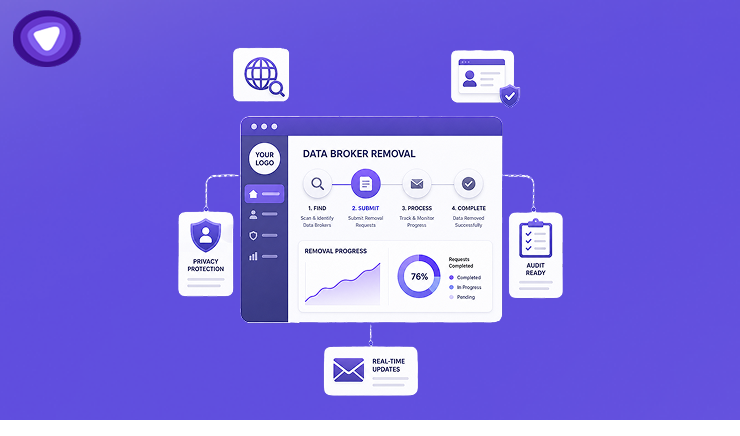
Data removal used to be a niche product for privacy enthusiasts who knew how to find their own listings on people-search sites. It has become a standard revenue line for VPN providers, cybersecurity resellers, and managed service companies. These businesses want recurring income without building a broker-tracking system from the ground up. A white label data broker removal service lets a brand offer this protection under its own name. Someone else handles the backend work of finding and removing exposed records.
This guide breaks down what the service involves and why demand is rising. It also covers how a business can launch one without hiring an engineering team or negotiating with hundreds of data brokers directly.
What a Data Broker Removal Service Actually Does
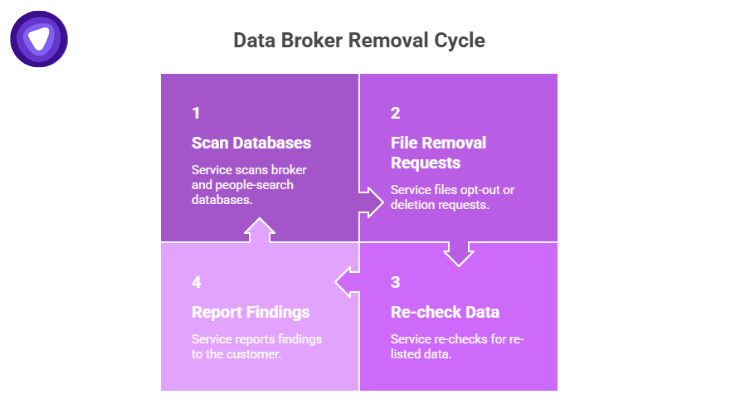
A data broker removal service scans broker and people-search databases for a customer’s personal information. It then files opt-out or deletion requests on the customer’s behalf. Brokers collect details such as home address, phone number, employer, relatives, and income estimates. They resell that information to marketers, background-check companies, and sometimes to less legitimate buyers.
The service typically covers:
- Continuous scanning across a defined list of broker and people-search sites
- Submission of removal requests through each broker’s specific opt-out process
- Re-checks, since brokers often re-list data pulled from public records or other brokers
- Reporting so the customer can see what was found and what was removed
A unified database built in 2025 identified more than 750 registered data brokers across five state registries in the US. It also found that many companies had registered in one state while skipping registration in others. That gap is one reason manual removal is so time consuming for an individual. It is also why a managed service has real value.
Why Demand for Data Removal Keeps Growing
Demand for white label data broker removal is not building on hype. It shows up in adoption numbers, industry revenue, and new regulation.
Only 6% of American adults have ever used a data removal service. But 12% of non-users say they are highly likely to sign up within the next year. That represents a pool of roughly 26 million potential new customers in the US. Adoption is still low, which means the category is early rather than saturated.
At the same time, the underlying industry keeps expanding. The global data broker market was valued at close to $278 billion in 2024. It is projected to reach $512 billion by 2033, growing at roughly 7.3% a year. More brokers and more data volume mean more exposure for consumers. That gives people more reason to pay for ongoing removal rather than a one-time cleanup.
Consumer sentiment backs this up. Nearly nine in ten American adults report being at least moderately concerned about who has access to their personal data online. Concern is high, but action is still low. That gap is exactly what a removal service is built to close.
Regulation is starting to catch up too. California’s Delete Request and Opt-Out Platform is a state-run tool that lets residents file one deletion request across every registered broker in the state. It went live on January 1, 2026. That kind of policy signals where public expectations are headed. It also puts pressure on brokers outside California to match similar standards, voluntarily or by law.
The Business Case for Adding This Service
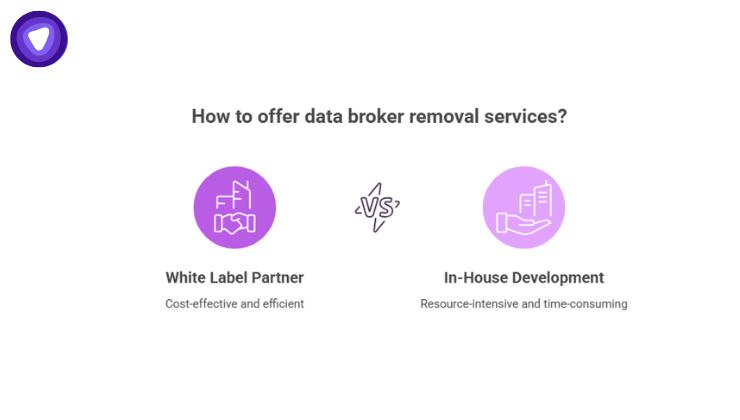
For a VPN, antivirus, or identity protection brand, a white label data broker removal service is a natural add-on rather than a stretch. Customers already buying privacy tools are the exact audience most likely to want their exposed data cleaned up. Adding removal as a bundled feature or upsell increases average revenue per user. It also gives the brand another reason for a subscriber to stay instead of canceling.
The alternative, building broker tracking and removal in house, is a multi-year undertaking. It requires:
- Mapping and maintaining relationships with hundreds of broker sites, each with different opt-out formats
- Legal review across state and international privacy law
- A scanning and matching engine that can find a person’s data across inconsistent formats
- Ongoing monitoring, since brokers re-list removed data on a recurring basis
Most companies do not have the internal resources to justify that investment, especially when a white label partner has already built and tested the infrastructure.
Who This Model Fits Best
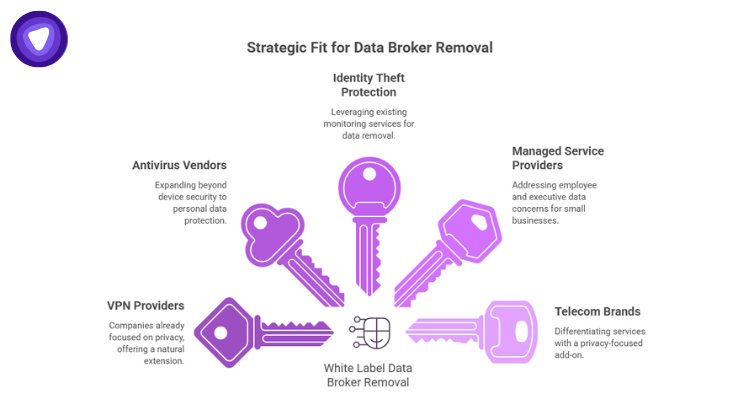
Not every business is positioned to launch a white label data broker removal offer right away. It tends to work best for companies that already have an audience thinking about privacy or security in some form.
- VPN providers already selling a privacy story to their subscriber base
- Antivirus and endpoint security vendors looking to expand beyond device protection into personal data exposure
- Identity theft protection companies that already monitor for breaches and fraud
- Managed service providers (MSPs) serving small business clients who ask about employee and executive data exposure
- Telecom and ISP brands that want a differentiated privacy add-on for existing plans
A company with no existing privacy or security product can still launch a removal service. It will just need to build trust and awareness from scratch, which takes longer and costs more in acquisition spend.
Build vs White Label: A Direct Comparison
The tradeoffs come down to speed, cost, and control, and they play out differently depending on the path a brand chooses.
| Factor | Building In House | White Label Partnership |
| Time to launch | 12 to 24 months | Weeks |
| Upfront cost | High engineering and legal spend | Low, subscription or revenue share model |
| Broker coverage | Built one broker at a time | Inherited from an established network |
| Compliance ownership | Fully on the brand | Shared with the provider |
| Branding control | Full control by default | Full control, delivered under the brand’s name |
| Ongoing maintenance | Requires a dedicated internal team | Handled by the provider |
Core Components of a White Label Data Broker Removal Service
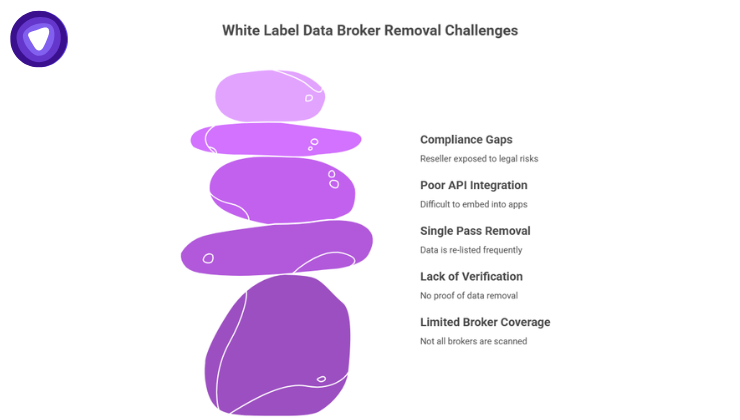
Before selecting a partner, a brand should confirm the service actually covers the parts that matter to customers. Look for these elements:
Broker coverage and update frequency. Ask exactly how many brokers are scanned and how often the list is updated. Confirm whether coverage includes both large data brokers and smaller people-search sites.
Verification and reporting. Customers want proof that something was found and then removed, not just a status message. A dashboard or report showing before-and-after results builds trust and reduces support requests.
Re-scan cadence. Since brokers frequently re-list data, the service needs scheduled re-checks rather than a single pass.
API and integration options. A brand embedding this into an existing app or dashboard needs clean API access rather than a bolted-on separate portal.
Compliance handling. The provider should already account for regional privacy law, including US state laws and GDPR-style requirements where applicable. That way the reseller is not left exposed.
Step by Step: Launching Your White Label Data Broker Removal Service
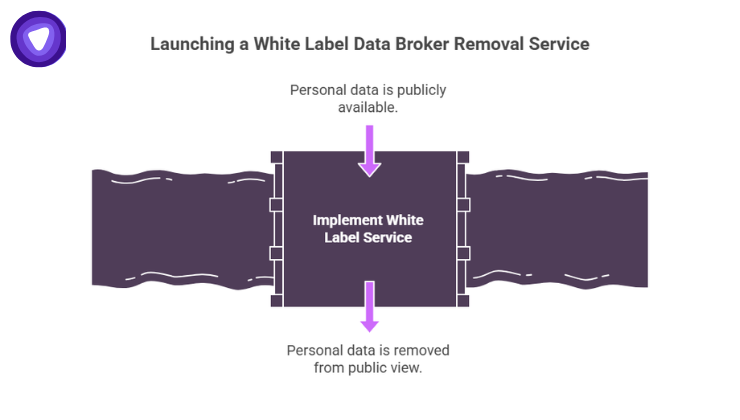
These are the basic steps that need to be followed.
Choose the Right Technology Partner
Coverage numbers matter, but so does how the partner supports resellers. Ask for a demo account, sample reporting, and a clear service level agreement on removal turnaround time. A partner that cannot show real broker coverage data is not ready for a reseller relationship.
Define Your Scope and Packaging
Decide whether removal will be:
- A standalone product
- A bundled feature inside an existing VPN, security, or identity protection plan
- A tiered add-on, with basic scanning at one price point and full removal plus monitoring at another
Set Pricing With Margin in Mind
Direct-to-consumer data removal services commonly run $15 to $20 a month, or $120 to $150 a year, in the US market. A white label reseller should price against that benchmark. Factor in the wholesale cost from the provider, support overhead, and desired margin.
A simple tiered structure works well for most resellers:
- Basic tier: Scanning and exposure reporting only, no active removal
- Standard tier: Scanning plus removal across the core broker network
- Premium tier: Full removal coverage, faster re-scan cadence, and priority support
Bundling the standard or premium tier into an existing VPN or security plan tends to improve conversion, more than selling it purely standalone. The customer is already paying for privacy protection, so removal reads as a logical extension rather than a new purchase decision.
Handle Legal and Compliance Requirements
Even with a white label backend, the reseller brand is customer-facing and needs its own privacy policy language. That language should cover how data removal requests are processed, what data the service itself collects to perform removal, and how long records are retained. This is not optional paperwork. It is what protects the brand if a removal request is challenged or delayed by a broker.
Plan Onboarding and Support
Customers will have questions the first time they see their exposure report. Build a short onboarding flow that explains:
- What was found
- What action is being taken
- Expected timelines for removal, since brokers can take up to 45 days to respond to a request
Launch With a Clear Value Proposition
Marketing should focus on outcomes, not process. Customers care about reduced spam calls and lower identity theft risk. They also care about knowing their address is not sitting on a public list. That matters more to them than the technical mechanics of opt-out requests.
Common Mistakes to Avoid in Data Broker Removal Service
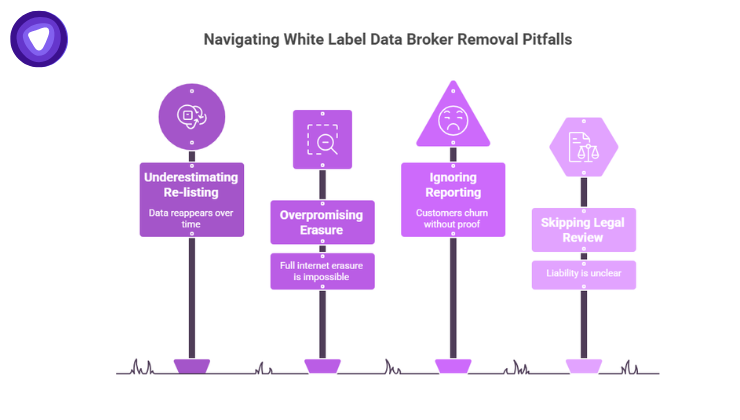
Launching a white label data broker removal offer comes with a few recurring pitfalls.
- Underestimating re-listing. A single removal pass looks good in a demo but does not hold up over months. Brokers pull from public records and other brokers, so data reappears.
- Overpromising full internet erasure. No service can guarantee removal from every broker that exists today or gets created tomorrow. Set expectations accordingly in marketing copy and terms of service.
- Ignoring reporting. Customers who cannot see proof of removal tend to churn faster, even if the work is happening correctly in the background.
- Skipping legal review of the reseller agreement. Confirm exactly who owns liability if a broker refuses a deletion request or delays past a stated SLA.
Where PureVPN Fits Into This Picture
Brands that already sell privacy and security tools are in the strongest position to add a removal service, since their customer base is already primed for it. PureVPN’s white label VPN solution is built for exactly this kind of expansion. It gives resellers a fully branded VPN product with the infrastructure, support, and network already in place. That is the same operating model that makes a white label data removal add-on practical to launch, without new engineering headcount.
For a business already running or considering a white label VPN offering, layering in data broker removal is a logical next step rather than a separate build. It extends the same privacy positioning the brand has already established. It does so using a partner model designed to move fast and stay compliant.
Final Thoughts
The gap between how concerned people are about their data and how few of them have actually done anything about it is the opportunity here. Brands with an existing privacy or security audience do not need to build broker-tracking infrastructure to close that gap. A white label data broker removal partnership already has the network, compliance groundwork, and reporting built. What is left is a plan for how the service fits into what the brand already sells.