

- A social engineering attack, not sophisticated malware, triggered the Jaguar Land Rover breach. Attackers used a phone call to an IT helpdesk and stolen credentials, some exposed since 2021.
- The breach cost the UK economy an estimated $2.5 billion (£1.9 billion) and halted JLR’s production for five to six weeks, disrupting over 5,000 businesses across the supply chain.
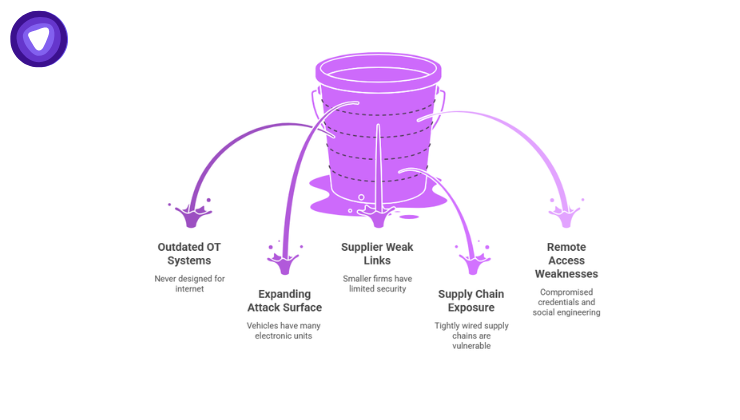
- Manufacturing networks are especially vulnerable because they combine outdated OT systems, connected vehicles, and thousands of third party supplier connections, each one a potential entry point.
- The UK government had to step in with a £1.5 billion loan guarantee to keep JLR’s supply chain from collapsing, showing how one company’s breach can become a national economic event.
- Businesses can avoid similar exposure by tightening credential hygiene, verifying helpdesk requests, and securing remote and third party access through tools like a white label VPN solution.
A single phone call to an IT helpdesk brought one of Britain’s largest manufacturers to a standstill for five weeks. No market crash did that. No factory fire did that. A phone call did.
That call was the starting point of the Jaguar Land Rover cyberattack. It triggered a chain of events that halted vehicle production and froze a supply chain touching thousands of businesses. The UK government stepped in with emergency funding. Analysts now rank it as the most financially damaging cyber event in British history.
This blog breaks down what happened, why it happened, and what it means for any business that depends on connected systems, remote access, and third-party vendors to keep operations running. That covers almost every company today, regardless of size or industry.
What Happened Inside the Jaguar Land Rover Cyberattack
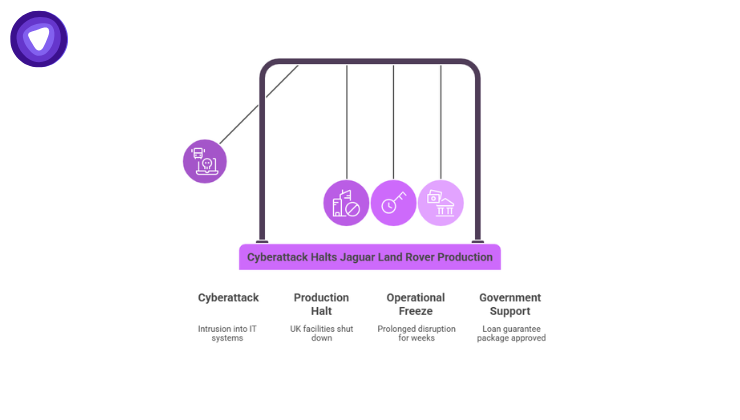
The breach began in late August 2025. Engineers at JLR’s Halewood plant noticed unusual activity on internal IT systems. Within a day, the company confirmed an intrusion serious enough to warrant a full shutdown of its digital infrastructure to contain the spread.
JLR paused production at its UK facilities, including Solihull, Halewood, and Wolverhampton. What started as a defensive move to isolate infected systems turned into a prolonged operational freeze that lasted more than a month.
Timeline of the Attack
- August 31, 2025: Abnormal system behavior detected at the Halewood plant.
- September 1, 2025: JLR halts production and takes systems offline to contain the intrusion.
- September 2, 2025: JLR publicly confirms a cyber incident.
- September 28, 2025: The UK government approves a loan guarantee package to support JLR’s supply chain.
- October 8, 2025: Production resumes on a phased basis.
- Mid-November 2025: Production returns closer to normal levels, after roughly six weeks of disruption.
Who Was Behind the Jaguar Land Rover Cyberattack
Attribution shifted several times as the investigation progressed. A group calling itself Scattered Lapsus$ Hunters initially claimed responsibility on Telegram, describing itself as a collaboration between members of Lapsus$, Scattered Spider, and ShinyHunters. These groups share a track record of social engineering and extortion rather than traditional malware-based break-ins.
Investigators later found that JLR’s network had not been compromised by one actor but by several, operating independently. One intrusion reportedly traced back to stolen Jira credentials harvested through infostealer malware. Another actor claimed access using credentials that had been exposed since 2021. Later reporting tied the core ransomware operation to Russian cybercriminals, raising questions about whether the attack was purely financially motivated or carried broader geopolitical intent.
The Real Cost of a Single Breach: Jaguar Land Rover Cyberattack
Cyberattacks on manufacturers rarely stay contained to one company’s balance sheet. The JLR incident is a clear example of how a single point of failure can ripple through an entire economy.
The UK’s Cyber Monitoring Centre classified the event as a Category 3 systemic incident, its highest severity tier, and estimated that the financial hit to the British economy reached roughly $2.5 billion. More than 5,000 UK organizations, including parts suppliers, logistics firms, and dealerships, felt the impact of the shutdown.
| Metric | Figure |
| Estimated economic damage | $2.5 billion (£1.9 billion) |
| UK organizations affected | Over 5,000 |
| Production halt duration | Approximately 5 to 6 weeks |
| Weekly vehicle production lost | Nearly 5,000 vehicles |
| UK government loan guarantee | £1.5 billion |
| JLR reported loss (fiscal 2026) | $350 million |
Jaguar Land Rover cyberattack reported a $350 million loss tied directly to the disruption. Wholesale sales volumes fell by more than 43 percent in the following quarter. Given the scale of the fallout, the UK government stepped in with a loan guarantee package. This kept JLR’s supplier network afloat and prevented smaller firms from collapsing under unpaid invoices and halted orders.
For context on scale, the average cost of a data breach globally sits around $4.5 million according to IBM’s annual reporting. JLR’s incident cost more than 500 times that figure, illustrating how connected, physical operations amplify damage far beyond typical IT breach scenarios.
Why Manufacturing Networks Are Easy Targets
Manufacturing has become one of the most targeted sectors for cybercriminals, and JLR’s case shows exactly why. Modern automakers run enormous digital ecosystems that link design, production, logistics, and dealership networks together. Every connection point is a potential entry route.
- Operational technology (OT) systems on factory floors often run on outdated software that was never designed with internet connectivity in mind.
- Vehicles themselves now include dozens of electronic control units, over-the-air update features, and cloud-connected services, each expanding the attack surface.
- Suppliers, many of them smaller firms with limited security budgets, connect directly into manufacturer networks, creating weak links that attackers exploit.
Third-Party and Supply Chain Exposure
JLR’s shutdown demonstrated how tightly manufacturing supply chains are wired together. When one company goes offline, dealerships stop receiving vehicles, parts suppliers stop shipping components, and logistics firms lose contracts overnight. A Unite union representative told the BBC that employers across the West Midlands were already discussing potential redundancies as plant workers stayed home without pay. That single sentence captures how a digital breach becomes a regional economic event within days.
Remote Access Weak Points
Several of the intrusions into JLR’s systems traced back to compromised credentials and social engineering, not sophisticated zero-day exploits. Attackers called helpdesks, phished employees, and used stolen login details that had been circulating since as far back as 2021. This pattern is consistent with what security researchers see across industries: most breaches start with a person, not a piece of malware.
What Businesses Should Learn From the Jaguar Land Rover Cyberattack
The JLR incident is not just a cautionary tale for automakers. It is a preview of the risks facing any organization that relies on remote employees, third-party vendors, and connected infrastructure, which today means almost every business.
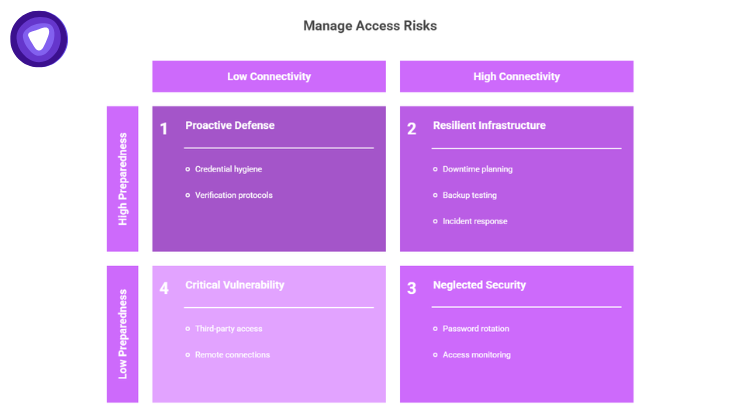
- Credential hygiene matters more than most companies assume. Passwords exposed years earlier can still open doors if they are never rotated or revoked.
- Helpdesk and support staff need clear verification protocols, since social engineering through phone calls remains one of the most effective attack methods.
- Third-party access should be limited, monitored, and segmented so that a breach at one supplier does not cascade into the core network.
- Downtime planning should account for weeks of disruption, not hours, since recovery from a systemic breach can take far longer than expected.
Securing Remote and Third-Party Access
One of the clearest lessons from JLR’s breach is that access control failures, not just malware, are what cause the most damage. Businesses that allow remote employees or external vendors to connect without strict authentication and encrypted tunnels are exposing themselves to the same risk that hit JLR’s supply chain. Every remote connection into a corporate network should be treated as a potential entry point and secured accordingly.
Preparing for Downtime Before It Happens
JLR’s production did not return to pre-incident levels for months. That kind of extended disruption tests whether a business has real contingency plans or only theoretical ones. Regular backup testing, isolated recovery environments, and rehearsed incident response plans separate companies that recover in days from those that take months.
Building Resilience With the Right Tools
Incidents like the JLR breach usually trace back to unmanaged access points rather than a lack of awareness. Businesses know remote work and third-party connections carry risk, but many still rely on outdated VPN setups, shared credentials, or no encrypted access controls at all. PureVPN’s white label VPN solution gives businesses and service providers a way to offer their own branded, secure remote access platform. It runs on encrypted tunneling and strict authentication, with infrastructure that scales with the organization rather than against it.
For companies managing distributed teams, vendors, or client networks, that kind of control matters. A white label VPN solution allows a business to enforce consistent security policy across every remote connection while keeping the experience branded and simple for end users. It is a practical way to close the exact gap that turned a helpdesk phone call into a $2.5 billion problem.
Where This Leaves Businesses
The jaguar Land Rover cyberattack will likely be studied for years as a case of how connected infrastructure, weak credential management, and social engineering can combine to disrupt an entire economy. The technical entry point was not exotic. It was a phone call and passwords nobody had bothered to change.
That is the part worth remembering. Most breaches on this scale do not start with a sophisticated exploit. They start with an overlooked access point. Businesses that treat remote access, vendor connections, and credential management as core security priorities, not afterthoughts, stand a far better chance of avoiding a headline like the one Jaguar Land Rover made.