

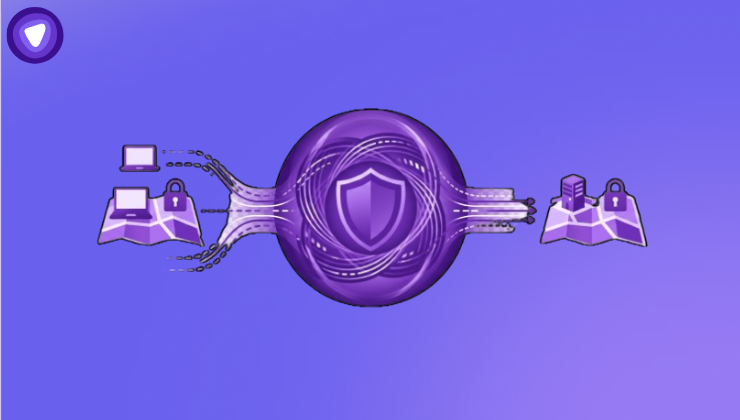
- VPN Architecture: A VPN is a structured system that encrypts data, routes it through a secure server, and masks the user’s original IP address to protect online communication.
- Core Components: The architecture includes a VPN client, VPN server, encryption protocols, secure tunnel, and authentication layers working together to secure data flow.
- Security Foundation: VPN sessions begin with authentication and cryptographic key exchange to ensure only authorized users can access the network.
- Data Protection: All traffic is encapsulated and encrypted before transmission, ensuring it remains unreadable across public networks.
- White Label VPN Model: White label VPN solutions allow organizations to embed VPN infrastructure into their platforms without building complex backend systems in-house.
VPNs are often described in abstract terms like “secure tunnels” or “private browsing layers,” but those descriptions rarely explain what is actually happening under the hood. For organizations evaluating embedded VPN infrastructure or white label deployment, understanding the mechanics matters.
A VPN is not a single technology. It is a structured sequence of encryption, authentication, routing, and traffic encapsulation processes that collectively reshape how data moves across the internet. When implemented at scale, this architecture becomes a foundational layer for secure connectivity across distributed systems.
This article breaks down that architecture in a clear but technically accurate way, focusing on what occurs at each stage of the connection lifecycle.
What a VPN Actually Is in Non-Technical Terms
A Virtual Private Network (VPN) is a secure communication framework that extends a private network across a public infrastructure like the internet. It is designed to control how data is transmitted, authenticated, encrypted, and routed between endpoints.
At a functional level, a VPN does three things consistently:
- Encrypts data before it leaves a device
- Routes that data through a controlled intermediary server
- Masks the original network identity of the user
This is not a single-layer technology. It is a coordinated system of multiple components working together to enforce secure data transmission.
Core Components of VPN Architecture
Understanding VPN behavior requires breaking it into its foundational components. Each plays a distinct role in how secure communication is established and maintained.
1. VPN Client
The VPN client is the software layer installed on a device or embedded within an application. It is responsible for:
- Initiating connection requests
- Managing encryption and decryption locally
- Enforcing session rules defined by the VPN system
In white label deployments, this client layer is often integrated directly into the host application rather than existing as a separate tool.
2. VPN Server (Gateway)
The VPN server acts as the central intermediary between the user and the internet. It:
- Receives encrypted traffic from clients
- Decrypts and processes outgoing requests
- Re-encrypts and returns inbound responses
It also determines the external IP address visible to websites and services, effectively acting as the user’s network identity on the internet.
3. Encryption Protocols
Encryption protocols define how data is secured during transmission. Commonly used protocols include:
- WireGuard for lightweight, high-performance encryption
- OpenVPN for flexible and widely supported configurations
- IPSec for network-level security in enterprise systems
These protocols establish the rules for key exchange, cipher selection, and secure tunneling behavior.
4. Secure Tunnel Layer
The secure tunnel is the logical pathway created between client and server. It is responsible for:
- Encapsulating data packets
- Preventing external visibility of payload content
- Maintaining session continuity across public networks
This tunnel is dynamically created per session and terminated once the connection ends.
5. Authentication and Access Control Layer
Before any data transmission begins, VPN systems validate identity and enforce access policies. This layer ensures:
- Only authorized users or devices can connect
- Sessions comply with predefined security rules
- Unauthorized access attempts are blocked at the entry point
How a VPN Works
Here are simplified steps to explain how a VPN functions.
1. Connection Initiation and Authentication Layer
Every VPN session begins with a controlled connection request between a client device and a VPN gateway.
Unlike standard internet traffic, this request is not immediately granted network access. It is first evaluated through an authentication layer that verifies identity, device integrity, or access credentials depending on deployment configuration.
At enterprise or embedded levels, this may include:
- Username and credential validation
- Token-based authentication (API or session tokens)
- Device certificates in managed environments
- Policy checks (region, role, or access group restrictions)
Once validated, the VPN system establishes a session context. This session defines encryption parameters, routing rules, and allowed traffic behavior.
Modern VPN protocols such as WireGuard or OpenVPN initiate a cryptographic handshake during this phase to agree on encryption keys and session security parameters.
2. Cryptographic Key Exchange and Session Establishment
After authentication, the system performs a key exchange process. This is the foundation of secure communication.
Both the client and VPN server generate cryptographic keys used to encrypt and decrypt traffic during the session. These keys are never transmitted in readable form.
This ensures:
- Forward secrecy (past sessions remain protected even if future keys are compromised)
- Unique encryption per session
- Isolation between concurrent users
A widely used method is Elliptic Curve Diffie-Hellman (ECDH), which enables secure key agreement over untrusted networks.
Once completed, the VPN session transitions into an encrypted state.
3. Traffic Encapsulation and Encryption Process
Once the session is active, all outgoing traffic is intercepted at the device level and encapsulated before transmission.
Encapsulation means wrapping original data packets inside encrypted layers. This ensures that:
- Payload data is unreadable outside the VPN tunnel
- Packet headers are modified or hidden
- Traffic cannot be reconstructed without session keys
Encryption standards such as AES-256 or ChaCha20 secure the data during transit.
4. Secure Tunnel Transmission Across Public Networks
Encrypted packets are transmitted through a secure tunnel over public internet infrastructure.
This tunnel is logical, not physical. It behaves as an isolated communication channel between client and VPN server.
During this phase:
- Internet service providers can see only metadata (such as VPN server connection)
- Packet contents remain encrypted
- Intermediate networks cannot inspect payload data
Protocols such as WireGuard, OpenVPN, and IPSec manage this tunnel behavior.
A report found that 68% of breaches involve a human element, including credential misuse. Encrypted tunnels reduce exposure by eliminating readable traffic in transit environments.
5. VPN Gateway Decryption and Traffic Forwarding
Once encrypted packets reach the VPN server, they are decrypted inside a controlled environment.
The server then:
- Restores original data packets
- Forwards requests to the intended destination
From the destination’s perspective, all traffic appears to originate from the VPN server’s IP address rather than the user.
Key outcomes:
- Original IP is not exposed externally
- Location appears as VPN server region
- Identity is separated from network activity
6. Response Routing and Reverse Encryption Flow
VPN architecture is bidirectional.
When a response is generated:
- It is sent to the VPN server first
- The server encrypts it
- It is transmitted back through the secure tunnel
- The client decrypts it locally
This ensures consistent encryption for both outbound and inbound traffic.
At no point is unencrypted data exposed on public networks.
7. Traffic Integrity and Session Lifecycle Management
Beyond routing and encryption, VPN systems maintain session integrity throughout the connection lifecycle.
This includes:
- Packet sequencing validation
- Session timeout enforcement
- Automatic key rotation in modern protocols
- Continuous authentication checks in enterprise environments
These mechanisms protect against session hijacking, replay attacks, and long-duration exposure risks.
Comparative View: Direct Internet vs VPN Architecture
This comparison highlights how VPN architecture shifts control from open, ISP-mediated data exposure to a managed, encrypted framework that reduces visibility, limits attack surfaces, and enforces consistent security across all traffic paths.
| Layer | Direct Internet Connection | VPN Architecture |
| Traffic visibility | Fully visible to ISP and intermediaries | Fully encrypted in transit |
| IP exposure | User IP exposed to destination | VPN server IP exposed instead |
| Routing control | ISP-controlled routing path | Controlled encrypted tunnel path |
| Data security | Dependent on endpoint security | Protected in transit via encryption |
| Session isolation | Minimal | Strong session separation |
| Attack surface | Higher | Reduced |
Why VPN Architecture Has Become a Core Infrastructure Layer
VPN usage has shifted from optional privacy tools to foundational infrastructure in distributed systems.
Three structural drivers define this shift:
- Expansion of remote and hybrid work models
- Increased dependency on cloud-based systems and APIs
- Rising frequency of credential-based attacks targeting unencrypted traffic paths
White Label VPN Integration in Modern Digital Ecosystems
White label VPN architecture extends this model by embedding VPN functionality directly into existing platforms.
Instead of requiring standalone applications, encryption, tunneling, and routing operate within the product environment.
This model is widely used in:
- Fintech platforms securing financial transactions
- SaaS ecosystems managing distributed workforce access
- Digital platforms requiring embedded secure connectivity
Security becomes part of the system architecture rather than an external tool.
How PureVPN White Label VPN Fits Into This Model
A solution like PureVPN White Label VPN Solution provides the underlying VPN infrastructure required for encryption, tunneling, and global routing while allowing organizations to maintain full control over branding and user experience.
This approach removes the operational burden of building and maintaining complex core systems such as global server infrastructure, encryption protocol management, and traffic routing frameworks, all of which require continuous engineering effort, monitoring, and optimization at scale.
Instead, organizations integrate a production-grade VPN layer directly into their platforms while retaining control over interface design, user flows, and product logic, enabling them to deliver secure connectivity without taking on the complexity of managing the underlying network security stack.
Closing Perspective
VPN technology is not defined by its marketing terms but by its architecture: authentication, encryption, tunneling, routing, and controlled session management.
When implemented correctly, it forms a structured communication layer that operates consistently across public networks without exposing sensitive data or user identity.
When delivered through white label systems, this architecture becomes embedded infrastructure, quiet, persistent, and foundational to secure digital ecosystems.