

- SaaS VPN premium feature monetization captures spending that already exists outside your platform, making it a revenue play built on proven demand rather than manufactured need.
- White label VPN removes the infrastructure barrier entirely, letting SaaS platforms offer branded VPN access via API integration without building or operating a single server.
- The strongest monetization fit sits with remote work, HR, developer tools, and cloud storage platforms where compliance and data security create a genuine willingness to pay.
- Pricing works best when VPN is tier-gated or bundled at the Pro or Business level, with annual plan incentives driving the highest ARPU and retention impact.
- Beyond direct revenue, VPN reduces churn by becoming part of a user’s daily workflow, raising the switching cost and improving long-term platform stickiness.
SaaS VPN premium feature monetization is one of the few revenue strategies built on demand that already exists. Most SaaS companies spend months building features users barely touch. VPN is different. Users actively seek it, pay for it separately, and associate it with trust. When it lives inside a platform they use daily, the decision to upgrade becomes practical, not aspirational.
That is a meaningful distinction. When it lives inside a platform users access daily, the decision to upgrade becomes practical, not aspirational.
The Revenue Gap in Standard SaaS Pricing
SaaS businesses live and die by average revenue per user. Free-to-paid conversion rates across the industry sit between 2% and 5%, which means the majority of users never upgrade. The usual lever is adding features to paid plans, but most feature additions fail to shift behavior because users do not feel a pressing reason to pay.
Security is different. It creates urgency that convenience cannot replicate.
Why Security Features Drive Paid Conversions
Users do not upgrade because a feature is convenient. They upgrade when a feature removes a real risk. Security features, particularly privacy and encryption tools, tap into genuine concern rather than feature preference.
A 2024 report found that over 31% of internet users worldwide accessed a VPN at least once a month. That is a large segment of any SaaS user base already spending on protection outside your platform.
When you bring that protection inside your product, you capture spending that was going elsewhere. That is the core logic of SaaS VPN premium feature monetization: intercepting an existing purchase decision, not creating a new one.
What SaaS VPN Premium Feature Monetization Actually Looks Like
Adding VPN to a SaaS platform is not about reskinning a consumer app. It is about embedding a functional privacy layer into workflows users already depend on.
Done correctly, it gives users encrypted connections, IP masking, and secure remote access from inside tools they use every day. For B2B platforms, that means secure access across distributed teams. For B2C tools, it means personal data protection as a value-added reason to stay on a paid plan.
Common Integration Formats
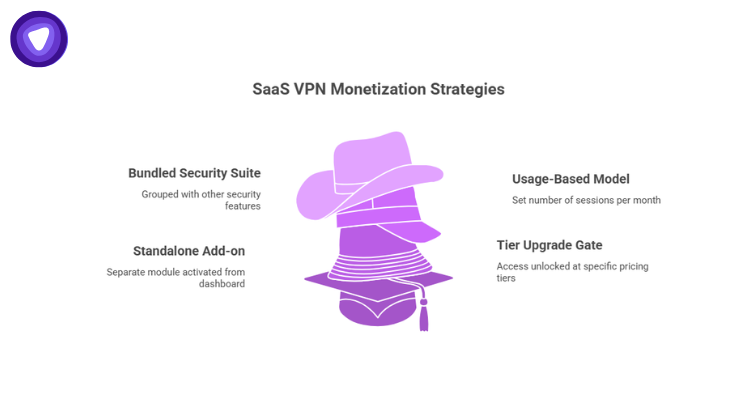
SaaS VPN premium feature monetization takes several structural forms depending on your platform and billing architecture:
- Standalone add-on: A separately priced module users activate from the account dashboard
- Tier upgrade gate: VPN access unlocked at a specific pricing tier — Pro, Business, or Enterprise
- Bundled security suite: Grouped with other security features such as two-factor authentication, secure file sharing, or access controls
- Usage-based model: A set number of protected sessions per month, with overages used as an upgrade trigger
Each format works differently across platform categories. The right model depends on your user base and existing billing infrastructure.
Which SaaS Categories Have the Most to Gain
Not all SaaS platforms benefit equally. The clearest opportunity sits with platforms where users handle sensitive data or operate across geographic boundaries.
The table below maps platform categories to VPN monetization potential. It draws from actual use cases rather than theoretical fit:
| SaaS Category | Primary User Need | VPN Monetization Fit |
| Remote Work Tools | Secure team access | High: bundled in Business/Enterprise tiers |
| Project Management | Cross-border collaboration | High: data compliance and geo-restriction use cases |
| Freelance Platforms | Client privacy, payment security | Medium-High: standalone add-on or Pro tier gate |
| eCommerce SaaS | Geo-testing, IP protection | Medium: niche but recurring need |
| HR and Payroll SaaS | Employee data security | High: compliance-driven demand |
| Developer Tools | API testing, IP rotation | High: strong willingness to pay in developer segment |
| Cloud Storage SaaS | Encrypted transfer, access control | High: natural fit for security-first upsell |
Wherever users deal with sensitive data, cross-border access, or compliance requirements, SaaS VPN premium feature monetization converts the feature from a nice-to-have into a justified line item on a business expense report.
The Technical Case for White Label VPN
Building VPN infrastructure from the ground up is not a realistic option for most SaaS companies. It requires significant engineering investment, ongoing maintenance, global server infrastructure, and security certification expertise that most product teams do not have in-house.
White label VPN solves that directly. You offer the feature, set the price, and collect the revenue. The infrastructure runs under your brand without your team operating it.
What the Integration Covers
A production-ready white label VPN solution provides:
- Branded client apps for desktop and mobile, matching your product identity
- API access to provision and manage VPN accounts within your platform
- Global server network so users get reliable, fast connections across regions
- Protocol support including WireGuard, OpenVPN, and IKEv2
- Usage dashboards to monitor adoption and identify upsell triggers
- Compliance-ready infrastructure with no-log policies and jurisdiction controls
From a development standpoint, integration involves API calls to provision user accounts, webhook triggers for subscription events, and optional SDK components for in-app VPN controls. The heavy infrastructure work stays with the provider.
Revenue Share vs. Reseller Models
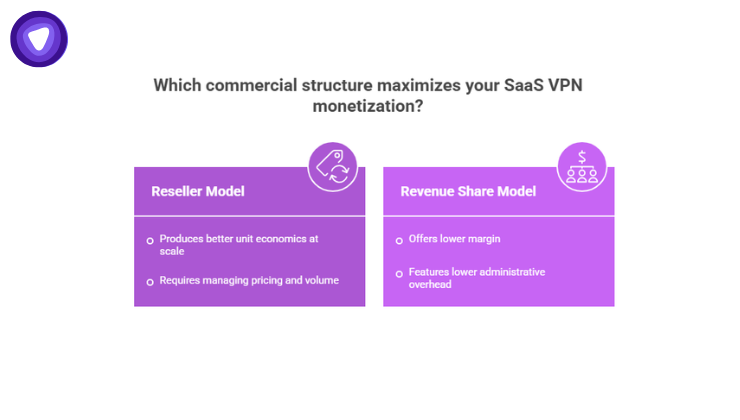
White label VPN partnerships come in two main commercial structures. Understanding the difference shapes the unit economics of your SaaS VPN premium feature monetization program from day one.
Reseller model: You purchase VPN capacity at wholesale rates and mark it up. Margins typically run 40% to 70% depending on volume. You control the pricing and keep the difference.
Revenue share model: The provider handles billing infrastructure and you receive a percentage of each sale. Lower administrative overhead, but lower margin.
For SaaS platforms with existing billing systems, the reseller model almost always produces better unit economics at scale. This same tier-gating logic is what’s pushing neobanks and digital wallets to embed VPN into premium tiers rather than treat it as a bolt-on.
Building the Pricing Architecture
Pricing VPN as a premium feature requires matching perceived value to user segment. Charge too little, and it cheapens the offering. Price it without bundle context, and conversion suffers.
Pricing Structures That Perform
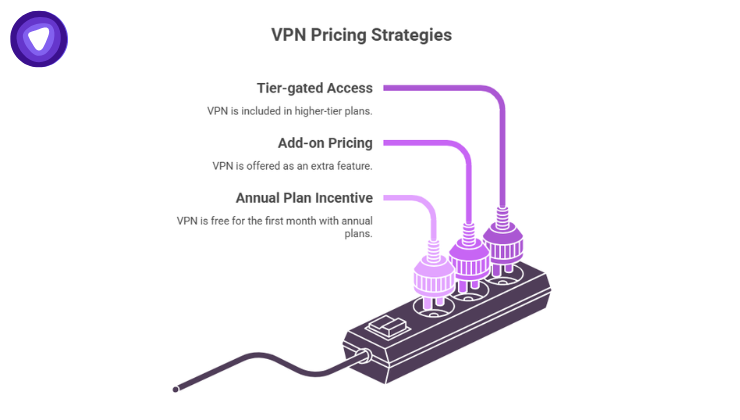
Tier-gated access works best when your platform already has clearly differentiated plan levels. VPN lives at the Pro or Business tier as a natural trust signal, not as a bolt-on afterthought.
Add-on pricing suits platforms with a large free or basic user base. A flat monthly fee of $3 to $8 per seat converts well when positioned alongside a security audit or privacy score feature.
Annual plan incentive is the most reliable ARPU driver. Offer VPN access free for the first 30 days with annual plan upgrades. Retention on annual plans with VPN enabled is measurably higher because the feature creates a daily usage habit.
According to Gartner’s security forecast, global cybersecurity spending is projected to grow 15% in 2025, crossing $212 billion. SaaS platforms that embed security into their pricing tiers sit directly inside that budget category.
User Communication and Activation
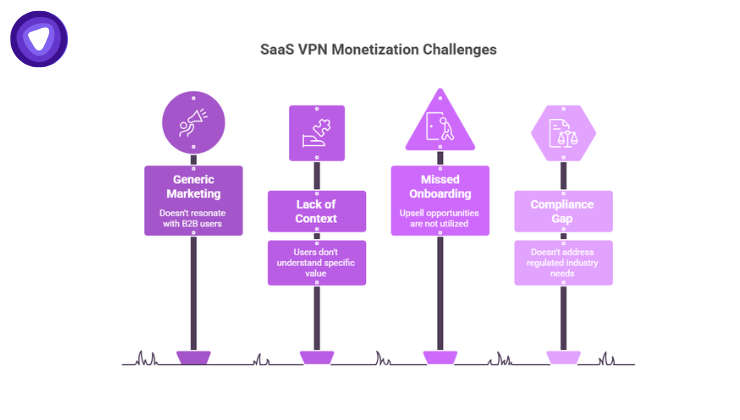
Pricing architecture means nothing without an activation strategy. Users need to understand what VPN does within your specific context, not in general consumer terms.
The mistake most platforms make is using generic VPN marketing language. Phrases like “protect your privacy” work for consumer VPN campaigns. They do not convert inside a B2B SaaS dashboard. Effective SaaS VPN premium feature monetization depends on context-specific messaging that connects the feature to a task users are already doing.
What works instead:
- Connect VPN to a specific task: “Access your workspace securely from public Wi-Fi”
- Show it alongside data handling: “Your files, encrypted end-to-end, even in transit”
- Use onboarding moments: Trigger the VPN upsell at first login from a new location or device
- Tie it to compliance language for regulated industries: “Meet remote access security requirements for SOC 2 and ISO 27001 audits”
The global VPN market was valued at $44.6 billion in 2022 and is projected to expand at a compound annual growth rate of 17% through 2030. Users are not unfamiliar with VPN. Your job is to make choosing yours the easier decision.
Retention Impact: The Often-Missed Argument
The revenue case for VPN gets most of the attention. The retention case is equally important.
Users who activate security features within a SaaS platform show meaningfully higher retention rates across categories. The reason is structural: enabling a security feature creates a workflow dependency. Once your VPN is part of a user’s daily routine, switching platforms means losing that protection and reconfiguring access elsewhere.
Industry data shows the cybersecurity SaaS segment growing at a rate that outpaces general SaaS growth. SaaS VPN premium feature monetization is not just a revenue line. It is a retention mechanism with measurable impact on churn that most LTV models do not account for until it is already working.
Where PureVPN White Label Fits In for SaaS VPN Premium Feature Monetization
PureVPN’s white label VPN program is built for exactly this scenario. It gives SaaS platforms a fully branded VPN solution backed by a network of 6,500+ servers across 70+ countries, without requiring internal infrastructure development. The integration is API-first, which means your engineering team connects it to existing subscription logic rather than rebuilding billing from scratch.
The program supports multiple protocol options, role-based access controls, and usage analytics, giving product and growth teams the data they need to optimize upsell timing and in-app messaging.
For SaaS companies evaluating SaaS VPN premium feature monetization, PureVPN white label removes the two biggest barriers: technical complexity and time to market. The infrastructure is production-ready. The commercial model is flexible enough to fit either a reseller or revenue-share structure depending on your platform’s scale and billing preferences.
The Bottom Line
VPN monetization is not a long-term product roadmap item. It is a near-term revenue decision that also strengthens product stickiness. The infrastructure is available through white label partnerships. The user demand is already established.
SaaS companies that act first on SaaS VPN premium feature monetization set a pricing precedent that is difficult for competitors to undercut without devaluing their own offering. That is a durable commercial advantage, not just an additional revenue line.