

- Pre-Login Signal: Credential monitoring flags leaked shopper and seller logins before an attacker signs in, earlier than bot defense or fraud scoring.
- Session Cookies: Infostealer logs carry live session cookies that skip passwords and MFA, so every alert needs a session wipe, not only a reset.
- Five Checkpoints: The exposure flag belongs at login, contact changes, address changes, loyalty redemption, and stored-card checkout, not just the login screen.
- Seller Accounts: Marketplace seller takeovers redirect payouts, so platforms need seller login monitoring and payout change holds.
- Peak-Season Deadline: Holiday code freezes set the real deadline, so the monitoring hooks must go live before code locks.
Credential monitoring account takeover prevention checks shopper and seller logins against breach dumps and stolen login files. When a match appears, the platform forces a reset, revokes live sessions, or adds a step-up check. All of that happens before an attacker signs in. For e-commerce platforms, this makes credential monitoring a warning that fires before login. It acts before bot defenses and fraud scoring ever see the session.
A hijacked shopper account rarely ends with one bad order. The attacker inherits a saved card, a loyalty balance, and a delivery address to change. The Javelin 2026 study found account takeover losses topped $15 billion in 2025. Javelin ranked it the costliest fraud type it tracked. Victim counts rose 18% to six million in the same year.
For commerce platforms, that loss lands on three budgets at once. Chargebacks hit finance. Recovery tickets hit support. The shopper who never logs in again hits revenue. The attacker needs no exploit for any of it. They need a password your shopper already used somewhere else.
Why Account Takeover Hits E-Commerce Platforms Harder
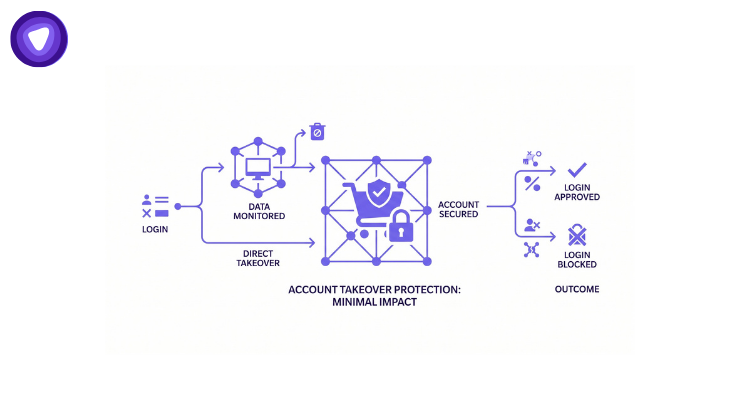
Store accounts hold money you can spend, so attackers treat them as cash, not data. Digital commerce ranked just behind internet and software platforms for takeover rates in 2025, per fraud network data. The same report names stored payment methods and loyalty balances as what attackers exploit once inside.
Four account features turn a stolen login into money:
- Saved cards turn one login into instant purchasing power with no card details needed.
- Loyalty points and gift balances turn into resale cash without a card charge.
- Email and address changes lock the real owner out and reroute every future order.
- Order history gives the attacker the details to fool your help desk.
Take an illustrative platform with 2,000,000 shopper accounts. Suppose 1% of those logins appear in fresh breach data. That leaves 20,000 accounts carrying live takeover risk. At a $50 average loss per compromised account, the exposure reaches $1,000,000. Support hours and lost repeat purchases come on top. These are round numbers for illustration, not industry benchmarks.
Where Shopper Credentials Leak From
Most stolen commerce logins never leak from the commerce platform itself. They leak somewhere else first, then get tested against your login page. Two sources account for most of that exposure.
Password Reuse Across Breached Sites
Shoppers reuse passwords far more than security teams assume. A Cybernews analysis of more than 19 billion leaked passwords found only 6% were unique. A breach at an unrelated forum becomes a live login risk on your storefront. Attackers load those pairs into credential stuffing tools and test them against retail logins at scale.
Infostealer Logs and Stolen Session Cookies
Infostealer malware takes more than passwords from a shopper’s device. It grabs saved logins, autofill data, and live session cookies. A live session cookie lets an attacker skip the password and the second factor. Business-grade dark web monitoring tracks these logs alongside classic breach dumps.
This changes the response. A password reset alone leaves a stolen cookie working. Every alert on a store account needs a session wipe as well as a reset.
Credential Monitoring vs Bot Defense vs Fraud Scoring
Credential monitoring acts first because it flags risk before any login attempt. Bot defense and fraud scoring both wait for the attacker to show up. Each layer catches something the others miss.
| Layer | When It Acts | What It Sees | Blind Spot |
| Credential monitoring | Before login, when exposure appears | Shopper and seller logins in breach dumps and stealer logs | Logins that never leaked anywhere |
| Bot and credential-stuffing defense | During the login attempt | Request speed, device signals, network reputation | Slow, human-paced attackers holding a valid password |
| Transaction fraud scoring | At checkout | Order value, payment details, shipping signals | The takeover itself, since the session already looks legitimate |
A credential monitoring account takeover layer does not replace the other two. It feeds them. An exposure flag gives bot defense and fraud scoring a reason to look harder at one specific account. Card number and BIN monitoring is a separate layer again, tied to a different chargeback workflow.
Where Credential Monitoring Account Takeover Checks Fit in the Commerce Flow
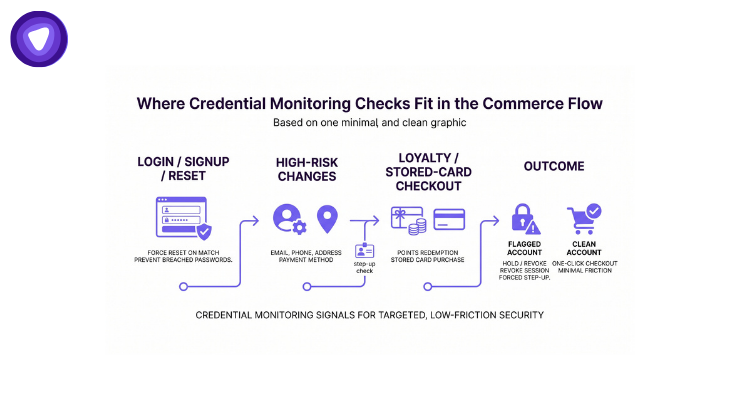
The exposure flag earns its value at specific account events, not only at login. Most platforms wire it into the login screen and stop there. Attackers who already hold a session skip that screen entirely.
At Login, Signup, and Password Reset
Check every login against the exposure record for that account. On a match, force a reset and revoke every active session in one step. Apply the same check at signup and reset. A shopper should never set a new password that already sits in a breach dump.
Before High-Risk Account Changes
Account changes signal takeover more clearly than logins do. Gate these actions behind a fresh step-up check whenever the account carries an exposure flag:
- Changing the account email or phone number
- Adding or editing a shipping address
- Adding a new payment method
- Turning off two-factor checks
At Loyalty Redemption and Stored-Card Checkout
Redemption and saved-card purchases are where the attacker collects. A flagged account redeeming its full points balance to a new address deserves a hold. A flagged account buying gift cards with a stored card deserves the same.
Friction is the real objection here. Two-factor adoption sits near 13% in digital commerce, per fraud index data. Forcing a step-up on every shopper costs conversions. Credential monitoring account takeover signals narrow step-up checks to accounts with a known leak. Clean accounts keep their one-click checkout.
| Account Event | Risk If the Login Is Exposed | Action on an Exposure Flag |
| Login | Attacker signs in with a reused password | Force reset and revoke sessions |
| Email or phone change | Real owner loses recovery access | Step-up check through the original contact |
| Shipping address change | Orders reroute to a drop address | Step-up check and owner notification |
| Loyalty redemption | Points drain to resale | Hold large redemptions for review |
| Stored-card checkout | Instant purchases on saved payment | Step-up before high-value or gift card orders |
Credential Monitoring Account Takeover Protection for Marketplace Sellers
Seller accounts carry more money per takeover than shopper accounts. A hijacked seller account can change payout bank details and collect weeks of sales. It can also list counterfeit stock under a trusted storefront name. Platforms that monitor only shopper logins leave this door open.
Seller credentials leak the same way shopper credentials do. Small sellers often run their store login, email, and supplier portals on one reused password. A single infostealer infection on a seller laptop exposes all of them at once.
Three controls close most of that gap:
- Watch seller logins and work email addresses, not just shopper logins.
- Hold payout changes on any flagged seller account until the seller confirms by a second channel.
- Revoke seller API tokens and sessions on every alert, since linked tools often stay logged in for months.
A credential monitoring account takeover program that covers sellers protects the platform’s own cut of each sale. It also protects the buyers who trust those stores.
Why Peak Season Sets the Deadline
Late-year shopping gives attackers cover. Takeover attempts hide inside real traffic spikes, and fraud teams run flat out. Many store tech teams also freeze code before the holiday peak.
That freeze sets the real deadline. A credential monitoring account takeover signal needs its login, account change, and redemption hooks live before code locks. Decide before the freeze, not after a takeover wave forces the question in December.
What to Ask a Credential Monitoring Provider
Vendor claims here sound alike, so ask for specifics in writing. Five checks separate a real exposure feed from a sales page:
- Ask which sources get scanned, and confirm stealer logs sit next to old breach dumps.
- Ask how fast a new match reaches you, in hours or in days.
- Ask which login types you can register, such as email, phone, and username.
- Ask whether alerts arrive by webhook or whether your team must poll for them.
- Ask how registered logins get stored, and confirm they are hashed first.
Each answer maps to a step in your own flow. Slow alerts give attackers a head start. Missing stealer log coverage hides the sessions that skip passwords. Weak storage turns the monitoring feed into a new leak of its own.
Build, Buy a Standalone Tool, or Embed Through an API
Building credential monitoring in-house means buying breach feeds, gaining access to stealer logs, and running a matching pipeline. That pipeline must clean data, hash each login, and score risk around the clock. It is a standing cost, not a one-time project.
A standalone consumer tool skips the build but breaks the flow. It sends shoppers to a separate login and a separate brand. The alert never reaches the platform’s own reset or step-up logic.
An embedded API keeps credential monitoring account takeover signals inside the platform. The platform adds each login to watch, gets webhook alerts, and runs its own response. This matters for one more reason. A password manager only checks credentials stored inside its own vault. Exposure monitoring checks every login you add, wherever the shopper keeps it.
Proof: Embedding Protection Without a Second App
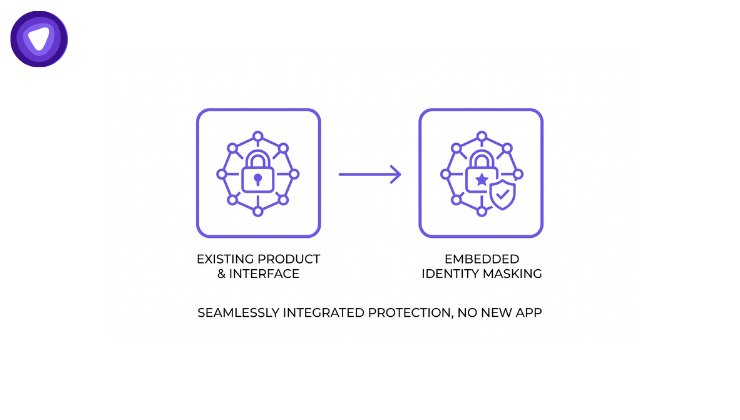
The embedded model already runs at consumer scale. In a published partner case study, Samsung Electronics added identity masking to its Secure Wi-Fi feature. Galaxy users received the protection with no second app and no new interface. The teams mapped both systems first, fit the build to the feature, and tested it over several rounds.
That case covers a VPN-layer privacy feature on phones, not credential monitoring on a store. What carries over is the delivery model. The security feature lived inside a product people already used, under that product’s own look and feel.
PureVPN White Label Dark Web Monitoring
PureVPN White Label Dark Web Monitoring supplies this credential monitoring account takeover signal through an API and SDK. It runs under the platform’s own brand. It watches dark web breaches and infostealer malware, both live and historic, down to stolen cookies. Each alert carries its source and timeline, so the platform’s own reset and step-up logic responds.
The platform keeps the alert, the reset flow, and the shopper. The provider lists 400+ broker sites covered, 150+ partners, and SOC 2 Type II and ISO 27001 certification. The coverage and partner counts are its own figures, not third-party audited. The same deal can grow into data broker removal inside a wider privacy suite.
Final Thoughts
Account takeover on a store starts with a login that leaked somewhere else. Bot defense and fraud scoring catch the attacker late, once the session looks real. Credential monitoring account takeover checks catch the exposure first, at the account events where attackers collect. Wire the signal into login, account changes, redemption, and seller payouts before the peak-season freeze.
Request API sandbox access for a 20-minute integration walkthrough.