

Key Takeaways
- Machine keys have no email, owner, or password reset, so human dark web monitoring cannot match or fix them.
- One in five firms had an incident tied to non-human identities, per the Cloud Security Alliance.
- Support tickets, developer infostealer logs, and third-party apps leak machine keys that repo scans never reach.
- A real tier needs a machine identifier schema, an owner map, a live-key check, and queue routing.
- Per-seat pricing hides machine coverage costs, so the tier should bill per key, cloud account, or app.
Quick Answer: Non-human identity monitoring tracks API keys, OAuth tokens, service accounts, and cloud access keys after they leak. These credentials need their own tier because they have no email address, no human owner, and no password reset. A tier built for people cannot match them, route them, or fix them.
In August 2025, attackers stole OAuth tokens tied to the Drift chat integration and used them against Salesforce. Google’s threat intelligence team tracked the OAuth token theft to a group it calls UNC6395. The attackers then searched support case records for AWS access keys, Snowflake tokens, and passwords. None of those secrets carried an email address. As a result, a dark web monitoring tier built around people would never have matched them.
That gap has a real cost. In June 2024, the Cloud Security Alliance asked 818 IT and security pros about it. One in five firms had a security incident tied to non-human identities. Only 15% felt sure they could secure them. Keys that never got rotated caused 45% of those incidents. Weak monitoring caused 37%.
For cloud security providers, that confidence gap is a revenue problem as much as a security one. Customers already pay for posture tools inside their own environment. However, few have anything watching where their machine credentials end up outside it. That is the job of non-human identity monitoring, and it needs a tier of its own.
What Non-Human Identity Monitoring Covers
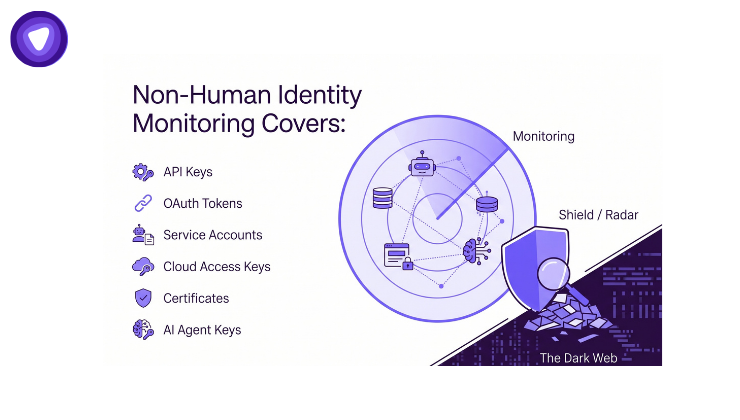
Non-human identity monitoring looks for machine keys that have slipped out of a company’s hands. The list is longer than most teams expect. It includes:
- API keys that apps and vendors use to talk to each other
- OAuth tokens given to connected apps
- Service account logins that run scripts and jobs
- Cloud access keys that open whole accounts
- Certificates and signing keys
- Keys held by AI agents that act for a user
The OWASP project ranks secret leakage second on its NHI Top 10 list for 2025. Long-lived secrets rank seventh. A leaked secret with no expiry gives an attacker access with no time limit.
Most identity security tools work inside the customer’s environment. They inventory identities, baseline behavior, and flag drift. Dark web monitoring covers the other half of the problem. It answers whether a secret already sits in a stealer log, a breach dump, or a forum post. The Zero Trust gap explains why access controls alone cannot answer that question.
Why Human-First Monitoring Misses Machine Credentials
A standard dark web monitoring tier makes four guesses about each identity it watches. Machine keys break all four, and each break opens its own blind spot.
There Is No Email Address to Match
Human monitoring registers an email, phone number, or card number. Then it searches new dumps for exact matches. A cloud access key has no email attached. Instead, it has a fixed prefix, a set length, and a character pattern tied to the issuing platform.
A monitoring tier needs format-aware detection to recognize that pattern. It also needs organization context, such as domains, account IDs, or client IDs. Without that context, a found key cannot reach the right customer.
There Is No Person to Notify
A human alert goes straight to the person who owns the account. A service account has no inbox, and nobody logs into it. In the same survey, service account management and identity discovery ranked as the most common challenges.
So an alert without an owner map lands in a shared queue and waits. That wait is the window an attacker uses.
A Password Reset Does Not Fix It
The human playbook is short. Reset the password, then end active sessions. Machine credentials need rotation instead, followed by redeployment to every system that uses the old secret.
Rotating a key without a dependency map can break production. As a result, teams delay rotation, and the exposed key stays valid. OWASP lists improper offboarding as its top risk for a related reason. Stale identities linger because removing them feels risky.
Severity Depends on Scope, Not Data Type
Human tiers rank alerts by data type, so a password outranks a phone number. Machine credentials need ranking by privilege instead. A read-only analytics token and an admin cloud key look alike in a dump. However, one exposes a dashboard, and the other exposes an entire account.
Where Machine Credentials Surface Outside the Perimeter
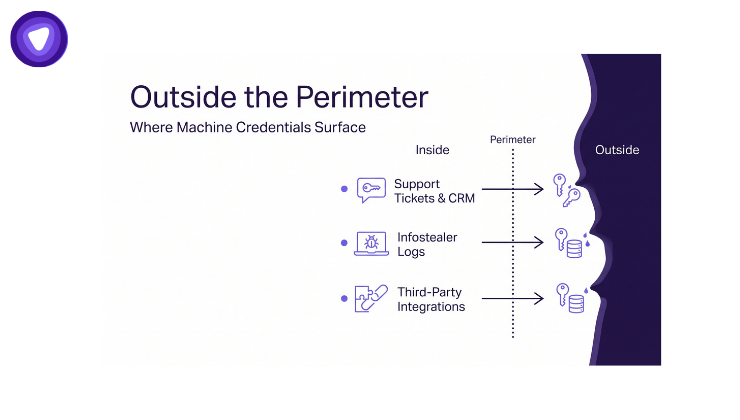
Code repos and build logs get most of the attention. The leaked cloud credentials guide covers those in depth. Non-human identity monitoring also has to watch three places that repo scans never reach.
Support Tickets and CRM Records
The UNC6395 campaign shows why this channel matters. Engineers paste keys into support cases to unblock a customer quickly. Those records then sync to connected apps that hold their own tokens. One compromised integration exposes every secret buried in that ticket history.
Infostealer Logs From Developer Machines
An infostealer infection on a developer laptop captures more than browser passwords. It also grabs session cookies, saved console sessions, and local configuration files. A human tier sees the developer’s email in that log. A machine tier also has to see the tokens sitting beside it.
Third-Party Integrations
Every connected app holds a token the customer issued. When that vendor suffers a breach, the token leaks from the vendor’s systems, not the customer’s. OWASP ranks vulnerable third-party identities third on its list. Therefore, monitoring has to track each token by issuer and by grantee.
Human Identity Tier vs Non-Human Identity Monitoring Tier
The differences become clearer side by side. Each row below changes how a provider builds, routes, and prices the service.
| Dimension | Human Identity Tier | Non-Human Identity Monitoring Tier |
| What gets registered | Email, phone, card, or ID number | Key formats, client IDs, account IDs, domains |
| Who receives the alert | The account holder | The service owner, pipeline team, or SOC queue |
| First response | Password reset and session sign-out | Rotation, redeployment, and token revocation |
| Severity basis | Type of data exposed | Privilege and scope of the credential |
| Validity check | Rarely needed | Required before paging anyone |
| Billing unit | Per user or per seat | Per identity, environment, or integration |
| Offboarding risk | Account closes with the employee | Orphaned keys outlive projects and staff |
What a Non-Human Identity Monitoring Tier Needs
Splitting the tier is a product decision before it is a technical one. Four components separate a real tier from a relabeled human one.
An Identifier Schema Built for Machines
The tier has to accept identifiers that are not personal data. That means key formats, OAuth client IDs, cloud account IDs, and integration names. Each one needs a link to the customer tenant that owns it.
An Ownership Map
Every monitored identity needs a named owner before monitoring starts. That owner might be a team, a pipeline, or an outside vendor. Without this map, alerts arrive with nowhere to go.
A Validity and Blast-Radius Check
A leaked key that a team rotated last month is noise. A live admin key is an incident. The tier should confirm whether a secret still works, then show what it can reach. This check keeps a security team focused on live exposure.
Routing Into Existing Workflows
Machine alerts belong in a ticket queue or a security queue. They do not belong in a user’s inbox. The technical primer covers how alerts get sent. For a non-human identity monitoring tier, only the target changes. The way alerts move stays the same.
The Economics: Why Per-Seat Pricing Breaks
Most dark web monitoring charges per user. That model works for people and fails for machines. The following example uses illustrative numbers, not a published benchmark.
Take a customer with 400 employees on a $3 per-seat plan. Monitoring earns $1,200 a month. Now assume that customer runs 20 machine identities per employee. That adds 8,000 credentials the provider must watch without extra revenue. Published industry estimates of that ratio run higher than this example.
So the provider either eats the cost or prices the work on its own. A separate tier solves this. It bills per key watched, per cloud account, or per connected app. It also gives buyers a line item they can defend in a budget review.
How Cloud Security Providers Package the Tier
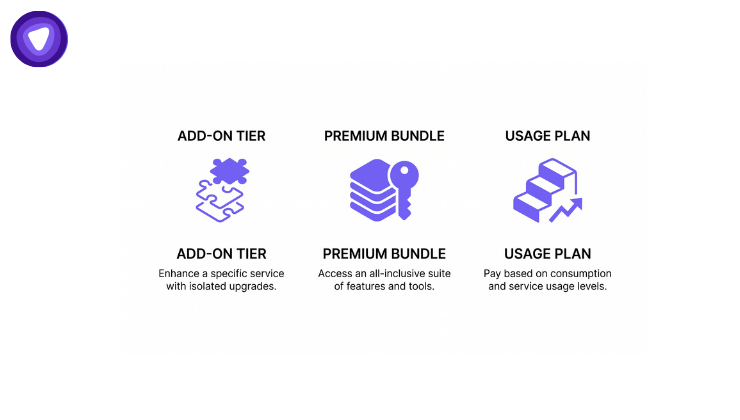
Cloud security providers have three clear ways to sell non-human identity monitoring. Each one fits a different type of buyer.
- Add-on tier: Sell machine coverage on top of a human plan, and price it per cloud account.
- Premium bundle: Put it in a top plan, the way many security suites already add human monitoring.
- Usage plan: Charge per key watched for customers with large cloud setups.
Providers that already sell credential monitoring to end users can extend the same engine. The launch guide walks through branding, pricing, and go-live for a white label service.
The timing matters too. Third-party token breaches like UNC6395 keep exposing secrets that customers never knew were shared. Decide on the tier before the next renewal cycle, not after a vendor breach forces the question.
How PureVPN White Label Dark Web Monitoring Fits
PureVPN White Label Dark Web Monitoring watches breach data and infostealer logs around the clock. Partners plug it in through an API and SDK. Its infostealer coverage reaches stolen logins, cookies, and device details, not just email matches. Cloud security providers can sell it under their own brand and pricing.
The platform holds SOC 2 Type II and ISO 27001 certifications, with full audit reports shared under NDA. A vendor review should confirm the audit scope covers the white label build itself. Confirm the exact machine identifier types in scope during evaluation, before pricing the tier.
Non-Human Identity Monitoring Belongs in Its Own Tier
Machine keys now hold the access that attackers want most. Yet most dark web monitoring still waits for an email that never shows up. Non-human identity monitoring fixes that. It uses machine identifiers, owner routing, live-key checks, and its own pricing. For cloud security providers, the tier closes a real blind spot. It also adds a revenue line buyers can defend.
Request API sandbox access for a 20-minute integration walkthrough.
Frequently Asked Questions
What is non-human identity monitoring?
It tracks leaked API keys, OAuth tokens, service accounts, and cloud keys outside a company’s own systems.
What are examples of non-human identities?
API keys, OAuth tokens, service accounts, cloud access keys, certificates, and AI agent keys all count.
How is it different from human dark web monitoring?
It matches key formats, not emails, sends alerts to service owners, and starts key rotation, not password resets.
Can dark web monitoring detect leaked API keys?
Yes. It needs format-aware matching plus company context, since API keys carry no email address.
Who should receive a non-human identity alert?
The service owner or pipeline team gets it through an owner map, never the end user.