Nobody actually likes passwords!
We hate creating them, we hate remembering them, and we definitely hate that mini-heart attack when “Incorrect Password” pops up for the third time.
But with technology advancements, you might be wondering, will biometrics eventually replace password managers altogether?
With the rise of “Passkeys” and the fact that almost every smartphone now comes with high-fidelity scanners, it feels like we’re on the verge of a set it and forget it world. But as we’ll see, your face might be the key, but you still need a very strong safety.
Why Password Managers Still Matter in a Biometric Era
Even as biometrics and passkeys are gaining hype, password managers remain an essential layer of protection, and the data shows why.
1. Credentials Are Still a Huge Attack Vector
Weak or stolen passwords continue to be a major cause of compromise. According to recent identity statistics, 36 % of consumers reported at least one account compromise due to weak or stolen credentials, highlighting that traditional authentication still exposes users to significant risk.
Meanwhile, credential stuffing and phishing attacks still account for a large share of login attempts, meaning attackers continue to exploit password weaknesses rather than bypassing biometric systems.
Even with biometrics authenticating users locally, passwords themselves remain a major breach vector, especially when reused or poorly chosen.
2. People Still Struggle With Password Security
Despite advancements in authentication tech, many people still rely on memory or insecure practices to manage their credentials. Surveys show that over half of users globally try to remember passwords or jot them down on paper, which directly correlates to insecure habits and breach risk.
Without a password manager to generate and store strong, unique credentials, users continue to leave themselves vulnerable, even if their devices use biometric unlocks.
3. Passkeys Are Growing—but Adoption Is Still Partial
Passkeys promise passwordless login using biometrics or device-bound credentials, and adoption is increasing rapidly: over 48 % of top websites now support passkeys, and awareness continues to grow.
But the reality is not all services, or all user populations, are ready. Many users still don’t fully understand or use passkeys, and even among IT professionals, adoption is not universal.
Until passkeys are ubiquitous and solely relied upon, passwords and the tools that help manage them will remain a core part of digital identity, and we know that can never happen.
4. Password Managers Enhance All Authentication Methods
Modern password managers don’t just store credentials:
- They generate strong, unique passwords that eliminate reuse risk.
- They integrate with biometrics so your vault is easy to unlock securely.
- They detect compromised credentials and prompt resets where necessary.
Even if a service supports passkeys, password managers or similar secure vaults are often still used to store, sync, and manage those keys securely across devices.
5. Biometrics Alone Aren’t a Complete Fix
Biometric authentication is convenient and harder to phish than passwords alone, but it can’t be changed if leaked, and sometimes still requires a strong credential fallback.
That means biometrics are great for unlocking, but they don’t replace the need for strong credential management, especially when interacting with systems that still depend on passwords or recovery keys.
What Do Experts Think About Managing Passwords?
When you talk to cybersecurity analysts in 2026, the consensus isn’t that password managers are dying; it’s that they are upgrading.
Experts from the FIDO Alliance point out that while passwords are a cybersecurity nightmare, the infrastructure to manage their replacements, Passkeys, is more critical now.
Gartner predicts that by 2026, 30% of enterprises will find biometric identity verification unreliable if used in isolation due to AI-generated deepfakes.
As noted in Innovation News Network, biometrics are inherently tied to the individual. But here’s the catch: you can’t reset your thumbprint if a database of minutiae points is ever leaked.
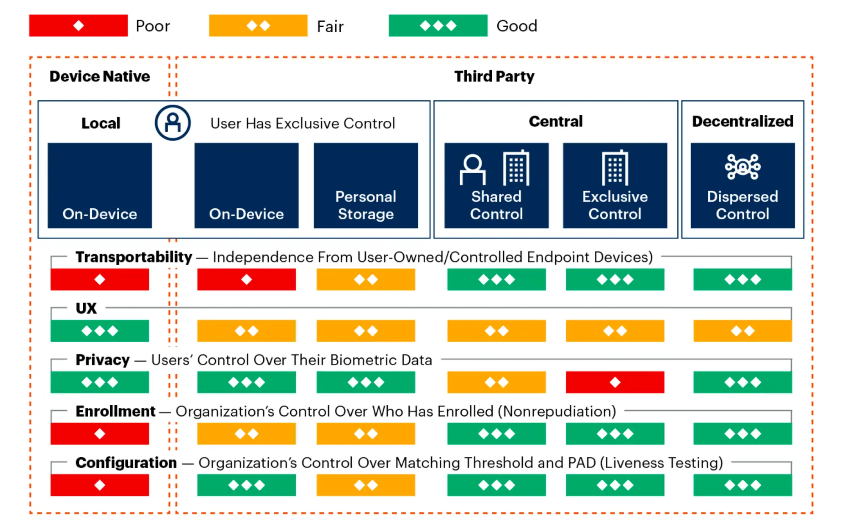
Also, experts now favor decentralized biometric models, where your data never leaves your device.
What Do People Think About Password Security?
If you want to see the real-world friction of this transition, look no further than r/cybersecurity.
“I haven’t typed a password in six months. Between my Apple Watch and FaceID, my password manager is basically just a backup drive. Why would I go back?”

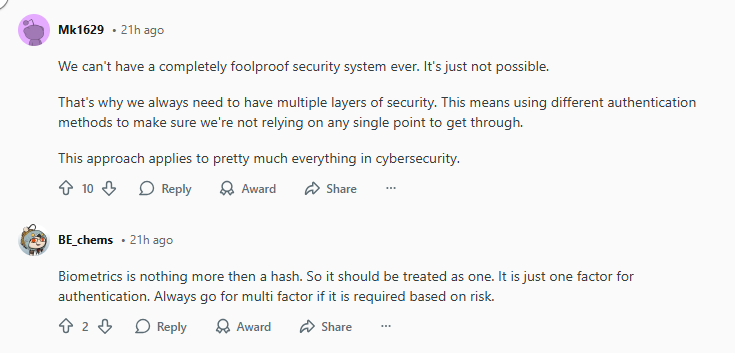
“Biometrics are usernames, not passwords. They identify who you are, but they shouldn’t be the only thing guarding your life. I’ll stick to my encrypted vault.” — u/PrivacyBuff99 on r/privacy
Redditors correctly point out that biometrics are public. You leave your password on every glass you touch. Password managers keep your secrets… a secret.
The consensus among tech commentators is that we are moving toward Behavioral Biometrics, analyzing how you type or move your mouse, as a secondary layer of continuous authentication.
Why Biometrics Can’t Really Protect Your Passwords
Even in 2026, we face the wall of reality. Here is why biometrics alone aren’t enough:
- Hardware Dependency: If your key is tied to your phone’s Secure Enclave and you drop that phone in the ocean, you’re locked out of your life.
- The Legacy Gap: Thousands of websites still use old-school login forms. You need a manager to autofill those until the world catches up.
- The Compelled Access Issue: In many places, police can legally force you to unlock a phone with your face, but they cannot force you to reveal a memorized password.
Pitching a Modern Solution with PureVPN Password Manager
PureVPN Password Manager brings together a privacy-first design with everyday usability, making password management the safest option. Here’s what you get:
- Biometric Integration: Unlock your entire vault with a touch or a glance.
- Quantum-Resistant Encryption: While hackers try to use AI to crack codes, PureVPN password manager uses advanced algorithms to stay ahead.
- Cross-Platform Sync: It bridges the gap between your iOS FaceID and your Android fingerprint scanner seamlessly.
Wrap Up
So, will biometrics replace password managers? No. Biometrics are the interface, but password managers are the infrastructure. We are moving toward a future where typing is rare, but managing is more important.
The password manager of the future isn’t a list of secret words; it’s a sophisticated command center like PureVPN that uses future-rich technology to keep your passwords safe.
Frequently Asked Questions
Yes, against phishing but not against physical theft or data breaches. A password can be changed; your face cannot. Using biometrics as a second factor or a local unlocker is a good decision but using a reliable password manager keeps your privacy on top.
Yes. Most high-end password managers, like PureVPN, allow you to use a traditional Master Password as a fallback.
No, instead, they make them more necessary. Someone has to store and sync those cryptographic keys across your different devices, and that’s what password managers do.
Modern systems use Liveness Detection. However, as deepfake technology is making this a closer race.