Cyberattacks are no longer just IT problems — they’re becoming public-safety issues. This week, hackers claimed they breached NAFFCO, one of the Middle East’s largest fire-safety engineering firms and a key contractor behind major landmarks in Dubai, including the Burj Khalifa.
A breach involving a company responsible for life-safety systems isn’t just a corporate incident — it affects the public, residents, and anyone relying on the protection systems these vendors support.
This breakdown explains what the attackers claim to have stolen, how the data could be misused, and why breaches involving safety-critical vendors have become so common.
What the Hackers Claim Happened?
A well-known ransomware gang posted NAFFCO on its leak site, stating it had stolen 1TB of internal data — including documents, employee records, and client-contract files.
They publicly mocked the company with the line:
“They say their success is driven by a passion to protect. They could not protect themselves.”
This is a typical intimidation tactic. Ransomware gangs leak small samples of data online to pressure victims into negotiating.
What is NAFFCO?
NAFFCO is not an ordinary vendor. The company:
- Is headquartered in Dubai
- Generates billions in annual revenue
- Designs and maintains fire-protection and emergency-response systems
- Works with government agencies, civil-defense units, and major industries
- Supports energy, aviation, and large-scale infrastructure sectors
It also provides safety systems to key landmarks such as:
- Burj Khalifa
- Louvre Abu Dhabi
- Oman Convention & Exhibition Centre
When a provider responsible for critical life-safety systems experiences a breach, the consequences can extend to public trust, national infrastructure, and physical-safety readiness.
How the NAFFCO Breach Likely Happened?
- Initial access — Attackers likely entered through a compromised or phished employee account.
- Lateral movement — They moved inside the network to reach high-value file servers.
- Data exfiltration — Documents were quietly copied and extracted over time.
- Ransom phase — Once enough data was taken, the attackers issued a ransom demand.
- Leak-site pressure — NAFFCO was then posted on INC Ransom’s leak site to increase public pressure, following the group’s typical playbook used against hundreds of other victims.
What Did Attackers Likely Access?
- A highly active threat actor — INC Ransom has hit 450+ victims since July 2023 across hospitals, schools, governments, tech firms, and more.
- Likely stolen data includes:
- Internal directories and department files
- Project documents and client contracts
- Safety-system documentation
- Operational workflows and internal communications
- Internal directories and department files
What Data Appears to Be Exposed?
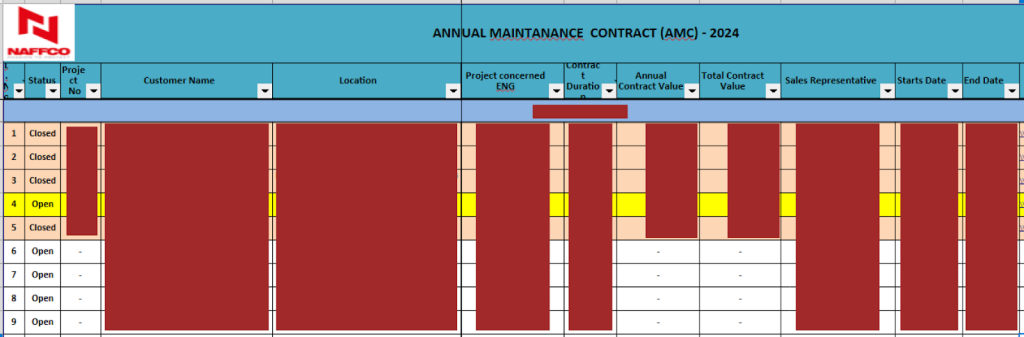
The attackers released 47 screenshots as proof (one of them is below). Early reviews indicate the data includes:
Internal company and operational details
- Organization charts
- Department information
- Internal memos
- Emails and phone numbers
Client and contract information
- Annual contract lists
- Financial amounts
- Detailed contract documents
- Client-company names
- Sales-representative records
Source: CyberNews
Employee personal information (PII)
- Passport/ID document photos
- Visa details
- Names, birthdates, identification numbers
While no system blueprints or fire-safety schematics appear publicly leaked at this stage, the information released still carries significant risk.
Why Vendors Like NAFFCO Are Being Targeted?
Attackers are zeroing in on suppliers because compromising a single vendor can expose dozens of downstream organizations. INC Ransom’s victim list shows this strategy clearly — from Stark AeroSpace to NHS Dumfries & Galloway and even Ahold Delhaize, the $99 billion retail giant behind Stop & Shop and Albert Heijn.
The group consistently targets high-leverage environments where one breach creates a wide-ranging impact. NAFFCO fits the same profile: a major safety-systems vendor with legacy networks, distributed operations, and access to critical building schematics across airports, hospitals, and government facilities. That combination makes it a strategically valuable and high-pressure target.
How Individuals Can Protect Themselves After Vendor Breaches?
Even if you aren’t a NAFFCO employee or client, vendor breaches often lead to widespread secondary attacks — especially phishing and identity fraud.
Here’s what matters most:
1. Be alert for targeted phishing attempts
Attackers often use leaked employee or partner information to craft convincing emails, calls, or WhatsApp messages.
2. Enable multi-factor authentication (MFA)
This stops attackers even if they obtain your password from a breach.
3. Update your passwords — especially old or reused ones
Reused credentials remain one of the biggest causes of account takeovers. PureVPN’s built-in password manager helps you create and store strong, unique passwords, reducing the risk of credential-based attacks.
4. Monitor bank, email, and social accounts for unusual activity
Identity details from breaches can be used weeks or months later.
5. Be cautious with unexpected requests for documents or payments
Breaches often trigger impersonation scams targeting the public or partner companies. Using a trusted VPN like PureVPN adds an extra layer of protection by securing your connection and keeping sensitive activity private. These steps focus on realistic, high-impact protections — not tool-stack promotions.
Final Word
Incidents involving safety-critical vendors highlight how deeply cyberattacks now affect everyday people — not just businesses. Breached documents, leaked ID details, and exposed employee information all create long-tail risks that criminals can exploit long after the headlines fade.
Strengthening your own security habits — from resisting phishing to using MFA and practicing good password hygiene — remains one of the most effective ways to reduce your exposure. Cyberattacks may start inside companies, but the fallout often reaches far beyond them.
Frequently Asked Questions (FAQ)
In this context, the main types are data breaches, ransomware attacks, and supply-chain compromises where a vendor’s systems are used to reach downstream clients.
The NAFFCO breach itself is an example — attackers stole 1TB of internal data, including employee IDs and contract files, and posted the company on a ransomware leak site.
You isolate affected systems, identify how attackers got in, assess what data was taken, notify affected parties, and tighten access controls like passwords and MFA.
Examples include leaked employee passports, exposed client contracts, stolen operational documents, or large data extractions like the one claimed in the NAFFCO case.
INC Ransom is a rapidly growing ransomware group active since July 2023, claiming over 450 victims and using multi-extortion tactics to steal data, leak samples, and pressure organizations across industries.