
Booking an Airbnb can unlock unforgettable travel experiences, unique stays, local hosts, and homes that feel like your own. However, alongside those positive moments, there can be nightmares, including fake listings, misleading photos, fraudulent payment requests, and more. Whether you’re a guest planning your next trip or a host welcoming travelers, being aware of common scams helps protect your money, safety, and peace of mind.
In this guide, we’ll break down the latest Airbnb scams reported by real people, the red flags to watch, and tips you can use to spot and avoid them.
Why is Airbnb Home to Scams?
The peer-to-peer nature of Airbnb makes it a powerful travel platform, and, unfortunately, an attractive target for scams. Fraudsters often try to manipulate unsuspecting people by posing as hosts or guests, using off-platform communication, or showcasing listings that don’t exist.
This can result in lost money, ruined vacations, or, in extreme cases, compromised safety.
Real stories from Reddit and news outlets highlight that no one is immune: even seasoned travelers and experienced hosts have faced scams. So let’s explore what these scams look like and how to recognize them.
Common Airbnb Scams to Watch Out For
While most hosts and guests use the platform honestly, scams still slip through and often target travelers who are booking in a rush or are unfamiliar with common red flags.
1. Fake Listings
One of the most frequent scams involves fraudulent listings, properties that either don’t exist or are nothing like advertised. Scammers often steal photos from genuine listings or stock image sites to improve credibility.
A traveler booked what was advertised as a luxury Barcelona Airbnb with gorgeous cathedral views, only to find a cardboard print of the skyline instead of the real thing upon arrival.
2. Bait-and-Switch Tactics
Scammers lure guests with a great deal on a beautiful property and suddenly change plans, offering a lower-quality location upon arrival. This wastes time and limits options, specifically if it’s late or peak travel season.
3. Off-Platform Payment Requests
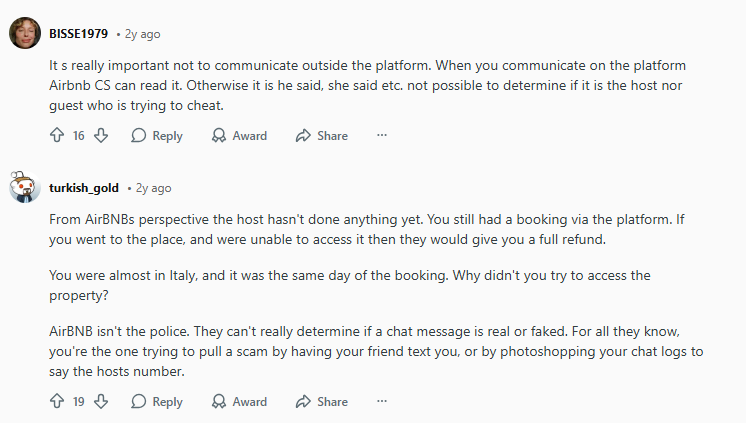
Never pay outside Airbnb’s secure system. Scammers may ask for direct bank transfers, PayPal payments, or cash to “save the deal,” but this strips away Airbnb’s protections and leaves victims without recourse.
4. Phishing and Fake Support Messages
Fraudsters may pretend to be Airbnb support and send urgent emails asking you to “log in” via provided links. These are phishing attempts designed to steal credentials or install malware. Airbnb will never ask for sensitive info this way.
5. Misleading Photos and Fake Reviews
Scammers love to pad their listings with overly polished photos and glowing but generic reviews. These can hide inconsistencies between the listing and reality.
7. Scams Targeting Hosts Too
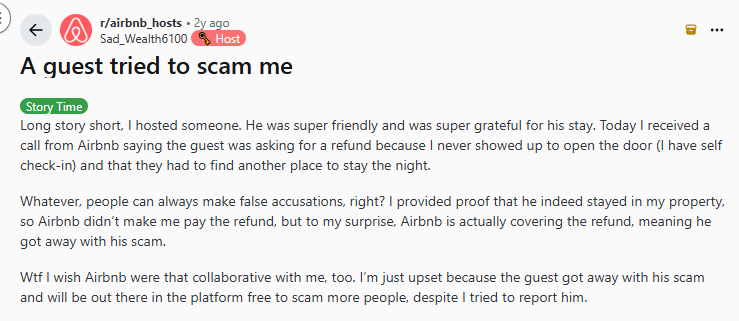
Hosts aren’t safe either. Some guests book stays, trash the property, then demand refunds using false claims. In one hosted Reddit thread, a guest tried to get a refund by claiming the host never showed up, despite photographic evidence proving otherwise.
Red Flags to Watch Out for Airbnb
To stay one step ahead of scammers, look out for these warning signs:
- Listings with unusually low prices compared to similar properties.
- Requests to communicate or pay off Airbnb.
- Hosts or guests with no reviews or sketchy profiles.
- Pictures that appear in multiple unrelated listings (sign of stolen photos).
- Requests to send personal ID, banking details, or passwords outside the platform.
If two or more of these appear together, proceed with caution.
How to Spot a Scam (Smart Checklist)
Here’s a quick way to vet any Airbnb booking before hitting “Reserve”:
- Profile & Reviews
Look for a verified host with recent, detailed reviews. A Superhost badge earned by high ratings and frequent stays adds another layer of trust.
- Verify Photos
Do a reverse image search on listing photos. If the same images show up elsewhere, it may be a fake listing.
- Stay on Platform
Keep all communication and payments within Airbnb. This preserves protections like AirCover.
- Check the Address
Use Google Street View to confirm the listing matches the actual location before you travel.
- Watch for Pressure Tactics
If a host pushes you to commit quickly or accept special terms, slow down. Time pressure is a common trick scammers use.
Frequently Asked Questions
Yes, millions of stays every year are scam-free. However, scams do occur, and the best defense is vigilance and prudent booking habits.
Contact Airbnb support immediately through the app, report the issue, and reach out to your bank if financial info was compromised. AirCover may help with refunds and alternate arrangements.
Final Thoughts
Airbnb is a fantastic platform for discovering amazing stays around the world, but like any online marketplace, it attracts scammers. Understanding the most common tricks, recognizing warning signs, and making smart, platform-protected decisions can reduce your risk.