If you’ve noticed a surge of unexpected calls or texts popping up from 646 numbers, you’re definitely not the only one. Scammers have been leaning hard on 646 caller IDs to run everything from quick one-ring traps to fake support calls and phishing texts designed to steal information.
In this guide, we will see the latest scam activity tied to 646 scams, how they work, and what you can do to keep yourself safe.
Is Area Code 646 Always a Scam?
No, the 646 area code itself is legitimate. It’s an overlay code used for Manhattan / New York City, originally added to meet growing demand.
But like any area code that covers a major city, 646 numbers are frequently used, and spoofed by scammers. Because 646 is associated with Manhattan, many people perceive it as local, which makes them more likely to answer. Scammers exploit that familiarity.
So, every code is fine. But unknown 646 calls from numbers you don’t recognize deserve caution.
Why Scammers Pick 646 and Other Urban Area Codes
There are a few reasons why 646 and other urban area codes are popular among scammers:
- Caller-ID spoofing is cheap and easy — With VOIP (Voice-over-IP) services and spoofing tools, scammers can make a call appear to come from any number they choose. Your phone may show a legitimate 646 number even if the call is coming from an overseas VOIP server.
- Local numbers build trust — a call from 646-###-#### feels domestic, familiar, and less suspicious than a foreign or unknown number. Scammers rely on that lowered guard.
- High volume, low cost — automated dialers and robocall/spam-call services let fraudsters blast thousands of calls or texts for very little money.
- Overlay and urban area-code confusion — when a city has many area codes overlaying together (like NYC’s 212, 646, 332, etc.), people are used to seeing different codes. That makes them less suspicious when a new code calls.
All of this makes codes like 646 especially effective for scammers trying to cast a wide net — nationally or even globally.
Real People’s Area Code 646 Scam Stories
Scam activity always feels more real when you hear it straight from the people dealing with it every day. Across Reddit, X (Twitter), and local New York forums, users are sharing firsthand experiences with 646 numbers.
“Yes, everyone in North America gets these calls. Everyone. They are scams targeting Chinese expats and they are dialing every number on the continent.”
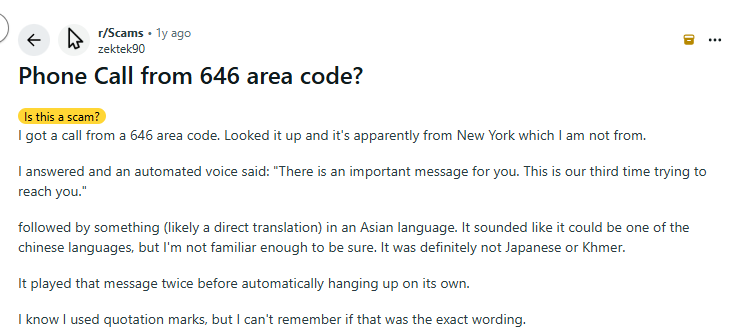
Many users in threads like r/Scams report sudden, random missed calls from 646 numbers, sometimes one ring, sometimes full call-backs, often with no message, or a suspicious voicemail prompting them to call back. Some describe garbled audio, pressure tactics, or weird silences.
Others on local community forums describe daily calls from 646 numbers pretending to be from banks, courier companies, or health-related services, often rotating numbers rapidly to avoid blocking. These patterns suggest organized call-farm rotation that tries to avoid detection and blocking.

Such firsthand accounts are a powerful signal; they show scammers aren’t necessarily targeting New York residents only, but anyone reachable, anywhere.
Common 646 Scam Tactics You Need to Watch For
Scammers love using local-looking numbers because people are more likely to pick them up, and the 646 area code is one of their favorite ones. Below are the most reported tactics they use.
One-Ring / Missed-Call Trap
Your phone rings once from a 646 number, then goes silent. Calling back often connects you to premium-rate or international lines, meaning hidden charges or confirming your number is active for future scams.
Caller-ID Spoofing & Impersonation
Scammers spoof a 646 number to look local, then pretend to be a bank agent, delivery service, or even the IRS. Multiple pressure tactics, like if your account is locked or you owe a fee, are used to push victims into sharing sensitive info or making payments.
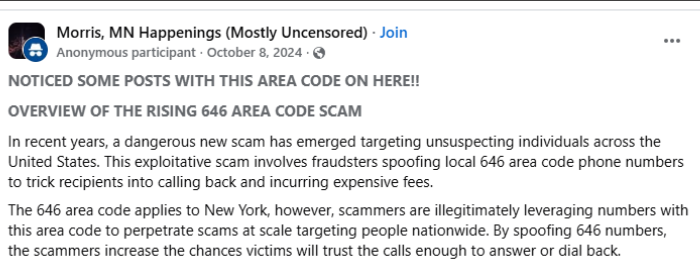
Tech-Support & Service Provider Scams
People frequently describe callers posing as internet or software companies claiming your device has issues. With a spoofed 646 number, they try to gain remote access to your device or trick you into paying for fake fixes.
Phishing / Smishing Text Attacks
Several users online report text messages saying things like “Your card is locked” or “Unusual activity detected. Call 646-XXX-XXXX.” These texts often include phishing links aiming to steal credentials or banking info.
Neighbor-Spoofing (Local Number Imitation)
This tactic makes the caller ID look like it’s from a number similar to yours. It tricks people into answering because it feels like it’s coming from a nearby business or neighbor, and once you pick up, the scam script begins.
What To Do If You Are Targeted or Worried by Area Code 646 Scams
Here are practical steps to protect yourself, your identity, and your money now, and going forward.
- Don’t rely on caller-ID. Treat any surprising or unsolicited 646 call or text with suspicion. Caller ID can be spoofed. Before you share any personal info or click anything, verify through the company’s official contact channel.
- Don’t call back missed 646 calls. If you answer and get nothing (or a voicemail instructing you to call back), don’t call back, you might end up connected to an international or premium-rate scam line.
- Block suspicious numbers or area codes. Many call-blocking tools and apps let you block entire area codes, unknown numbers, or numbers not in your contact list. This can reduce the volume of scam calls.
- Report scams to authorities. In the U.S., you can report scam calls to regulatory bodies like the Federal Communications Commission (FCC), which collects complaints and helps track spoofing/spam trends.
- Warn others, friends, family, especially older relatives. Scammers often target less-aware or vulnerable people. Sharing real stories and common flags helps protect others.
- Adopt broader privacy / security hygiene. Be careful about giving your phone number online or publicly. Consider limiting where you share it, and treat unknown calls/texts with caution.
How to Report 646 Scams And Why It Matters
If you’re tired of 646 scam calls blowing up your phone, reporting them isn’t just busywork, it actually helps regulators track patterns, shut down campaigns, and protect people who might fall for the same tricks.
Many report receiving multiple 646-based scam calls per day, often paired with phishing texts or aggressive impersonation attempts. Regulators like the FCC have also stepped in with updated guidance, urging consumers to report unwanted calls and texts so investigations can move faster.
You can file reports here:
- FCC Complaint Center – for spoofed numbers, robocalls, or any suspicious call or text.
- FTC Report Fraud – for scams involving money, identity theft, or phishing attempts.
- Your phone carrier’s spam-reporting tools – most accept “SPAM” texts to 7726.
With all reactive measures, prevention always comes first! Using PureVPN, limiting where you share your number, and keeping your digital footprint limited can reduce your exposure.
Final Thoughts
The area code 646 itself isn’t a scam. But because it’s well-known, widespread, and associated with New York City, scammers often exploit it using spoofing, mass-call tools, and social-engineering scripts to make their calls seem legitimate.
Most of their tricks rely not on technical sophistication, but on psychological manipulation, surprise, trust, fear, and urgency. And that means the most powerful defense is awareness.
By treating unexpected 646 calls with suspicion, using call-blocking and reporting tools, and verifying identity independently, you can protect yourself, your family and help reduce the reach of these scams.
Frequently Asked Questions
Don’t trust caller-ID alone. Instead, independently find their official contact number (on the company’s website or your account statement) and call that. For sensitive alerts, log in to the official app or site rather than acting on instructions from the 646 call or text.
Only if you don’t expect legitimate calls from 646, blocking can help reduce spam, but may also block real contacts. You must block unknown numbers/area codes, but whitelist trusted contacts. Consider using spam-filtering apps or built-in carrier protections.
Act quickly, freeze or monitor your bank cards/accounts, change passwords, enable stronger 2FA, and report the incident to your financial institution. Also, consider reporting to regulators or law enforcement, depending on your country.
You can usually tell a number is a scam when the caller pressures you, asks for sensitive info, or creates fake urgency. Spoofed numbers often look local, so don’t rely on caller ID as proof of legitimacy. If anything feels off, let it go to voicemail, verify the number yourself, and avoid sharing personal details.