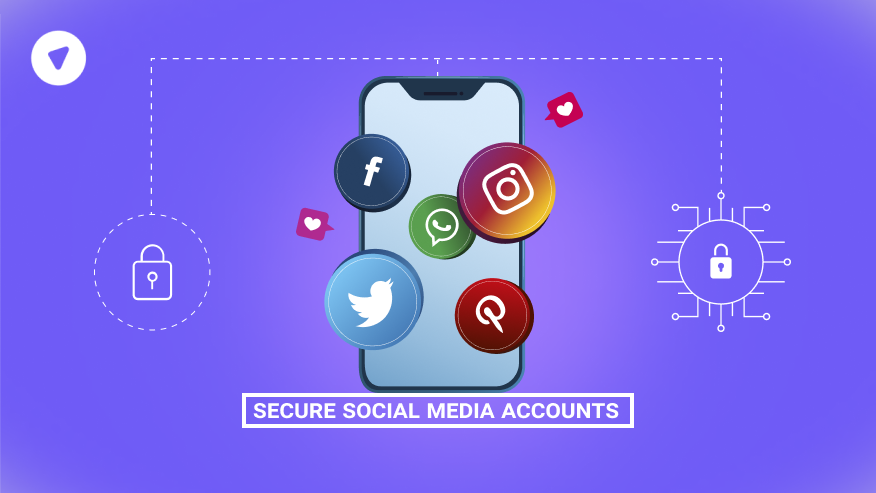
Social media platforms like Facebook and X are part of everyday communication, but access isn’t always consistent. Depending on where you are or which network you’re using, certain apps or features may be blocked, limited, or unavailable altogether. In this guide, you’ll find out what social media restrictions are, why they exist, and how a VPN like PureVPN can help in these situations.
What are social media restrictions?
Social media restrictions refer to limits placed on access to social platforms, features, or content. These limits can prevent users from opening certain apps, viewing posts, or interacting normally on a platform.
Restrictions are usually applied based on location, network rules, or policy requirements. In some cases, access is completely blocked, whereas in others only specific features or content are made unavailable to users.
Common reasons social media gets restricted
Social media access can be limited for various reasons. The most common are:
Government regulations and policies
In some countries, governments restrict or block social media platforms through laws, directives, or regulatory measures. These restrictions may be temporary or long-term and are often linked to compliance requirements that platforms must meet to operate locally. In practice, this can result in partial limits or full platform blocks at the national level.
School and workplace network controls
Schools and workplaces commonly restrict access to social media on their internal networks. These limits are usually put in place to manage productivity, reduce distractions, or control non-essential traffic. Restrictions apply at the network level and affect any device connected to the organization’s Wi-Fi or wired connection.
ISP-level filtering or throttling
Internet service providers may limit access to social media platforms when required to comply with regional regulations or official orders. This can involve blocking domains or services associated with a platform. In some cases, access is slowed rather than fully blocked, making platforms difficult to use even though they remain reachable.
Regional platform restrictions
Social media platforms may apply location-based limits that affect availability, features, or content in certain regions. These restrictions are typically tied to licensing arrangements, local laws, or internal policies. The platform enforces these limits itself based on a user’s detected location, rather than controls applied by the network provider.
How are social media restrictions enforced
When social media is restricted, access is blocked using a handful of methods. These include:
IP-based blocking
One of the most common methods relies on IP addresses to determine a user’s location. When IP ranges associated with specific countries or regions are blocked, connections from those locations are denied access. This is often used for regional or country-wide restrictions.
DNS or domain blocking
Domain blocking prevents a platform’s web address from resolving properly. When users try to visit a social media site, the request is stopped before the page loads. ISPs frequently use this method because it can be enforced across an entire network.
Network firewalls
Many schools and workplaces use network firewalls to block traffic linked to specific social media platforms. These controls apply automatically to any device connected to the same Wi-Fi or wired network, regardless of the app or browser being used.
Can a VPN help you bypass social media restrictions?
In many cases, social media restrictions are tied to a user’s location or the network they’re connected to. When access is limited based on these factors, a VPN can help by changing how your connection appears online. Instead of showing your real IP address, a VPN assigns a different one based on the server you connect to.
This can be useful on networks where social media platforms are blocked or restricted, such as school, workplace, or public Wi-Fi. By routing traffic through an encrypted tunnel, a VPN can allow access to platforms that are otherwise unavailable on that network.
That said, a VPN isn’t a guaranteed solution in every situation. Some restrictions are enforced directly by platforms or through more advanced blocking methods, and local laws or platform rules still apply. A VPN can help in certain situations, but it doesn’t override all forms of restriction.
Steps to bypass social media restrictions using PureVPN
Here’s how you can use PureVPN to access social media platforms without restrictions:
- Set up PureVPN on your device: Download and install the PureVPN app on the device you use to access social media.
- Connect to a server: Once logged in, select a server in a country where the social media platform you want to access is available.
- Access social media: Open the social media app or website as usual. If the restriction was based on your network or location, access may now be available.
Note: If a platform remains inaccessible, disconnect and try a different server location. Restrictions and filtering methods can vary, and switching servers can help in some cases.
Frequently asked questions
Yes, a VPN can help when social media access is restricted based on location or network controls. By routing traffic through a different server, access may be restored on blocked networks. This works best for network or region-based restrictions.
Yes, a VPN may help when bans rely on IP or network-level blocking. However, government restrictions can be layered and subject to local laws. It’s important to understand the legal context before attempting access.
If Reddit or X is restricted on your network or in your region, connecting to a VPN server where the platform is accessible can help. Once connected, the platform can be opened normally through the app or browser.

PureVPN

December 26, 2025

3 months ago