
The internet was once celebrated as the ultimate equalizer: a borderless, real-time network that connected voices, empowered protest movements, and democratized access to information.
Over the past 15 years, however, governments around the world have shown just how fragile that connection can be. Increasingly, internet shutdowns are no longer limited to technical failures or wartime disruptions, they are being used intentionally to silence dissent, prevent mobilization, and suppress political expression.
From the streets of Srinagar to the alleyways of Tehran, the modern “kill switch” has become a disturbingly common tool in the arsenal of digital authoritarianism.
In 2025, the trend of digital blackouts shifted from rapid numerical growth to deepened persistence and tactical precision. While 2024 saw a peak in the total number of individual incidents, 2025 was defined by the weaponization of the “platform ban” and the expansion of the digital kill switch into the permanent legal frameworks of several nations.
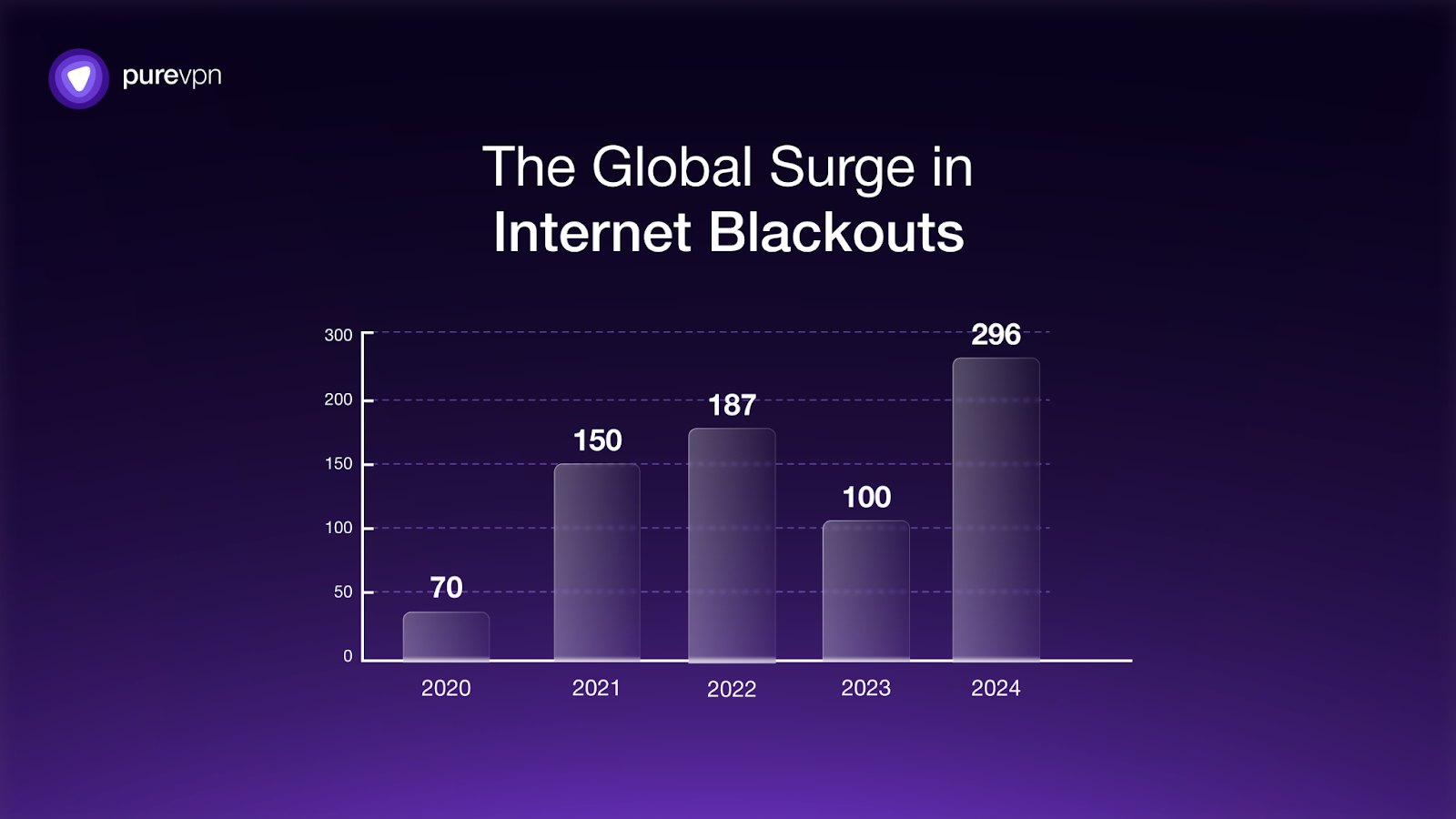
The Global Surge in Internet Blackouts
In 2024, at least 296 internet shutdowns were recorded across 54 countries, making it the highest year on record. That’s a staggering increase from the 187 shutdowns in 2022. These blackouts are not limited to a single region or regime type. Democracies and dictatorships alike have resorted to severing access to the web, revealing a troubling global trend toward normalizing network disruptions.
India has consistently led the world in the number of shutdowns, often citing national security or public order. In 2022 alone, the country experienced 84 internet blackouts, many of them in the conflict-prone region of Jammu and Kashmir. Iran followed with at least 18 shutdowns during waves of anti-regime protests. Even regions embroiled in active conflict, such as Myanmar and parts of Ukraine under Russian occupation, have seen targeted internet disruptions.
In a major shift, 2025 saw a coordinated crackdown on messaging apps. Vietnam and Nepal both imposed permanent bans on Telegram mid-year, citing a lack of state cooperation. Telegram faced more collective hours of disruption (nearly 17,000 hours) than any other messaging platform.
In an alarming twist, countries like France and El Salvador made their debut on the shutdown lists in 2024, signaling the tactic’s spread beyond traditionally authoritarian contexts.
Global Internet Shutdown & Restriction Trends (2024–2025)
| Metric | 2024 | 2025 |
| New Internet Restrictions | 63 | 81 |
| Countries Imposing Restrictions | 17 | 21 |
| Total Global Economic Loss | $7.69 Billion | $19.7 Billion |
| Most Targeted Platform | X (formerly Twitter) | Telegram |
The surge in election-day blackouts continued. Tanzania implemented a 5-day nationwide shutdown during its October polls, while Cameroon and Venezuela used repeated “network failures” to suppress the flow of information during sensitive voting windows.
Governments like those in Russia and Afghanistan perfected the “Intranet Trap,” where domestic services remained active but global connectivity was severed. Russia alone accounted for an estimated $11.9 billion in economic losses due to prolonged, state-directed outages.
How Shutdowns Work, and Why They’re Dangerous
An internet shutdown can take many forms. Governments may order telecom companies to:
- Cut off mobile data or broadband access entirely
- Throttle internet speeds to unusable levels
- Block specific platforms like WhatsApp, Facebook, or Telegram
- Shut down communication towers or international gateways
The result is the same: users are plunged into an information blackout, unable to communicate, organize, or report abuses. In many cases, entire cities or regions are disconnected for days or even weeks.
Shutdowns typically occur during sensitive political moments, elections, protests, or outbreaks of violence. Authorities justify them using vague terminology: maintaining “public safety,” preventing “misinformation,” or protecting “national security.” But the reality is more troubling. Without the ability to document or livestream abuses, vulnerable populations face a heightened risk of violence and repression.
The Human Cost of Going Dark
Internet shutdowns do not just silence speech; they disrupt economies, isolate communities, and endanger lives. Small businesses that rely on digital payments or social media for marketing see their revenues plummet. Hospitals and emergency responders struggle to communicate. Students are locked out of online education.
During a weeklong shutdown in Ethiopia’s Amhara region in 2023, banks froze, ATMs stopped working, and citizens could not contact relatives during a period of intense violence. In Iran, protesters lost access to life-saving information, such as the locations of safe houses or legal assistance, while authorities used the darkness to detain activists away from public scrutiny.
The economic costs are also significant. A Brookings Institution study estimated that India’s internet shutdowns in 2020 alone may have cost its economy over $2.8 billion. Globally, shutdowns have cost billions more, hitting developing countries the hardest.
Workarounds and Resistance: Fighting the Kill Switch
While no single tool can fully defeat a nationwide blackout, tools like PureVPN help users maintain privacy and bypass targeted platform restrictions when infrastructure remains partially accessible.
- VPNs: Usage spikes are common during shutdowns. In 2022, VPN installations in Iran rose by over 3,000% in one week.
- Mesh networks: In regions like Hong Kong and Myanmar, activists set up decentralized networks that bypass traditional internet infrastructure.
- Offline sharing apps: Tools like Bridgefy and FireChat allow people to message via Bluetooth when cellular service is blocked.
Tech platforms are also responding. Companies like Cloudflare and Access Now are offering tools to detect and document shutdowns in real-time, and groups like #KeepItOn are pushing for legal accountability at the UN and national levels.
A New Digital Divide
The growing use of internet kill switches represents more than a technical disruption; it marks a seismic shift in the relationship between states and citizens. In the hands of unaccountable authorities, connectivity becomes a privilege, not a right.
As the world becomes more dependent on digital infrastructure, these blackouts expose a new kind of divide: not just between those who have the internet and those who do not, but between those who can speak freely and those who can be silenced with the flick of a switch.
In the face of this growing threat, resistance will require a united global response from tech companies, civil society, and ordinary users who refuse to be disconnected from their rights.
This is where tools like VPNs play a vital role. It empowers its users to stay connected and in control during state-imposed internet restrictions. It shifts control from centralized authorities to individuals, allowing them to decide what information to share and what to keep private.

Arsalan Rashid

February 19, 2026

2 months ago