
Have you ever noticed how two people searching for the same thing on Google get slightly different results? It’s not a glitch, it’s personalization. Search engines tailor results based on your location, IP address, language, and browsing behaviour.
Let’s break it down.
How Search Engines Decide What You See
Search engines like Google, Bing, and DuckDuckGo don’t show identical results to everyone. Instead, they use multiple signals to personalize search results, including:
- Your IP address
- Your physical or inferred location
- Device type (mobile vs desktop)
- Search history and cookies
- Language and regional settings
Out of all these, location is one of the strongest ranking signals when searching for news, services, shopping, videos, and local queries.
Why Location Matters So Much in Search Results
Search engines are designed to be useful, which often means being locally relevant.
For example:
- Searching “best internet provider” in New York shows US-based ISPs
- The same search in London highlights UK providers
- Searching for “Netflix shows” in different countries gives different titles
- News results prioritize local publishers first
Your IP address tells search engines where you are, even if your device location is turned off.
Change your IP location, and you change the context search engines rely on.
How VPNs Change Search Results
A VPN works by routing your internet traffic through a secure server in another location. When you connect to a VPN server:
- Your real IP address is hidden
- You’re assigned a new IP from the VPN server’s country
- Search engines interpret you as browsing from that location
This directly impacts what results you see.
Examples of Search Changes With a VPN
When using a VPN, you may notice:
- Different Google rankings for the same keyword
- Local websites from another country appear first
- Country-specific news sources
- Regional pricing in shopping results
- Different YouTube and video recommendations
So we can say that VPNs don’t manipulate search engines, but they change the signals search engines rely on.
Do All Search Engines React the Same Way?
Not exactly. While all search engines aim to deliver relevant results, the degree to which they personalize content and how they respond to VPNs varies widely.
Google & Bing
These heavily personalized results using:
- IP location
- Search history
- Google account data
A VPN has a visible impact, especially when combined with incognito mode. It can alter the order of search results, display different ads, and give local content you wouldn’t normally see.
DuckDuckGo
DuckDuckGo minimizes personalization, but:
- It still uses an approximate location
- A VPN can change regional results and language defaults
YouTube & Google Discover
VPNs influence:
- Trending videos
- Region-based recommendations
- Content availability
So while privacy-first search engines reduce tracking, location-based signals still matter.
VPNs, SEO Testing, and Unbiased Search Results
This is one reason marketers, researchers, and journalists rely on VPNs.
Using a VPN allows to:
- Check how websites rank in different countries
- See unbiased search results without local influence
- Research global trends without geo-bias
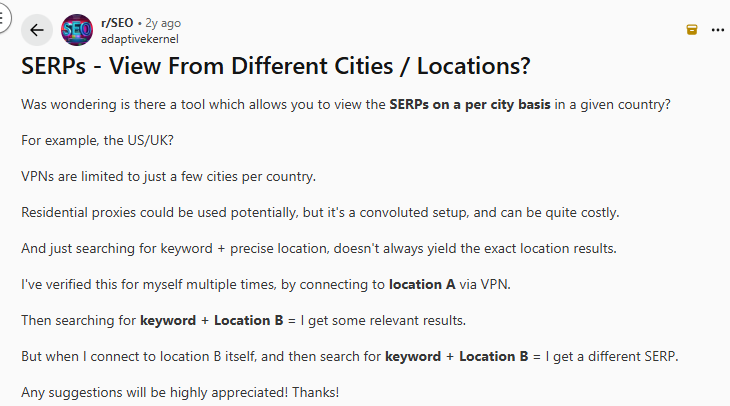
- Compare SERPs across regions
For everyday users, this also means escaping the filter bubble created by hyper-personalized search.
Why Do You Need a Trusted VPN to Get the Desired Search Engine Results?
Not all VPNs are equal when it comes to search accuracy and privacy. A reliable VPN with a large global server network allows you to:
- Switch between regions easily
- Access consistent IPs from specific countries
- Avoid DNS leaks that reveal your real location
And that’s why PureVPN is the best bet! If you are comparing search results globally or trying to reduce location bias, having access to servers across dozens of countries makes the process seamless and accurate.
Can a VPN Affect Google Rankings Permanently?
This is a common misconception. Let’s be clear:
- VPNs do not change how Google ranks websites globally
- They only change what you personally see
- Rankings revert as soon as you disconnect the VPN
So no, using a VPN won’t confuse Google or harm search engines. It simply alters your browsing context, not the algorithm itself.
How to See the Most Accurate Search Results Using a VPN
To maximize the effect and accuracy, follow these steps:
- Connect to a VPN server in your target country
- Open a private/incognito window
- Log out of Google (optional but helpful)
- Clear cookies if needed
- Perform your search
This setup removes most personalization signals except location, giving you a clearer view of region-specific results.
Are There Any Limitations If I Am Using a VPN to Change Search Results?
Yes, and it’s important to be realistic. Even with a VPN:
- Search engines may still infer location via language or device settings
- Logged-in accounts can override IP-based signals
- Some results are globally standardized
That said, location-based changes are still significant for commercial, media, and service-related searches.
Why Personalised Search Results Matter for Privacy-Conscious Users
Beyond curiosity, this topic ties directly to online privacy and data control. When search engines rely on location:
- Your IP becomes a form of tracking
- Regional profiling shapes what information you see
- Price discrimination and content filtering become possible
Using a VPN gives users more control over:
- How they appear online
- What digital footprint do they leave behind
- Which version of the internet do they experience
Final Word
VPNs can and do change search engine results. Because search engines heavily depend on location-based signals, changing your IP location through a VPN directly influences your rankings, local content, news sources, shopping results, video recommendations, and more.
Frequently Asked Questions
Google may detect VPN usage, but it still uses the VPN IP’s location for results.
They hide your IP, not your account activity. You must use Incognito for the best results.
Yes, ads often change based on VPN location.