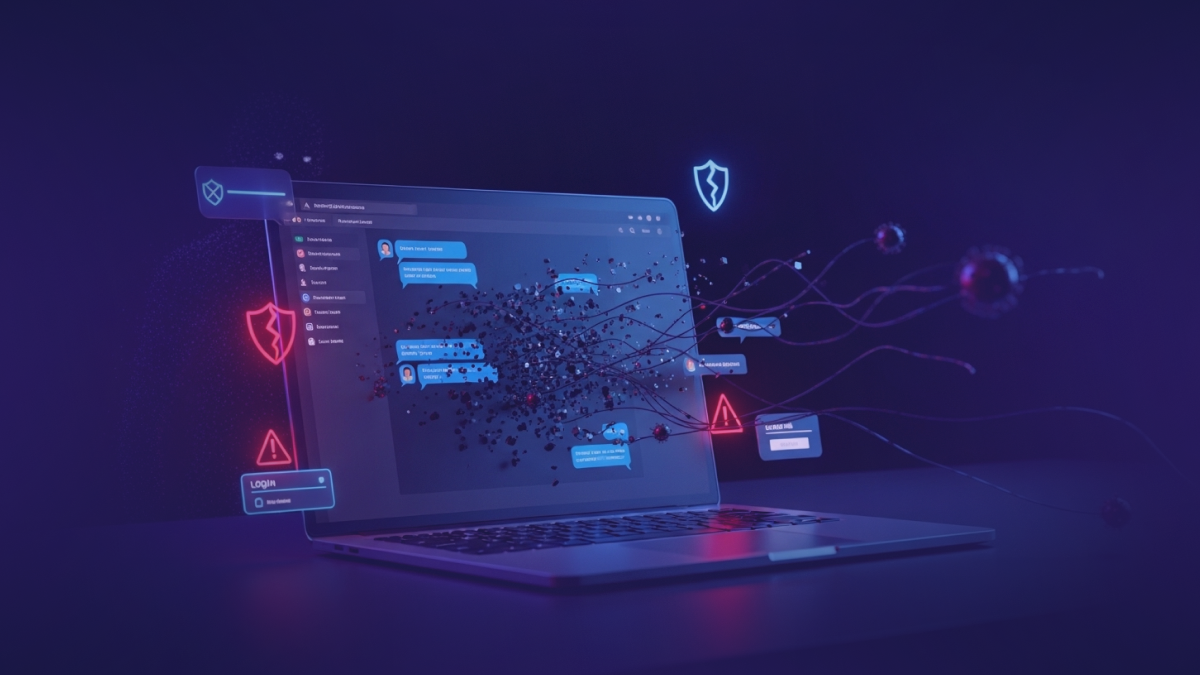
Cybercriminals are increasingly exploiting trusted workplace tools to infiltrate corporate networks. In a recent campaign, attackers have been using Microsoft Teams to impersonate IT support staff and trick employees into installing malware that creates hidden backdoors inside company systems.
Instead of sending traditional phishing emails, attackers contact victims directly through Teams messages and guide them through a fake troubleshooting process. Once employees grant remote access to their devices, attackers install malicious software that allows them to maintain persistent access to the compromised system.
The attacks have primarily targeted organisations in the finance and healthcare sectors, where sensitive financial records and personal information can be highly profitable for cybercriminals.
The incident highlights a major shift in cybercrime tactics: attackers are increasingly exploiting trusted collaboration platforms rather than relying only on email-based phishing.
Why Microsoft Teams Is an Attractive Target
Workplace collaboration platforms have become essential infrastructure for modern businesses. As their use grows, they are also becoming an attractive attack surface for cybercriminals.
Today, Microsoft Teams has over 320 million users worldwide, making it one of the largest enterprise communication platforms globally.
Because Teams is widely used for internal communication, employees often assume that messages sent through the platform are trustworthy. Attackers exploit this trust by impersonating coworkers, IT staff, or help-desk personnel.
Security researchers have warned that collaboration platforms are now a major entry point for cyberattacks because they allow criminals to communicate with victims in real time and guide them through malicious actions step-by-step.
How the Microsoft Teams Attack Works
The attack begins with a simple Teams message.
The attacker impersonates someone from the company’s IT department and claims that the employee’s computer has triggered a security alert or system issue. The attacker then offers to help resolve the problem.
The victim is instructed to open Microsoft Quick Assist, a legitimate Windows tool used by IT departments for remote troubleshooting.
Once the victim shares the access code, the attacker gains full remote control of the computer.
From there, the attacker installs malware and establishes persistent access inside the organisation’s network.
The Backdoor Malware Behind the Attack
After gaining access to the system, attackers deploy malware that acts as a backdoor, allowing them to maintain long-term control of the infected machine.
Backdoor malware enables attackers to:
- Execute remote commands
- Steal sensitive files and credentials
- Conduct reconnaissance inside the corporate network
- Install additional malware such as ransomware
Because the malware communicates with remote command-and-control servers, attackers can continue interacting with the compromised system even after the initial attack is completed.
Why Finance and Healthcare Organizations Are Targeted
The campaign has largely targeted finance and healthcare organisations, two sectors that store extremely valuable data.
Financial institutions hold:
- Banking credentials
- Payment systems
- Transaction records
Healthcare organisations manage:
- Patient medical records
- Insurance information
- Personal identification data
According to research on healthcare security incidents, over 133 million healthcare records were exposed in data breaches in a single year, highlighting the scale of risk in the sector.
Financially, the impact of breaches is also significant.
The 2025 Cost of a Data Breach Report from IBM found that the global average cost of a data breach reached $4.44 million.
For healthcare organisations, the damage is even greater. Healthcare breaches cost an average of $7.42 million per incident, making it the most expensive industry for data breaches for the 14th consecutive year.
Collaboration Tools Are Becoming a New Attack Surface
The Microsoft Teams campaign reflects a broader cybersecurity trend: attackers are moving beyond email and targeting collaboration platforms instead.
These platforms allow attackers to:
- Communicate with victims in real time
- Impersonate coworkers or IT personnel
- Guide victims through malicious steps
- Bypass traditional email security filters
Because collaboration tools are deeply integrated into daily workflows, suspicious messages may not trigger the same caution that phishing emails do.
This makes social engineering attacks through chat platforms particularly effective.
The Potential Impact on Organizations
Once attackers successfully install a backdoor inside an organisation’s network, the consequences can be severe.
Compromised systems may allow attackers to:
- Steal corporate data
- Access financial systems
- Move laterally across networks
- Deploy ransomware
- Launch attacks on partner organisations.
In healthcare environments, cyberattacks can also disrupt hospital systems and potentially impact patient care and medical operations.
The financial, operational, and reputational damage from such attacks can extend far beyond the initial breach.
Lessons for Organizations
The Microsoft Teams phishing campaign highlights the need for organisations to rethink how they approach cybersecurity.
Collaboration platforms should be treated as potential attack vectors, not just communication tools.
Organisations can reduce risk by:
- Restricting remote support tools like Quick Assist
- Monitoring unusual remote access activity
- Deploying endpoint detection and response (EDR) systems
- Training employees to recognize chat-based phishing attempts
Security awareness training should also include social engineering scenarios within collaboration platforms, not just email phishing.
How Employees Can Protect Themselves
Employees play a critical role in preventing social engineering attacks.
If someone claiming to be IT support contacts you through a collaboration platform and asks for remote access, it is important to verify the request before taking action.
Some basic precautions can significantly reduce risk:
- Confirm IT requests through official help-desk channels
- Never share remote access codes without verification
- Report suspicious messages to your security team
- Avoid installing software requested through chat messages
Taking a moment to verify unusual requests can prevent a serious security incident.
While awareness is the first line of defence, using additional security tools can further reduce exposure to cyber threats. An all-in-one security solution like PureVPN helps strengthen online protection by encrypting internet traffic, masking IP addresses, and reducing the risk of tracking or data interception when employees connect to networks outside secure corporate environments.
In an era where cybercriminals increasingly target both workplace tools and personal devices, having an additional privacy and security layer can help safeguard sensitive information.
Conclusion: When Trusted Workplace Tools Become Attack Vectors
The Microsoft Teams phishing campaign shows how cybercriminals are adapting their tactics to modern digital workplaces.
Instead of exploiting technical vulnerabilities alone, attackers increasingly target human trust within everyday communication platforms.
With more than 320 million users relying on Microsoft Teams globally, collaboration tools have become a critical part of enterprise infrastructure—and an increasingly valuable target for attackers.
As organisations continue to rely on digital collaboration, cybersecurity strategies must evolve to protect not just networks and software but also the people who use them every day.
Frequently Asked Questions
Attackers impersonate IT support staff on Microsoft Teams and convince employees to grant remote access to their computers. Once access is provided, malware is installed to create a backdoor into the corporate network.
Collaboration platforms are trusted communication tools used daily by employees. This trust makes them ideal environments for social engineering attacks.
Finance and healthcare organisations are particularly targeted because they store sensitive financial records and personal data.
According to IBM’s 2025 Cost of a Data Breach Report, the global average cost of a breach is $4.44 million, with healthcare breaches averaging $7.42 million per incident.
Organisations should monitor collaboration platforms, restrict remote access tools, deploy endpoint security solutions, and train employees to identify social engineering attempts.