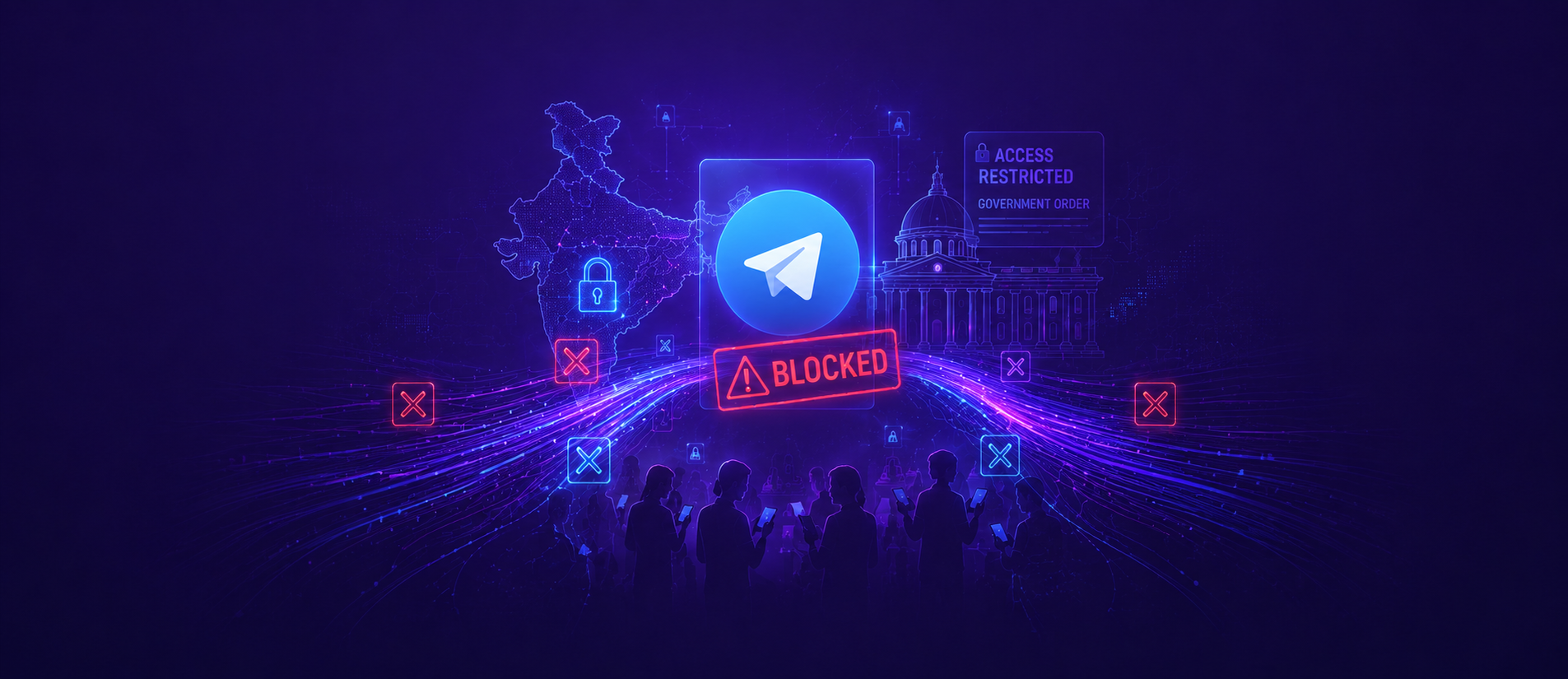
Millions of users woke up this week to find one of their most-used communication platforms suddenly inaccessible.
India temporarily blocked Telegram ahead of the NEET-UG 2026 re-examination after authorities alleged that organised groups were using the platform to distribute leaked exam papers, misinformation, and fraudulent content. The restriction, which remained in place through the examination period, affected millions of legitimate users alongside the bad actors it was intended to stop.
While the move was presented as a measure to protect exam integrity, it has once again sparked a familiar debate: when platforms are misused, should governments restrict access for everyone?
More importantly, what does this mean for the future of internet freedom?
Why Telegram Was Restricted?
According to Indian authorities, Telegram was being used by networks involved in exam-related fraud. Officials argued that restricting access to the platform would help prevent the spread of leaked materials and misinformation before the country’s largest medical entrance examination.
The decision was framed as a temporary intervention rather than a permanent ban. However, for students, businesses, educators, communities, and everyday users who rely on Telegram for communication, the result was the same: sudden loss of access to a service they depend on.
The incident highlights a growing challenge facing governments worldwide. As digital platforms become central to communication, education, commerce, and public discourse, authorities are increasingly forced to balance security concerns against the rights of legitimate users.
The Bigger Problem With Platform-Wide Restrictions
Cybercrime, scams, and online fraud are real threats. Governments have a responsibility to address them.
But platform-wide restrictions often create unintended consequences.
When access to a service is blocked, malicious actors rarely disappear. Instead, they migrate to alternative platforms, private channels, or other communication tools. Meanwhile, millions of ordinary users lose access to communities, information, and conversations that have nothing to do with the activity being targeted.
This creates an important question:
Are blanket platform restrictions solving the problem, or simply moving it elsewhere?
History suggests the latter.
From social media platforms to messaging apps, internet restrictions have repeatedly shown that while access can be interrupted, online activity usually finds another route.
India Isn’t Alone
The Telegram restriction is part of a much larger global trend.
Around the world, governments are introducing stricter controls over digital platforms in response to concerns about cybersecurity, misinformation, political unrest, fraud, and national security.
Some restrictions are temporary. Others become long-term regulations. In many cases, authorities argue that these measures are necessary to protect citizens and critical infrastructure.
Yet each new restriction contributes to a broader reality: internet access is becoming increasingly fragmented.
The experience users have online is no longer determined solely by technology. It is increasingly shaped by geography, regulations, and government policies.
As a result, access to information and communication platforms can change overnight.
What This Means for Internet Users
For everyday users, the Telegram restriction serves as a reminder that access to digital services should never be taken for granted.
Whether it’s a messaging platform, social network, streaming service, or news website, restrictions can emerge with little warning. Users often discover the impact only when they suddenly find themselves unable to access a service they rely on.
This is why digital resilience is becoming just as important as digital security.
People are no longer looking only for protection against hackers and cybercriminals. They also want reliable access to information, communication tools, and online services regardless of where they are or what restrictions may arise.
The Growing Need for Privacy and Security Tools
As governments, platforms, and regulators continue to reshape the digital landscape, demand for cybersecurity and privacy tools continues to grow.
Users are becoming more aware of online threats, surveillance concerns, data collection practices, and access restrictions. At the same time, they want greater control over how they connect to the internet and how their data is protected.
This shift has transformed cybersecurity from a niche concern into a mainstream necessity.
Solutions like VPNs are increasingly viewed as essential tools for maintaining privacy, securing internet connections, and helping users stay connected in an environment where digital restrictions are becoming more common.
Wrapping Up
The Telegram restriction in India is unlikely to be the last major platform restriction we’ll see.
As governments continue to grapple with cybersecurity threats, misinformation, online fraud, and national security concerns, similar actions may become more common across the globe.
The challenge for policymakers will be finding solutions that address legitimate security concerns without unnecessarily limiting access for millions of users.
Because while platforms may change, the principle remains the same:
A secure internet should also be an open internet.


