PayPal powers hundreds of millions of online transactions worldwide, and its ease of use makes it a top choice for sending money, buying goods, or receiving payments. But where there’s convenience, scammers follow.
In recent years, especially during peak shopping seasons and periods of economic uncertainty, fraudsters have become increasingly creative, targeting PayPal users with everything from fake invoices and phishing emails to emotional manipulation schemes involving charity or family emergencies.
Whether you’re an online seller, marketplace buyer, or just a common shopper who sends the occasional payment, understanding how these scams work and how to avoid them is essential.
This guide breaks down the most pervasive scams, explains where scammers strike, and offers actionable tips to protect your money and accounts.
What Are PayPal Scams?
PayPal scams are deceptive tactics used by cybercriminals to trick you into revealing personal information, authorizing payments, or lending access to accounts. Scammers don’t target just one demographic; every user is a potential victim, but they often focus on people who are rushed, unaware of fraud tactics, or inexperienced with online payment platforms.
According to PayPal’s own security guides, these scams include phishing emails, invoice scams, overpayment fraud, fake charities, bogus tech support, and more. Scams evolve constantly, and community reports show real users experiencing new twists on classic fraud attempts. Below, we unpack the most common types in 2026.
Top Common PayPal Scams
PayPal scams aren’t random, they follow patterns. Once you know what those patterns look like, they become much easier to spot and avoid.
1. Phishing Emails and Fake Account Alerts
Scammers send emails or messages that appear to be official PayPal communications, often using urgent language about account issues or unauthorized transactions. These messages include malicious links, ask you to verify account details, or mimic PayPal branding to steal login credentials.
Several users reported receiving suspicious emails claiming recent activity on an unused PayPal account, even though they hadn’t logged in for years. These messages often don’t align with any real activity and are likely scams.
Why it’s dangerous: If you click a fake link and enter your info, scammers can hijack your account, change passwords, and drain funds.
2. Fake Invoices and Money Requests
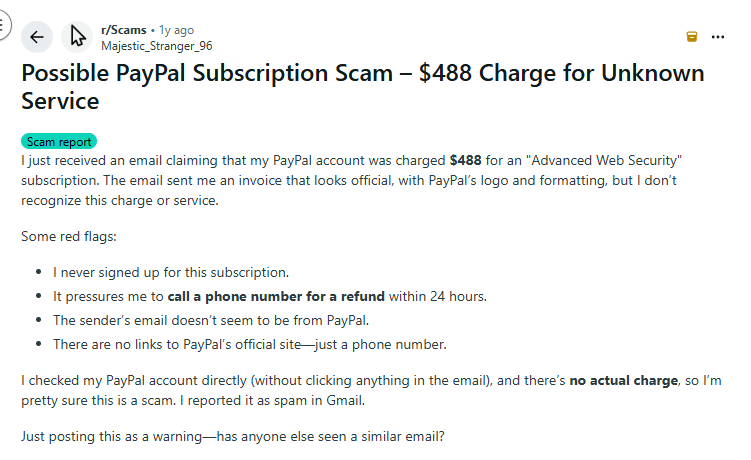
Fraudsters send bogus PayPal invoices for goods or services you never ordered. The invoice appears real, sometimes with the PayPal logo, and may include a fake phone number to call for billing issues.
Users frequently see random money request emails that show strangers trying to bill them for sums they don’t recognize. One Reddit thread warned that engaging with such invoices can trigger follow-up scams like recovery scammers asking for fees to fix the problem.
Red flag: Legit PayPal invoices never include phone numbers. Always log in directly (don’t click links) to verify if a charge is real.
3. Overpayment and Refund Scams
Buyers send more money than the agreed price, then ask for a refund of the extra amount. The overpayment could be made with stolen financial info. Once you refund the extra amount, the original payment bounces, leaving you out of pocket.
Why scammers use this: It creates an illusion of legitimacy, who wouldn’t trust someone who just sent extra money?
4. Friends & Family Payment Irregularities
A scammer asks you to accept payment using the Friends & Family option instead of Goods & Services. Because Friends & Family payments bypass fees and protections, PayPal won’t cover you if something goes wrong.
A buyer asks to use Friends & Family to save you fees, then disputes the transaction after receiving goods.
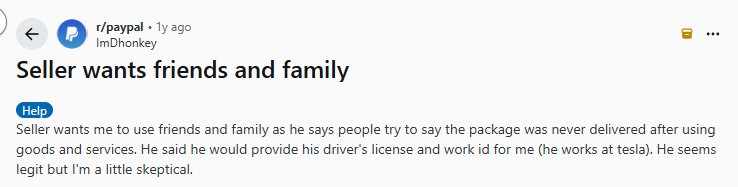
Pro tip: Always choose Goods & Services for transactions with strangers, it’s your safety net.
5. Fake Tech Support and Account Recovery Scams
Scammers pose as PayPal support, claiming to help with account issues. They ask you to give remote access, download software, or reveal codes, which lets them take over your device or account.
Remember real PayPal support will never ask for passwords or require remote access.
Read more: PayPal Data Breaches: How to Protect Yourself
6. Charity and Imposter Donation Scams
Fraudsters impersonate charities or relief efforts using PayPal or Venmo. They send links that appear to be for a legitimate cause, but the money goes into the scammer’s pocket.
Recent PayPal community discussions and partners emphasize that impersonation scams around giving events spike during disasters or holiday seasons.
7. Social Engineering and Emotional Manipulation
Scammers exploit emotions, loss, urgency, fear, to pressure victims into paying via PayPal. For example, one reported case involved scammers posing as funeral home staff requesting urgent payment via PayPal.
These scams trick even vigilant people because they invoke grief, fear, or panic.
8. Sophisticated Phishing with Subscription Exploits
Scammers are now abusing PayPal’s subscription features to send convincing phishing messages that bypass email protections. These messages come from seemingly legitimate servers and can be very hard to distinguish from real notifications, making vigilance essential.
How to Spot PayPal Scams (Key Warning Signs)
To stay safe, learn the common red flags that suggest something’s off:
1. Urgent Language and Fear Tactics
Scammers push urgency.
“Your account will be closed!” or “Pay now to avoid fees.” PayPal rarely pressures users with threats.
2. Suspicious Sender Addresses
Legitimate PayPal emails are sent only from official PayPal domains, such as those ending in @paypal.com. Scam emails often come from addresses that look similar at first glance but include subtle misspellings, extra characters, or completely unrelated domains. In many cases, the sender name may say “PayPal,” but the actual email address tells a very different story.
3. Links That Don’t Match What They Seem
Scam emails often hide malicious URLs behind text that looks legitimate. Always hover over links before clicking to see the real destination. If the link doesn’t clearly lead to paypal.com or an official PayPal subdomain, assume it’s a scam and don’t click.
4. Requests for Personal Info or Passwords
Scammers often pretend to be PayPal support and ask for sensitive details to verify your account. PayPal will never request your password, full bank details, or one-time verification codes via email, text, or phone calls. If any message asks for this information, it’s a clear sign of fraud.
5. Offers That Are “Too Good to Be True”
Big discounts, free money, or unexpected winnings are classic scam bait. These offers are designed to create excitement and urgency, so you act without thinking. If something sounds unreal or comes out of nowhere, it’s almost always a scam.
Avoid PayPal Scams with Simple Tricks
Here’s how to stay safe and protect your money:
- Log in only through the PayPal app or by typing the URL yourself. Don’t use email links
- Enable Two-Factor Authentication (2FA) to add an extra layer of security
- Selecting Goods & Services helps ensure you’re eligible for PayPal’s protections in disputes.
- Check your transaction history regularly, early detection helps prevent losses.
- Forward suspicious emails to phishing@paypal.com and delete them.
- Secure devices with antivirus programs and updates to avoid credential theft.
Frequently Asked Questions
Yes, if your payment qualifies under Buyer Protection. But this isn’t guaranteed, especially if you used Friends & Family. Always choose Goods & Services when possible.
Immediately change your PayPal password, enable 2FA, and contact PayPal support to report compromise.
Yes, PayPal is generally secure, but your behavior (like avoiding suspicious links and choosing correct payment types) determines your risk level.
Check if you recognize the sender and never trust the included phone numbers or links. Log in directly to review any pending transactions.
Legitimate PayPal support will not cold-call you asking for passwords or verification codes. If they claim to be from PayPal, hang up and contact support through official channels.
Conclusion
PayPal scams are evolving, with fraudsters constantly inventing new ways to deceive users. With awareness and good security habits, most scams are avoidable. Start by learning to spot the red flags, unusual emails, urgent demands, unsolicited links, and adopt strong safeguards like two-factor authentication, regular monitoring, and using proper payment types that qualify for protection.