Modern cyberattacks no longer begin with phishing emails or brute-force logins.
Today, attackers are targeting the software supply chain itself, the trusted open-source packages, CI/CD pipelines, and developer workflows powering modern applications.
That reality became impossible to ignore after attackers linked to the “Mini Shai-Hulud” campaign compromised the TanStack npm ecosystem, eventually leading to a breach involving Grafana Labs.
What started as a malicious package update escalated into source-code exposure, stolen GitHub credentials, poisoned CI/CD workflows, and ransom demands.
The attack has now become one of the most discussed software supply-chain incidents of 2026.
The Numbers Behind the Attack
The scale of this incident is what makes it especially alarming.
- 42 TanStack packages were compromised
- 84 malicious package versions were published
- 170+ npm packages were ultimately affected
- 404 malicious package versions were identified across npm and PyPI
- Millions of weekly package downloads were exposed to risk
- Grafana reportedly serves 35M+ users globally
- OpenAI confirmed 2 employee devices were impacted by the broader campaign
This was not just a single-company breach.
It became a cascading supply-chain event affecting multiple organizations, developer ecosystems, and CI/CD environments simultaneously.
What Actually Happened?
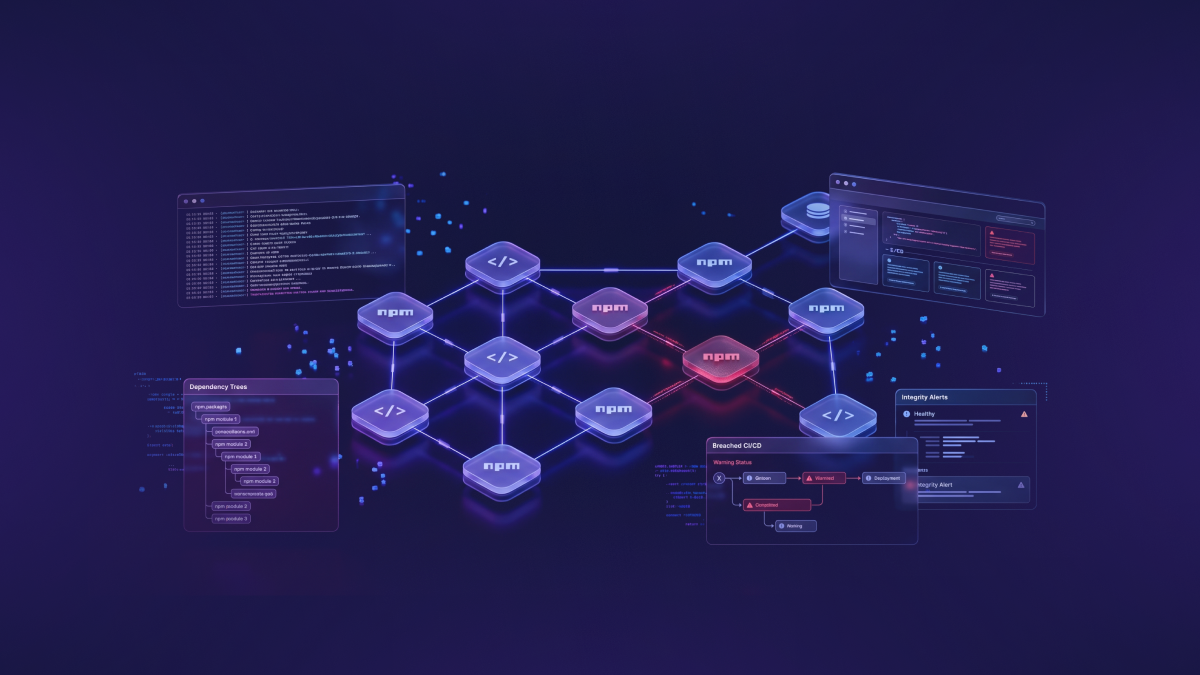
The breach chain reportedly began with compromised npm packages within the TanStack ecosystem.
Attackers injected malicious code into trusted package versions distributed through npm. Once developers and organizations updated dependencies, the malware attempted to steal:
- GitHub tokens
- SSH keys
- Cloud credentials
- npm publishing credentials
- CI/CD secrets
Researchers later linked the activity to a threat actor known as TeamPCP.
The most dangerous aspect of the campaign was that it abused trust.
Developers were not downloading obvious malware.
They were downloading legitimate packages from trusted open-source ecosystems.
How the Attack Spread
Researchers say the attackers exploited GitHub Actions workflows and CI/CD automation pipelines.
The attack chain reportedly looked like this:
- A malicious pull request was introduced
- GitHub Actions workflows were abused
- Malicious JavaScript payloads were injected
- GitHub Actions cache poisoning occurred
- Compromised workflows published infected npm packages
- Organizations consuming those packages inherited the compromise
One particularly shocking detail from the investigation was the poisoning of a 1.1 GB GitHub Actions cache used to spread malicious build artifacts.
This demonstrates how attackers are increasingly targeting developer infrastructure instead of traditional endpoints.
How Grafana Became Involved
Grafana Labs later confirmed that attackers gained unauthorized access to parts of its GitHub environment.
According to reporting and investigations, the breach was linked back to the TanStack compromise after one GitHub workflow token was reportedly not rotated properly.
That single missed credential rotation became the entry point.
Attackers allegedly accessed:
- Internal GitHub repositories
- Public source code
- Operational information
- Business contact email addresses
After exfiltrating source code, attackers reportedly demanded ransom payments in exchange for not leaking the data.
Grafana refused to pay.
Importantly, Grafana stated that customer production systems were not impacted.
Why This Attack Matters
This incident highlights a major shift in cybersecurity.
Instead of attacking users directly, threat actors are compromising the software ecosystems organizations trust every day.
The Grafana-TanStack incident exposed several major security realities:
1. Open Source Has Become a Prime Attack Surface
Modern applications rely heavily on third-party dependencies.
One compromised package can create downstream exposure for thousands of organizations.
2. CI/CD Pipelines Are Now High-Value Targets
Attackers are increasingly abusing GitHub Actions, build systems, deployment automation, and package publishing workflows.
Developer infrastructure has become part of the attack surface.
3. Supply-Chain Blast Radius Is Massive
A single dependency compromise can propagate across ecosystems within hours.
The affected packages in this campaign collectively handled millions of weekly downloads.
4. Credential Hygiene Still Matters
One missed token rotation reportedly enabled attackers to escalate access into Grafana’s GitHub environment.
Small operational gaps can have enormous downstream consequences.
Key Lessons for Organizations
The Grafana-TanStack incident reinforces several urgent security priorities:
- Rotate credentials immediately after ecosystem-wide incidents
- Harden GitHub Actions workflows
- Restrict CI/CD permissions using least privilege
- Monitor dependency updates aggressively
- Audit third-party packages continuously
- Implement software supply-chain security controls
- Treat developer infrastructure as critical infrastructure
Organizations can no longer assume trusted packages are inherently safe.
Final Thoughts
The Grafana breach linked to the TanStack npm compromise is more than another cyberattack headline.
It represents the evolution of modern software supply-chain warfare.
One poisoned npm package triggered a chain reaction across CI/CD systems, GitHub workflows, open-source ecosystems, and enterprise environments.
And the most dangerous part?
The attack succeeded because it exploited trust.
Not firewalls.
Not passwords.
Trust.