
StockX has grown into one of the world’s most popular platforms for buying and selling sneakers, streetwear, collectibles, and electronics. Often referred to as the “stock market of things,” the marketplace allows buyers to place bids, sellers to set asks, and transactions to follow real-time supply and demand trends. With millions of users globally, StockX has become a major player in the resale industry. Yet, with this growth comes the question many people ask before making their first purchase: Is StockX really legit?
The short answer is yes. StockX is generally considered a legitimate and trustworthy marketplace that delivers authentic products for most users. However, like any large resale platform, it is not completely free of controversies, authentication disputes, and risks. Understanding how StockX operates, what its verification process looks like, and what limitations exist helps buyers and sellers make informed decisions.
What Is StockX and How Does It Work?
StockX operates as a middleman between buyers and sellers, ensuring that every item passes through its authentication center before reaching the consumer.
- Buyer places an order by either accepting the lowest Ask or submitting a Bid.
- Seller receives the sale notification and ships the item to StockX within the required time.
- StockX receives the item at one of its authentication centers.
- Professional authenticators inspect the product using physical checks, machine-assisted tools, and internal databases.
- If the item passes authentication, StockX packages it and ships it to the buyer.
- If the item fails authentication, the order is cancelled and the buyer is fully refunded.
- Seller is notified of the failed authentication, and ineligible items are returned or disposed of depending on StockX policy.
- StockX releases payment to the seller once the item is authenticated.
- The buyer receives order tracking and updates until delivery is complete.
- Historical pricing, charts, and market data help users track product values and make informed buying or selling decisions.
Is StockX Legit?
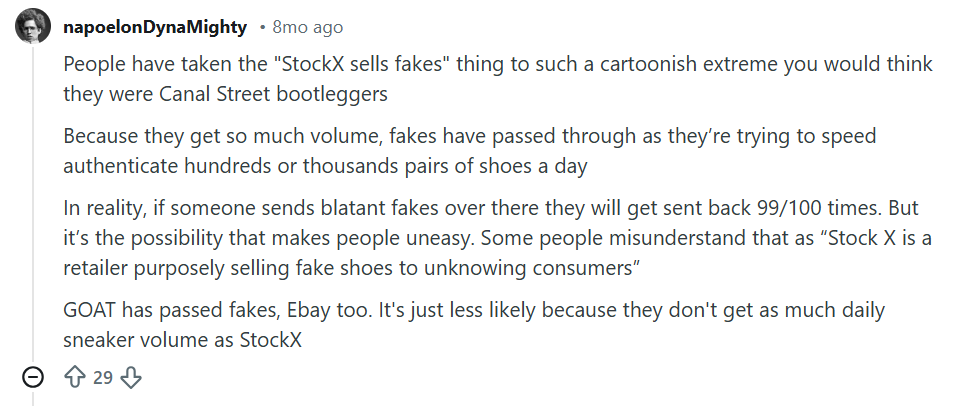
StockX is a legitimate business with years of operation, millions of customers, and established investment backing. Most users receive authentic items, especially when purchasing popular sneakers, general releases, or widely circulated items.
However, no authentication system is perfect, and StockX has faced criticism and controversy, especially regarding occasional verification errors. Still, compared to peer-to-peer marketplaces that lack verification entirely, StockX remains significantly safer.
For buyers, StockX provides a structured, secure environment that reduces the risk of scams. For sellers, it ensures guaranteed payment once an item passes authentication. While the platform is strictly “all sales final,” and returns are not permitted, its systematic approach and transparency make it one of the most trusted resale platforms today.
How StockX Authenticates Products
StockX’s reputation depends heavily on its verification process. To maintain authenticity, the company uses a combination of trained human authenticators and machine-assisted tools. Each item goes through a multi-step inspection process that checks materials, stitching, shape, labels, serial numbers, packaging, and even manufacturing inconsistencies. Authenticators compare the product with internal databases of verified genuine pairs to catch structural or cosmetic differences.
- Multi-point physical inspection of stitching, materials, shape, texture, logos, and overall construction.
- Verification of labels and serial numbers to ensure they match authorized manufacturing standards.
- Box and packaging inspection, including label accuracy, fonts, barcodes, and factory codes.
- Comparison with StockX’s internal database of verified authentic pairs to detect inconsistencies.
- Machine-assisted checks, including UV light examinations to reveal hidden marks, stamps, or discrepancies.
- Use of AI and machine learning tools to flag high-risk features or patterns associated with counterfeit products.
- Smell and texture tests for materials, which experienced authenticators recognize instantly.
- Final approval tag application once the item meets all authentication criteria.
- Rejection and cancellation if the item fails any stage of verification, followed by a refund to the buyer.
Is Your Money Safe on StockX?
StockX uses strict security protocols to make its platform safe for financial transactions. Payments are processed through secure gateways, and buyers never transfer funds directly to sellers. Instead, StockX holds the payment until the item passes authentication.
The platform uses encryption, fraud monitoring, and real-time alerts to protect users, making it safer than informal resale channels or direct seller-to-buyer arrangements.
How Safe Is StockX for Buyers?
StockX is generally safe for buyers who want authentic sneakers or collectibles with minimal risk. The authentication system, secure payments, purchase tracking, and platform-wide policies offer strong protection.
However, buyers should be aware that StockX operates on a strict no-return policy, meaning items cannot be refunded or exchanged simply because a buyer changes their mind or ordered the wrong size. Additionally, prices are influenced by the resale market, so buyers may end up paying significantly above retail for popular releases.
How Safe Is StockX for Sellers?
For sellers, StockX provides a reliable payout system, as payments are released promptly once the item is authenticated. Sellers benefit from a structured selling process that reduces the risk of fraudulent buyers.
However, if an item does not pass authentication, or if StockX determines that the item is not deadstock, the seller may face delays or lose shipping costs. While this affects a minority of transactions, it is important for sellers to follow StockX’s condition requirements closely.
Is StockX Safe for International Users?
International users can use StockX safely, but they should be prepared for longer shipping times, customs fees, and potential delays during verification. The platform functions globally and serves many countries through its international authentication hubs.
While authentication quality remains consistent, international users may find dispute resolution and customer support slower due to time zone differences and additional regional regulations.
StockX Risks and Controversies
Despite its legitimacy, StockX has faced scrutiny. Some buyers have claimed that flawed or fake products occasionally slip through authentication. The highly publicized legal dispute between Nike and StockX also raised concerns about the accuracy of verification.
Additionally, StockX does not offer returns unless it makes a mistake, which can frustrate users accustomed to retailer-style customer service. Delays in shipping, seller response times, and fluctuating resale prices are common concerns as well.
While these issues do not define the majority experience, they highlight the importance of understanding StockX’s limitations before using the platform.
How to Use StockX Safely
You can use StockX safely by ensuring the pointers below:
- Review market prices and recent sales data before purchasing to avoid overpaying.
- Record an unboxing video when your item arrives to protect yourself in case of disputes.
- Inspect the product carefully upon delivery to confirm authenticity and condition.
- Avoid expecting flawless quality control, as StockX verifies authenticity rather than cosmetic perfection.
- Understand shipping timelines, as delays may occur during seller processing or authentication.
- Be aware of customs duties and additional fees for international shipments.
- Familiarize yourself with the strict no-return and no-exchange policy to prevent misunderstandings.
Does StockX Sell Fake Items?
StockX does not intentionally sell fake products, and its entire business model depends on maintaining trust. However, like any authentication service, human error is possible.
While the chance of receiving a counterfeit item is low, it is not zero. Individuals purchasing highly replicated or extremely hyped pairs should be extra cautious and inspect their products thoroughly after delivery.
StockX vs. GOAT: Which Is Safer?
Both platforms are well-established and trusted in the resale market. StockX is known for its transparent pricing system and stock market-like model, while GOAT is often praised for its slightly stricter quality control and smoother dispute process.
Many buyers consider GOAT marginally safer for rare, heavily faked sneakers, but StockX remains an excellent choice for consistent pricing and market transparency. Ultimately, the safer platform depends on your priorities: pricing insight or stricter QC.
FAQs
While rare, verification mistakes have been reported, just like on any authentication platform.
StockX authenticates every item before shipping, but no system is infallible.
Yes, StockX uses secure, encrypted channels to process payments.
No, StockX has an all-sales-final policy unless StockX itself makes an error.
StockX operates on a resale model, where prices reflect market demand.
Yes, as long as the buyer understands pricing trends and StockX’s no-return policy.