Journalists spend a large part of their work online, whether researching sensitive topics, communicating remotely, or publishing from outside the newsroom. Using the internet is unavoidable, but it also means relying on networks and systems that journalists do not control.
That means their internet traffic can be monitored, data can be intercepted, and account access can be compromised. In this blog, we’ll break down the issues journalists commonly run into when working online and how a VPN can help reduce exposure.
Common challenges journalists face online
Since much of their work has moved online, journalists face a unique set of challenges that can compromise day-to-day reporting. These include:
Communicating with sources privately
Communicating with sources via email or messaging apps can expose identities, metadata, or communication patterns. Even without message content being accessed, logs or account records can reveal who a journalist is communicating with and when.
Protecting access to work accounts
Journalists regularly log in to email, cloud storage, CMS platforms, and newsroom tools from multiple locations and devices. If access credentials or active sessions are compromised, drafts, unpublished material, and internal communications can be accessed or altered.
Researching without a digital trail
Investigating sensitive topics often involves repeated searches, site visits, and document access over time. This activity can be visible to service providers, platforms, or network operators, potentially exposing areas of investigation before publication.
Keeping unpublished work safe
Drafts, notes, recordings, and media files are commonly stored on laptops, phones, or cloud services during reporting. If devices are accessed by others or accounts are breached, unpublished material can be copied, leaked, or deleted.
Relying on third-party platforms
Journalistic work frequently relies on third-party platforms, each with its own legal obligations and internal policies. Data stored or transmitted through these services may be subject to retention policies, access requests, or restrictions that journalists have no control over.
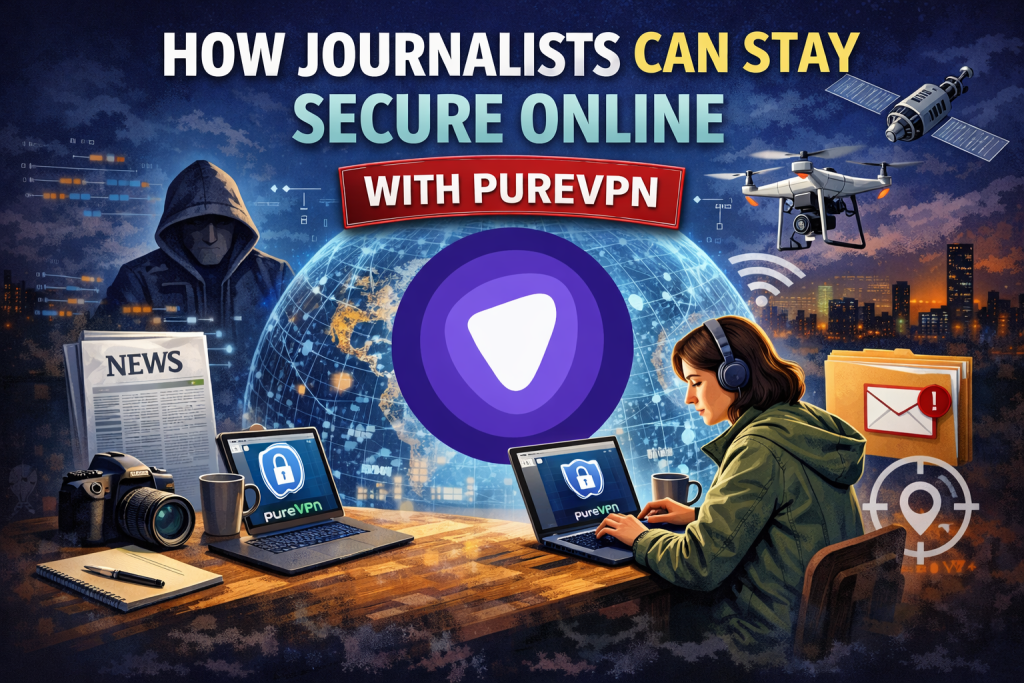
How a VPN helps journalists work more safely
A VPN does not solve every issue journalists face, but it can make a difference in specific situations like:
Researching stories with better privacy
Online research activity is typically linked to an IP address by default. When a VPN is active, research traffic is routed through a VPN server, reducing the direct association between browsing activity and the network or location it originates from.
Securing online communication channels
Email, messaging platforms, and file sharing tools all rely on internet connections to transmit data. A VPN encrypts those connections, helping protect communications and file transfers as they pass through networks outside the journalist’s control.
Limiting location exposure during reporting
Websites and online services commonly use IP addresses to infer location. By replacing the real IP address with one from the VPN server, a VPN limits how precisely online activity can be tied to a journalist’s physical location.
Working safely on external networks
Journalists often connect through hotel Wi-Fi, shared offices, or temporary workspaces. A VPN encrypts traffic before it passes through these networks, reducing visibility into browsing, uploads, and access to work-related services.
Accessing blocked or restricted information
Some websites and resources are restricted based on network rules or geographic location. A VPN routes traffic through servers in other regions, allowing access when local networks block or limit certain content.
Using work tools across locations
Newsroom systems, cloud platforms, and publishing tools may apply different controls depending on network or region. A VPN can help maintain consistent access when moving between countries during active reporting.
Other ways journalists can stay secure online
A VPN is only one part of safer online working. Journalists must follow these everyday security practices to protect accounts, devices, and information throughout the reporting process:
- Use strong, unique passwords: Email, cloud storage, CMS platforms, and collaboration tools should all have unique passwords. Reusing credentials increases the impact if one account is compromised.
- Enable MFA: Using multi-factor authentication adds a second verification layer, which makes it harder for attackers to access accounts, even if login details are exposed through phishing or data breaches.
- Keep devices and software up to date: Operating systems, browsers, and apps receive regular security patches. Delaying updates can leave known vulnerabilities unaddressed during active reporting.
- Be cautious with links, attachments, and downloads: Phishing attempts often target journalists through email or messaging platforms. Verify senders and avoid unexpected files to reduce the risk of account or device compromise.
- Limit data stored on devices when possible: Unpublished drafts, notes, and recordings should be stored securely and removed from devices when no longer needed, so exposure is reduced if a device is lost or accessed by others.
- Back up sensitive files frequently: Backing up work files regularly to trusted storage, such as an external hard drive, helps prevent data loss if devices fail, are stolen, or need to be wiped quickly.
Frequently Asked Questions
Yes, a VPN secures internet connections and reduces network-level visibility. Journalists often rely on unstable or third-party networks in these environments, where traffic monitoring is more likely. A VPN helps protect data in transit but does not replace physical safety measures or secure devices.
A VPN encrypts internet traffic and masks the journalist’s real IP address, which can help reduce exposure on hostile or heavily monitored networks. This is particularly relevant when accessing email, uploading material, or researching online.
In the EU, journalists frequently work across borders and networks with different monitoring and data handling practices. A VPN can help secure connections when accessing work tools or conducting research on unfamiliar networks. It may also help maintain consistent access to services while traveling between member states.
The safest VPN would be one that uses strong encryption protocols, follows an audited no-log policy, and comes with must-have features like a kill switch, obfuscation, and split tunneling. PureVPN checks all these boxes, making it one of the best choices for journalists or activists.
Free VPNs often come with limitations such as data caps, weaker security controls, or unclear logging practices. For journalists handling sensitive work, these trade-offs can increase risk rather than reduce it. A reputable paid VPN is generally a safer choice.
Yes, VPN use is legal in most EU countries, including for journalists. VPNs are commonly used to protect privacy and secure connections. However, journalists should still comply with local laws and regulations when accessing or publishing information online.

PureVPN

December 17, 2025

4 months ago