You wanted to watch a new movie or download a software tool, searched for a torrent, and 1337x showed up near the top of the results. You clicked, found what you needed, downloaded it, and a few days later, your device slowed down, pop-ups appeared, or your antivirus flagged something suspicious.
Sounds familiar? That’s the risk millions take when using torrent sites like 1337x. In this blog, we’ll explain what 1337x is, how safe (or unsafe) it really is, and how you can protect your device and data if you still decide to use it.
What Is 1337x?
1337x is one of the world’s most popular torrent indexing sites, known for hosting magnet links and .torrent files for movies, TV shows, games, and software. It doesn’t store the files itself and connects users to others who are sharing them through peer-to-peer (P2P) networks.
At first glance, 1337x looks legitimate. It has a clean interface, HTTPS encryption, active uploaders, and a large community. However, most of the content shared on it is copyrighted, which makes downloading or distributing such material illegal in many countries.
Sites like Scamadviser rate 1337x as “moderately safe,” but cybersecurity experts caution against using it without protection. Torrent files, especially those marked as “cracked,” “premium,” or “no DRM,” often contain malware, adware, or trojans disguised as legitimate software.
Is 1337x Safe?
No, 1337x is not safe. The site is known for hosting torrents that often contain malware, spyware, trojans, and crypto-miners. These malicious files can run in the background, record keystrokes, steal passwords, or access personal data without permission.
Cybercriminals frequently create fake 1337x clone sites to spread infected files or collect personal information. Because torrent activity exposes your real IP address, your downloads and uploads can be tracked by ISPs, copyright agencies, or law enforcement.
Some torrents also include adware that monitors your browsing habits and sells that data to advertisers. Even a single unsafe download can compromise your device, privacy, and home network security.
What Do People Say About 1337x?
User discussions across Reddit communities like r/Piracy, r/1337x, and r/CrackSupport reveal a mixed picture of 1337x’s reputation. Some users describe it as relatively safer than lesser-known torrent sites, but they also emphasize that no public torrent site is ever truly risk-free.
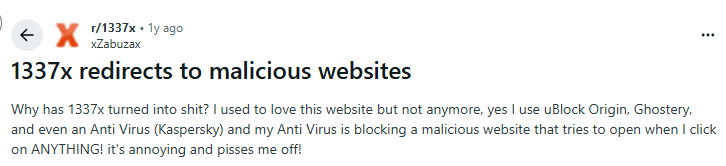
Several Reddit threads warn of fake torrents, especially those that appear shortly before new episodes or software releases. These files often include disguised “.lnk” shortcuts or repackaged installers meant to trick users into downloading malware. Others report that clicking certain buttons on the site, such as “sort” or “download,” occasionally redirects them to malicious ad pages if no ad blocker is active.
Even verified repacks from trusted uploaders like FitGirl or Dodi aren’t guaranteed safe, according to some experienced users, since impersonators often re-upload modified versions under similar names.
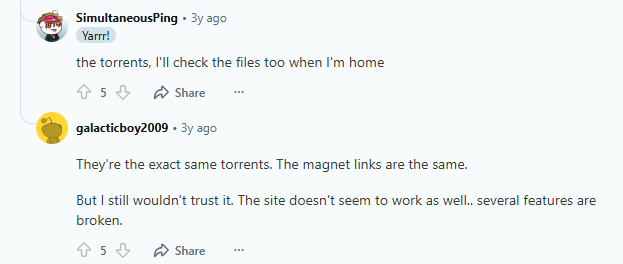
Meanwhile, mirror and replica sites pretending to be 1337x are described as especially dangerous, with many of them marking all uploaders as “verified” and distributing torrents filled with trojans, adware, and other infections.
Overall, most Reddit users agree that while 1337x remains one of the cleaner torrent indexes, safety still depends entirely on user caution, proper verification, and protective tools like VPNs, ad blockers, and antivirus software.
What are the Main Risks of Using 1337x
Malware and Fake Torrents
One of the biggest dangers of using 1337x is the high chance of downloading infected or fake torrents. Studies on public torrent indexes show that roughly 30% to 40% of shared files contain malicious or misleading content. These fake torrents often pretend to be popular movies, software, or games but are actually designed to harm your device.
Common threats include Trojans disguised as cracked applications, crypto-mining malware hidden in setup files, and spyware or keyloggers that silently collect your personal data once installed.
In some cases, users can even get infected just by visiting a malicious torrent page, a tactic known as a drive-by malware attack, where harmful ad scripts automatically run in the background.
Even torrents marked as “verified” are not always safe. Uploaders can be compromised, or their accounts can be hijacked by malicious actors, making it difficult to ensure that any torrent is 100% trustworthy.
Fake Mirror and Clone Domains
Because 1337x is blocked in several countries, many mirror and proxy domains pop up online claiming to be the “official” 1337x site. Unfortunately, a large number of these are fake clones built to distribute malware or steal user data.
These clone sites often use redirect loops that lead users to phishing pages, force pop-ups to trigger unwanted downloads, or imitate HTTPS security with fake SSL certificates. Many also use slightly altered URLs, such as 1337xx.to or 1337xto.net, to trick users into thinking they are visiting the real site.
IP Exposure and Privacy Risks
When you download or upload torrents from 1337x, your real IP address becomes publicly visible to everyone sharing the same file. This is how peer-to-peer (P2P) networks work — your device directly connects with others in the torrent swarm.
This open visibility creates serious privacy and tracking risks. Internet Service Providers (ISPs) and copyright enforcement agencies can monitor torrent traffic and log your online activity, even if you’re just downloading open-source content.
More dangerously, attackers can scan visible IPs in torrent swarms to target vulnerable systems, launch network attacks, or inject malware into shared peers. Even if your intention is legal file sharing, exposing your real IP in a public swarm environment can compromise your anonymity and online safety.
1337x Legal & Copyright Consequences
The legality of 1337x varies by country, but downloading or sharing copyrighted material without permission remains illegal in most regions.
| Region / Country | Legal Status | ISP Enforcement | Possible Penalties |
|---|---|---|---|
| United States | Illegal under DMCA | ISPs send warning letters; repeat offenses → fines | $200–$150,000 per work |
| UK & EU | Illegal under copyright law | Blocking orders for torrent sites; user tracking common | Fines or injunctions |
| Canada | Illegal | ISPs notify users via “Notice and Notice” system | Civil lawsuits possible |
| Australia | Illegal | ISPs block torrent domains | Site blocking and legal action |
| South Asia | Illegal under Pakistan Copyright Ordinance, 1962 | ISPs often block torrent sites | Account suspension or official warning |
Even if you hide your IP using encryption or VPN, the act of downloading copyrighted material remains unlawful.
Final Thoughts
1337x might look harmless, but behind its sleek design lie privacy threats, malware traps, and copyright risks. Every torrent you download without proper protection exposes your device and identity. If you truly value your privacy, data, and peace of mind, stay away from unverified torrent sites. Instead, stick to legal streaming or downloading platforms.
Frequently Asked Questions
No. Even though 1337x itself isn’t a scam, the torrents it hosts can contain malware, ransomware, or spyware. You also risk copyright violations if you download copyrighted material.
Authorities and ISPs frequently block torrent sites, forcing 1337x to shift between mirror domains. Some mirrors are legitimate, while others are cloned and dangerous.
Avoid files with no comments, few seeders, or odd file names. Always scan downloads and check community feedback before opening.
It’s rare but possible. Malicious pop-ups or scripts on fake 1337x mirrors can trigger “drive-by” infections. So, make sure you have an anti-virus installed.