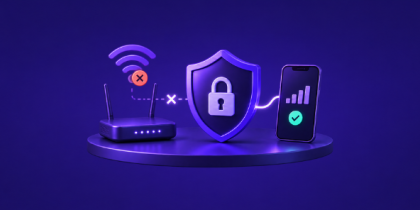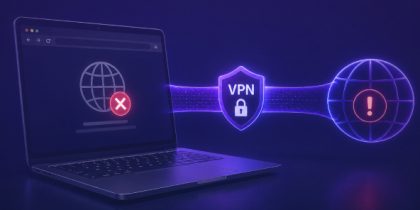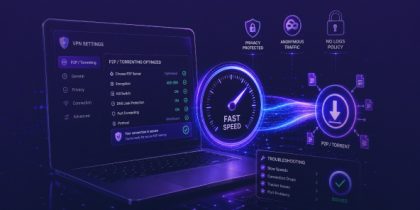
You wanted a quick answer. Google wanted you to identify nine bicycles first.
You connect to your VPN, open Google, and search for something. Instead of results, you see:
“Our systems have detected unusual traffic from your computer network.”
You complete the CAPTCHA, get back to searching, and a few minutes later, another one appears.
Frustrating? Absolutely. A sign your VPN has stopped working? Not necessarily.
Google may show CAPTCHAs when activity from your VPN’s shared IP address looks automated or unusual. You could be searching normally while other people using the same address trigger extra checks.
Here’s why it happens and what you can try to get back to the things you actually opened your browser for.
Why Does Using a VPN Trigger Google CAPTCHA?
A CAPTCHA is a check designed to distinguish people from automated programs. When you use a VPN, several factors can affect how often you encounter one.
1. Multiple People Share the Same VPN IP Address
When you connect to a shared VPN server, your searches can reach Google through the same public IP address as other users’ searches.
You might be looking up a recipe while someone else is researching flights. To Google, those requests arrive from one address.
Sharing an IP does not automatically trigger a CAPTCHA. However, automated searches coming from that shared network can lead to checks that affect other users too. Google explicitly identifies this scenario in its guidance on unusual traffic from VPN networks.
Think of it as sharing an apartment building’s address: someone else’s activity can draw attention to the building, even when you’re just getting on with your day.
2. The IP Address May Have a History of Unusual Activity
You may have just connected, but the IP address you’re using may already have a history.
If it has previously been associated with automated requests or abuse, that could help explain why you encounter verification immediately. It does not necessarily mean your own searches caused the problem.
The important distinction is that the address belongs to the VPN connection you’re using. A challenge against that address is not, by itself, evidence that something is wrong with your device.
3. Switching Servers Changes Your IP Address
Switching VPN locations changes the address websites see. Depending on the service, changes in your apparent location may lead to additional verification.
However, Google’s unusual-traffic guidance does not establish frequent country changes as a standalone cause of Search CAPTCHAs. Switching servers can also move you onto an address that already has problematic traffic.
For everyday browsing, keeping a suitable connection stable is a sensible troubleshooting step. You do not need to keep hopping between countries to find out whether Google will let you search.
How to Reduce Google CAPTCHA Requests While Using a VPN
Start with the simplest checks and change one thing at a time. That makes it easier to see what actually helps.
1. Try a Different VPN Server
If CAPTCHAs keep returning on the same connection, try another server.
- Open your VPN app.
- Choose another server in the same country, or a different city if available.
- Wait until the VPN confirms it is connected.
- Open Google and try your search again.
You can explore PureVPN’s server locations to find an alternative.
A different server may give you a different public IP address, which can help if the interruptions are tied to the previous address. Reconnecting does not always change your IP, so use an IP address checker if you want to confirm.
2. Keep Your Connection Stable
Once you find a server that works well, stay connected to it during your browsing session.
Repeatedly switching locations makes troubleshooting harder because you keep changing the connection you’re testing. Pick a suitable location, complete any verification that appears, and continue browsing normally.
A stable connection will not guarantee that CAPTCHAs disappear, but it gives you a consistent starting point.
3. Test Your Browser Before Clearing Everything
If switching servers does not help, try the same search in another updated browser or a private window.
Treat this as a comparison test. If the issue only appears in your usual browser, its settings, extensions, or stored site data may be worth investigating.
Incognito mode does not change your VPN IP address or make you invisible to Google. Google explains these limitations in its Incognito browsing guide.
If the CAPTCHA page is loading incorrectly or getting stuck, try clearing relevant cookies and cached files, then restart your browser. Follow Google’s instructions for clearing cache and cookies.
Clearing this data can help with page-loading problems, but it does not repair a VPN IP address’s reputation. It may also sign you out of websites, so avoid repeatedly deleting everything as a routine CAPTCHA fix.
4. Check Browser Extensions and Automated Tools
Review tools that send requests automatically, such as search automation, scraping, or auto-refresh extensions.
Pause them and test again. If you suspect an extension, disable it temporarily and check whether the problem continues.
If the challenge itself fails to load, also check whether a script-blocking extension is preventing it from working. You do not need to turn off every privacy tool: test individual extensions and restore anything that makes no difference.
If unusual traffic appears across browsers and networks, run a malware scan. Google lists malware as another possible source of automated requests.
5. Consider a Dedicated IP for Recurring Shared-IP Issues
If shared-IP interruptions regularly get in the way of work or browsing, a Dedicated IP may be worth considering.
A PureVPN Dedicated IP gives you a fixed VPN IP address assigned exclusively to you. You are no longer sharing that address with other VPN customers, which can reduce interruptions caused by their activity.
It can also be useful for remote access to systems that require an approved, consistent IP address.
A Dedicated IP does not guarantee CAPTCHA-free browsing. Google can still request verification, and a fixed address does not resolve browser problems or automated traffic from your own device.
Try the simpler troubleshooting steps first. Consider the add-on when sharing an IP is a recurring source of friction.
Does a CAPTCHA Mean Your VPN Is Not Working?
No. A CAPTCHA alone does not indicate that your VPN connection has failed.
An active, correctly configured VPN can still:
- Encrypt traffic between your device and the VPN server.
- Replace your usual public IP address with the VPN’s address for traffic routed through it.
- Protect that connection while Google asks you to complete a security check.
Our guide to how a VPN works explains these functions in more detail.
To check your connection, confirm that your VPN app shows it is connected and that your browser’s public IP matches the VPN connection. An IP check is a useful first step, although it is not a complete test for every possible leak or configuration issue.
What If Google Still Keeps Asking?
If the problem continues after trying another server and browser, contact your VPN provider’s support team.
Share the server location, browser, approximate time, and whether switching servers helped. These details can help narrow down whether the issue follows a particular VPN address or your browser setup.
If the CAPTCHA is difficult to complete, Google also provides accessible verification options, including audio challenges where available.
Frequently Asked Questions (FAQs)
Other users on the same VPN IP may be sending automated searches, prompting Google to verify people using that address. The challenge does not necessarily mean your own activity is unusual.
There is no guaranteed way to eliminate them. Changing servers and investigating browser issues may help. A Dedicated IP may reduce checks associated with sharing an address, but Google still controls when verification appears.
It may help if the challenge page has a browser-related loading problem. It does not change your VPN’s public IP address or remove restrictions associated with that address.
No. It can also suit individuals who want a consistent VPN IP for everyday use. Whether you need one depends on how often shared-IP problems affect you and whether a fixed address would be useful.
You Have Better Things to Do Than Identify Bicycles
A quick search should fit into your day without becoming a task of its own.
Start by trying another VPN server. Keep the connection stable, then check your browser if the interruptions continue. If sharing an IP keeps causing problems, a Dedicated IP may help reduce that particular source of friction.