Browse the Dark Web Safely: Best Dark Web VPN in 2025
Protect your identity, encrypt your traffic, and explore .onion sites without exposing your real IP. PureVPN adds an essential layer of security to Tor and dark web access.
-
AES 256-bit high encryption for iron-clad protection.
-
Zero-log policy won’t save your online activity anywhere on this VPN.
-
Internet Kill switch to ensure your anonymity even if you lose connection.
-
6500+ servers in 71+ countries for complete freedom on the internet.
DNS leak protection.
Evidence better gaming performance with DMZ configurations.
Prevents ISP throttling for seamless internet.

Can a VPN protect you on the Dark Web?
Yes, a VPN adds a vital layer of protection when accessing the dark web. While the Tor browser encrypts traffic inside its network, it does not prevent your ISP from seeing that you’re using Tor, nor does it protect you from threats at the entry or exit nodes.
The dark web is part of the deep web, a portion of the internet not indexed by standard search engines. Access requires specific tools like the Tor browser and (.onion-compatible) networks. While some dark web services are legal, such as anonymous whistleblowing platforms or privacy-first forums, many others involve illicit marketplaces and malicious content.
Browsing the dark web without safeguards can leave you vulnerable to malware, phishing attempts, surveillance, and IP exposure. While the Tor network anonymizes your traffic within its own ecosystem, it doesn’t prevent your ISP from detecting that you’re using Tor, nor does it secure your connection before it enters the network. A VPN strengthens your privacy by masking your real IP address before Tor initiates, encrypting your traffic end-to-end, and hiding your activity from ISPs or local network administrators. It also helps reduce the risk of DNS leaks and man-in-the-middle attacks. To safely explore the dark web, it’s essential to use a VPN with strong encryption, DNS leak protection, and a strict no-log policy, qualities that PureVPN is built around.
What happens if you go on the dark web?

Identity theft
The dark web offers anonymity, and it’s not uncommon for users to use fake identities or stolen information to carry out illicit activities. So your personal information could be compromised if you accidentally access a website or download a file containing malware or a virus. Hackers can easily use this to gain your identity for illegal activities.

Unknowingly getting involved in criminal activity
Law enforcement agencies actively monitor the dark web to identify and prosecute criminal activities. While it is possible for users to remain anonymous, law enforcement agencies have sophisticated tools and techniques to identify individuals engaged in illegal activities on the dark web, and you might get caught in the crossfire even if you accidentally landed there to feed your curiosity.

Online threats
Hackers on the dark web have a whole business of blackmailing users by tracking their online activities and then sending them threatful messages using their personal information, forcing them to do their bidding no matter how illegal or harmful they are.
Things you should be wary of while using the dark web
Here are some things you should avoid on the dark web:

Illegal activities
The dark web is notorious for hosting illegal marketplaces and activities, such as drug sales, firearms sales, and human trafficking. Engaging in illegal activities on the dark web can have serious consequences.

Scams and frauds
The dark web is also home to many scams and frauds, including phishing, fake websites, and fake marketplaces. These scams can be difficult to detect, so you must approach unfamiliar websites or marketplaces cautiously and cautiously.

Malware and viruses
The dark web is also a hotspot for malware and viruses. These can be downloaded and installed unknowingly when accessing certain websites or files on the dark web.

Personal information theft
It’s important to keep personal information private from the dark web, such as your name, address, or credit card information. Hackers can use these details and other criminals to steal your identity or commit fraud.
How to surf safely on the dark web
Use a VPN (Virtual Private Network)
A VPN will encrypt all traffic and mask your IP address, making it more difficult for hackers and other online threats to track your activities and steal your personal information. One of the most important steps is to use a trusted VPN service that offers advanced security features.

Use a Tor browser
Another important method is using a dedicated dark web browser like Tor. It is an open-source browser designed specifically for anonymous web browsing and offers some security and privacy.
Avoid falling for clickbait
It is also important to avoid clicking on unknown links or downloading unknown files. The dark web is often home to malware and viruses, which can infect your computer and compromise your personal information. It would help if you only visited known websites and should be cautious when clicking links or downloading files, as they may contain harmful software.
Stay anonymous
You should never share your personal information or use your identity when accessing the dark web. Using a fake identity or pseudonym can help protect your personal information and identity from being compromised.
How does a VPN protect you on the dark web?
A VPN can provide you with the following benefits.

Encrypted internet traffic
A VPN is a powerful tool for protecting privacy and security on the dark web. A VPN works by encrypting all internet traffic between your computer and the VPN server, making it difficult for anyone to intercept or eavesdrop on your online activities. This means that when you access the dark web through a VPN, your online activity won’t be tracked by anyone.

Masks IP address
A VPN also masks your IP address, making it more difficult for hackers and other online threats to track your location or identity. This is especially important on the dark web, where anonymity is highly valued, and you may be at risk of being targeted by malicious actors.

Malware protection
A VPN also masks your IP address, making it more difficult for hackers and other online threats to track your location or identity. This is especially important on the dark web, where anonymity is highly valued, and you may be at risk of being targeted by malicious actors.
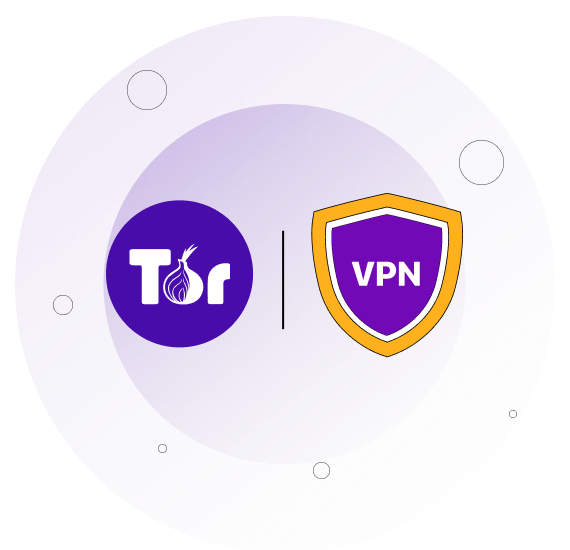
Is Tor better than a VPN?
-
Connection speed
VPN connections are faster, as your encrypted data is transmitted directly to just a single server of your choice.
Tor sends data through three servers distributed randomly across the world.
-
Data transfer server
A VPN directs your data through an individual, privately-owned server that you choose.
Tor uses a dispersed and random network of nodes or servers to transfer data.
-
Internet traffic encryption
A VPN encrypts and secures all internet traffic originating from your device.
Tor solely encrypts traffic that is generated within the Tor browser.
Anonymity
Some free VPN services provide anonymity but may have access to your IP address and online activity, unlike PureVPN’s no-log policy.
Tor’s network of decentralized servers offers absolute anonymity.
How to use a PureVPN to access the dark web
1
Download and install PureVPN
2
Download and install the Tor browser for extra protection.
3
Now open PureVPN and connect to a server.
Frequently Asked Questions
-
Can I use a free VPN for the dark web?

No, using a free VPN for accessing the dark web is not recommended due to security, bandwidth, reliability, and malware concerns. So, always use a premium VPN service only for accessing the dark web.
-
What is the difference between the dark web and the deep web?
The deep web refers to all websites not indexed by standard search engines, while the dark web refers to a small portion of the deep web that is intentionally hidden and can only be accessed through specific software or configurations.
-
Is the dark web an illegal site?
No, the dark web is not necessarily illegal. But some criminals frequently use the dark web and engage in illegal activities, such as selling drugs, weapons, stolen data, and other criminal activities. It is important not to engage in such activities on the dark web that can have serious legal consequences.
-
Can the dark web be monitored?
Yes, it is possible to monitor the dark web, and law enforcement agencies have developed methods to track and identify individuals engaged in criminal activity on the web, often through undercover agents or other sophisticated investigative techniques.
-
How big is the dark web?
While there is no precise figure, the dark web is believed to constitute about 5% of the entire internet.