A sticky session is a proxy or load balancer configuration that keeps the same IP address or backend server assigned to a connection for a defined duration. The term is used in two distinct technical contexts and means something different in each.
In load balancing, a sticky session routes all HTTP requests from one client to the same backend server for the life of the session. In proxy infrastructure, a sticky session routes all requests through the same IP address for a configured duration instead of rotating to a new IP on each request.
What Is a Sticky Session in Load Balancing?
A sticky session in load balancing routes all HTTP requests from a single client to the same backend server instance for the duration of a session. The formal technical terms for this are session affinity and session persistence.
Server-side applications that store session state locally break when a subsequent request reaches a different server with no record of that session. Sticky sessions prevent this.
Two cookie mechanisms implement stickiness. Application-based cookies are generated by the application and carry custom attributes. Duration-based cookies are generated by the load balancer and specify how long stickiness persists. When the cookie expires, the next request is treated as a new session.
| Property | Default behaviour | With sticky session |
|---|---|---|
| Request routing | Round-robin across all healthy instances | All requests from one client go to one instance |
| Session state | Must be shared across all instances | Stored on single instance, no replication required |
| Failure behaviour | Any instance handles any request | If the sticky instance fails, session is lost |
| Cookie mechanism | None | Application-based or duration-based |
| Load distribution | Even | Uneven if long sessions concentrate on fewer instances |
What Is a Sticky Session in Proxy Infrastructure?
A sticky session in proxy infrastructure holds the same residential or datacenter IP for all requests through that proxy for a configured duration, instead of rotating on each request.
Most residential proxy pools rotate by default. Sticky sessions override this. A session identifier is embedded in the proxy authentication credentials. The proxy gateway reads that identifier on each request, retrieves the bound exit node, and routes traffic through the same IP until the session expires.
The session identifier is passed as a parameter appended to the proxy username — for example: username-session-abc123. Changing the session parameter begins a new session and assigns a new exit node.
How Is a Sticky Session Different From a Rotating Proxy?
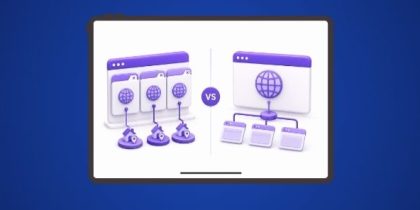
A rotating proxy assigns a new IP on each request or at a configured interval. A sticky session holds the same IP for a defined duration. Both are session modes on the same residential proxy plan, rotating is the default, sticky is opt-in via a session parameter in the credentials.
| Property | Rotating proxy | Sticky session |
|---|---|---|
| IP per request | New IP on each request | Same IP for session duration |
| Default on residential pools | Yes | No — opt-in via session parameter |
| Session continuity | Broken on each rotation | Maintained across all requests |
| Duration control | Per-request or timed interval | 1 min to 30 min standard; up to 7 days on ISP/static plans |
| What breaks without it | Nothing for stateless tasks | Login state, multi-step flows, geo-consistent results |
| Risk | Lower per-IP exposure | IP may drop mid-session if exit node goes offline |
Rotating proxies suit tasks where IP diversity matters more than continuity. Sticky sessions suit tasks where the destination server ties state to a specific IP: authenticated flows, multi-step processes, or any task that produces inconsistent results if the visible IP changes mid-session.
What Ends a Sticky Session?
Three conditions end a sticky session:
- Timeout. The configured duration elapses. The session ID is no longer bound to the exit node. The next request begins a new session with a new IP.
- Exit node dropout. Residential IPs come from real devices that can disconnect at any time. A sticky session can end before its configured duration if the assigned device loses its connection. This is an infrastructure constraint, not a configuration error.
- Credential reset. The client changes the session parameter in the proxy authentication string. A new session ID triggers immediate assignment of a new exit node.
What Is the Difference Between a Sticky Session and Session Isolation?
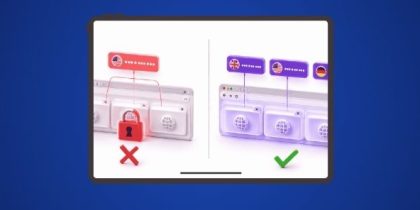
A sticky session controls IP persistence over time. Session isolation controls IP separation across concurrent connections.
| Property | Sticky session | Session isolation |
|---|---|---|
| What it controls | Whether the same IP persists across sequential requests | Whether simultaneous connections use different IPs |
| Axis | Time | Concurrency |
| Question it answers | Does my IP stay the same across requests? | Does my IP differ from other active connections? |
A sticky session without isolation produces one consistent IP shared across all concurrent connections. Session isolation without stickiness produces different IPs per connection, but each may rotate mid-session. Workflows running multiple concurrent connections that each require a stable IP need both properties.
How Do Browser Extensions Implement Sticky Session Behaviour?
Provider-side sticky sessions are time-limited, typically between 1 and 30 minutes. Browser extensions that assign a fixed IP to a specific tab store that assignment in local browser storage, persisting it until the user changes it manually with no timer.
IP Per Tab (PureVPN) stores tab assignments in chrome.storage.local. The same residential IP applies to every request from that tab until the user changes the assignment.
What Is the Difference Between a Sticky Session and a Static IP?
A sticky session is temporary IP persistence: the same IP holds for the session duration, then rotates back to the pool. A static IP is permanent assignment until manually changed.
| Property | Sticky session | Static IP |
|---|---|---|
| Duration | Minutes to hours | Indefinite |
| IP rotation | Rotates when session expires | Does not rotate |
| Cost model | Included in rotating residential plan | Higher cost, dedicated allocation |
| Best for | Multi-step workflows, authenticated sessions | Long-term account management, API whitelisting |
For workflows requiring longer duration than any sticky session supports, ISP proxies or dedicated proxies are the appropriate tool.
Frequently Asked Questions
A rotating proxy assigns a new IP on each request or at a configured interval. A sticky session holds one IP for a defined duration, typically 1 to 30 minutes on standard residential plans. Both are modes on the same residential proxy plan.
Most plans support 1 to 30 minutes. SOAX supports up to 60 minutes; IPRoyal up to 7 days. ISP and static residential proxies hold an IP indefinitely. Confirm maximums in vendor documentation before building workflows around a specific duration.
No. Residential IPs come from real devices that can go offline at any time. A 30-minute session can end early if the assigned exit node disconnects.
A sticky session controls IP persistence over time. Session isolation controls IP separation across concurrent connections. Workflows running multiple concurrent sessions, each requiring a consistent IP, need both properties.
Three conditions: the configured duration expires; the assigned exit node goes offline; or the client resets the session parameter in the proxy credentials.
Session affinity is the formal term for sticky session behaviour in load balancing. AWS and Oracle use both terms to describe the same mechanism.
By storing proxy assignments in local browser storage rather than embedding session identifiers in request credentials. The assignment holds until the user changes it manually, with no provider-side duration ceiling.

Arsalan Rashid

August 28, 2026

2 months ago