
A VPN encrypts your internet traffic and replaces your real IP address with one from a VPN server. However, that does not always make the connection impossible to recognise.
VPN traffic can still leave patterns in packet size, timing, protocol handshakes, and data flow. Networks may analyse these patterns to detect that a VPN is being used, even when they cannot see the contents of the encrypted tunnel.
This is known as VPN fingerprinting. In this guide, we will explain how it works, who can detect VPN traffic, whether it can identify you, and what can make detection more difficult.
What Is a VPN Fingerprint?
VPN fingerprinting is a detection method used to recognise VPN traffic from the way a connection behaves. Instead of reading the encrypted data, a network looks for characteristics associated with particular VPN protocols or services.
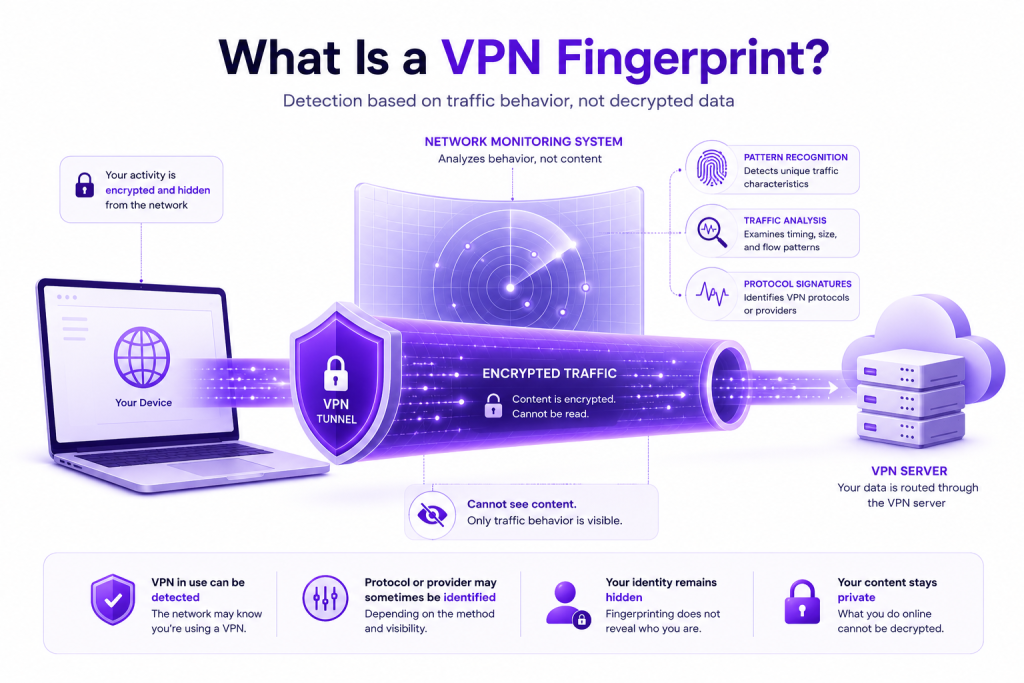
Depending on the method used, fingerprinting may reveal that a VPN is active and sometimes indicate the protocol or provider involved. However, it does not, by itself, reveal the user’s identity or decrypt what they are doing online.
How VPN Fingerprinting Works
VPN fingerprinting can use several methods to recognise a VPN connection. These include:
Protocol Fingerprinting
VPN protocols such as OpenVPN, WireGuard, and IKEv2 do not all behave the same way on a network. They may use different handshake processes, packet structures, transport methods, port usage, timing patterns, and session behaviour.
A detection system can compare these characteristics with known protocol fingerprints. When enough details match, it may conclude that the traffic belongs to a particular VPN protocol.
Traffic Pattern Analysis
A network cannot normally read the contents of encrypted VPN traffic, but it can still observe how the traffic moves. Packet sizes, timing, direction, data bursts, and the consistency of a connection can all provide clues.
Detection systems may analyse these patterns together to separate VPN traffic from regular web traffic or identify patterns associated with a particular VPN protocol.
Active Probing
Active probing goes beyond watching traffic. After a system identifies a suspected VPN server, it may send carefully chosen connection attempts or test packets to that server. The way the server responds, rejects the request, closes the connection, or times out may match the behaviour of a known VPN protocol.
This can help confirm whether the server is running a VPN service after passive traffic analysis has raised suspicion.
Who Can Detect VPN Traffic?
VPN traffic may be detected by several parties, but not all of them use the same methods:
- Internet service providers: Your ISP may see that you are connected to a VPN server, along with the server IP, connection timing, and data volume. It cannot normally see the contents of the encrypted traffic.
- Network administrators: Workplaces, schools, hotels, and other network operators may use firewalls or traffic inspection tools to recognise or block VPN connections.
- Restricted networks: Networks in regions where VPN use is controlled may analyse traffic patterns, block common VPN ports, or test suspected VPN servers.
- Websites and streaming services: They usually see the VPN server IP rather than the traffic inside the tunnel. They may flag known VPN or data centre IP ranges, shared-IP activity, or mismatched location signals.
When VPN use is detected, the connection may be blocked, limited, or checked more closely. This does not mean the traffic has been decrypted or the user identified.
Can VPN Fingerprinting Identify You?
VPN fingerprinting can reveal that a VPN is being used and may sometimes identify the protocol, server, or provider involved. However, it does not normally reveal the person behind the connection by itself.
You may still be recognised through other signals, including:
- Logged-in accounts that link your activity to a known identity
- Cookies that remember previous visits and browsing activity
- Browser fingerprinting based on device and browser characteristics
- Account or payment details connected to a service
- DNS or WebRTC leaks that expose information outside the VPN tunnel
These are separate from VPN fingerprinting. They may identify or track a user even when the VPN connection itself remains encrypted.
Can Obfuscation Reduce VPN Fingerprinting?
Obfuscation can make VPN traffic harder to recognise by disguising it as regular internet traffic. Instead of exposing the usual patterns linked to a VPN protocol, the connection may be wrapped or altered so it looks more like standard HTTPS traffic.
VPN providers may offer this through obfuscated servers, stealth protocols, traffic wrapping, or different port options. These features can help on networks that use traffic inspection or block known VPN connections.
However, obfuscation does not guarantee that a VPN will remain undetected. More advanced inspection systems may still identify unusual traffic patterns, server IPs, or other signs that a VPN is being used.
How to Reduce VPN Fingerprinting
You may not be able to prevent VPN detection completely, but a few steps can make the connection harder to recognise:
- Use obfuscated servers: These are designed to disguise VPN traffic so it looks more like regular HTTPS traffic.
- Try another VPN protocol: Different protocols leave different network patterns. Switching protocols may help if a network is targeting one specific type of VPN traffic.
- Switch VPN servers: A different server may help when the current IP address has already been identified or blocked (this addresses IP-based detection rather than traffic fingerprinting itself).
- Keep the VPN app updated: Updates may include improvements to protocols, obfuscation, and connection handling.
Frequently Asked Questions
Yes. Your ISP may be able to see that you are connected to a VPN server, along with the server IP, connection timing, and data volume. However, it cannot normally see the contents of the encrypted traffic.
Yes. Networks may detect VPN traffic by analysing protocol behaviour, packet timing, traffic flow, or known VPN server IPs. Detection does not mean the encrypted contents of the connection have been exposed.
Not by itself. VPN fingerprinting is mainly used to recognise VPN traffic, protocols, or servers. Identifying specific websites from encrypted traffic would require separate traffic-analysis methods and is not an automatic result of detecting VPN use.
Obfuscation can make VPN traffic harder to recognise by making it look more like regular internet traffic. However, it does not guarantee that the connection will remain undetected against every inspection system.

Arsalan Rashid

June 19, 2026

4 months ago