Your email could be compromised.
Scan it on the dark web for free – no signup required.
Utah just made history, and not the good kind.
Starting September 3, 2026, Utah is officially the first US state to enforce a law that puts VPNs directly in its crosshairs. The internet has spent the last few days calling it an “anti-VPN law,” and if you’ve seen the headlines without the fine print, you’d be forgiven for thinking your VPN just became illegal.
It didn’t. But what actually happened is arguably more interesting, and it says a lot about where internet privacy regulation is headed next.
Here’s the full breakdown:
Key Points
- Utah’s Senate Bill 73 (“Online Age Verification Amendments”) takes effect September 3, 2026, after a court-ordered delay pushed it back from its original May 6 start date.
- VPNs are not banned. Using one in Utah, or anywhere in the US, remains completely legal.
- The law makes websites, not VPN users, legally responsible for verifying the age of anyone physically located in Utah, VPN or no VPN.
- It also bars certain sites from publishing instructions on how to use a VPN to dodge age checks.
- The law only applies to adult content platforms. Your banking app, streaming service, and work VPN are untouched.
The Timeline: How Utah Got Here
This law didn’t appear overnight, and its bumpy road to enforcement is part of the story.
- January 5, 2026 — Sen. Calvin Musselman introduces SB 73.
- February 23, 2026 — Passes the Utah Senate, 22–2.
- March 4, 2026 — Passes the Utah House, 66–1.
- March 19, 2026 — Governor Spencer Cox signs it into law.
- May 6, 2026 — Original effective date.
- May 11, 2026 — Enforcement paused after Aylo, Pornhub’s parent company, sues.
- September 3, 2026 — The law officially kicks in.
Worth noting: most of SB 73 has nothing to do with VPNs at all. The bulk of it introduces a 2% tax on adult content revenue, starting in October. The VPN provisions are tucked into one section, Section 14, and that’s what’s been making headlines for months.
What Section 14 Actually Does?
Strip away the panic, and Section 14 does exactly two things.
1. Your physical location beats your VPN location
If you’re physically standing in Utah, the law treats you as accessing a website from Utah, full stop. It doesn’t matter what your VPN, proxy, or IP-masking tool tells that website. Your GPS coordinates, not your virtual ones, are what count in the eyes of the law.
The catch? A VPN’s entire job is to make your real location invisible. Asking a website to reliably detect something that’s specifically engineered to be undetectable is, to put it gently, a technical contradiction.
2. Sites can’t teach you how to use a VPN to dodge checks
Covered websites are now banned from facilitating, encouraging, or explaining how to use a VPN to bypass their age gates. This is the piece that’s drawn the sharpest criticism; it’s not regulating a tool, it’s regulating information about a tool.
VPNs are legal. Explaining how they work is normally protected speech. Digital rights groups argue this crosses into First Amendment territory, and a legal challenge here feels less like a possibility and more like a matter of time.
Who Does This Actually Apply To?
Just one category: commercial websites where more than one-third of the content is considered harmful to minors.
That’s it. This is not a blanket internet law. It doesn’t touch:
- Your everyday browsing
- Streaming platforms
- Remote work VPNs
- Public Wi-Fi protection
- Any site that isn’t hosting adult content at scale
If your VPN use looks like most people’s, hiding your traffic on airport Wi-Fi, unblocking a show you already pay for, or keeping your ISP from selling your browsing habits, this law was never written with you in mind.
Why Are Privacy Advocates Still Sounding the Alarm?
Age verification laws aren’t new; over two dozen US states already have them. What makes Utah different is that it’s the first to fold VPNs into the equation, and critics say that single move creates problems far bigger than Utah’s borders.
It sets an impossible technical standard. Websites are being asked to identify VPN users’ real locations, something VPNs are built to prevent. That leaves them with three unappealing options: verify every visitor globally, block all known VPN IP ranges, or cut off Utah entirely.
It could affect users who’ve never set foot in Utah. If sites choose the “block all VPN traffic” route to limit liability, users anywhere could get swept up in the fallout.
It’s a preview, not a one-off. Wisconsin drafted near-identical VPN provisions earlier in 2026, then stripped them out after backlash from privacy advocates and the tech industry over constitutional risk. Utah pushed forward regardless, and lawmakers in the UK and France have both floated similar “VPN loophole” language recently.
The speech restriction may not survive a court fight. Regulating a device is one thing. Regulating truthful information about a legal device is a different, much shakier category, and it’s the part most likely to get challenged and potentially struck down.
Frequently Asked Questions (FAQs)
No. VPNs remain 100% legal to use in Utah and across the US. The law places obligations on websites, not on individuals using a VPN.
The law targets the website’s compliance obligations, not the individual user’s legal liability for simply connecting through a VPN.
No. The law is scoped narrowly to commercial adult content platforms. Everyday VPN use for privacy, security, or streaming is unaffected.
Potentially, indirectly. If affected websites respond by blocking VPN traffic broadly or verifying every global visitor to reduce legal risk, users outside Utah could feel the ripple effects even though the law itself only targets Utah-based access.
Unlikely. Utah is the first state to pass this kind of law, but similar language has already surfaced in other state legislatures and internationally. Expect this to be a bigger conversation, not a smaller one, over the next year.
The Bottom Line
Utah didn’t outlaw VPNs, it did something narrower and, in its own way, more consequential: it made a website’s liability depend on detecting something that’s deliberately undetectable. Whether that holds up in court, gets copied by other states, or quietly unravels the way Wisconsin’s version did remains to be seen.
For now, if you’re using a VPN for the reasons most people do, nothing changes for you. But this is exactly the kind of law worth watching because “first of its kind” rarely stays that way for long.
If you need different IP addresses on different browser tabs at the same time, you do not need a VPN per tab. VPNs apply one IP to the entire browser. What you actually need is IP Per Tab by PureVPN, a Chrome extension that assigns a separate IP to each tab independently, with any configuration required.
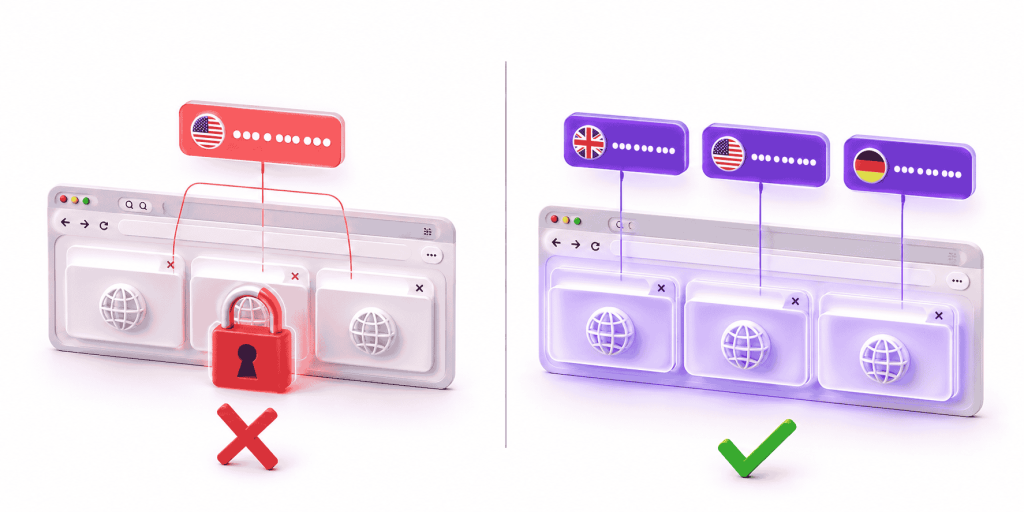
VPN per tab is not a feature that exists in Chrome. A VPN applies one encrypted tunnel to the entire browser, and every open tab shares the same exit IP the moment you connect. Switching country changes the IP for all tabs at once, with no way to isolate one tab from another.
If you are searching for VPN per tab, what you actually need is per-tab residential proxy routing. IP Per Tab by PureVPN assigns a different residential IP to each Chrome tab independently, with no external VPN required and no manual configuration.
What Does “VPN Per Tab” Actually Mean?
Two different problems sit behind the term “VPN per tab,” and both have the same root cause.
The first is directional: users want specific tabs or sites routed through a chosen country while everything else stays direct. Most VPNs do the opposite — route everything through the tunnel and let you exempt specific apps. Per-tab control in the other direction does not exist in any Chrome VPN extension.
The second is simultaneous: users want Tab 1 on a UK IP and Tab 2 on a US IP at the same time. A VPN holds one exit IP for the entire browser at any given moment. Running two different country IPs across two tabs simultaneously is architecturally impossible with a VPN.
Why VPN Per Tab Is Not Possible in Chrome
A VPN creates one encrypted tunnel at the device or browser level. Chrome applies that tunnel to every open tab through a single proxy configuration. There is no mechanism in Chrome’s networking layer to apply a different tunnel to Tab 2 while Tab 1 uses another.
Chrome VPN extensions have exactly the same constraint. Every VPN extension in the Chrome Web Store uses the chrome.proxy API. That API accepts one configuration for the entire browser profile. When the extension updates that configuration, every open tab immediately routes through the new setting.
| What you want | What a VPN does | VPN per tab possible? |
|---|---|---|
| Tab 1 on UK IP, Tab 2 on US IP simultaneously | One tunnel, one exit IP for all tabs | No |
| Route one tab through a different country, keep others unchanged | Country switch applies to entire browser | No |
| Keep one tab direct while another uses a proxy country | Split tunnel works per app, not per tab | No in Chrome |
| Set a rule so a specific site always loads from a specific country | Not a VPN feature | No |
Does Split Tunneling Solve VPN Per Tab?
Split tunneling is the closest feature VPNs offer to per-tab control, and it does not solve the problem.
Split tunneling works at the application level. It routes Chrome as one app through the VPN while another app uses a direct connection. Chrome is one process, and split tunneling cannot distinguish between individual tabs inside it.
VPN Per Tab vs IP Per Tab by PureVPN
IP Per Tab by PureVPN is the tool built for the workflow that VPN per tab searches are actually describing. It routes individual Chrome tabs through separate residential IPs simultaneously, using PAC file logic that maps each tab ID to its own proxy endpoint.
The comparison between the two approaches is direct:
| Property | VPN per tab (any provider) | IP Per Tab by PureVPN |
|---|---|---|
| Routing level | Entire browser, no tab-level control | Individual tab |
| Simultaneous different IPs across tabs | No | Yes |
| Change one tab’s IP without affecting others | No | Yes |
| Domain rules (auto-assign IP per site) | No | Yes |
| IPs included | No — bring your own | Yes — residential IPs from PureVPN pool |
| Manual proxy configuration | No | No |
| Encrypts all device traffic | Yes | No — proxy routing only |
| Setup required | VPN app or extension | Chrome extension only |
VPN per tab and IP Per Tab by PureVPN solve different problems. A VPN encrypts everything and gives the entire browser one location. IP Per Tab by PureVPN gives each tab its own residential IP, simultaneously, with no encryption overhead and no browser-wide IP change on every switch.
Related Read: What Is Per-Tab IP Routing?
How IP Per Tab by PureVPN Works
IP Per Tab by PureVPN assigns residential IPs from PureVPN’s proxy pool to individual Chrome tabs through the extension popup. Select a country for a tab, and that tab routes through a residential IP in that country immediately. Every other tab is unaffected.
The residential IPs are included in the plan. No external VPN app is needed, no proxy credentials to enter, and no PAC scripts to write manually. The extension handles the routing logic internally.
Bandwidth plans are available at 12 GB, 25 GB, and 50 GB. The extension itself is free to install.
The Feature VPN Per Tab Never Had: Domain Rules
VPN per tab, even if it existed, would still require manual switching every session. Domain rules in IP Per Tab by PureVPN remove that friction entirely.
Set a rule for a domain once. Every time any tab navigates to that domain, IP Per Tab by PureVPN automatically assigns the chosen residential IP. The rule persists in chrome.storage.local and survives browser restarts. No action is required after the initial setup.
A practical example: set amazon.co.uk to always route through a UK residential IP. From that point, every tab that opens amazon.co.uk gets the UK IP automatically. Set amazon.com to always route through a US residential IP. Both can be open simultaneously, each on their assigned IP, with no manual switching.
Related Read: What Is Session Isolation in Chrome
When a VPN Is Still the Right Tool
IP Per Tab by PureVPN is not a replacement for a VPN. The two tools serve genuinely different purposes.
| You need | Right tool |
|---|---|
| Encrypt all traffic on public Wi-Fi | VPN |
| Access a geo-restricted streaming service on your full browser | VPN |
| Hide your real IP across all browsing activity | VPN |
| VPN per tab: different IP on each tab simultaneously | IP Per Tab by PureVPN |
| A site that always loads through a specific country automatically | IP Per Tab by PureVPN |
| Check search results from two countries side by side | IP Per Tab by PureVPN |
| Verify ads from multiple geos without switching | IP Per Tab by PureVPN |
| Residential IP for accurate geo-targeted results | IP Per Tab by PureVPN |
If encryption for all traffic is the requirement, a VPN is the correct tool. If tab-level IP control is the requirement, IP Per Tab by PureVPN is the correct tool.
Related Read: Browser Profiles vs Per-Tab Proxy
Frequently Asked Questions
No. Chrome VPN extensions apply one proxy configuration across the entire browser through the chrome.proxy API. Switching VPN country changes the IP for every open tab simultaneously. VPN per tab, meaning different IPs on different tabs at the same time, is not possible with any Chrome VPN extension.
Chrome’s proxy API accepts one configuration for the entire browser profile. When a VPN extension updates that configuration, every tab routes through the new setting immediately.
A VPN applies one encrypted tunnel to the entire browser. IP Per Tab assigns a separate residential IP to each Chrome tab independently using PAC file routing. With IP Per Tab, Tab 1 and Tab 2 run different country IPs simultaneously. With a VPN, every tab always shares the same exit IP.
No. Split tunneling works at the application level, routing specific apps through the VPN while others use a direct connection. Chrome is one application, so split tunneling applies to the entire browser. It cannot route individual tabs inside Chrome through different connections.
Yes, with IP Per Tab by PureVPN’s domain rules. Set a domain once and the extension automatically assigns the chosen residential IP every time any tab navigates to that domain. The rule persists across browser restarts with no manual switching required on each session.
No. IP Per Tab by PureVPN includes residential IPs from PureVPN’s proxy pool directly. No external VPN app or subscription is needed. Install the extension, select a bandwidth plan, and assign IPs to tabs from the popup.
Residential IPs matter for web scraping because they come from real consumer internet connections and are generally less likely to be identified as datacenter or proxy traffic. The IP address behind your scraper can influence how a website treats your requests, whether they pass normally or trigger CAPTCHAs, rate limits, or blocks.
Datacenter IPs, on the other hand, are assigned to servers in commercial hosting facilities and are easier for websites to classify as infrastructure. This makes the choice of IP type an important part of building a reliable scraping workflow.
In this blog, we’ll break down the differences between residential and datacenter IPs, how websites identify them, and when residential IPs can improve scraping reliability.
What Is the Actual Difference Between a Residential IP and a Datacenter IP for Scraping?
The difference that matters for scraping is how IP reputation databases classify each address type. Datacenter IP ranges are documented by their hosting providers and indexed by vendors. Residential ranges are allocated by ISPs to end users and do not appear in those databases by default.
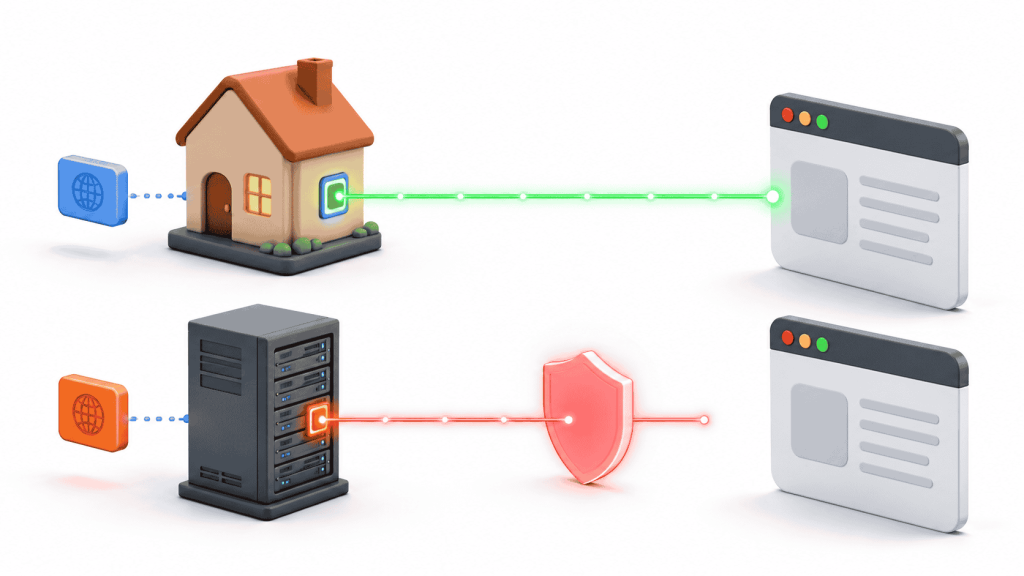
A request from an Amazon AWS, Google Cloud, or DigitalOcean address resolves as datacenter infrastructure in MaxMind’s GeoIP2 database. A request from a Comcast, BT, or Vodafone residential allocation resolves as a consumer ISP connection. A website applying IP-type-based rules acts on that classification before evaluating any other part of the request.
| Property | Residential IP | Datacenter IP |
|---|---|---|
| Assigned by | ISP (Comcast, BT, Vodafone) | Hosting provider (AWS, GCP, DigitalOcean, Hetzner) |
| Appears in datacenter IP databases | No | Yes, by ASN range |
| MaxMind connection type classification | Residential / ISP | Hosting / Data Center |
| Reputation baseline on arrival | Lower risk score | Higher risk score, regardless of request content |
| Cost per GB on proxy networks | $3–4 typical | $0.10–0.50 typical |
The cost gap between residential and datacenter is significant. A datacenter IP on a target site that filters by IP type produces blocked or altered responses regardless of how the request is constructed, which makes the cost comparison irrelevant for those targets.
Why Do Websites Filter Datacenter IPs Before Looking at Anything Else?
Websites filter by IP type first because it is the cheapest check in the stack. Querying an IP reputation database adds single-digit milliseconds to request evaluation. Evaluating JavaScript execution, session behavior, or browser fingerprinting requires more processing and only runs on requests that have already passed the IP check.
What Residential IPs Do Not Fix in a Scraping Workflow
Residential IPs pass the IP reputation check. Every other detection signal stays active regardless of IP type.
Request timing
A scraper sending 60 requests per minute at uniform 1-second intervals produces a timing signature that behavior-based detection identifies as automated. Real browsing produces variable intervals: a product page held open for 45 seconds, a category page for 8, a search result for 3 minutes. Uniform timing is a bot signal independent of IP classification.
TLS and HTTP fingerprinting
A real Chrome browser on macOS sends headers in a specific order with a specific cipher suite in the TLS handshake. A Python requests call produces a different header set and a different JA3 fingerprint.
Cookie and session state
A first browser visit to most sites receives a session cookie. Subsequent requests from that browser include the cookie. A scraper sending no cookies, or a fresh cookie on each request, signals no real session is in progress. This check applies per session, not per IP.
JavaScript execution
Headless browsers including Puppeteer and Playwright execute JavaScript, but certain challenges test for properties specific to real browser environments: hardware concurrency values, screen dimensions, WebGL renderer strings, and timing APIs. A residential IP does not affect whether those tests pass.
| Signal | Affected by IP type | What actually fixes it |
|---|---|---|
| IP reputation score | Yes | Residential IP |
| Datacenter ASN classification | Yes | Residential IP |
| Request timing patterns | No | Randomized delays, variable pacing |
| TLS / JA3 fingerprint | No | Real browser or browser-matched cipher suite |
| Cookie and session state | No | Persistent cookie jar per session |
| JavaScript challenge response | No | Full browser execution environment |
| Navigation behavior patterns | No | Realistic page traversal logic |
Use this table to diagnose a failing scraping workflow. If switching from datacenter to residential resolves the issue, IP reputation was the blocking factor. If residential IPs do not resolve it, the failure is in one of the remaining signals.
Related Read: Why Websites Block Scrapers and How They Detect Them
How Rotation and Sticky Sessions Work Differently With Residential IPs
Residential proxy pools operate in two session modes. Using the wrong mode for a task produces failures that look like IP blocks but are actually session continuity errors.
Rotating residential IPs assign a different exit node per request or per configurable interval. Rotation suits tasks where requests are independent: fetching individual product pages, collecting search result pages with no login dependency, or pulling publicly available data that carries no session state between requests.
Sticky residential sessions hold the same exit node for a configured duration. The session identifier embeds in the proxy credentials as a parameter, for example username-session-abc123. The proxy gateway reads that identifier and routes every request through the same exit node until the session expires. Standard durations run from 1 to 30 minutes depending on provider. ISP proxy plans hold the same address indefinitely.
Sticky sessions suit tasks that require continuity: logging in and then fetching authenticated pages, moving through a multi-step checkout flow for price verification, or any workflow where the server tracks the visitor’s IP across a sequence of requests. Rotating the IP mid-session on those workflows breaks continuity and produces errors that look like access restrictions.
| Mode | IP behavior | Use when | Avoid when |
|---|---|---|---|
| Rotating residential | New IP per request or interval | Independent, stateless requests | Login flows, multi-step sessions |
| Sticky residential | Same IP for 1–30 min (standard) | Authenticated sessions, stateful flows | High-volume parallel independent requests |
| ISP / static residential | Same IP indefinitely | Long-running tasks, API whitelisting | Tasks needing IP diversity across requests |
- Related Read: What Is a Sticky Session?
How Geo-Accuracy Differs Between Residential and Datacenter IPs
A residential IP from the United Kingdom is an address allocated by a UK ISP to a connection physically in the UK. A datacenter IP from a UK-based server is an address allocated to hosting infrastructure that sits in the UK geographically but does not represent a UK consumer connection.
For scraping tasks where the localized version of a page matters, such as regional pricing, localized search results, or geo-targeted content, a residential IP from the target country produces a more accurate starting point than a datacenter IP from the same country. Websites also read Accept-Language headers, stored cookies, and account locale settings alongside IP geolocation, so the IP is one input rather than the only one.
- Related Read: Why One IP Is Not Enough for Web Scraping
How Per-Tab IP Routing Applies to Browser-Based Research
Chrome applies one proxy configuration across the entire browser. Switching the proxy for one tab switches it for every tab, which makes simultaneous multi-location checks impossible without an extension that operates at the tab level.
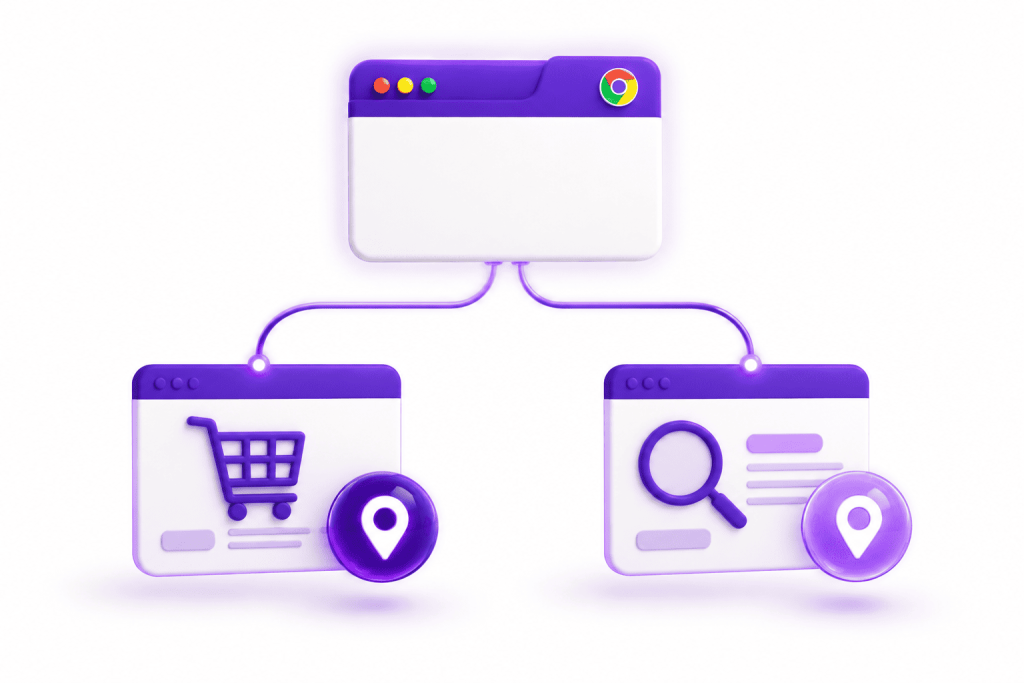
IP Per Tab by PureVPN assigns a residential proxy IP to individual Chrome tabs independently. A tab assigned to a US residential IP and a tab assigned to a UK residential IP run concurrently in the same browser window, each sending requests from its own assigned address. The extension stores each tab’s assignment in chrome.storage.local, so assignments persist across browser restarts without reconfiguration.
The practical use for browser-based research: checking localized pricing across two markets simultaneously, comparing search results from two countries side by side, or verifying that geo-redirects resolve correctly from multiple locations.
Related Read: What Is Per-Tab IP Routing?
Frequently Asked Questions
Yes. Proxy pools reuse the same ISP-assigned addresses across many users. Sites logging IP behavior history can flag the same address appearing across geographically inconsistent sessions. Behavioral history tracking catches this; basic ASN classification does not.
No. IP Per Tab by PureVPN is built for browser-based workflows in Chrome. Automated scripts connect to a residential proxy pool directly via credential-based authentication, without the extension.
No. Websites read Accept-Language headers, cookies, and account locale settings alongside the IP. A UK residential IP paired with Accept-Language: en-US and a USD cookie returns different content than the same IP with matching UK locale signals.
Yes. Proxy pools reuse the same ISP-assigned addresses across many users. Sites logging IP behavior history can flag the same address appearing across geographically inconsistent sessions. Behavioral history tracking catches this; basic ASN classification does not.
Websites check IP reputation before reading anything else. Datacenter ranges (AWS, Google Cloud, Hetzner) are indexed by ASN in MaxMind and IPQualityScore. That classification happens before headers, cookies, or timing are evaluated. Residential IPs carry no ASN flag and pass that check by default.
To obtain a new IP for every browser tab, install IP Per Tab by PureVPN from the Chrome Web Store. The extension assigns a separate residential proxy IP to each tab individually. Open ten tabs, assign ten IPs, all running simultaneously inside one Chrome window.
Why Most IP-Changing Methods Apply One IP to the Whole Browser
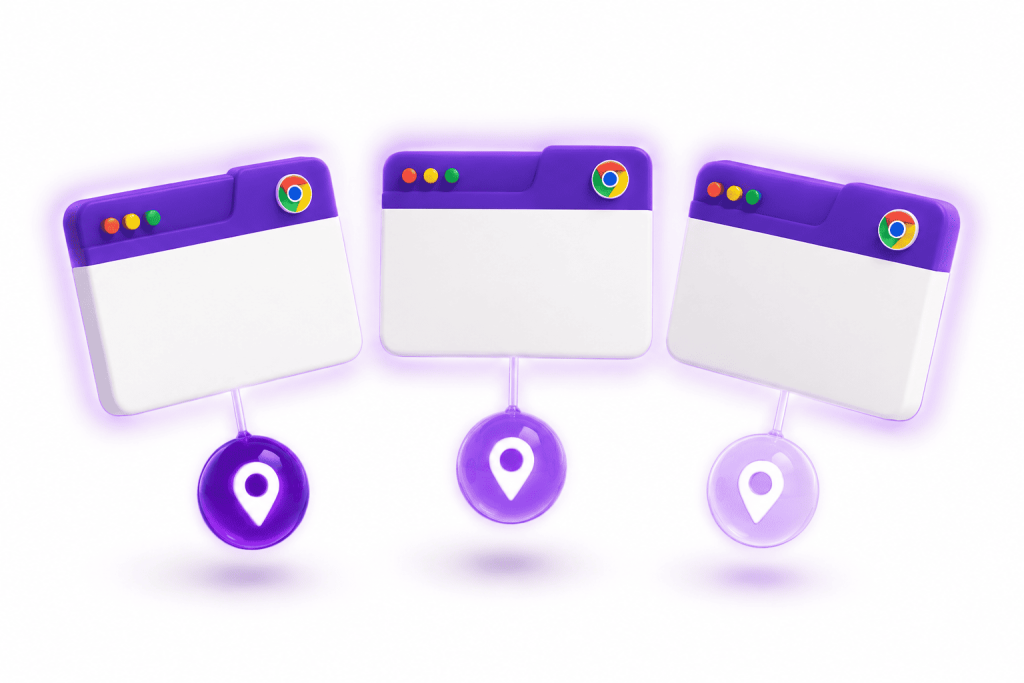
Standard IP-changing tools, including VPNs and most browser proxy extensions, apply a single IP address to the entire browser. This creates a real problem for anyone running parallel workflows: checking two different regional SERPs, previewing geo-targeted ads from multiple locations, or monitoring product listings across different markets. Each workflow interrupts the others every time the IP changes on your browser.
The root cause is how Chrome’s proxy API works by default. Most extensions call chrome.proxy.settings.set() once for the whole browser, not per tab. That single setting applies globally, which means true tab-level IP isolation is not possible unless the extension is specifically built to handle per-tab routing.
PureVPN’s residential proxy infrastructure powers IP Per Tab, which routes proxy assignments at the tab level rather than the browser level. You can still use PureVPN’s app, and use residential proxy on whole browser, but if you are someone looking for a tab-level proxy routing, you can use IP per tab chrome extension.
What PureVPN’s IP Per Tab Does Differently?
IP Per Tab is a Chrome extension built on Manifest V3 that assigns residential proxy IP addresses to individual browser tabs. Each tab holds its own IP session independently of every other tab open in the same Chrome window.
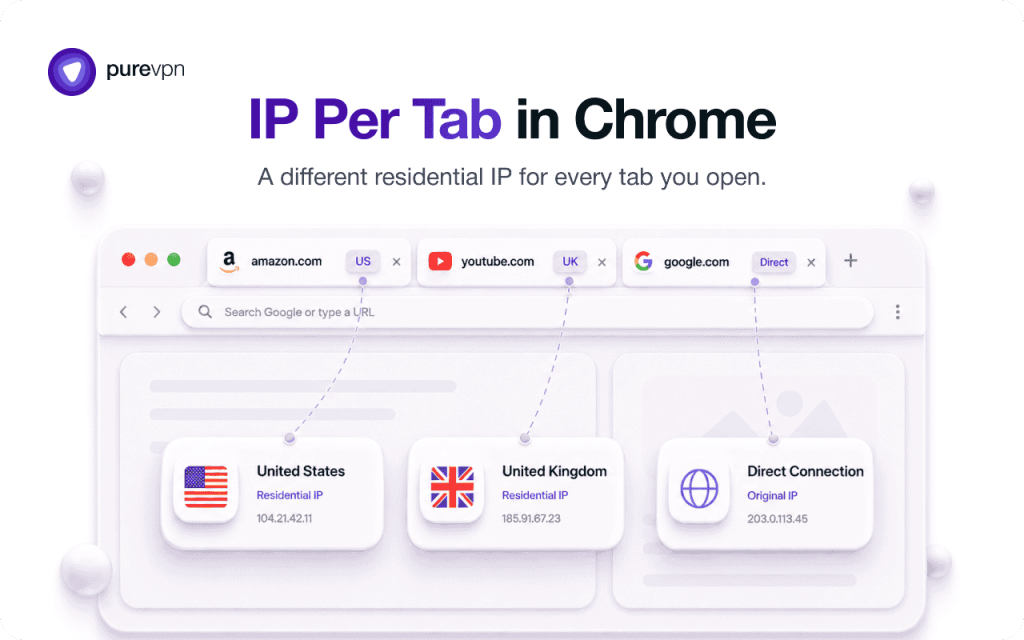
When a user focuses a tab, the extension switches the active proxy to that tab’s assigned IP in under 300 milliseconds. When the user switches to another tab, the extension applies that tab’s assigned IP instead. No manual switching. No profile juggling. No second browser.
The extension connects in under 3 seconds and draws IPs from PureVPN’s whitelisted residential proxy pool. These are IPs assigned by real ISPs to real home users, not datacenter IPs that websites identify and treat as automated traffic.
How to Set Up a Different IP on Each Tab?
Setting up IP Per Tab takes under 60 seconds from install to first working session.
- Add IP Per Tab by PureVPN from the Chrome Web Store.
- Log in with your PureVPN account credentials inside the extension.
- Select a residential proxy plan — plans start at 12 GB and go up to 50 GB.
- Open the extension popup and select a residential IP for the active tab.
- Open a second tab and assign a different residential IP from the same popup.
Each assignment persists across browser restarts via Chrome’s local storage. A tab assigned a US residential IP keeps that IP the next time the browser opens, without re-configuration.
Who Needs a Different IP Per Tab?
IP Per Tab is built for professionals who run more than one geo-sensitive workflow at the same time.
SEO professionals checking local SERP results need to see Google search results from different countries simultaneously. With IP Per Tab, a US residential IP goes on Tab 1 and a UK residential IP goes on Tab 2. Both SERP views stay open side by side without switching IPs between sessions. PureVPN’s anonymous browsing infrastructure ensures the residential IPs appear as real local users to search engines.
Ad verification analysts need to confirm that ads render correctly for users in target geographies. Tab 1 shows the ad as a US visitor sees it. Tab 2 shows the same ad as a UK visitor sees it. Both views stay live simultaneously. Residential IPs are critical here because ad networks serve different creatives to datacenter IPs than they serve to real residential users.
QA developers and testers verifying geo-conditional features, CDN routing behavior, and regional pricing logic can load the same URL across multiple tabs with different residential IPs and check regional variations in parallel rather than sequentially. PureVPN’s DNS leak protection ensures DNS queries route through the proxy tunnel, so geo-detection tests reflect what real regional users actually see.
E-commerce researchers monitoring product pricing across regional marketplaces can keep UK and US storefronts open in separate tabs with separate IPs, without one tab’s IP session contaminating the other’s results.
Domain Rules: Assign IPs Automatically by Website
IP Per Tab includes a Domain Rules engine that removes the need to manually assign IPs on return visits.
A domain rule maps a specific domain such as amazon.com or ebay.co.uk to a designated residential IP. Every time a tab navigates to a matching domain, the extension automatically applies the stored IP route. The rule fires on every navigation event, so the assignment applies immediately when a page loads.
Domain rules support exact domain matching and subdomain wildcards. A rule set for *.amazon.com covers amazon.com, seller.amazon.com, and all other subdomains automatically. Rules can be enabled, disabled, or deleted from the extension popup without losing saved configurations.
This is useful for recurring workflows. An SEO professional who checks UK SERPs every morning sets a domain rule for Google UK once. Every subsequent visit applies the UK residential IP without any manual action.
What IP Per Tab Is Not
IP Per Tab is a per-tab residential proxy router, not a VPN. It routes HTTP and HTTPS proxy traffic for individual Chrome tabs and does not encrypt the full device connection the way PureVPN’s VPN apps do.
The extension includes WebRTC leak protection toggle in the Settings tab, which prevent real IP exposure through WebRTC API calls. For full device-level encryption alongside per-tab IP control, use IP Per Tab alongside a PureVPN subscription. The two products operate independently and do not conflict.
Frequently Asked Questions
Yes. IP Per Tab by PureVPN assigns a separate residential proxy IP to each Chrome tab individually. Ten open tabs can run ten different residential IPs simultaneously from one Chrome window.
No. IP Per Tab runs inside regular Chrome. Separate IP sessions for each tab do not require additional browsers, profiles, or extensions.
IP Per Tab uses residential proxy IPs sourced from PureVPN’s whitelisted pool. These are real ISP-assigned IP addresses, not datacenter IPs. Available locations currently include the US and UK.
No. Tab assignments persist across browser restarts using Chrome’s local storage. Each tab keeps its assigned IP route until the user manually changes it.
The extension detects the tab focus change and applies that tab’s assigned residential IP within 300 milliseconds. Switching between tabs switches IPs instantly and silently.
No. IP Per Tab is a per-tab proxy extension. It manages proxy routing inside Chrome and does not encrypt device-level traffic. For full VPN protection, PureVPN’s apps handle encryption separately and work alongside IP Per Tab without conflicts.
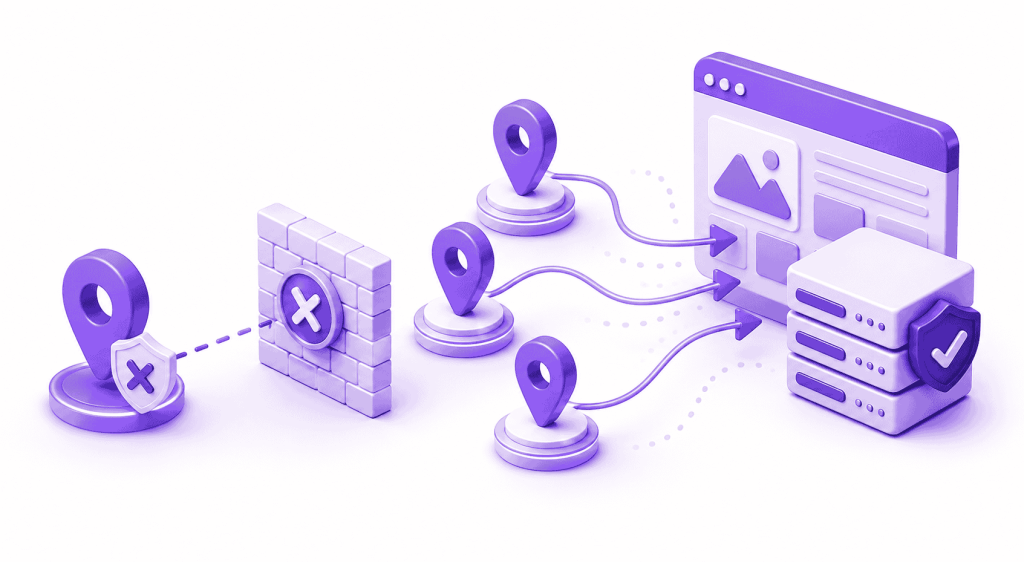
One IP can be enough for smaller scraping tasks, but it becomes limiting as workloads grow. Traffic stays concentrated on one address, parallel jobs may share it, and regional checks are restricted to one IP-based location at a time.
Using multiple IPs can spread requests across different routes and keep separate scraping tasks apart. It does not mean the IP should change with every request, either. Some jobs work well with rotation, while others need the same IP to stay in place for a session.
In this guide, we break down why one IP is not always enough for web scraping, when it can still do the job, where using multiple IPs makes more sense, and how rotating and sticky IPs compare against each other.
Why a Single IP Can Limit Scraping
There are a few ways relying on one IP can hold a scraping task back. Here are the main ones:
Repeated Requests Build Up Against the Same IP
When every request goes through the same network route, the target website sees the same source IP each time. Websites can count requests by IP and apply rate limits or restrictions when their configured rules are triggered.
The limitation is straightforward: as request volume increases, all of that traffic remains tied to one address. With only one IP, there is no way to spread those requests across separate source addresses.
Parallel Scraping Jobs Still Share the Same Source IP
Running several scraping jobs at the same time does not automatically give each one a different public IP. If they all use the same network or proxy route, their requests still come from the same source address.
Even though the jobs are separate, their combined requests still add to the traffic associated with that IP. As more jobs use the same route, that concentration grows, and a rate limit or restriction affecting the address can also disrupt the other jobs relying on it.
One IP Only Gives You One IP-Based Location at a Time
Location can matter when a scraping task involves comparing regional prices, availability, search results, or localized pages. One IP route represents one IP-based location at a time, so checking several markets through separate locations requires different routes.
IP location is only one part of how a website may determine what to show. Cookies, account settings, browser language, and other signals can also affect the experience, so changing the IP alone does not guarantee a particular regional version of a page.
When Is One IP Still Enough for Scraping?
A single IP can still work well for simpler scraping tasks that do not need separate routes for different jobs or locations. For example:
- Small scraping workloads: A single IP might be sufficient when request volume stays low.
- One location only: There is less need for multiple routes when the task only needs one IP-based location.
- No need to separate parallel jobs: If several jobs do not need to appear from different source IPs, one route may still be enough.
- Stateful workflows: Some related requests can benefit from staying on the same IP, since changing the address too often may disrupt session continuity.
How Many IPs Do You Need for Scraping?
No fixed number of IPs works for every scraping task. It comes down to how the workload is structured. The table below highlights the main factors that can affect your requirements:
| Factor | Why It Matters |
| Request volume | Higher volumes may need more IPs so traffic is not concentrated on one address |
| Concurrent jobs | Separate jobs may need separate routes if you do not want all requests coming from the same IP |
| Location coverage | Checking different markets may require IPs from different locations |
| Session consistency | Some workflows work better when related requests keep the same IP, which affects how IPs are assigned or rotated |
| Site request limits | IP-based request limits can affect how much traffic each address should handle |
Rotating IP vs Sticky IP Sessions
When it comes to using multiple IPs, you can either use rotating IPs or keep the same IP for a session. Take a closer look at their differences below:
Rotating IPs
A rotating proxy draws from a pool of IPs and changes the exit address according to its rotation rules. Depending on the service, that can happen with each request, after a set period, or when a new session starts.
Rotation can work well for independent requests that do not rely on what happened before them. It spreads traffic across different IPs without requiring one address to stay tied to the entire job.
Sticky IPs
A sticky session keeps related requests on the same proxy IP instead of changing the address each time. That can be useful for workflows where continuity matters, such as logging in, completing a multi-step form, or moving through another stateful session.
Changing the IP partway through such a flow can cause problems on sites that expect the same client to remain consistent. How long an IP stays assigned depends on the proxy service and its session settings.
Why Multiple IPs Do Not Solve Every Scraping Problem
Using multiple IPs changes where requests come from, but websites can still look at other signals. Request patterns, cookies, session information, browser characteristics, and behaviour across the site can all remain relevant even when the IP changes.
CAPTCHA or browser challenges can also depend on more than the source address, so switching IPs does not automatically remove them. The same applies to crawler rules and site policies, which still apply regardless of which IP sends the request.
Related Read: Why Websites Block Scrapers and How They Detect Them
How Per-Tab IP Routing Helps
Browser-based scraping can involve several source checks, test runs, or regional pages open at once. Chrome normally applies one proxy configuration across the browser, so separate tabs do not get their own proxy routes by default. Per-tab routing can help when those tasks need different IPs at the same time.
PureVPN IP Per Tab lets you assign a residential proxy IP to an individual Chrome tab. Different tabs can use different available locations, while tabs that do not need a proxy can stay on your direct connection. Each assigned tab keeps its own IP session, and domain rules can automatically apply a chosen route when you return to a specific site.
For browser-based work, that means separate checks can stay open side by side without repeatedly changing the proxy for the whole browser. Automated scraping scripts would still need their own proxy or rotation.
Related Read: What Is Per-Tab IP Routing?
Frequently Asked Questions
Not necessarily. More IPs can spread requests across different routes, but scraping speed also depends on factors such as request concurrency, network performance, response times, and how the scraper is configured.
No. A sticky IP usually stays the same for a session or a set period within a rotating proxy pool, while a static IP is intended to remain assigned for much longer. The exact duration depends on the provider and service.
Yes, if different parts of the workload have different requirements. Independent requests can use rotation, while related or stateful requests can stay on the same IP for a session.
No. Some scraping tasks work well with rotation, while others benefit from keeping the same IP across related requests. How often the IP changes should match the way the workload is structured.
You can watch Clash of the Thundermans on Paramount+. However, if you are outside the US, you may not be able to access the platform due to licensing agreements and copyright regulations. Fortunately, you can use PureVPN to connect to a US server and watch Clash of the Thundermans outside the US on Paramount+.
How to Watch Clash of the Thundermans Outside the US?
You can watch Clash of the Thundermans outside the US on Paramount+. You will just need to connect via PureVPN to overcome regional limitations. Follow these steps:
- Subscribe to PureVPN.
- Download the VPN app on your device.
- Connect to a US server.
- Sign in to Paramount+.
- Watch Clash of the Thundermans outside the US.
Where is Clash of the Thundermans Streaming Officially?
Clash of the Thundermans is streaming officially on Paramount+ in the US. However, Paramount+ may be inaccessible outside the US due to licensing agreements and copyright regulations.
Why is Clash of the Thundermans Unavailable Outside the US?
Clash of the Thundermans may be unavailable outside the US due to regional distribution rights, licensing agreements, and country-specific contracts. To stream Clash of the Thundermans outside the US on Paramount+, you will need to connect via PureVPN.
What is the Plot of Clash of the Thundermans?
Clash of the Thundermans follows Chloe as she develops a new superpower that she struggles to control. Because of her unpredictable abilities, the Hero League decides that she should attend a superhero boarding school. The plan is meant to help Chloe understand and manage her powers while keeping everyone around her safe.
However, the decision causes a disagreement within the Thunderman family. Some family members believe Chloe should leave and learn to control her powers, while others want her to stay at home with them. As the family takes different sides, they have to deal with the consequences of their choice while trying to stay together.
What is the Release Date of Clash of the Thundermans?
Clash of the Thundermans will premiere on Paramount+ on September 3, 2026.
What is the Cast of Clash of the Thundermans?
Clash of the Thundermans features the following cast:
- Kira Kosarin as Phoebe Thunderman
- Jack Griffo as Max Thunderman
- Maya Le Clark as Chloe Thunderman
- Diego Velazquez as Billy Thunderman
- Addison Riecke as Nora Thunderman
- And several others.
What is the Genre of Clash of the Thundermans?
Clash of the Thundermans falls under the superhero comedy and family genres.
Official Trailer
Have a look at the trailer for Clash of the Thundermans below:
Clash of the Thundermans Official Trailer ⚡️ | Nickelodeon
IMDb Rating
Clash of the Thundermans is rated 8.9 out of 10 on IMDb.
The Social Media Hype
Check out the hype on social media about Clash of the Thundermans below:
Can You Watch Clash of the Thundermans Outside the US Without a VPN?
No, you cannot watch Clash of the Thundermans outside the US without a VPN. Clash of the Thundermans is only available on Paramount+ in the US. If you are traveling or living outside the US, you will need PureVPN to access the official stream.
Is It Legal to Watch Clash of the Thundermans Using a VPN?
Yes, it is legal to watch Clash of the Thundermans using a VPN for security purposes. A VPN will help you access the official stream on Paramount+ if you are outside the US.
Can I Stream Clash of the Thundermans Outside the US on Fire TV Stick, Smart TV, iOS, and Android?
You can stream Clash of the Thundermans outside the US on the following devices:
- Apple & Android smartphones and tablets
- Smart TVs (Samsung, LG, Sony, Vizio)
- Amazon Fire TV Stick & Roku
- Web browsers (Chrome, Safari, Firefox, Edge)
- Gaming consoles (PlayStation, Xbox)
Frequently Asked Questions
Yes, you can watch Clash of the Thundermans by connecting to a US server via PureVPN and accessing Paramount+ officially.
Connect to a server in the US where Clash of the Thundermans is officially available on Paramount+.
Paramount+ may detect some VPN connections, but PureVPN can help you access Clash of the Thundermans when you are outside the US.
You can watch it on demand on Paramount+ after its release.
Streaming issues can occur due to server selection or network connectivity. Switching to another US server usually resolves this.
PureVPN – The best VPN to Watch Clash of the Thundermans Outside the US
PureVPN gives you plenty of VPN servers in India to access Paramount+ no matter where you are.
Switching servers or clearing the cache solves most issues. Few clicks to circumvent Paramount+’s geo-blocking and anti-VPN technologies. Our customer support team is also available 24/7 via live chat if you encounter any issues while accessing Paramount+
Lastly, with PureVPN’s 20 Gbps servers, you can enjoy high-speed and buffer-free streaming of Clash of the Thundermans on your desired device. Still not sure about us? All PureVPN subscriptions come with a 31-day money-back guarantee, so you can test out our VPN service risk-free!
| PureVPN | Other VPN Providers | |
Global Internet Access | Available with 6,500+servers for global access. | Limited server options, may not have extensive global coverage. |
Accessing Streaming Services | Supports 50+ popular platforms like US Netflix, BBC iPlayer, Amazon Prime, Hulu, and many more. | May have limited compatibility with certain streaming services. |
Multi-Device Support | Routers, Android, iOs, Firestick, macOS, Windows, Linux, Chrome, Firefox, Edge | May have limited device compatibility or impose device limitations. |
VPN protocols | OpenVPN, IKEv2/IPsec, WireGuard | OpenVPN, IKEv2/IPsec, WireGuard |
4K Streaming Experience | Capable of seamless streaming up to 4K resolution | May experience buffering or quality degradation during 4K streaming |
Simultaneous connections | 10 Simultaneous Connections. | May offer less simultaneous connection based on plans. |
Support | Knowledge base, FAQs, email, 24/7 live chat. | Knowledge base, FAQs, email, 24/7 live chat. |


What other streaming services can you access with PureVPN?
You can use PureVPN to watch more movies and TV shows by accessing a wide range of other geo-restricted streaming services, such as:


You can watch Chad Powers Season 2 on Hulu. However, if you are outside the US, you may not be able to access Hulu due to licensing agreements and copyright regulations. Fortunately, you can use PureVPN to connect to a server in the US and watch Chad Powers Season 2 outside the US on Hulu.
How to Watch Chad Powers Season 2 Outside the US?
You can watch Chad Powers Season 2 outside the US on Hulu. You will just need to connect to a server in the US using PureVPN to overcome regional barriers. Follow these steps:
- Subscribe to PureVPN.
- Download the VPN app on your device.
- Connect to the US server.
- Sign in to Hulu.
- Watch Chad Powers Season 2 outside the US.
Where is Chad Powers Season 2 Streaming Officially?
Chad Powers Season 2 is streaming officially on Hulu. However, Hulu is inaccessible outside the US due to licensing agreements and copyright regulations.
Why is Chad Powers Season 2 Unavailable Outside the US?
Chad Powers Season 2 is unavailable outside the US due to country-specific contracts and platform exclusivity. To stream Chad Powers Season 2 outside the US on Hulu, you will need to connect via PureVPN.
What is the Plot of Chad Powers Season 2?
Chad Powers Season 2 follows Russ Holliday after his fake identity is exposed to Ricky, and she agrees to keep it a secret to protect her father’s reputation and Catfish’s season. Russ and Danny desperately want Ricky to keep the deception going as Chad takes on matches and becomes a rising star on the field. However, Coach Hudson and Gerry are starting to suspect something after Chad’s strange behavior.
The plot takes a dramatic turn after Russ brings Chad’s real father to the Catfish’s homecoming banquet as Howard Powers to protect his fake identity. Gerry is onto something and may expose Chad’s true identity. Still, as the tournament approaches, where the Catfish needs to beat Texas to qualify for the College Football Playoff, all must keep his identity hidden while helping him achieve the biggest goal of his life.
What is the Release Date of Chad Powers Season 2?
Chad Powers Season 2 will premiere on Hulu on September 3, 2026.
What is the Cast of Chad Powers Season 2?
Chad Powers Season 2 will feature the following cast:
- Glen Powell as Russ Holliday/Chad Powers
- Steve Zahn as Coach Jake Hudson
- Perry Mattfeld as Ricky Hudson
- Quentin Plair as Coach Byrd
- Wyn Everett as Tricia
- And several others.
What is the Genre of Chad Powers Season 2?
Chad Powers Season 2 falls under the sports comedy genre.
Official Trailer
Check out the trailer for Chad Powers Season 2 below:
Official Season 2 Trailer | Chad Powers | Hulu
IMDb Rating
Chad Powers is rated 7.5 out of 10 on IMDb.
The Social Media Hype
Check out the hype on social media about Chad Powers Season 2 below:
Can You Watch Chad Powers Season 2 Outside the US Without a VPN?
No, you cannot watch Chad Powers Season 2 outside the US without a VPN. Chad Powers Season 2 is only available on Hulu in the US. If you are traveling or living outside the US, you will need PureVPN to access the official stream.
Is It Legal to Watch Chad Powers Season 2 Using a VPN?
Yes, it is legal to watch Chad Powers Season 2 using a VPN for security purposes. A VPN will help you access the official stream on Hulu if you are outside the US.
Can I Stream Chad Powers Season 2 Outside the US on Fire TV Stick, Smart TV, iOS, and Android?
You can stream Chad Powers Season 2 outside the US on the following devices:
- Apple & Android smartphones and tablets
- Smart TVs (Samsung, LG, Sony, Vizio)
- Amazon Fire TV Stick & Roku
- Web browsers (Chrome, Safari, Firefox, Edge)
- Gaming consoles (PlayStation, Xbox)
Frequently Asked Questions
Yes, you can watch Chad Powers Season 2 by connecting to the US server via PureVPN and accessing Hulu officially.
Connect to a server in the US where the content is officially available.
Hulu may detect some VPNs, but PureVPN reliably works to watch Chad Powers Season 2.
You can watch Chad Powers Season 2 entirely on demand on the Hulu streaming platform.
This usually happens if the VPN is disconnected, the server is overloaded, or cookies/cache interfere. Switching servers or clearing the cache solves most issues.
PureVPN – The best VPN to Watch Chad Powers Season 2 Outside the US
PureVPN gives you plenty of VPN servers in India to access Hulu no matter where you are.
Switching servers or clearing the cache solves most issues. Few clicks to circumvent Hulu’s geo-blocking and anti-VPN technologies. Our customer support team is also available 24/7 via live chat if you encounter any issues while accessing Hulu
Lastly, with PureVPN’s 20 Gbps servers, you can enjoy high-speed and buffer-free streaming of Chad Powers Season 2 on your desired device. Still not sure about us? All PureVPN subscriptions come with a 31-day money-back guarantee, so you can test out our VPN service risk-free!
| PureVPN | Other VPN Providers | |
Global Internet Access | Available with 6,500+servers for global access. | Limited server options, may not have extensive global coverage. |
Accessing Streaming Services | Supports 50+ popular platforms like US Netflix, BBC iPlayer, Amazon Prime, Hulu, and many more. | May have limited compatibility with certain streaming services. |
Multi-Device Support | Routers, Android, iOs, Firestick, macOS, Windows, Linux, Chrome, Firefox, Edge | May have limited device compatibility or impose device limitations. |
VPN protocols | OpenVPN, IKEv2/IPsec, WireGuard | OpenVPN, IKEv2/IPsec, WireGuard |
4K Streaming Experience | Capable of seamless streaming up to 4K resolution | May experience buffering or quality degradation during 4K streaming |
Simultaneous connections | 10 Simultaneous Connections. | May offer less simultaneous connection based on plans. |
Support | Knowledge base, FAQs, email, 24/7 live chat. | Knowledge base, FAQs, email, 24/7 live chat. |
What other streaming services can you access with PureVPN?
You can use PureVPN to watch more movies and TV shows by accessing a wide range of other geo-restricted streaming services, such as:
You can watch The Gentlemen Season 2 on Netflix. However, if you are outside the US, you may not be able to access the platform due to licensing agreements and copyright regulations. Luckily, you can use PureVPN to connect to a server in the US and watch The Gentlemen Season 2 outside the US on Netflix.
How to Watch The Gentlemen Season 2 Outside the US?
You can watch The Gentlemen Season 2 outside the US on Netflix. You will just need to connect to a server in the US using PureVPN to overcome regional limitations. Follow these steps:
- Subscribe to PureVPN.
- Download the VPN app on your device.
- Connect to a US server.
- Sign in to Netflix.
- Watch The Gentlemen Season 2 Outside the US.
Where is The Gentlemen Season 2 Streaming Officially?
The Gentlemen Season 2 is streaming officially on Netflix. However, the Netflix US library is inaccessible outside the region due to licensing agreements and copyright regulations.
Why is The Gentlemen Season 2 Unavailable Outside the US?
The Gentlemen Season 2 is unavailable outside the US due to country-specific contracts and platform exclusivity. To stream The Gentlemen Season 2 outside the US on Netflix, you will need to connect via PureVPN.
What is the Plot of The Gentlemen Season 2?
The Gentlemen Season 2 picks up a year after Eddie Horniman and Susie Glass join forces and run Bobby Glass’s huge cannabis empire overseas. As Bobby’s poor decisions threaten the stability of the business, Eddie and Susie must choose between questioning his leadership and losing everything they built. Eddie’s ambition to expand the family business takes him from the English countryside to the Italian lakes, where he establishes a new industrial plant.
Meanwhile, there are powerful new players in Italy already, especially ruthless crime boss Marco Moretti, whom Eddie and Susie must deal with. Eddie is quite determined to gain greater wealth and influence, so he builds connections within the establishment. However, his uncalled-for actions put his and Susie’s partnership under pressure. The conflict of interest threatens to divide them while both form new alliances.
What is the Release Date of The Gentlemen Season 2?
The Gentlemen Season 2 will premiere on Netflix on September 3, 2026.
What is the Cast of The Gentlemen Season 2?
The cast of The Gentlemen Season 2 features:
- Theo James as Eddie Horniman
- Kaya Scodelario as Susie Glass
- Daniel Ings as Freddy Horniman
- Ray Winstone as Bobby Glass
- Giancarlo Esposito as Stanley Johnston
- And several others.
What is the Genre of The Gentlemen Season 2?
The Gentlemen Season 2 falls under the action, comedy, crime, and drama genres.
Official Trailer
Check out the official trailer for The Gentlemen Season 2 below:
The Gentlemen: Season 2 | Official Trailer | Netflix
IMDb Rating
The Gentlemen is rated 8.0 out of 10 on IMDb.
The Social Media Hype
Check out the hype on social media about The Gentlemen Season 2 below:
Can You Watch The Gentlemen Season 2 Outside the US Without a VPN?
No, you cannot watch The Gentlemen Season 2 outside the US without a VPN. The Gentlemen Season 2 is only available on Netflix US. If you are traveling or living outside the US, you will need PureVPN to access the official stream.
Is It Legal to Watch The Gentlemen Season 2 Using a VPN?
Yes, it is legal to watch The Gentlemen Season 2 using a VPN for security purposes. A VPN will help you access the official stream on Netflix if you are outside the US.
Can I Stream The Gentlemen Season 2 Outside the US on Fire TV Stick, Smart TV, iOS, and Android?
You can stream The Gentlemen Season 2 outside the US on the following devices:
- Apple & Android smartphones and tablets
- Smart TVs (Samsung, LG, Sony, Vizio)
- Amazon Fire TV Stick & Roku
- Web browsers (Chrome, Safari, Firefox, Edge)
- Gaming consoles (PlayStation, Xbox)
Frequently Asked Questions
Yes, you can watch The Gentlemen Season 2 by connecting to the US server via PureVPN and accessing Netflix US officially.
Connect to a server in the US where the content is officially available.
Netflix may detect some VPNs, but PureVPN reliably works to watch The Gentlemen Season 2.
You can watch The Gentlemen Season 2 on demand on Netflix.
This usually happens if the VPN is disconnected, the server is overloaded, or cookies/cache interfere. Switching servers or clearing the cache solves most issues.
PureVPN – The best VPN to Watch The Gentlemen Season 2 Outside the US
PureVPN gives you plenty of VPN servers in India to access Netflix no matter where you are.
Switching servers or clearing the cache solves most issues. Few clicks to circumvent Netflix’s geo-blocking and anti-VPN technologies. Our customer support team is also available 24/7 via live chat if you encounter any issues while accessing Netflix
Lastly, with PureVPN’s 20 Gbps servers, you can enjoy high-speed and buffer-free streaming of The Gentlemen Season 2 on your desired device. Still not sure about us? All PureVPN subscriptions come with a 31-day money-back guarantee, so you can test out our VPN service risk-free!
| PureVPN | Other VPN Providers | |
Global Internet Access | Available with 6,500+servers for global access. | Limited server options, may not have extensive global coverage. |
Accessing Streaming Services | Supports 50+ popular platforms like US Netflix, BBC iPlayer, Amazon Prime, Hulu, and many more. | May have limited compatibility with certain streaming services. |
Multi-Device Support | Routers, Android, iOs, Firestick, macOS, Windows, Linux, Chrome, Firefox, Edge | May have limited device compatibility or impose device limitations. |
VPN protocols | OpenVPN, IKEv2/IPsec, WireGuard | OpenVPN, IKEv2/IPsec, WireGuard |
4K Streaming Experience | Capable of seamless streaming up to 4K resolution | May experience buffering or quality degradation during 4K streaming |
Simultaneous connections | 10 Simultaneous Connections. | May offer less simultaneous connection based on plans. |
Support | Knowledge base, FAQs, email, 24/7 live chat. | Knowledge base, FAQs, email, 24/7 live chat. |
What other streaming services can you access with PureVPN?
You can use PureVPN to watch more movies and TV shows by accessing a wide range of other geo-restricted streaming services, such as:
Datacenter proxies use IPs hosted on commercial server farms; residential proxies use IPs that ISPs assign to real home devices. On bot-protected sites, datacenter proxies succeed 20 to 40 percent of the time while residential proxies succeed 85 to 99 percent of the time, according to Proxyway’s 2024 proxy benchmark report.
You picked datacenter proxies because the price made sense — hundreds of IPs, fast rotation, a fraction of the cost of residential. Then the target site returned a 403 before your scraper loaded a single element, and every retry hit the same wall.
Proxyway’s 2024 proxy benchmark report found that datacenter proxies achieve success rates of just 20 to 40 percent on sites running active bot protection, compared to 85 to 99 percent for residential proxies on the same targets.
The gap is not about configuration or speed. It is about where the IP comes from, and modern detection systems check that before they check anything else. Whether datacenter proxies or residential proxies are the right choice for your workflow comes down to one question: what detection layer does your target run, and which IP origin passes it.
Datacenter Proxies vs Residential Proxies
| Factor | Datacenter Proxies | Residential Proxies |
|---|---|---|
| IP Source | Commercial server farms (AWS, GCP, Azure) | ISPs assigned to real home devices |
| ASN Classification | Cloud provider ASN, flagged by default | Residential ISP ASN, baseline trust |
| Detection Risk | High, fails ASN check on protected sites | Low, passes as genuine user traffic |
| Success Rate on Protected Sites | 20 to 40 percent | 85 to 99 percent |
| Success Rate on Unprotected Sites | 60 to 90 percent | 85 to 99 percent |
| Average Speed | 100 to 1,000 Mbps | 10 to 100 Mbps (varies by host device) |
| Average Cost | $0.50 to $0.70 per GB | $3 to $15 per GB |
| Geo-targeting Accuracy | Data center location only | City-level, tied to real ISP regions |
| Best For | High-volume scraping, load testing, public data | Ad verification, e-commerce intel, geo-access |
What Is a Datacenter Proxy and When Does It Actually Work?
A datacenter proxy is an IP address hosted on a commercial server owned by a cloud infrastructure provider. AWS, Google Cloud, DigitalOcean, Hetzner, and OVH are among the providers whose IP ranges populate most datacenter proxy pools. These IPs have no connection to an internet service provider or a physical household address.
Datacenter IPs belong to ASNs (Autonomous System Numbers) registered to infrastructure companies, and anti-bot platforms maintain continuously updated lists of these ASN ranges.
When a request arrives from one of these IPs, detection systems assign it a low trust score before reading a single request header. This is the structural disadvantage of datacenter proxies on bot-protected targets, and no configuration change fixes it because the problem is the IP’s origin, not the request’s behavior.
Where datacenter proxies deliver genuine value:
- High-volume scraping of public data from unprotected targets: government databases, academic repositories, unprotected news sites, public APIs
- Load testing and performance simulation, where throughput matters and legitimacy does not
- SEO rank tracking across large keyword sets on targets with no active bot management
- Basic geo-bypass on services that use IP-location checks without ASN filtering
The signal for choosing datacenter proxies is simple: inspect your target’s response headers for CF-RAY (Cloudflare), _abck cookies (Akamai), or __ddg cookies (DataDome). If none of these appear, datacenter proxies are the cost-effective choice. If they do appear, the 20 to 40 percent success rate makes datacenter proxies an expensive way to produce unreliable data.
What Is a Residential Proxy and Why Do Bot-Protection Systems Trust It?
A residential proxy is an IP address that an ISP assigned to a real device in a home. The device could be a laptop, a router, or a smartphone on a home network. The IP is registered under a residential ISP’s ASN, the same ASN that serves millions of real consumers on that provider’s network.
To any system checking IP origin, a residential IP is indistinguishable from a genuine user browsing from their home connection because it carries the same ASN classification as one.
This is why residential proxies achieve 85 to 99 percent success rates on bot-protected targets where datacenter proxies fail. The ASN-level check that filters out datacenter IPs passes residential IPs by default, because residential ISP ASNs carry baseline trust that anti-bot vendors assign to consumer networks.
Where residential proxies are the only viable option:
- Ad verification, where detection systems serve different ad variants to non-residential IPs, making datacenter-based verification data worthless
- E-commerce intelligence on Amazon, major retailers, and travel platforms that run Akamai or Cloudflare bot management
- Accessing geo-gated content that verifies geographic location through ISP registration data, not just IP city data
- Social media account management on Meta, TikTok, and Reddit, which flag datacenter ASNs at the platform level
Where residential proxies are not the right fit:
- High-volume scraping at scale on unprotected targets, where the per-GB cost produces a significant and unnecessary cost premium over datacenter alternatives
- Pure performance testing where legitimacy is not the constraint and throughput is.
How Bot-Protection Systems Detect Datacenter Proxies in Three Steps
Bot-protection systems do not wait to observe behavioral patterns before deciding whether to block a datacenter IP. Detection happens at the network layer in a sequence that completes before any page content loads.
Step 1: ASN Classification Fires First
Every incoming connection carries an IP address. Platforms running Cloudflare Bot Management, Akamai Bot Manager, DataDome, or PerimeterX cross-reference that IP’s ASN against maintained lists of cloud infrastructure providers. If the ASN belongs to AWS, GCP, Azure, DigitalOcean, or similar providers, the IP receives a default-low trust score.
Step 2: IP Reputation Scoring Compounds the Penalty
Anti-bot vendors maintain IP reputation databases that track the history of each IP address. A datacenter IP that previously participated in scraping operations carries a negative reputation score that compounds the ASN penalty. Freshly provisioned datacenter IPs start at a structural deficit.
Step 3: Sequential IP Pattern Detection Flags the Pool
Many datacenter proxy pools issue IPs in sequential or near-sequential blocks. Detection systems recognize this pattern. Sequential IPs from the same ASN, even when individual request behavior appears clean, register as a strong bot signal. Against Kasada or Akamai specifically, datacenter proxies succeed less than 20 percent of the time, according to Scrapfly’s 2025 anti-bot bypass analysis.
The practical consequence is that the effective cost per successful request from a datacenter proxy on a bot-protected target is two to five times higher than the headline per-GB price suggests.
The Real Cost Comparison: Headline Price vs Effective Cost per Successful Request
The pricing difference between proxy types is real, but headline price is not the right comparison metric for bot-protected workflows.
| Cost Factor | Datacenter Proxies | Residential Proxies |
|---|---|---|
| Headline price | $0.50 to $0.70 per GB | $3 to $15 per GB |
| Success rate on protected target | 20 to 40 percent | 85 to 99 percent |
| Effective cost per successful request | 2.5 to 5x the headline price | Close to headline price |
| CAPTCHA overhead | High, triggers frequently on protected sites | Low, rarely triggered |
| IP pool burn rate | High, pools degrade fast under bot protection | Low, residential IPs hold reputation longer |
| Retry logic overhead | Significant, failed requests consume bandwidth | Minimal |
On unprotected targets, datacenter proxies are seven times cheaper and the correct choice. On bot-protected targets, the effective cost per completed request often exceeds the residential proxy price, while producing a data set that is incomplete and unreliable.
What Happens When You Use the Wrong Proxy Type
Using a datacenter proxy on a bot-protected site produces a specific, costly failure pattern. The 403 arrives in milliseconds. Every retry burns bandwidth without returning data. The IP range that generated repeated failures gets added to blocklists shared across anti-bot vendor networks, degrading the pool for every other user who shares it.
Using a residential proxy for high-volume scraping on an unprotected target produces a different failure: a financial one. Routing large-volume, low-risk requests through a residential pool at $3 to $15 per GB versus $0.70 per GB for datacenter generates a cost blowout with no detection-avoidance benefit.
The correct approach is to identify the protection layer your target runs before choosing a proxy type, match the IP origin to what that protection layer checks, and reassess when your target updates its bot management vendor.
Datacenter Proxies vs Residential Proxies: Which One Does Your Use Case Need?
| Use Case | Right Proxy Type | Reason |
|---|---|---|
| Scraping public government databases | Datacenter | No bot protection, volume matters |
| Load testing a web application | Datacenter | Throughput is the requirement |
| SEO rank tracking at scale | Datacenter | Low detection risk, high volume |
| Amazon price monitoring | Residential | Akamai-protected, datacenter fails |
| Ad verification in specific US cities | Residential | ISP-level geo accuracy required |
| Accessing US geo-locked streaming | Residential | ISP registration check, not just IP location |
| Social media account management | Residential | Datacenter ASNs flagged platform-wide |
| Sneaker copping on major retail sites | Residential | Active bot protection on all major platforms |
| Scraping unprotected news sites | Datacenter | Cost advantage, no detection risk |
| E-commerce competitive intelligence | Residential | Protected targets, data integrity required |
The Bottom Line on Datacenter vs Residential Proxies
Datacenter proxies succeed on the significant portion of the web that runs no ASN-level detection, at a price that makes high-volume operations practical. Residential proxies are the only viable option once your target runs Cloudflare Bot Management, Akamai Bot Manager, DataDome, or comparable systems, because those platforms check IP origin before they check anything else, and datacenter IPs fail that check by default.
Choose based on what your target actually runs, not on the headline price difference. Getting this wrong does not just cost you the proxy spend. It costs you the compute, the burned IP pool, and the corrupted data set from a workflow that appeared to run but produced results you cannot trust.
PureVPN’s Residential Network add-on offers a vast selection of US-based residential IPs, ideal not only for accessing region-locked content but also for enhancing anonymity, among other things. However, it is not suited for tasks like web scraping.
You can watch The Varnell Hill Show on Paramount+. However, Paramount+ is inaccessible outside the US due to licensing agreements and copyright regulations. Fortunately, PureVPN allows you to connect to a server in the US and watch The Varnell Hill Show outside the US on Paramount+.
How to Watch The Varnell Hill Show Outside the US?
You can watch The Varnell Hill Show outside the US on Paramount+. All you need is to connect to a US server to overcome regional limitations through PureVPN. Follow these steps:
- Subscribe to PureVPN.
- Download the VPN app on your device.
- Connect to a US server.
- Sign in to Paramount+.
- Watch The Varnell Hill Show outside the US.
Where is The Varnell Hill Show Streaming Officially?
The Varnell Hill Show is streaming officially on Paramount+. Furthermore, Paramount+ is regionally limited to the US because of licensing agreements and copyright regulations.
Why is The Varnell Hill Show Unavailable Outside the US?
Due to the regional distribution rights and licensing agreements, The Varnell Hill Show cannot be streamed outside the US on Paramount+. To watch The Varnell Hill Show on Paramount+ outside the US, you will have to connect via PureVPN.
What is the Plot of The Varnell Hill Show?
The Varnell Hill Show is a sitcom that takes inspiration from the hit 1990s sitcom “Martin”. After almost thirty years since his first appearance on “Martin”, the series takes its audience behind the scenes of Varnell’s successful talk show as he struggles to stay on top and relevant in the fast-changing world of entertainment. This series combines the classic sitcom genre and utilization of fourth-wall breaks and satirical cutaway scenes.
The show focuses on the chaotic life of Varnell Hill trying to maintain his successful career in TV. He faces challenges posed by the network executives wanting to bring modernization into the show, unpredictable writers’ room and guest celebrities who can often cause problems on the set. In addition, Lawrence, who plays Varnell Hill, has Martin Lawrence appearing regularly in his character of Martin Payne, adding more tension to the storyline being built around the rivalry between the two characters.
What is the Release Date of The Varnell Hill Show?
The Varnell Hill Show will premiere on Paramount+ on Tuesday, September 1st, 2026.
What is the Cast of The Varnell Hill Show?
Here’s the cast of The Varnell Hill Show:
- Tommy Davidson as Varnell Hill
- Kym Whitley
- Wendy Raquel Robinson
- Nick Cafero
- Emmanuel Hudson
- Chris Williams
- And several others.
What is the Genre of The Varnell Hill Show?
The Varnell Hill Show falls under the satire & comedy, and meta-comedy genres.
Official Trailer
Check out the official trailer of The Varnell Hill Show below:
THE VARNELL HILL SHOW | Official Trailer (2026) 4K
IMDb Rating
The Varnell Hill Show is not yet rated on IMDb.
Can You Watch The Varnell Hill Show Outside the US Without a VPN?
No, you cannot watch The Varnell Hill Show outside the US without a VPN. The Varnell Hill Show is only available on Paramount+ in the US. If you are outside the US or traveling abroad, you will need PureVPN to access the official stream.
Is it Legal to Watch The Varnell Hill Show Using a VPN?
Yes, it is legal to watch The Varnell Hill Show using a VPN for security purposes. PureVPN will help you access and stream the content on Paramount+ if you are outside the US or traveling.
Can I Stream The Varnell Hill Show Outside the US on Fire TV Stick, Smart TV, iOS, or Android?
You can stream The Varnell Hill Show outside the US on the following devices with PureVPN:
- Apple & Android smartphones and tablets
- Smart TVs (Samsung, LG, Sony, Vizio)
- Amazon Fire TV Stick & Roku
- Web browsers (Chrome, Safari, Firefox, Edge)
- Gaming consoles (PlayStation, Xbox)
Frequently Asked Questions
Season 1 consists of 8 episodes total, with each streaming for half an hour.
It directly follows the events of the beloved 1990s sitcom Martin. It features the character Varnell Hill and played by Tommy Davidson.
Paramount+ is providing two independent packages: the Essential plan for $8.99 a month ($89.99 a year) with ads and limited sports and Premium for $13.99 a month ($139.99 a year) with ad-free viewing and offline downloads, local CBS live, and the complete showtime collection.
PureVPN – The best VPN to Watch The Varnell Hill Show Outside the US
PureVPN gives you plenty of VPN servers in India to access Paramount+ no matter where you are.
Switching servers or clearing the cache solves most issues. Few clicks to circumvent Paramount+’s geo-blocking and anti-VPN technologies. Our customer support team is also available 24/7 via live chat if you encounter any issues while accessing Paramount+
Lastly, with PureVPN’s 20 Gbps servers, you can enjoy high-speed and buffer-free streaming of The Varnell Hill Show on your desired device. Still not sure about us? All PureVPN subscriptions come with a 31-day money-back guarantee, so you can test out our VPN service risk-free!
| PureVPN | Other VPN Providers | |
Global Internet Access | Available with 6,500+servers for global access. | Limited server options, may not have extensive global coverage. |
Accessing Streaming Services | Supports 50+ popular platforms like US Netflix, BBC iPlayer, Amazon Prime, Hulu, and many more. | May have limited compatibility with certain streaming services. |
Multi-Device Support | Routers, Android, iOs, Firestick, macOS, Windows, Linux, Chrome, Firefox, Edge | May have limited device compatibility or impose device limitations. |
VPN protocols | OpenVPN, IKEv2/IPsec, WireGuard | OpenVPN, IKEv2/IPsec, WireGuard |
4K Streaming Experience | Capable of seamless streaming up to 4K resolution | May experience buffering or quality degradation during 4K streaming |
Simultaneous connections | 10 Simultaneous Connections. | May offer less simultaneous connection based on plans. |
Support | Knowledge base, FAQs, email, 24/7 live chat. | Knowledge base, FAQs, email, 24/7 live chat. |
What other streaming services can you access with PureVPN?
You can use PureVPN to watch more movies and TV shows by accessing a wide range of other geo-restricted streaming services, such as: